

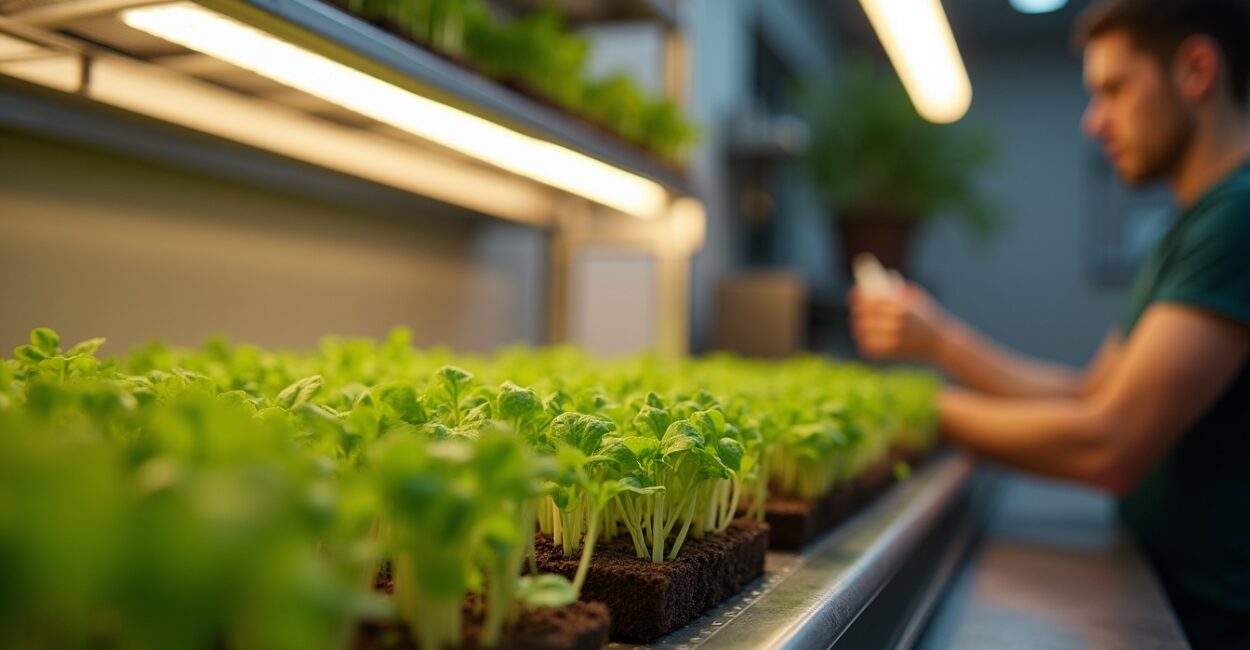
It started as a whisper in trade journals, then blew up into front-page curiosity: indoor farming demand has spiked — and it’s not just big ag companies scrambling. For beginner microgreen growers, that surge can mean a fast lane to profit, or a costly mistake if you buy the wrong kit. Read on to discover which gear is suddenly selling out, where newcomers can enter without blowing capital, and the three moves that separate a backyard hobby from a small, repeatable business.
Why Buyers Are Suddenly Obsessed with Small-scale Indoor Farms
Retail demand for locally grown, pesticide-free microgreens jumped sharply this year. Shoppers want year-round freshness and chefs want predictable yields; that combination has retailers and restaurants calling local growers. For beginners, that’s good news: your product isn’t a novelty anymore — it’s an accessible commodity people will pay a premium for. But demand is fickle. Learn the price points your local market tolerates and don’t assume every neighborhood will pay restaurant margins for a tiny salad garnish.
The Three Pieces of Equipment Selling Out — And Why You Should Care
LED racks, automated trays, and climate controllers are the new gold rush. LEDs optimized for microgreens improve growth cycles; multi-tier racks multiply square-foot productivity; simple controllers keep humidity and temperature within narrow microgreen tolerances. Sellers are moving from selling a lamp to selling a system. If you’re starting, prioritize a decent LED and a reliable tray system over luxury extras — you can scale up automation once sales cover it.
The Setup You Can Build for Under $500 (reality Vs Expectation)
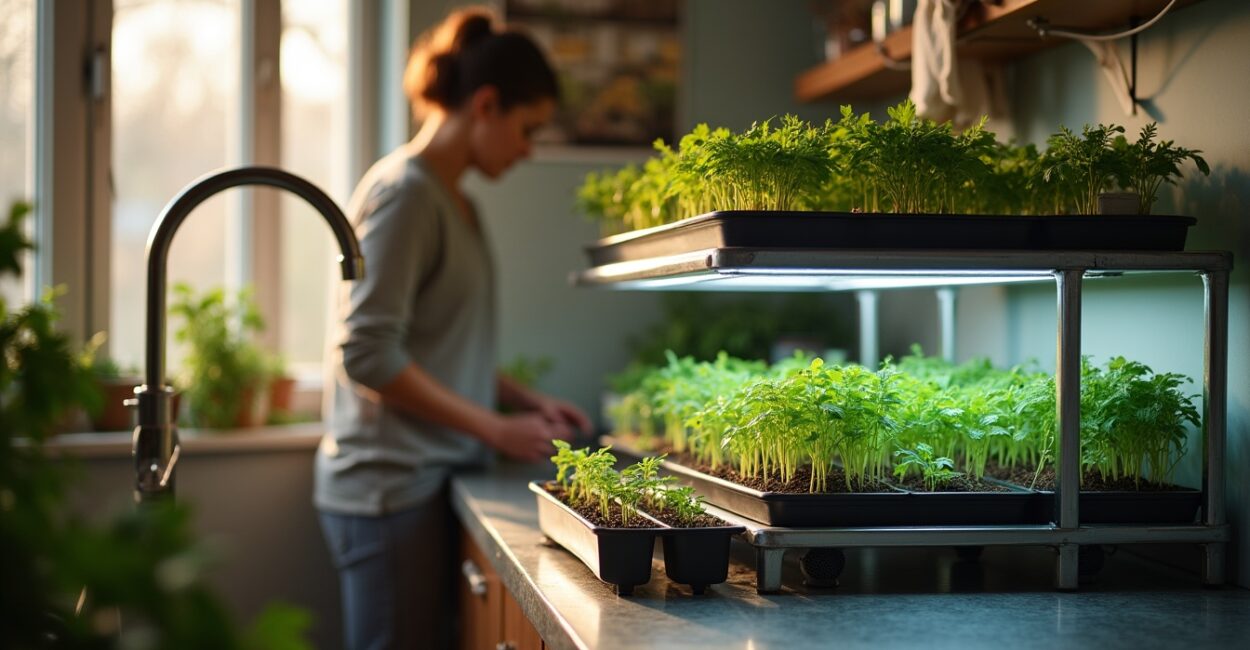
Expectation: hydroponic warehouse. Reality: a compact, high-yield countertop system that pays back in a month or two. Comparison: most beginners imagine full hydroponics, but a basic soil or tray method with quality LEDs and 3–4 shelves gives 80% of the yield at 20% of the complexity. Build list: a 2–4 shelf rack, full-spectrum LED, seed-starting trays, potting medium, and a humidity tray. This setup keeps upfront risk low while you learn crop cycles and local pricing.
What Microgreens Buyers Actually Look for — Not What Sellers Brag About
Buyers care about consistency more than exotic varieties. Farmers’ market shoppers notice wilted bunches; chefs notice variability. That means predictable weight, uniform cut, and clean packaging beat marketing copy about rare varieties. Offer a two-week fulfillment window, consistent pricing, and small sample packs for chefs. Small touches — tight packaging, quick delivery, a brief care card — often win repeat customers more than Instagrammable photos.
Common Mistakes That Sink Beginner Growers (and How to Avoid Them)
Most failures are logistics, not biology. Errors to avoid:
- Overinvesting in expensive automation before proving demand.
- Neglecting simple hygiene — mold spreads faster than profits.
- Ignoring local regulations for food sales and labeling.
Three Quick Strategies to Capture Early Profits
Sell what’s easy to repackage and hard to replicate locally. Strategy picks:
- Target restaurants with a reliable weekly subscription for garnishes.
- Create a CSA-style microgreen box for local homes.
- Offer a “chef’s dozen” sample kit to convert curious cooks into buyers.
The Next Six Months: How to Read the Market and Scale Without Gambling
The smart play is iterative scaling tied to confirmed orders. Track lead time, churn, and per-tray yield every week. Use those metrics to decide whether to add a shelf, buy a second light, or hire help. Watch supply chains: if LEDs or trays are delayed, have fallback suppliers or modular equipment. For authority and baseline data, check USDA guidance on controlled environment agriculture and university extension publications on post-harvest handling to tighten food-safety practices — both reduce costly mistakes. USDA resources and university extension guides are practical starting points.
Mini-story: A neighbor started selling trays to a single bistro; six weeks later she had two chefs on weekly contracts and a waiting list for weekend markets. She didn’t buy racks until orders forced her hand — and when she did, she asked the chefs for a deposit before upgrading. That simple step turned an impulse hobby into a predictable micro-business.
Comparison that matters: buying every shiny gadget up front is like buying a commercial oven for a home-baker — unnecessary and expensive. Instead, buy the one tool that fixes your current bottleneck and rent or defer the rest.
Where to act now: establish two reliable customers (chef or retailer), document two full crop cycles, and reinvest the first month of profits into the one piece of equipment that increases your throughput most. That sequence turns uncertainty into momentum.
Closing thought: indoor farming opened a door — but success is about which door you choose. Pick the one that leads to predictable orders, not the flashiest setup.
How Much Can a Beginner Realistically Earn from Microgreens in the First Three Months?
Beginners can expect modest but fast returns if they secure early buyers. In a practical first three months, a focused grower with two weekly chef customers or a small CSA can net between $300 and $1,200 per month after basic costs, depending on pricing, crop mix, and local demand. Your first weeks are about learning cycles and trimming waste; profits scale quickly once yields stabilize and you secure recurring orders. Avoid overpricing early — build trust, then raise prices with proven consistency.
What Basic Equipment Should I Buy First, and What Can Wait?
Start with essentials: a reliable full-spectrum LED, a sturdy multi-tier rack, seed-starting trays, quality seeds, and a simple humidity tray or controller. These items directly affect yield and consistency. Defer expensive automation like full hydroponic reservoirs, commercial climate controllers, or industrial conveyors until you have steady orders. Invest in hygiene supplies — food-safe detergents and a scale — before luxury packaging. The rule: buy what removes your current bottleneck, and postpone aspirational upgrades.
How Do I Find Local Buyers Quickly Without Expensive Marketing?
Find buyers by showing samples and solving problems, not by selling features. Visit local restaurants and deliver a small, well-packaged sample with a short note on shelf-life and suggested use. Offer a one-week trial subscription at a discount and ask for direct feedback. Partner with co-ops, farmers markets, and specialty grocers for visibility. Use direct outreach and personal relationships — chefs prefer predictable suppliers. Word of mouth from two reliable clients often produces more orders than broad ads.
What Food-safety Rules and Labeling Should I Be Aware Of?
Food-safety matters even for micro-scale producers. Follow local health department rules on selling fresh produce, which often include basic sanitation, traceability, and keeping records of harvest and distribution. Label packages with grower information, harvest date, and storage instructions. For food-safety best practices, consult official guidance from government agencies and university extension services to ensure compliance; these sources also help you implement simple record-keeping that prevents costly recalls and builds buyer trust.
When is the Right Time to Scale from Hobby to Small Business?
Scale when demand is consistent and margins cover expansion. Key signals include two or more recurring customers, predictable weekly orders, and positive cash flow after basic costs. Before scaling, document cycle times and yields, have a hygiene protocol, and secure at least one backup supplier for critical gear. Use the first month of net profit to buy capacity — not marketing. Scaling too early turns fixed costs into a liability; scaling after validation turns them into leverage.