

Vacuum Bags Vs. Bins: Which Saves More Space for Clothes?
Struggling with winter storage? Discover the pros and cons of vacuum bags vs storage bins to save space and organize your closet today!
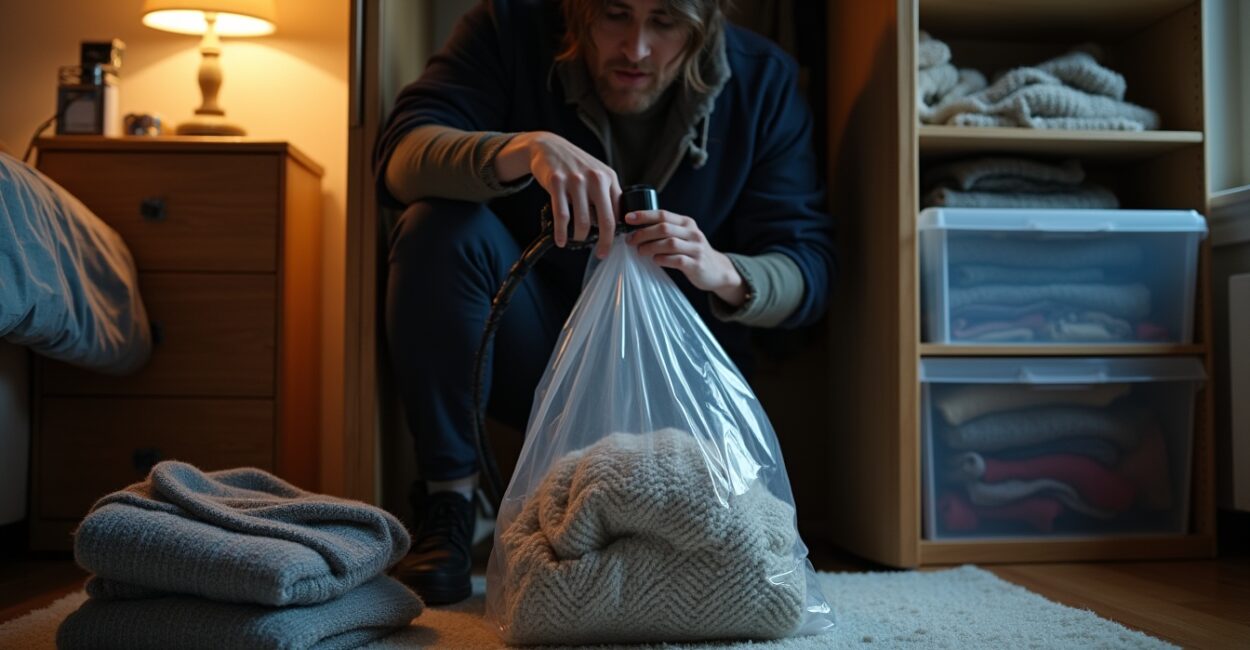
It’s 2 a.m., you’re trying to cram three bulky sweaters into a closet that’s already a crime scene of winter coats — and you wonder if vacuum bags could actually save your life (or at least your closet). Vacuum bags appear like magic: squeeze the air out and suddenly space multiplies. But they’re not the only option. Storage bins promise neat stacks and instant access. This piece compares vacuum bags and storage bins for seasonal clothes, showing real space savings, protection trade-offs, and exactly when to reach for each method.
How Much Space Do Vacuum Bags Actually Save Vs. Bins?
Vacuum bags typically shrink textiles by 50–80% depending on fabric and compression, while bins only reorder volume. In other words, vacuum bags turn a puffy winter coat into a pancake; a bin keeps the coat’s original shape but stacks it. Practical example: a queen-size comforter in a large bag often becomes the size of a throw pillow. A plastic bin will require roughly the original footprint, plus headspace for air. If raw cubic feet are your metric, bags usually win. If usable, maintainable storage is your metric, bins sometimes do.
The Protection Trade-off: Moisture, Odors, Pests, and Creases
Bags lock out pests and odors temporarily but can trap moisture and create deep creases; bins allow airflow but invite dust and pests if not sealed well. Vacuum-sealed gear prevents moths and smells from getting in—until condensation forms inside and stays. Hard plastic bins give a buffer against accidental crushing and let you layer tissue paper or cedar to deter insects. For delicate knits and tailored garments, the crease risk in vacuum bags is real: long-term compression can break down fibers. Use acid-free tissue or fold carefully if you choose bags for these items.
The Timeline Test: Short-term Rotation Vs. Long-term Storage
Decide how long a garment will be out of rotation. For short seasonal swaps (months), vacuum bags are brilliant: they free space fast and fit under beds or on high shelves. For multi-year storage, bins often outperform because they reduce stress on fabric and let you add silica gel packs or humidity monitors. Think of vacuum bags as sprint athletes—great for quick wins. Bins are marathon runners: slower, steadier protection over long periods.
Real-world Comparison: Closet After Using Bags Vs. Bins (before/after)
Before: three full boxes and a laundry basket of winter clothes crowding a hall closet. After vacuum bags: closet gains two shelves and a hanging rod back; you can slide bags under the bed. After bins: everything looks tidy, labeled, and accessible, but you need more shelf space. Expectation vs. reality: vacuum bags deliver immediate visible space savings; bins deliver mental savings — you can find things without unrolling a compressed sweater. The surprise: a mix of both often beats a purist approach.
Common Mistakes People Make (and How to Avoid Them)
- Storing damp clothes in vacuum bags — invites mold. Always fully dry garments.
- Compressing delicate wool and cashmere for long periods — causes irreversible creasing.
- Using cheap bags that puncture easily — switch to heavy-duty, vacuum-rated brands.
- Forgetting to label bags or bins — ends in a frantic unrolling session mid-season.
Avoid these to keep both space and garments intact. Also: don’t stack heavy boxes on sealed vacuum bags; punctures undo the whole point.
Mini-story: The Sweater That Learned Its Lesson
She shoved a beloved alpaca sweater into a bargain vacuum bag before visiting family for six months. When she returned, the sweater returned too—scrunched, creased, and thinner along the shoulders. She moved the sweater to a bin lined with acid-free tissue and cedar. Next winter it looked and felt right again. That one mistake cost her an emotional attachment and a bit of cash. The point: compression can be benign or brutal depending on fabric and time. Choose method with the garment in mind.
How to Choose—decision Checklist for Your Closet
Pick vacuum bags when: you need maximal short-term space (moving, seasonal swaps), you’re storing bulky items (comforters, puffy jackets), and you’ll access items within months. Pick bins when: you prioritize long-term fabric health, quick access, or want to store delicate garments. Best practice: combine—vacuum bulky bedding and puffs; use clear, labeled bins with moisture control for knits and tailored clothes. Add silica gel, cedar, and rotate stock every 6–12 months.
For data on humidity’s effect on textiles, see research from textile conservation programs and environmental health resources. According to the U.S. National Archives, improper compression and humidity contribute to textile deterioration over time; for climate guidance, government and university conservation pages provide practical humidity targets and packing methods. National Archives on textile storage and CDC guidance on indoor humidity are useful starting points.
In short: vacuum bags win at space. Bins win at care. If you treat your items as replaceable, vacuum bags are a tidy shortcut. If you want heirlooms to survive, bins—or a smart hybrid—are the right play. Now pick one based on what you can’t afford to lose.
How Long Can I Safely Store Clothes in Vacuum Bags?
Short answer: months are fine; years are risky. Vacuum bags compress fabrics and block pests and odors, which makes them excellent for seasonal swaps that return to rotation within months. Problems arise when trapped moisture or prolonged compression degrade fibers, cause yellowing, or create permanent creases. If you plan to store garments longer than a year—especially natural fibers like wool, silk, or cashmere—use breathable bins, acid-free tissue, and humidity control. Periodic checks every 6–12 months reduce risk and extend garment life.
Will Vacuum Bags Damage Delicate Fabrics Like Wool or Silk?
Yes, they can if used improperly or for long durations. Delicate fibers suffer from sustained compression and lack of airflow: wool can lose loft, silk can crease, and creases can set permanently. If you must compress delicate items, protect them with acid-free tissue, roll gently instead of folding, and limit the compression time to months rather than years. Ideally, place delicate pieces in breathable garment bags inside a bin to balance protection from pests with gentle storage conditions.
Are Plastic Bins Better at Preventing Pests and Mold Than Vacuum Bags?
Plastic bins prevent pests better than porous storage but are not infallible—rodents can chew through thin plastic and tight lids can trap humidity. Vacuum bags block insects by sealing garments away, but if any moisture is present when sealed, they can trap it and promote mold. Best practice: ensure garments are clean and fully dry, add cedar or pest deterrents for bins, and include desiccants like silica gel to keep humidity low in either method. Regular checks are the safest route.
Can Mixing Vacuum Bags and Bins Be an Effective Strategy?
Yes—mixing often gives the best balance of space and care. Use vacuum bags for bulky, less-delicate items like down comforters and puffer jackets to reclaim space quickly. Store delicate sweaters, tailored coats, and sentimental garments in labeled bins with acid-free tissue and moisture absorbers. This hybrid approach saves room while protecting valuable pieces. The key is labeling, scheduling a seasonal check, and keeping a simple inventory so you don’t accidentally over-compress treasured items.
What Should I Look for When Buying Vacuum Bags or Storage Bins?
For vacuum bags, choose heavy-duty, purpose-made products with double seals and compatible vacuum valves; avoid cheap single-use options that puncture. For bins, prioritize clear, food-grade plastic with tight lids, stackable design, and smooth interiors for easy cleaning. Look for bins with gasket seals if humidity is a concern, and consider size—shallow bins are perfect for sweaters, deep bins better for bulky bedding. Always factor in labeling space and the ability to access items without full unpacking.