


It was the Tuesday before service and the chef stood in the kitchen holding a wilted mizuna that should have been bright and peppery. That crate of microgreens didn’t arrive. You can avoid that moment. With a backyard plan for seasonal microgreens, you can deliver fresh trays chefs trust every week — and get paid like a pro.
The Weekly Schedule Chefs Actually Respect
Chefs want rhythm, not surprises. They plan menus days ahead. If you promise Thursday mornings, be there Thursday mornings. For seasonal microgreens, map a rolling 4-week schedule: sow, grow, harvest, rest. Repeat.
- Week 1: Fast greens (mustard, arugula) — sow Monday, harvest day 9–11.
- Week 2: Mild salad mixes — stagger trays so harvests overlap.
- Week 3: Specialty shoots (pea, sunflower) — longer germination, plan ahead.
- Week 4: Buffer week — catch-up and quality control.
Start with a simple calendar in a notebook or spreadsheet. Mark holiday weeks and local farmer market days. Seasonal microgreens thrive on predictability.
How Much to Grow: Yield Targets That Pay Your Bills
Forget vague guesses. A chef ordering weekly wants clear numbers. Aim for reliable yields: one 10×20 tray yields roughly 10–14 servings depending on cut and density. For most small restaurants, start by supplying 10–20 trays a week.
- Small bistro: 10 trays/week → gross revenue $200–$400
- High-end restaurant: 20–40 trays/week → $400–$1,200
Measure by trays, not by square feet. Track germination rates for each crop. If arugula drops to 70% germination, adjust seed density and sow dates. Seasonal microgreens have predictable yield curves if you log them.

Crop Rotation: What to Plant Each Season (and Why It Matters)
Rotation keeps soil and supply steady. Plant cold-tolerant microgreens in fall/winter — kale, mizuna, mustard. Save tender greens — basil, sunflower — for spring and summer. For seasonal microgreens, this reduces disease and evens out harvests.
- Spring: peas, radish, basil (bright flavors chefs love)
- Summer: sunflower, amaranth, basil
- Fall: kale, mustard, cilantro
- Winter: cold houses or LEDs for kale and brassicas
Rotation also helps pricing. Chefs pay a premium for out-of-season flavors when quality is consistent.
Packing and Presentation Chefs Will Accept Without Fuss
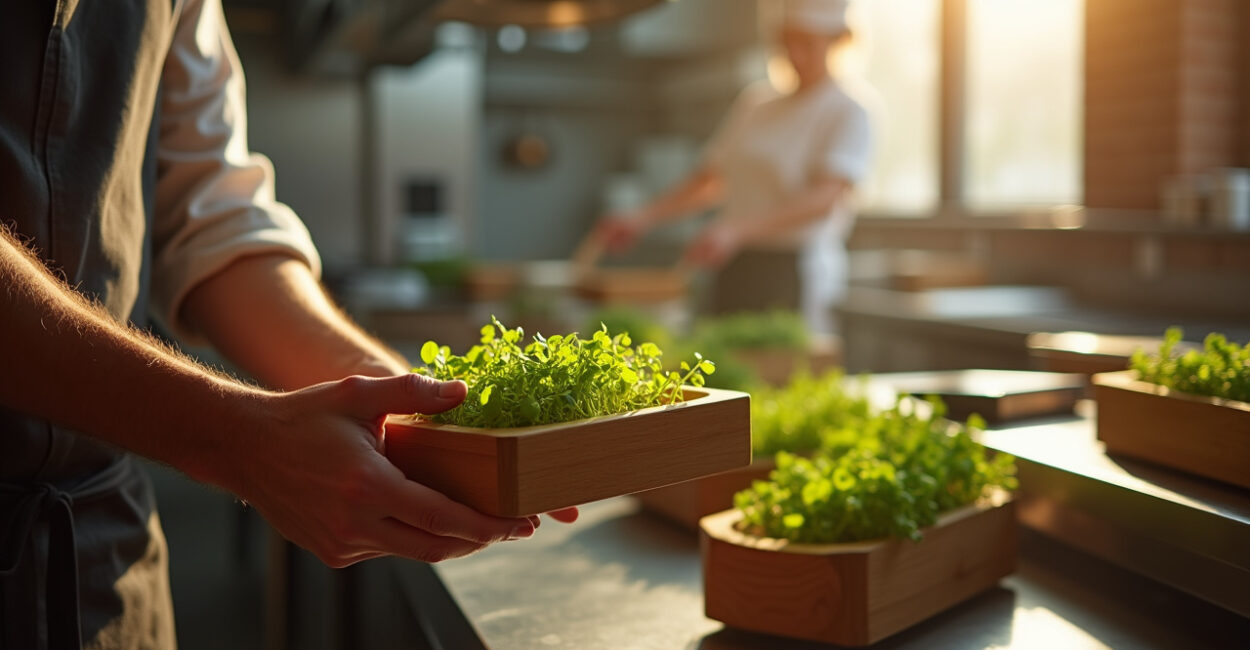
Chefs judge first by sight, then by smell. Packaging must protect and showcase seasonal microgreens. Use shallow clamshells with small vents or kraft boxes with breathable liners. Label trays: crop, harvest date, weight, your contact.
- Do: keep stems dry, chill lightly, deliver within 24 hours.
- Don’t: crush leaves with heavy lids or overpack trays.
Presentation sells repeat orders. A clean tray with a clear label says you’re a reliable supplier. Chefs remember that more than marketing lines.
Simple Sales Tactics Chefs Actually Respect
Stop pitching like a market vendor. Chefs want consistency, not persuasion. Offer a tasting tray once, deliver reliably for four weeks, then ask for a standing order. Seasonal microgreens are a relationship business.
- Start with a one-week trial — discounted or free small sample.
- Offer a backup plan: “If I miss a week, here’s my substitute.”
- Invoice weekly or net-7. Keep billing simple.
Respect the kitchen’s timing. Deliver before prep starts. Be reachable. Chefs reward that with steady orders and referrals.
Common Mistakes and How to Avoid Them
People assume microgreens are easy and fast. That’s the trap. Here are the top errors when selling seasonal microgreens and how to dodge them.
- Overpromising variety: Don’t promise basil in January unless you have climate control.
- Poor labeling: Mistakes cost trust. Label each pack clearly.
- Skipping trials: Never deliver bulk without a tasting run.
- Ignoring post-harvest: Wet stems = quick spoilage. Dry before packing.
Fix these and your reputation grows faster than your seedlings.
The Little Decisions That Make Your Operation Scalable
A backyard can turn into a supplier if you standardize small things. Tray sizes, seeding rates, and a simple heat mat schedule scale up easily. For seasonal microgreens, consistency beats flash skill.
- Pick two tray sizes and stick to them.
- Use the same seed supplier for key crops.
- Document germination times and watering volume per tray.
One grower I knew swapped from guessing to a one-page SOP file. Within two months, restaurants doubled orders. A single sheet of instructions saved hours and avoided mistakes.
For technical guidance on safe food handling and small farm practices, see the USDA resources and your local extension office. USDA and university extensions like Extension.org offer useful guides on food safety and small-scale production.
Ready to pick one crop and set a date? Start small, deliver precisely, and let word-of-mouth in kitchens do the rest. Seasonal microgreens won’t get you rich overnight, but they will buy stability and respect from chefs who need your consistency.
How Do I Calculate How Many Trays to Grow Each Week?
Start by asking chefs how many servings they need per week. Convert servings to trays: a 10×20 tray typically yields 10–14 restaurant servings depending on cut and crop density. Track actual yields for three weeks, then average. Add a 10–15% buffer for failed trays or weather shifts. Use that buffer to schedule a “catch-up” sowing each cycle. Recalculate monthly — demand changes with season and menu shifts. Keep records simple: date, crop, trays sown, trays sold.
What Packaging Keeps Seasonal Microgreens Freshest During Transport?
Choose breathable, protective packaging. Shallow clamshells with small vents or kraft boxes with a breathable liner work well. Keep leaves dry before packing; moisture speeds spoilage. Chill lightly — not freezing — and transport in a cool, insulated box to maintain quality for up to 48 hours. Label each package with crop, harvest date, weight, and your contact. Chefs appreciate clear labels and consistent presentation. Good packaging reduces complaints and builds trust for recurring weekly orders.
Which Microgreens Are Most Profitable Per Tray Across Seasons?
Profit depends on local demand, but some crops consistently give higher margins. Radish, arugula, and mustard grow fast and sell well in cool seasons. Sunflower and pea shoots command premiums in spring and summer for their texture and visual appeal. Specialty herbs like basil fetch more but need climate control. Track seed cost, germination rate, labor, and chef price for each crop to find your best margins. Over time, focus on 3–4 high-performing crops rather than too many varieties to maximize profit.
How Do I Approach a Chef for the First Time Without Being Ignored?
Be brief and practical. Deliver a labeled sample tray with a note: crop, harvest date, and contact. Ask for a five-minute tasting during a prep lull. Offer a one-week trial or a small free sample. Show that you understand kitchen timing: offer delivery windows and a backup plan if you miss a week. Chefs respond to reliability more than charm. Follow up once, then let the product speak. If they like it, propose a simple standing order with clear terms.
What Basic Food Safety Steps Must I Follow in a Backyard Setup?
Food safety is essential. Designate a clean harvesting area away from pets and soil. Wash hands and sanitize tools and surfaces. Use potable water for irrigation and rinsing. Keep harvested greens cool and dry before packing. Label all batches with harvest dates and maintain simple logs for traceability. Consult local regulations — many areas require basic permits for selling produce to restaurants. For authoritative guidance, check USDA resources and your state extension to ensure compliance and protect your customers and business.