

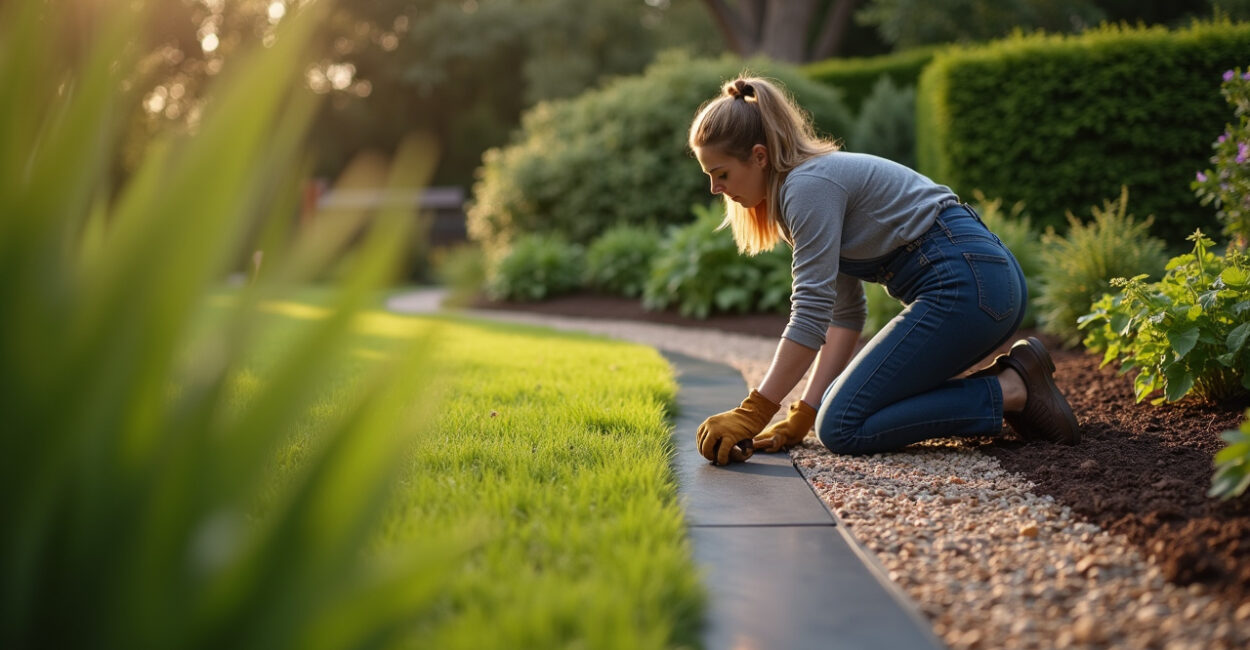
The first time I ran my hand along a clean garden edge, it felt like the lawn took a deep, satisfied breath. Edging does that — it gives order, makes color pop, and tells the eye where the garden begins and the grass ends. Whether you’re trimming a tiny cottage border or framing a long perennial bed, the right edging transforms a muddled yard into something that reads as deliberate and cared-for.
1. The Steel Edge That Disappears and Declares Structure
Rolled steel creates the crispest line you can get. A thin, dark blade sunk into the soil reads like a knife-cut between lawn and bed. Install it with a rubber mallet and stagger the joints for a continuous look. Steel works especially well with modern designs and gravel paths — it’s subtle but authoritative. For coastal gardens, choose corten or galvanized to avoid rust stains. Steel’s slim profile can fail if you don’t seat it deep enough; aim for 2–3 inches below turf level so you mow cleanly.
2. Natural Stone: The Long-term, High-impact Border
Stone feels permanent, like it has always belonged. Use flagstone, bluestone, or local fieldstone to anchor large beds. Stones can be laid flush for a smooth mowing edge or set with a slight reveal to show texture. Match the stone size to your garden scale: small pavers for cottage beds; large slabs for sweeping borders. A quick rule: heavier stones need a compacted sand base or they’ll sink. Stone pairs beautifully with shrubs and native plants, giving a garden an “aged in” look instantly.

3. Brick and Paver Edging: Classic, Affordable, and Versatile
Brick makes a neat, approachable edge that fits almost any style. Laid soldier-style for a formal look, or set at an angle for gentle lines, bricks are forgiving to install. Use polymeric sand between pavers to lock them and resist weeds. This edging is ideal where you want a defined visual border plus a low step for paths. Expect some settling; a compacted gravel base prevents wavy rows. Bricks play well with roses and annuals and can echo hardscape colors in your patio or walkway.
4. Timber and Treated Wood: Warmth with a Lifespan
Wood brings instant warmth but asks for upkeep. Sleepers, railroad ties, and pressure-treated boards are easy to cut and shape, perfect for terraces and raised beds. Install on a gravel base with galvanized stakes to avoid rot. For a modern twist, use charred cedar (shou sugi ban) for durability and dramatic contrast. Timber can warp and needs staining or sealing every few years; if you want the look without the work, consider composite timbers that mimic grain but last longer.

5. Plastic and Metal Roll-out Systems: Fast, Flexible, and Subtle
Roll-out edging is the quick fix that still looks tidy. Flexible plastic or thin aluminum strips follow curves closely and install in minutes with spikes. They’re great for curvy perennial beds and temporary displays. The trade-off: plastic can get brittle in sun, and thin metals feel less permanent. Use roll-out edging where you expect to change bed shape seasonally. Pair with cottage plants and groundcovers; the subtle line gives a finished look without shouting for attention.
6. Gravel and Mulch Borders: Soft Edges That Blur and Blend
Not every border needs a hard line; some deserve a gentle fade. Gravel and mulch edges are simple: create a shallow trench, lay landscape fabric if desired, and fill. This approach suits naturalistic gardens and low-maintenance beds. Gravel reflects light and highlights plant color; organic mulch feeds soil and encourages life. Watch out for weed migration — a narrow metal or plastic stop hidden under the mulch extends life. Use this edging with drought-tolerant plantings or Mediterranean palettes.
7. Plant-based Edging: Living Borders That Change the Story
Low hedges or groundcover can edge a bed while softening lines. Plants like mondo grass, thyme, dwarf boxwood, or sedum create a living buffer. They delight up close but require pruning to stay neat. A surprising comparison: a clipped plant edge reads cleaner than poor stonework. Living edges connect the bed to the garden ecosystem and are ideal for pollinator-friendly designs. Avoid fast-spreading runners without barriers; a shallow root barrier or frequent trimming keeps things civilized.
Common mistakes to avoid:
- Shallow installation that lets edging pop up after freeze-thaw cycles.
- Using tiny materials at a large scale — scale kills polish.
- Mixing too many materials in one small bed; it looks busy.
- Skipping a compacted base for hard edges — expect shifting.
Mini-story: I once replaced a hodgepodge of rotting timber and mismatched rock around a neighbor’s perennial strip. Two hours, a compacted sand base and one long steel edge later, the same plants read like a curated border. The bed suddenly looked twice as big and cost half what they feared. That’s the power of clean edging.
Installation tips and pairings that actually work:
- For mowers: set edges 1–2 inches below turf for a clean cut.
- For curves: choose flexible materials like pavers set on sand or roll-out edging.
- For formality: use brick or stone with mortar or compacted base.
- For budgets: recycled pavers or gravel with fabric are cost-effective.
For plant pairings and regional guidelines, consult extension services like Extension.org and local resources such as university horticulture pages — for example, University of Wisconsin Horticulture. They offer soil and plant recommendations tailored to your area.
Pick one material and do it well. A single, well-executed edge reads miles better than a dozen half-done ones. Edging isn’t just a trim — it’s the punctuation that tells your garden story.
How Deep Should I Install Hard Edging Like Steel or Brick?
The right depth is usually 2–3 inches below the lawn surface for steel and about 4–6 inches for brick with a compacted base. You want the edge low enough so the mower blade can cleanly skim without catching, but not so deep that heavy foot traffic hits it. For brick or pavers, add a 2–3 inch compacted gravel base and a 1-inch sand layer to level. In frost-prone zones, deeper bases reduce heaving. Proper depth prevents tripping hazards and keeps the line crisp for years.
Which Edging Material is Best for Curved Beds?
Flexible options win for curves: thin corten steel strips, aluminum roll-out edging, or small pavers set on sand allow smooth bends. Plastic can work for gentle curves but may sag or look cheap long-term. For a high-end curved look, use segmented stone or thin slabs placed on a compacted sand bed; the joints let you trace the line. Always mark the curve with a hose before you start. A well-executed curve reads as intentional and makes the whole planting feel softer.
Will Mulch or Gravel Edging Reduce Maintenance?
Mulch and gravel reduce some tasks: they suppress weeds, retain moisture, and give a neat finish. But they aren’t maintenance-free. Mulch needs topping every year or two as it breaks down. Gravel can migrate into the lawn and collects debris; occasional raking and edging are necessary. A hidden metal or plastic stop under the material helps keep it contained. If you want lower upkeep, pair organic mulch with a robust border installed slightly below grade to slow migration.
Can I Mix Different Edging Materials in One Garden?
You can mix, but do it with intent. Using two to three complementary materials creates contrast without chaos; more than that reads cluttered. Match materials to function: stone for structure, mulch for plant beds, and steel for mowing lines. Tie them together with a consistent color palette or repeated textures across the yard. The big mistake is random mixing — it breaks visual flow. Plan transitions where materials meet, using a clear joint or a planted buffer to smooth the shift.
How Do I Keep Living Plant Edges Tidy Without Losing Their Charm?
Choose compact, slow-growing species and commit to light annual pruning. Groundcovers like thyme or sedum need gentle shearing to keep a neat line. For low hedges, clip twice a year: once in late spring to shape and again in late summer for tidiness. Install a shallow root barrier for species that spread aggressively. Regular deadheading and removing runners keeps the edge controlled while preserving the living, soft look that draws people in.