

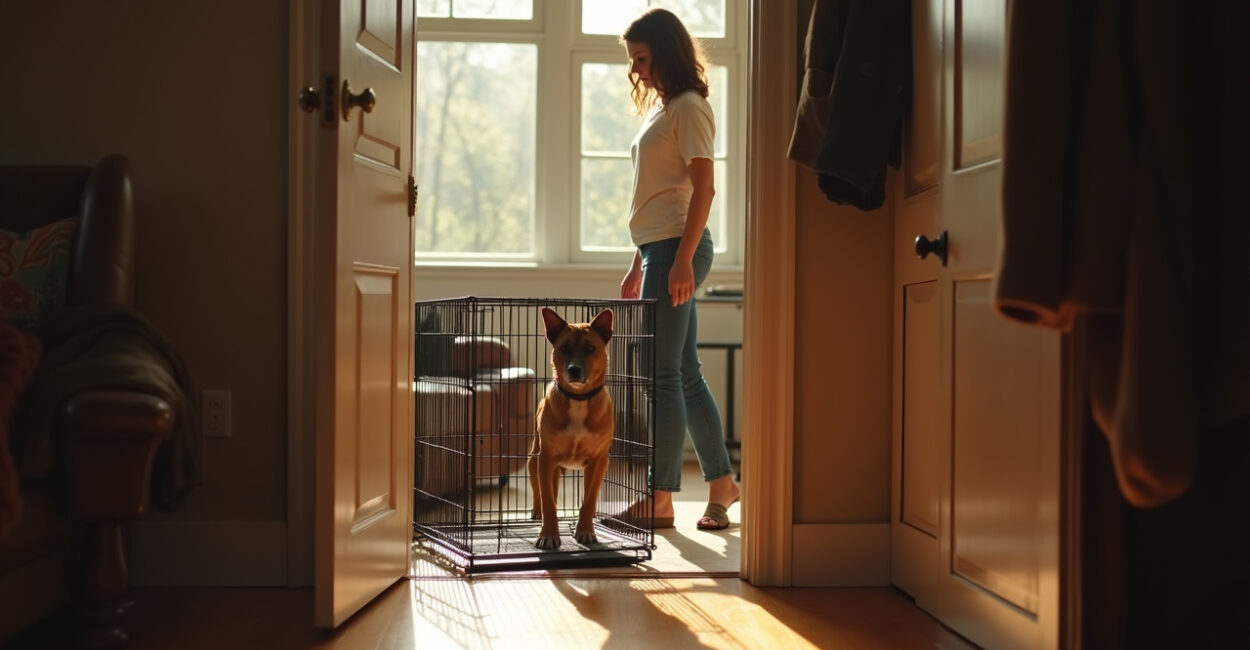
He howled for an hour the first time the front door closed. The neighbor called. You stayed a minute longer than usual and the dog stared at you like you’d betrayed them. That gut feeling — the panic under the fur — is what separation anxiety looks like. But sometimes the problem is the crate, not a broken heart. This piece cuts the fog: real causes, clear differences between separation anxiety and crate-related stress, and fixes that actually work.
Why the Howl Doesn’t Always Mean Separation Anxiety
Not every meltdown equals separation anxiety. Dogs bark, whine, scratch, or pee for many reasons: boredom, lack of training, medical pain, or a noisy building. Separation anxiety is a specific pattern: intense distress when the owner leaves, persistent and often escalating. If a dog panics only in the crate but is calm loose in the house, crate-related stress is more likely than separation anxiety. Observing timing and triggers is the quickest way to tell them apart.
The Mechanism That Nobody Explains Right: Fear Vs. Confinement
Separation anxiety is driven by fear of loss and unpredictability. Crate stress is driven by confinement and negative associations. Both cause similar behaviors—vocalizing, destruction—but their root is different. Imagine two scenarios: one dog sobs because they can’t find you; another screams because the crate feels like a box of punishment. The fixes diverge. Treating crate stress like separation anxiety wastes time and can make things worse.

How to Test Which Problem You Have in One Week
Run simple experiments over seven days. Day 1–2: leave the dog loose for short absences and record behavior. Day 3–4: leave the dog in the crate with a favored toy. Day 5–7: add small steps—sit by the door for 30 seconds, then leave. If distress happens while loose, separation anxiety is likely; if it spikes only in the crate, it’s crate stress. Write down noise, time of day, and whether the dog settles quickly or spirals.
Targeted Fixes That Actually Reduce Distress
One-size-fits-all won’t cut it. For separation anxiety, use gradual desensitization, counterconditioning, and predictability. For crate stress, change the crate’s meaning with positive experiences and adjust the environment. Examples that work:
- Separation anxiety: short, frequent absences paired with calm returns; teach a reliable “relax” cue.
- Crate stress: feed all meals in the crate, add comfy bedding and a slow-feed toy, and practice crate-only positive games.
- Both: increase physical and mental exercise before departures and minimize dramatic exits and entries.
Small, consistent changes beat dramatic punishments every time.

What the Science Says—and What to Try First
Studies show desensitization and counterconditioning reduce separation anxiety symptoms, especially when paired with routines and sometimes medication under vet guidance. Crate aversion responds quickly to pairing the crate with rewards and control. For evidence, see work from American Veterinary Medical Association and behavior research at PubMed. Start simple: predictable departures, short practice leaves, and high-value crate-only treats.
Common Mistakes That Make Separation Anxiety or Crate Stress Worse
Avoid these errors.
- Punishing vocalization—this increases anxiety, not calm.
- Using the crate as punishment—creates a negative association fast.
- Long, unsupported isolation jumps—skipping gradual steps leads to relapse.
- Ignoring medical causes—pain or thyroid issues can mimic separation anxiety.
One surprising comparison: owners who over-comfort on every sign of distress often reinforce panic; those who calmly follow a training plan reduce episodes in weeks.
The Small Environment Tweaks That Yield Big Results
A half-dozen thoughtful changes can halve distress. Dim lights, soft white noise, and a worn T-shirt with your scent can soothe separation anxiety. For crate stress, make the crate roomy, positioned where the dog can see family activity, and add chew-safe enrichment. Rotate toys so the crate feels novel. Environment shapes emotion—change the setting, change the reaction.
Mini-story: A Labrador stopped destroying the door frame after four weeks of short, planned departures and a stuffed Kong delivered only when the crate was used. The owner had tried longer absences first and blamed the dog. When the plan shifted to small wins, both sleep improved and vet bills fell.
Separation anxiety and crate stress look similar but need different medicine. Test honestly, pick the right protocol, and measure progress in small gains. Your dog will thank you with calmer days and fewer emergency calls from the neighbor.
FAQ
How Quickly Should I See Improvement with Separation Anxiety Training?
Most owners notice small improvements within two to four weeks when using a consistent desensitization and counterconditioning plan. Initial wins are usually shorter, calmer departures or less frantic pacing. Significant reductions in vocalization and destructive behavior often take six to twelve weeks of steady work. Severe cases may need veterinary evaluation for medication alongside behavior training. Track short, measurable goals weekly—like increasing time-out by 30 seconds without escalation—and celebrate those steps.
Can a Dog Who Hates the Crate Ever Learn to Like It?
Yes. Crate aversion is usually an association problem and can be reversed by making the crate a source of reward and control. Start with feeding all meals near and then inside the crate, use high-value toys only in the crate, and leave the door open while the dog explores. Practice short, positive crate sessions and build up slowly. Most dogs show clear improvements within a few weeks; consistency and patience are key to turning fear into comfort.
Should I Use Medication for Separation Anxiety?
Medication can be a helpful adjunct when separation anxiety is severe or not improving with training alone. A veterinarian or veterinary behaviorist can recommend options like SSRIs or short-term anti-anxiety drugs, paired with a behavior plan. Medication is not a stand-alone cure; it helps the dog learn new, calmer responses while training proceeds. Always consult a vet before starting drugs and monitor progress closely while adjusting the training regime.
What Are Simple Daily Routines That Reduce Separation Anxiety?
Predictability lowers stress. Simple daily routines include consistent departure cues (putting on shoes, picking up keys) followed by calm exits; a pre-departure walk or mental game to tire the dog; leaving a safe, enticing chew toy; and quiet returns without dramatic greetings. Short practice absences throughout the day teach the dog that departures are normal and predictable. Small, repeated routines beat rare, intense sessions for long-term success.
How Do I Tell If Behaviors Are Medical, Not Separation Anxiety?
If the behavior is new, sudden, or accompanied by other signs—loss of appetite, lethargy, or increased thirst—seek veterinary evaluation. Medical conditions like urinary tract infections, pain, or hormonal imbalances can mimic separation anxiety. Also, if the dog reacts to confinement only after an injury or shows pain when moving, a vet should rule out physical causes before behavior work begins. Treating an undetected medical issue with training alone can delay recovery.