

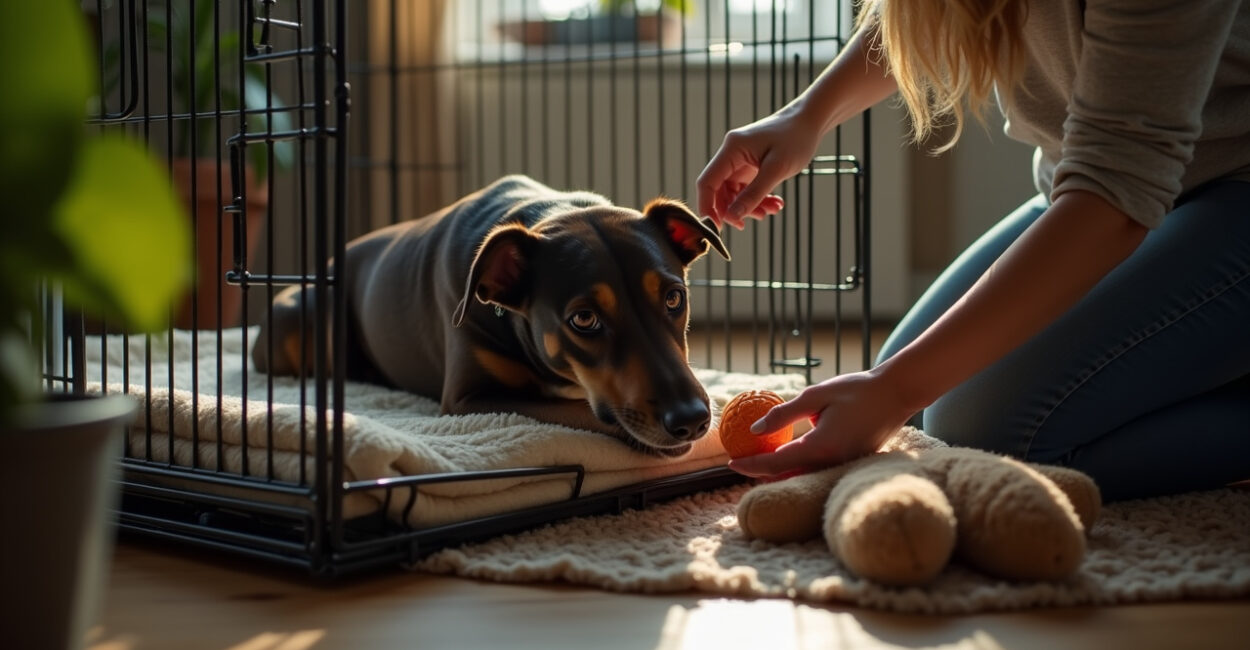
He stopped trembling two minutes after I slid the peanut-butter ball into the crate. Not because it was magic—because the right crate toy gave his brain something calm and predictable to do. Rescue dogs don’t need flashy; they need texture, timing, and toys that say: “You’re safe here.” In this article you’ll get vet-approved crate toys that soothe and engage rescue dogs, what textures and puzzles actually reduce stress, how to rotate toys without confusing your dog, and safe picks for anxious chewers.
The One Sentence That Changes How You Pick Crate Toys
Not all enrichment calms—some excites. That’s the key vets miss when owners buy loud, crunchy toys to “tire out” an anxious dog. For rescue dogs, predictability soothes. Think soft chew, slow-reward puzzle, or a stuffed snuggle toy with your scent. Crate toys should lower heart rate, not spike it. When a toy creates focused, gentle chewing or a slow treat-release, cortisol drops. The right crate toys give safety cues through texture and rhythm, not novelty.
Textures That Tell a Dog “it’s Okay”
Texture matters more than color. Rescue dogs often prefer:
- Soft plush with nested pockets for gentle muzzle work
- Rubber with slow-release treat cavities for steady licking
- Textured silicone for anxious chewers who need deep pressure
Soft, pliable textures mimic the comfort of a snout or a lap. Hard, brittle plastics can startle. For nervous chewers choose thick, flexible rubber or braided fabric—materials that give and don’t snap. Veterinarians note that licking and gentle chewing release endorphins; textures that encourage those actions are calming. For references on behavior and enrichment, see findings from the American Veterinary Medical Association and shelter-behavior studies at universities like UC Davis.

Which Puzzle Types Actually Reduce Stress (and Which Don’t)
Slow-reward puzzles lower stress. Fast-dispense toys create frustration for many rescues. Use these rules:
- Use sealed-kibble puzzles for short sessions to encourage calm focus.
- Choose lick mats or treat paste holders for repetitive, soothing action.
- Avoid high-speed ball launchers or noisy toys in the crate.
If your dog paws at a puzzle and then paces, the toy is increasing anxiety. Replace it with a simple, low-demand option like a stuffed KONG with peanut butter or a lick mat smeared and frozen. Studies show repetitive oral behaviors can be soothing; look at enrichment protocols used in shelters and applied behavior research at AVMA and university labs.
How to Rotate Crate Toys So Your Dog Stays Calm—and Curious
Rotation is a system, not a random swap. Keep a three-box method: active, comfort, and novel. Swap one item every 3–4 days. That’s enough to keep interest without making the crate unpredictable.
- Active box: slow puzzles and lick toys
- Comfort box: plush, snuggle items with your scent
- Novel box: new texture introduced briefly
Rotation prevents both boredom and overstimulation. If you rotate too often, the dog learns nothing is safe. If you never rotate, toys lose value. A steady schedule trains the brain to expect calm engagement. Track reactions in a notebook for a week to see what actually calms your dog.

Safe Choices for Anxious Chewers: What Vets Recommend
Anxious chewers are the trickiest. Safety first: avoid toys that shred into swallowable pieces or that have small parts. Vet-approved safe picks include:
- Thick rubber KONG Classic (stuff with wet food and freeze)
- Durable braided cotton rings for chewing and pulling
- Silicone lick mats that attach to crate walls
Replace toys at the first sign of splitting or exposed seams. For heavy chewers, use toys rated for strong chewers and supervise new items. The ASPCA has clear guidance on toy safety and ingestion risks; consult their resources for specific hazard signs and when to call your vet.
Common Mistakes Owners Make with Crate Toys (and How to Avoid Them)
People try to fix anxiety with volume and novelty. That backfires. Common errors:
- Giving high-energy toys that spike excitement in the crate
- Introducing too many new textures at once
- Ignoring scent—your smell calms more than you think
Never use interactive toys that require chasing or loud noises in the crate. Instead, pair a calm toy with a short scent item of yours. One mini-example: a dog chewed through three toys in a week when owners kept adding new plastic items. When they switched to a freeze-stuffed rubber toy and a worn T-shirt, chewing dropped and sleep improved within days.
Quick Vet-approved Crate Toy Kit to Try Tonight
Assemble a starter kit for one week. This is what many vets suggest for rescue dogs:
- One thick rubber stuffed KONG (freeze-filled)
- One silicone lick mat
- One plush comfort toy with your scent
- A braided cotton tug for supervised chewing
Use the kit on a schedule. Start with 10–15 minute sessions and watch body language. If the dog settles and breathes slower, keep the toy in the crate for longer. If pacing or pawing increases, stop and try a different texture. For evidence-based enrichment programs and shelter guidelines, see research summaries from NIH.
One small change in toys can change how a rescue dog feels about their crate. Choose calm, not crazy. Choose steady, not shocking. Your crate can become a refuge again.
How Long Should a Crate Toy Session Last?
Start with short sessions: 10–15 minutes. Watch your dog. If they lie down and chew calmly, stretch sessions to 20–30 minutes. For highly anxious dogs, several short sessions a day work better than one long one. Always remove a toy if it causes pacing, whining, or frantic digging. Gradually build up duration over weeks; stability and safety are more important than length. If unsure, follow your vet’s advice about session timing tied to your dog’s behavior and health.
Can a Crate Toy Make Separation Anxiety Worse?
Yes—if the toy increases arousal. Toys that bounce, rattle, or require frantic activity can turn a crate into a play zone, signaling that departures are exciting events. For separation anxiety, aim for low-demand, repetitive actions like licking or gentle chewing. Pair toys with a predictable departure routine and short absences first. If anxiety is severe, toys are only one tool; behavioral training or medication from your vet may be needed. Observe your dog: calm behavior means the toy helps; frantic behavior means change it.
Are Homemade Crate Toys Safe?
Homemade toys can be safe if made from durable, non-toxic materials. Avoid small parts, loose threads, and fragile plastics. A braided fleece tug or a towel-wrapped frozen snack can work well. Do not use rawhide or items that can splinter. Always supervise new homemade toys until you’re sure they hold up. For step-by-step safe ideas and warning signs, consult shelter safety guides or your veterinarian. Homemade is fine when durability and ingestion risk are addressed carefully.
How Often Should I Clean Crate Toys?
Clean lick mats and rubber toys once a week, more often if used daily with wet food. Plush toys can be washed in hot water every 1–2 weeks or sooner if soiled. Rotate toys to allow a full clean cycle. Inspect toys each wash for damage and discard any with exposed stuffing or hard pieces. Keeping toys clean reduces infection risk and keeps scents neutral, which helps rescue dogs associate the crate with calm, not dirt. Use mild, pet-safe cleaners and rinse thoroughly.
When Should I Call a Vet or Behaviorist About Crate Toy Reactions?
Call a vet or behaviorist if your dog shows increased aggression, repetitive destructive chewing, extreme pacing, or no improvement after a few weeks of toy adjustments. Sudden changes—like obsessive licking or vomiting after using a toy—warrant immediate vet attention. A certified applied animal behaviorist can help tailor enrichment to trauma histories or persistent anxiety. Early intervention prevents escalation; if you’re unsure, document behavior and reach out for a professional opinion rather than waiting for the problem to worsen.