

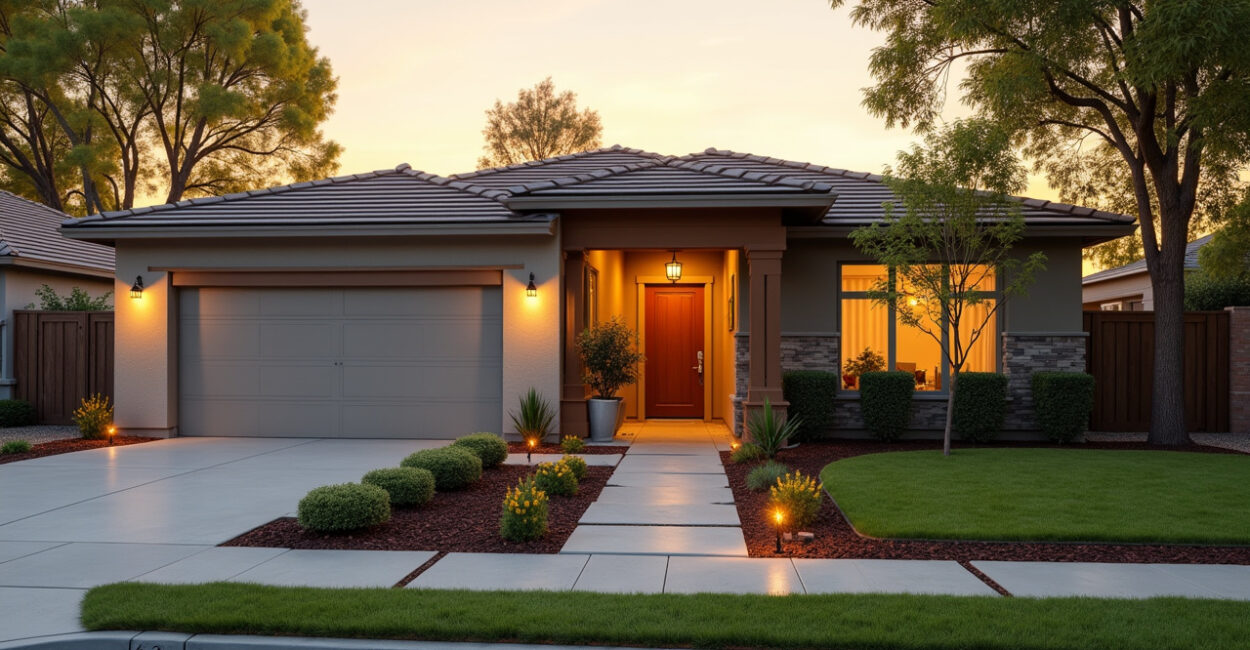
A front yard does not need a full renovation to look cared for. In fact, the fastest curb appeal gains usually come from a few visible upgrades: clean edges, healthy mulch, a simple planting plan, and lighting that makes the house read clearly from the street. The best affordable curb appeal landscaping ideas work because they change what people notice first, not because they add expensive square footage.
This guide focuses on the moves that deliver the most visual impact per dollar. You will see where to spend, where to skip, and which details quietly make a yard look finished instead of patched together. That matters because a budget landscape is not about doing less; it is about doing the right things in the right order.
What You Need to Know
- Clean borders, mulch, and pruning usually improve curb appeal faster than buying more plants.
- Low-cost landscaping looks expensive when the design repeats one or two plant types instead of scattering many.
- Lighting, edging, and a healthy lawn frame the house and make every other upgrade read better from the street.
- The cheapest projects are often the most visible ones, which is why front-yard spending should start at the sidewalk, driveway, and entry path.
- A good budget plan uses fewer materials, but each material has a clearer job and a stronger visual purpose.
Affordable Curb Appeal Landscaping Ideas That Make the Biggest First Impression
Technically, curb appeal landscaping is the set of visible exterior design decisions that improve the front-of-house presentation from public view. In plain English, it is the difference between a yard that looks maintained and one that looks ignored. The key is not adding everything at once. It is stacking a few high-visibility upgrades so the home looks intentional from the street.
The front entry, walk, driveway edge, and foundation beds matter more than the far corners of the yard because people see those areas first and longest. Who works in landscaping knows that a homeowner can spend $300 in the wrong places and get less effect than a $120 weekend refresh done in the right sequence. That is why budget planning should start with sightlines, not plant catalogs.
Budget curb appeal works when every dollar improves the parts of the yard people notice in the first ten seconds.
Start with the Frame, Not the Flowers
If the lawn edges are ragged, the beds are overgrown, and the walk is dirty, flowers will not save the look. Clean structure comes first: trim, edge, and define. Once those lines are crisp, even modest plantings read as designed instead of random.
Spend on Visibility, Not Volume
A single well-placed container at the door often does more than six scattered pots in the yard. The same logic applies to shrubs, lighting, and mulch. High-visibility areas deliver the best return because they affect the whole property image at once.
Foundation Beds, Edging, and Mulch: The Lowest-Cost Upgrade with the Highest Payoff
Foundation beds are the planting zones closest to the house walls, and they do two jobs at once: soften hard architecture and guide the eye toward the entrance. When these beds are overgrown or bare, the house itself looks older and less cared for. When they are clean, layered, and edged, the entire front yard feels more finished.
Edging is the cheapest structural upgrade most homeowners skip. A steel, aluminum, or heavy-duty plastic edge creates a crisp boundary between lawn and bed. Then mulch fills the visual gap, suppresses weeds, and unifies different plants into one composition. The Iowa State University Extension has long emphasized that mulch helps retain moisture and reduce weed pressure, which is why it does more than improve appearance.
Why Mulch Changes the Whole Yard
Fresh mulch acts like a visual reset. It darkens the bed, hides irregular soil tones, and makes plant shapes stand out. But the effect only lasts if the bed has a clean outline and the mulch depth stays reasonable; piling it too high around trunks or stems can create maintenance problems.
The Best Plants for Foundation Lines
Use plants that stay proportional to the house and do not need constant trimming. Dwarf boxwood, inkberry holly, dwarf spirea, and compact ornamental grasses work well because they hold shape without crowding windows or siding. The rule is simple: choose repeatable forms, not one-off novelty plants.

Plant Choices That Look Expensive Without the Price Tag
Cheap plants can still look refined when you choose them for repetition, texture, and seasonal reliability. The mistake many homeowners make is buying whatever is on sale and mixing too many colors or forms. That creates visual noise, which reads as “unfinished” even when the bed is full.
A better approach is to build around a limited palette. Two shrubs, one accent grass, and one flowering perennial repeated in clusters usually look more deliberate than a random mix of six species. Missouri Botanical Garden plant profiles are useful here because they help you check mature size, sunlight needs, and maintenance level before you buy.
| Plant Type | Why It Works | Budget Advantage |
|---|---|---|
| Dwarf shrubs | Hold a clean shape near the house | Fewer replacements and less pruning |
| Ornamental grasses | Add movement and texture | Often drought-tolerant and low maintenance |
| Perennials | Return each season | Lower long-term planting cost |
| Groundcovers | Fill gaps and reduce bare soil | Reduce weed control and coverage costs |
Repeat Plants for a Cleaner Look
Repetition is the trick that makes modest landscapes look designed. Three of the same shrub usually look better than one each of three different shrubs. That pattern creates rhythm, and rhythm is what people interpret as “professional.”
Match Plants to the Site
Sun exposure, drainage, and mature size matter more than the price tag. A cheap plant that dies in full sun because it needed afternoon shade is not affordable. That is why site fit is part of the budget equation, not an afterthought.
The cheapest plant is not the one with the lowest sticker price; it is the one that survives without constant replacement.
Lighting, Walkway Clean-Up, and Small Details That Make the House Read Better
Most front yards look better at night when the lighting is planned well, because the eye sees structure before clutter. A few low-voltage path lights, a lit doorway, and one wash of light on the facade can make a plain landscape feel safer and more finished. The U.S. Department of Energy notes that efficient exterior lighting can improve visibility while keeping energy use lower when fixtures are chosen and placed thoughtfully; see the guidance at Energy Saver.
Walkway clean-up matters for the same reason. Pressure-washing a path, removing weeds from cracks, and resetting a crooked border often improves the view more than adding more material. On a budget, these details are not cosmetic extras. They are the parts that make everything else look intentional.
Where Lighting Pays Off First
Put light where it clarifies movement and entry. The front steps, house number, and door area usually beat decorative uplighting in return on effort. Safety and visibility come first; drama comes second.
Do Not Overlight the Yard
Too much light flattens the landscape and makes the property look harsh. A few focused fixtures usually create a calmer, more upscale effect than broad floodlighting. That limit is worth admitting: this method works best when the home has strong architectural lines to highlight, and it can fail when the fixtures are too bright or too numerous.

Simple DIY Projects That Save Labor Costs Fast
Labor is often the largest hidden cost in front-yard work. If you can handle the simple jobs yourself, you can redirect money toward better materials. The smartest DIY tasks are the ones that require time and patience more than special equipment: weeding, bed shaping, spreading mulch, trimming back overgrowth, and installing basic edging.
Here is a real pattern from many first-time refreshes: a homeowner spends a weekend clearing the beds, narrows the mulch line by a foot, and replaces one tired shrub with two matching ones. The yard suddenly looks wider, cleaner, and more current. Nothing dramatic changed. The proportions did.
Good DIY Tasks for Beginners
- Remove dead annuals and overgrown debris before buying anything new.
- Redefine bed edges with a shovel or edging tool before laying mulch.
- Group plants in repeating clusters rather than spreading them out evenly.
- Paint or clean visible surfaces near the entry before adding more landscape material.
Know When to Stop DIY
Tree work, major grading, and electrical lighting installation are different categories. Those jobs can become expensive mistakes when handled without the right tools or permits. That is where professional help sometimes saves money instead of costing it.
How to Build a Front Yard Budget Without Wasting Money
The best budget is not the smallest one; it is the one that avoids rework. Start by spending on what cannot be fixed cheaply later: bad drainage, broken edging, unhealthy trees, or plants that are too large for the site. Then spend on visible finish work. That sequence prevents the common trap of beautifying a problem that still needs correction underneath.
The National Park Service offers useful design principles that translate well to home landscapes, especially balance, repetition, and scale. Those concepts sound formal, but the practical version is simple: keep the yard coordinated, avoid random sizing, and let one or two features lead the eye.
A Practical Spending Order
- Fix drainage or plant health issues that will kill new work later.
- Clean and edge the beds so the yard has clear boundaries.
- Add mulch to unify the front planting areas.
- Install a small number of plants that repeat in the design.
- Finish with lighting and entry details.
Where People Overspend
Homeowners often buy too many different plants, choose oversized containers, or install decorative pieces before the structural work is done. Those purchases look productive in the store and disappointing in the yard. The smarter move is to make the front yard read as complete, not crowded.
Common Mistakes That Make Cheap Landscaping Look Cheap
Cheap landscaping looks cheap when it appears accidental. The usual causes are visible: mismatched plant heights, mulch volcanoes around tree trunks, no edging, and an entry area that is ignored while the rest of the yard gets attention. These issues are fixable, but they all point to the same problem: the design was assembled without a plan.
There is also a style issue that experts disagree on. Some landscapers like dense planting because it covers bare ground quickly; others prefer open spacing and stronger structure. Both can work, but only if the scale matches the house and the maintenance level stays realistic. A crowded front bed on a small house often looks worse than a simpler one with better repetition.
What separates a polished budget yard from a cheap-looking one is not how much was spent — it is whether the materials repeat a clear design logic.
Three Errors to Avoid
- Mixing too many plant colors and leaf shapes in one bed.
- Placing mulch too deep or against stems and trunks.
- Ignoring the walk, steps, and door area while focusing only on planting.
The fastest correction is usually subtraction. Remove clutter, simplify the plant palette, and sharpen the borders. A restrained design almost always photographs better and ages better than a crowded one.
Next Steps for a Better-Looking Front Yard
If the goal is a front yard that looks cleaner without draining the budget, focus on sequence instead of volume. Start with the areas people see first, then build outward only if the structure still feels thin. That approach turns a small budget into visible progress instead of scattered upgrades.
For the next weekend, pick one high-visibility zone: the entry, the main bed, or the walkway edge. Measure it, clear it, and finish it well before moving on. That is the difference between shopping for landscaping and actually improving curb appeal. Use one project to set the standard for the next.
FAQ
What Are the Cheapest Curb Appeal Upgrades for a Front Yard?
The cheapest upgrades are usually edging, fresh mulch, pruning, and cleaning the walkway or driveway edge. These changes cost far less than replacing large plants, yet they affect the first impression immediately. If the entry area looks sharp, the entire home feels better maintained. For most homes, that is the fastest way to improve curb appeal on a tight budget.
How Do I Make a Small Front Yard Look More Expensive?
Use repetition, clean borders, and a limited plant palette. A small yard looks more expensive when it feels intentional, not packed with random species and clutter. Repeat the same shrubs or perennials in clusters, keep the mulch fresh, and avoid oversized decorations. Simplicity usually reads as higher-end because the design has room to breathe.
Is Mulch Really Worth the Money?
Yes, especially in front beds where appearance matters. Mulch hides bare soil, sharpens the contrast around plants, and helps reduce weeds and moisture loss. The key is to apply it at a sensible depth and refresh it when it breaks down, rather than piling on more every season. Used correctly, it is one of the best low-cost visual upgrades.
Which Plants Are Best for Low-cost Curb Appeal?
Choose plants that stay neat, repeat well, and match your site conditions. Dwarf shrubs, ornamental grasses, groundcovers, and reliable perennials are strong choices because they tend to look orderly without constant replacement. The best plant is not the most colorful one in the nursery; it is the one that fits your sun, soil, and maintenance level.
Should I Do Landscaping Myself or Hire Someone?
Simple tasks like bed cleanup, mulching, edging, and planting small shrubs are often good DIY projects. Bigger jobs such as grading, tree work, irrigation, or electrical lighting can become costly mistakes if handled without the right experience. A practical split is to DIY the visible finish work and hire out anything structural, technical, or safety-related.