
Best Lighting Ideas to Brighten Your Backyard
How to layer ambient, task, and accent lighting in backyards to create safe, inviting zones for dining, relaxing, and entertaining after sunset.
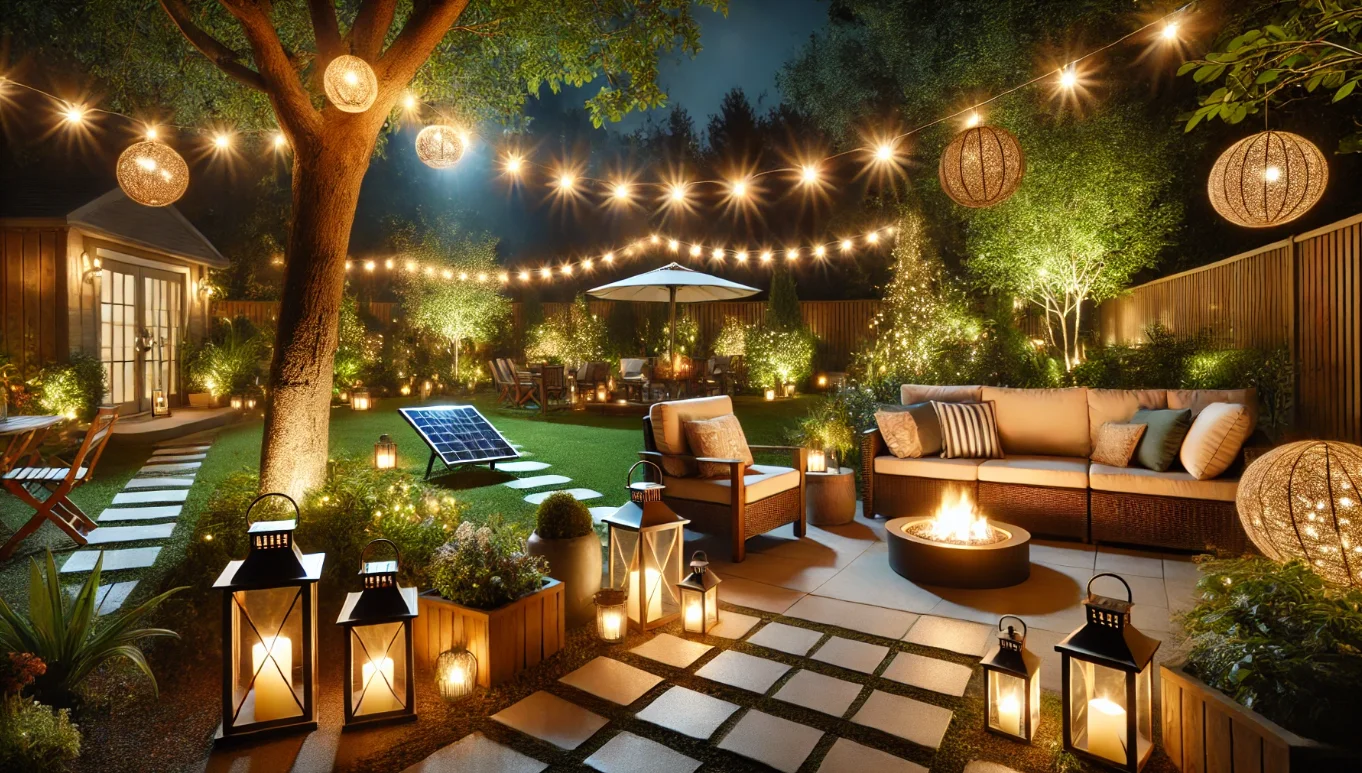 Layered lighting transforms a backyard into a cozy retreat
📅 Updated on 06/13/2026
The best backyard transformations often start after dark. Good lighting ideas do more than make a space prettier; they make it safer, more usable, and easier to shape into zones for dining, relaxing, walking, and entertaining.
The strongest outdoor lighting plans do not rely on one bright fixture. They layer ambient light, task light, and accent light so the yard feels intentional instead of overexposed. In practical terms, that means using path lights for movement, string lights or wall wash for atmosphere, and focused fixtures where people actually need to see.
Key Takeaways
- Layered lighting works better than a single overhead fixture because it controls glare, improves visibility, and makes the backyard feel deeper.
- Warm color temperatures usually feel more inviting outdoors than cool white light, especially around patios and seating areas.
- Task lighting belongs where people cook, read, or walk; accent lighting belongs where you want texture, depth, or focal points.
- Low-voltage LED systems are the most practical choice for most backyards because they are efficient, durable, and easy to scale.
- The best layout is planned around use zones first, then fixtures second.
Lighting Ideas for Backyards That Work After Sunset
Outdoor lighting design is the planned use of illumination to improve safety, function, and atmosphere in an exterior space. In plain English, it means placing the right light in the right place so your yard feels usable after dark instead of disappearing into shadow.
The mistake most people make is treating the backyard like a porch. A yard needs layers. It needs light for walking, light for eating, and light that adds shape without flattening everything into a bright, awkward wash. In practice, the most effective backyard lighting plans are built around how people move, sit, and gather—not around fixture style alone.
That approach is supported by basic outdoor lighting guidance from the U.S. Department of Energy, which emphasizes efficient fixtures and targeted placement rather than brute-force brightness.
Start with zones, not fixtures
Before buying anything, divide the yard into zones: entry, path, dining, lounge, garden, and any utility areas. Once those zones are clear, the fixture choices become much easier because each one has a job.
Use three layers of light
Ambient light creates the base level of visibility. Task light supports specific activities like cooking or walking. Accent light adds drama by highlighting trees, stone walls, water features, or planters.
What separates a polished backyard from a noisy one is not brightness — it is control over where the light lands.
Ambient Light That Sets the Mood Without Flooding the Yard
Ambient light is the general background illumination that makes the whole space feel settled and usable. For backyards, this usually comes from string lights, wall-mounted sconces, pergola fixtures, or indirect LED strips rather than a single harsh floodlight.
Warm light around 2700K to 3000K usually feels best outdoors because it softens skin tones and reduces the clinical look that cooler bulbs create. That matters more than people expect. A backyard can be well lit and still feel cold if the color temperature is wrong.
String lights still earn their place
String lights work because they create a low, continuous visual rhythm overhead. They are not the brightest option, but they are one of the easiest ways to make a patio feel finished.
Wall sconces add structure
Mounted on fences, exterior walls, or the side of a garage, sconces define the edges of the space and reduce the “floating in the dark” effect.
Pergola lighting feels built-in
Recessed fixtures, small downlights, or hidden LED strips inside a pergola or covered patio can make the area feel like an outdoor room instead of a temporary setup.
For placement and code-related basics, the Lighting Design Lab is a useful reference for understanding how controlled light, distribution, and efficiency affect real-world spaces.
Task Lighting for Dining, Cooking, and Safe Movement
Task lighting is focused illumination designed to help people do something specific. Outdoors, that usually means grilling, setting a table, checking steps, or moving along a path without squinting.
Where ambient light makes a backyard pleasant, task lighting makes it practical. The simplest rule is this: if a person needs to read, cut, cook, pour, or navigate, that area deserves direct light.
Grill areas need honest visibility
Grills and outdoor kitchens should have enough light to clearly show food, utensils, and controls. A shadowy cooking zone is not a style choice; it is a usability problem.
Paths and steps need consistency
Low path lights or recessed step lights reduce trip hazards and make transitions feel safer. The goal is not to spotlight the walkway like an airport runway. It is to define the edge clearly enough that the eye reads it instantly.
Dining tables need softer focus
A pendant over a patio table can work well if it is shielded and dimmable. Too much downward glare makes people look tired and flattens the mood of the space.
Task lighting succeeds when it helps the eye without becoming the thing everyone notices.
For outdoor safety and fixture standards, OSHA is a useful reminder that visibility matters in walking and work zones, even in residential settings where the same logic applies.
Accent Lighting That Adds Depth and Texture
Accent lighting is the technique of drawing attention to a specific object or surface so the yard has depth, contrast, and visual interest. Think uplighting on trees, grazing light on stone, or a narrow beam on a planter or sculpture.
This is where outdoor design starts to feel layered instead of flat. Without accent light, everything in the background disappears. With it, the eye has places to land.
Uplights make trees feel architectural
A few low uplights aimed into the canopy can turn a plain tree into the strongest feature in the yard. The effect works best when the beam is narrow enough to shape the branches rather than wash out the whole trunk.
Grazing light reveals texture
When a fixture sits close to a stone wall, wood fence, or textured planter, the light skims the surface and brings out detail. That kind of contrast adds sophistication without adding clutter.
Water and fire need restraint
Reflective surfaces already create motion, so they usually need less help than people think. Too much nearby light can kill the effect instead of enhancing it.
One evening, I saw a small patio with six bright fixtures pointed at the center table and none at the backyard edges. It felt smaller than it was. After two uplights on the olive tree and a pair of path lights near the steps, the same yard suddenly looked wider, calmer, and more expensive.
Choosing the Right Fixtures, Bulbs, and Controls
For most homes, the smartest setup combines LED fixtures, low-voltage wiring, and dimming or smart controls. LED matters because it uses less power, runs cooler, and lasts longer than older halogen-style options.
Fixture choice is less about trend and more about durability. Backyard lighting lives through moisture, heat, dust, insects, and seasonal changes. If a fixture is beautiful but not rated for outdoor use, it is a short-lived decision.
| Choice | Best Use | Why It Helps |
|---|---|---|
| LED path lights | Walkways and borders | Efficient, low heat, easy to place in series |
| Wall sconces | Patios, fences, garages | Define edges and add usable ambient light |
| Uplights | Trees, columns, walls | Create depth and visual focus |
| String lights | Dining and lounge areas | Provide atmosphere with minimal installation |
| Smart dimmers | Multi-use spaces | Let one setup work for dinner, parties, or quiet nights |
Color temperature changes everything
Most backyard lighting looks best in the warm range. Cooler bulbs can make plants look sterile and skin tones harsh, even if the yard is technically brighter.
Choose weather-rated fixtures
Look for outdoor ratings that fit the installation location. Wet-rated fixtures are for direct exposure to rain; damp-rated fixtures are for covered areas. That distinction matters more than the finish color or the marketing label.
For efficiency guidance and LED basics, the ENERGY STAR program remains one of the clearest public references for choosing efficient lighting products.
Layout Mistakes That Make Good Lighting Ideas Fail
Most bad outdoor lighting is not a product problem. It is a layout problem. The same fixtures that look polished in one yard can look harsh, uneven, or pointless in another because spacing, height, and direction were guessed instead of planned.
There is one limit worth admitting: no lighting plan works equally well in every yard. Dense landscaping, small patios, low fences, or nearby streetlights can change the result a lot. What works in a large open yard can feel overbuilt in a tight courtyard.
Too much symmetry can look fake
Perfectly mirrored lighting often creates a stiff, commercial feeling. Outdoor spaces usually look better when lighting follows real use patterns rather than a purely formal grid.
Overlighting kills atmosphere
If every surface is illuminated, the yard loses contrast and depth. People often think they need more light when they really need better placement.
Hidden glare is the real problem
A fixture can be physically small and still feel annoying if it shines directly into the eyes from a sitting position. The best layouts keep the source subtle and the effect visible.
How to Build a Backyard Lighting Plan Step by Step
The most reliable way to plan backyard lighting is to work from function outward. First decide how the space will be used at night, then identify the darkest and most important areas, and finally choose fixtures that solve those specific problems.
That sequence saves money because it prevents impulse buying. It also keeps the yard from turning into a random mix of decorative lights that do not work together.
- List the nighttime activities the yard needs to support.
- Mark paths, steps, entrances, and seating areas.
- Choose one ambient source for the main zone.
- Add task lighting where people cook, eat, or walk.
- Use accent lighting only after the functional layers are in place.
- Test the layout at night before finalizing the installation.
Test from the viewpoint people actually use
Stand where guests will sit, walk, and look around. A fixture that seems fine from the yard edge may be harsh from a chair or invisible from a staircase.
Leave room for adjustment
Smart outdoor systems, dimmers, and adjustable heads help a lot because yards change across seasons. Plants grow, furniture moves, and the best arrangement in June may not work in November.
The right backyard lighting plan is less about buying more fixtures and more about making each fixture do one clear job.
Practical Lighting Ideas for Small Yards and Larger Spaces
Small yards benefit from restraint. Large yards benefit from zoning. The same principles apply in both cases, but the scale changes how you use them.
In a compact yard, pick one focal area and keep the rest quiet. In a larger yard, repeat a few fixture types to create rhythm across the space. The goal is always the same: make the yard feel coherent without making it feel crowded.
For small yards
- Use wall sconces or string lights instead of multiple tall fixtures.
- Light the edges and one focal point, not every square foot.
- Choose dimmers so the yard can shift from functional to relaxed.
For larger yards
- Break the space into distinct lighting zones.
- Repeat path lighting to guide movement through the landscape.
- Use a few strong accent points rather than many weak ones.
What to Do Next
The strongest backyard lighting plans start with one question: what should this space do after dark? Once that is clear, the right fixtures become obvious. Focus on layers, warm color, and controlled placement, and the yard will feel more inviting without needing a dramatic overhaul.
If you are planning a refresh, test one zone first and judge it at night before expanding the system. That keeps the project practical and helps you see where the light actually improves the space. For most backyards, the best next step is to map the yard into zones and build from there.
FAQ
What are the most effective lighting ideas for a backyard?
The most effective backyard lighting ideas use layers: ambient light for overall visibility, task lighting for paths and activity zones, and accent lighting for trees, walls, or other focal points. That combination makes the space safer and more comfortable than relying on one bright fixture.
What color temperature is best for outdoor lighting?
Most backyards look best between 2700K and 3000K. That range creates a warm, relaxed look and avoids the harsh feel that cooler light can create at night.
Should backyard lighting be bright or subtle?
Subtle usually wins. Bright light can flatten the yard and create glare, while carefully placed light adds depth and keeps the space comfortable to use.
Are LED lights better for outdoor use?
Yes. LED fixtures are efficient, long-lasting, and easier to maintain than older lighting options. They also work well with dimmers and smart controls, which makes them easier to adapt to different uses.
How do you light a backyard without overdoing it?
Start with the paths and seating area, then add one or two accent points. If every area is lit equally, the yard can feel flat and overexposed.
What is the biggest mistake people make with backyard lighting?
The biggest mistake is installing fixtures without a plan for how the space is used at night. When the layout follows random decoration instead of real activity, the lighting looks busy but does not work well.