
How to Organize Your Closet Like a Pro: Expert Tips for a Tidy Wardrobe
How to create a closet organization system that keeps items visible, accessible, and sorted by use, maximizing space in any closet-like area.
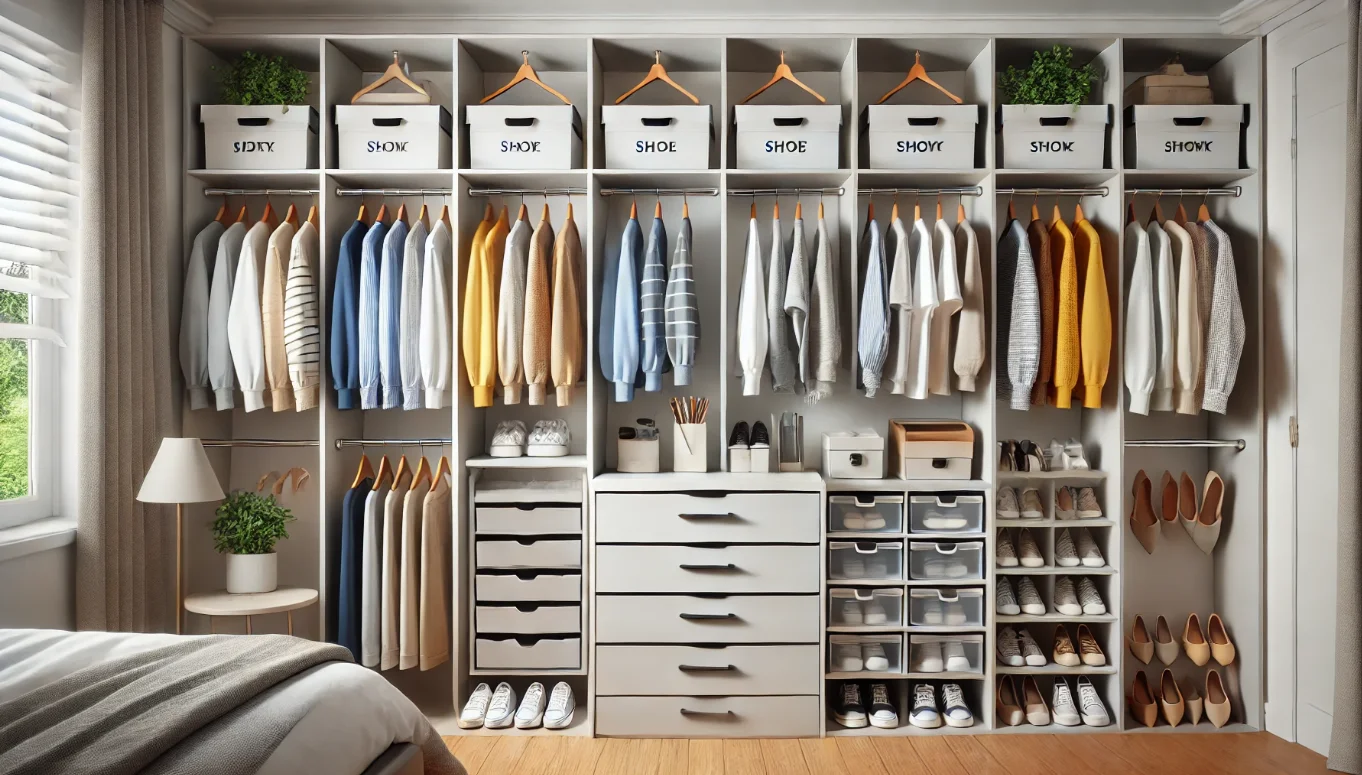 Woman organizes neatly arranged clothes in a bright walk-in closet
📅 Updated on 06/13/2026
A cluttered closet costs more than space. It slows down your morning, hides clothes you already own, and turns getting dressed into a small daily search problem. Good closet organization is not about making everything look perfect; it is about building a system that keeps items visible, accessible, and easy to put back where they belong.
This works in a walk-in closet, a reach-in closet, or a compact wardrobe with limited hanging room. The method is the same: sort with a clear standard, give every category a home, and use storage that matches how you actually live. Done well, a closet stops fighting you and starts saving time.
Quick Summary
- Effective closet organization is a system, not a styling project, and it works best when every item has one clear category and one fixed home.
- The fastest way to reduce clutter is to sort by use, not by sentiment: keep daily essentials easy to reach and move rarely used items to higher or deeper storage.
- Vertical space matters as much as hanging space; shelf dividers, bins, and double rods often solve more problems than buying a bigger closet.
- A closet stays tidy longer when the storage matches the category, such as drawers for knits, slim hangers for tailored items, and bins for accessories.
- The best closet setup is the one you can maintain in under two minutes after getting dressed.
How Closet Organization Turns a Closet-Like Space Into a Working System
Closet organization is the process of structuring storage so clothing, shoes, and accessories are easy to find, use, and return. In plain English: it means your closet should help you get dressed faster, not create another task for later. If a storage setup looks neat but slows you down, it is not a good system.
The most useful shift is to stop thinking in piles and start thinking in categories. Shirts belong together. Seasonal outerwear belongs together. Accessories need a different kind of storage than bulk knitwear. That sounds obvious, but in practice many closets fail because they mix categories based on available space instead of how the items are used.
What separates a tidy closet from a functional one is not how little you own, but how consistently each item returns to the same place.
For a practical standard, keep the items you wear most often at eye level and at arm’s reach, and move occasional-use pieces to higher shelves or less convenient zones. The New York Times Wirecutter has long emphasized choosing storage tools based on use patterns rather than looks alone, which is the right instinct here. The goal is friction reduction, not showroom perfection.
Sort by Category, Then Decide What Earns Space
The cleanest closet systems start with one hard rule: every item must either earn its place or leave. That sounds strict, but it is the fastest way to stop overcrowding. If you keep clothing because it might fit someday, because it was expensive, or because you feel guilty letting it go, you are storing emotions, not utility.
Use a simple sorting method
- Keep: items you wear regularly and can style without effort.
- Repair: pieces worth fixing within a set deadline.
- Store: seasonal or occasion-specific items you do not need daily.
- Donate or sell: pieces that no longer fit your life, size, or taste.
Whoever works with closets professionally knows this part is where most people stall. They do not need more bins first; they need fewer decisions later. A closet with 60 well-chosen items is easier to maintain than one with 140 mixed-use pieces, even if the larger closet has better shelving.
A useful benchmark is the one used in many minimalist wardrobe systems: if you cannot imagine wearing it in the next 30 days, it probably should not occupy prime space. That rule is not universal — formalwear, work uniforms, and seasonal gear are clear exceptions — but it keeps the main wardrobe honest.
Why overstuffing breaks the system
Overcrowding causes three predictable failures: hangers snag, folded stacks collapse, and hidden items get forgotten. Once that starts, the closet looks full even when half the contents are not being used. This is why organization improves most after removal, not after shopping for containers.
Map the Closet by Zones, Not by Random Open Space
A closet works better when you assign zones. Think of it as zoning a small room: daily wear goes where your hand naturally lands, special items go farther out of the way, and bulky storage belongs at the top or bottom. In a reach-in closet, this matters even more because every inch has to pull its weight.
Simple zone structure
| Zone | Best For | Why It Works |
|---|---|---|
| Eye level | Daily shirts, blouses, trousers, bags | Fast access with minimal visual clutter |
| Upper shelf | Seasonal items, keepsakes, spare bedding | Uses vertical space without crowding the main area |
| Lower section | Shoes, baskets, heavy folded items | Supports weight and keeps bulky items contained |
| Back or side wall | Hooks, accessories, belts, scarves | Turns dead space into functional storage |
Vertical zoning matters because most closets waste their best space. The National Association of Productivity and Organizing Professionals points out that storage works best when the system fits the user’s habits, not just the room’s shape. That is especially true in small closets, where a single extra shelf can change the entire workflow.
A closet becomes easier to maintain when access follows frequency: the things you use most often should require the fewest steps to reach.
One practical example: a client with a narrow apartment closet had three crowded hanging rods but no true landing zone for accessories. We removed one underused rod, added a shelf for folded denim, and mounted hooks on the inside wall for bags. The closet did not get bigger. It just started making sense.
Choose Storage Tools That Match the Item, Not the Trend
The best storage tools are the ones that solve a specific problem. Slim velvet hangers help when you need more hanging room. Drawer dividers help when small items keep mixing together. Clear bins help when you need to see what is inside without unpacking everything. None of these are magic on their own.
The mistake is buying containers before identifying the category they will hold. That usually leads to mismatched bins, wasted money, and a closet that looks coordinated but functions poorly. A sweater does not need the same storage as a necklace, and a shoe box is not an all-purpose solution just because it stacks neatly.
Best-fit tools by category
- Tailored clothing: slim non-slip hangers keep shoulders in shape and save space.
- Knitwear and denim: folded shelves or drawers prevent stretching.
- Accessories: trays, hooks, and small divided bins keep items visible.
- Shoes: tiered racks or low bins reduce floor clutter.
- Seasonal storage: lidded bins or breathable garment bags protect items not in rotation.
The Container Store and IKEA both build product lines around this logic, but the brand matters less than the fit. A cheap clear bin that matches your shelf depth beats an expensive organizer that leaves half the space unused. The real metric is whether the tool makes the item easier to return after use.
Keep Everyday Clothes in Rotation and Everything Else Under Control
A closet stays organized when it reflects your actual wardrobe cycle. That means daily wear should stay in the easiest-to-reach zone, while seasonal pieces move out of the way but remain accessible. If summer clothes compete with winter coats for the same prime hanging space, the system will feel crowded even when it is not.
A realistic rotation rule
Keep one active season visible and one secondary season stored nearby. For most households, that means the current season plus one transition category, like light jackets or layering pieces. Anything not needed for months can go into labeled bins, vacuum-sealed bags, or overhead storage, depending on the material.
The U.S. Environmental Protection Agency notes that extending the life of clothing through better care and reuse helps reduce waste, which is one more reason to store items cleanly instead of letting them disappear into chaos. See the EPA’s textiles and waste guidance at EPA.gov. Good organization is not only about convenience; it also makes reuse and donation far easier.
There is one caveat: vacuum bags are useful for bulky seasonal pieces, but they are not ideal for delicate fabrics that need airflow or items prone to creasing. Wool coats, structured blazers, and silk pieces deserve more careful treatment than compressed storage.
Prevent Clutter Before It Returns
Most closet systems fail during maintenance, not setup. The closet looks great on day one and drifts back within three weeks because the owner never gave the system a light upkeep rule. If putting things away takes more than a few seconds, people stop doing it consistently.
Rules that keep a closet stable
- Return items to the same category every time.
- Do one fast reset at the end of the week.
- Limit duplicate hangers, bins, and “temporary” piles.
- Reassess unused clothing at the start of each season.
- Keep one donation bag ready so removal is immediate.
Marie Kondo’s influence made decluttering popular, but the lasting lesson is not sentimental folding. It is decision speed. The less thinking a closet requires, the more likely it is to stay orderly. That is why labeled sections and predictable storage beat clever hacks almost every time.
A closet does not stay organized because it was cleaned once; it stays organized because the return path is obvious.
What Works in Small Closets and What Usually Fails
Small closets need discipline more than decoration. In tight spaces, the winning move is to create extra function from the surfaces you already have: doors, walls, and vertical gaps. The losing move is to add bulky organizers that steal the room you were trying to save.
What works well includes double hanging rods for shorter garments, slim hangers, over-the-door hooks, and shelf risers. What usually fails is deep stacking, oversized baskets, and trying to store too many categories in one bin. If you cannot see it, you will forget it. If you cannot reach it, you will not use it.
One more practical note: small closets do not need more stuff; they need tighter decisions. A compact wardrobe with clear rules often feels bigger than a larger closet with no structure. That is why some of the most effective closet organization projects happen in apartments, dorms, and older homes with awkward built-ins.
How to Keep the System Realistic Long Term
The best closet setup is the one you can live with on a rushed weekday morning. If it requires perfect folding, constant rearranging, or a lot of patience, it will fail. Long-term success depends on habits that are small enough to repeat without thinking.
Start with a 10-minute weekly reset, not a dramatic overhaul. Put hanging items back where they belong, fold what collapsed, remove dry-cleaning tags, and pull out one item that no longer earns space. That one habit keeps the closet from sliding backward.
For a durable routine, review the closet at the end of each season and ask three questions: What did I wear constantly? What did I ignore? What kept getting in the way? Those answers tell you more than any aesthetic trend. They show you how the system should change next.
Próximos passos
If you want a closet that stays useful, stop treating it like a storage problem and start treating it like a workflow problem. First remove the excess, then assign zones, then choose tools that fit the items you own. That order matters. When you reverse it, you end up organizing clutter instead of removing it.
Take one closet section this week and rebuild it around use, not appearance. Start with the category you touch every day, because that is where the time savings show up fastest. If a system makes getting dressed smoother by even five minutes, it is already doing real work.
FAQ
What is the fastest way to organize a closet?
The fastest method is to remove everything from one category, keep only what you use, and return it using a simple zone system. Start with the most visible section so the result is immediate. That creates momentum and makes the rest easier.
Should I fold or hang most clothes?
Hang items that wrinkle easily or need shape, such as shirts, blouses, blazers, and dresses. Fold knits, denim, and heavier casual items so they do not stretch on hangers. The right choice depends on fabric, not preference alone.
How do I make a small closet look less crowded?
Use slimmer hangers, remove unused items, and shift bulky storage to the top or bottom of the closet. Keeping colors grouped and surfaces visually clean also helps. The goal is to reduce visual noise, not just physical volume.
How often should I declutter a closet?
A seasonal review is enough for most people, with a lighter weekly reset in between. If your wardrobe changes a lot for work or climate, check it more often. The point is to catch drift before the closet becomes difficult to use.
Are clear bins better than opaque bins?
Clear bins work better for items you need to identify quickly, such as accessories or seasonal basics. Opaque bins are better when visual clutter is the main problem. Choose based on how often you need access, not just on appearance.