

📅 Updated on 06/13/2026
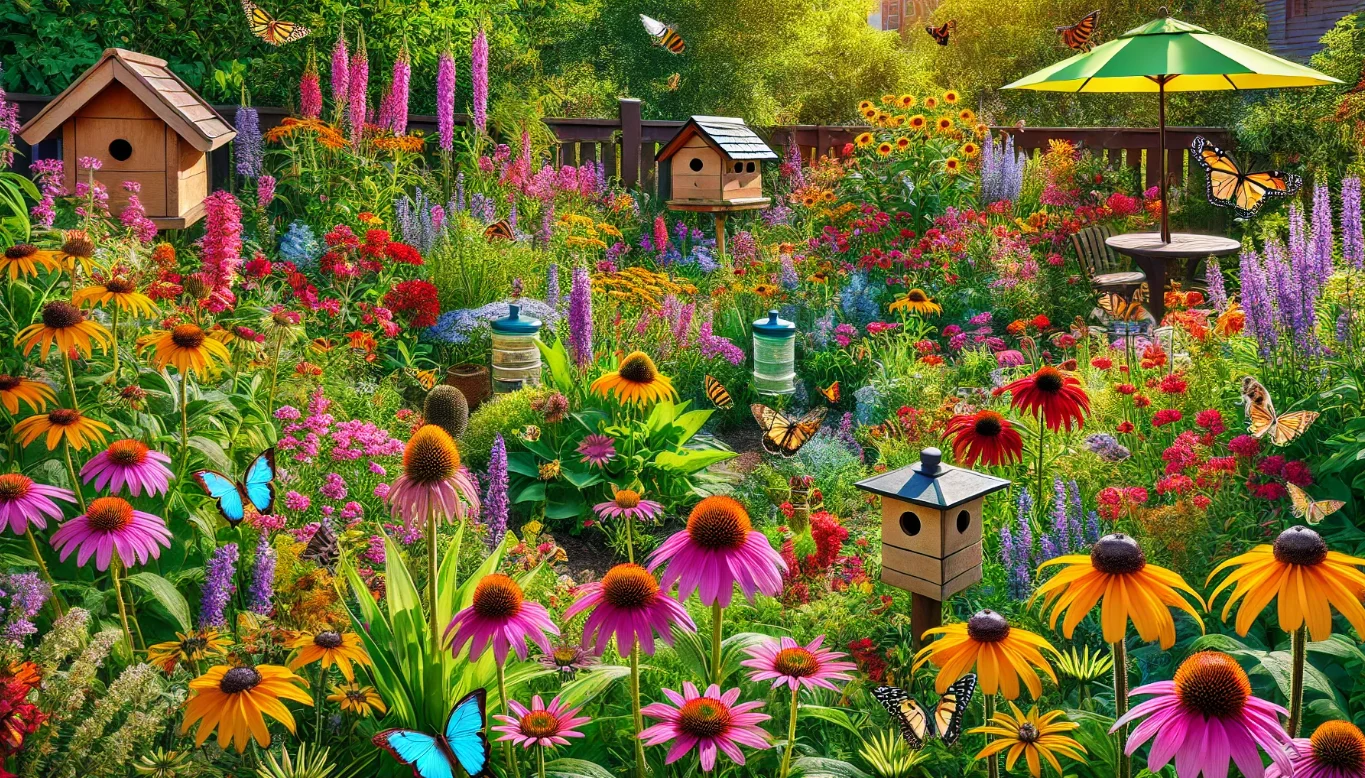
A garden can look polished and still be ecologically quiet. A pollinator-friendly garden changes that by giving bees, butterflies, moths, hummingbirds, and beneficial insects the food, shelter, and seasonal continuity they need to keep visiting.
Done well, it is not a random mix of flowers. It is a planned habitat built around bloom timing, native plants, nesting cover, and low-chemical care. The payoff is visible fast: more movement, more color, more fruit set, and a yard that works like a living system instead of a decorative bed.
Key Takeaways
- A pollinator garden works best when it provides nectar and pollen from early spring through late fall, not just during a single bloom flush.
- Native plants usually outperform ornamentals because local pollinators have evolved around them, but some well-chosen non-natives can fill important seasonal gaps.
- Short, repeated blooms are useful, but habitat features such as bare soil, leaf litter, and stems left standing matter just as much for nesting and overwintering.
- Broad-spectrum insecticides are one of the fastest ways to break a pollinator garden, even if the planting design is otherwise excellent.
- The strongest gardens combine flowers, structure, water, and restraint; the goal is not perfection, but dependable resources across the whole growing season.
How a Pollinator-Friendly Garden Works as a Living Habitat
A pollinator-friendly garden is a planted space designed to supply forage, nesting sites, and shelter for pollinating animals across the season. In plain language, it is a garden that keeps insects and birds coming back because it offers something useful in every part of the year that matters.
Why the design matters more than the flower count
Five hundred blossoms concentrated in two weeks are less valuable than a smaller number of blooms spread over months. Pollinators do not need a spectacle; they need reliability. That is why bloom sequence, not just bloom volume, is the central design rule.
In practice, the best results come from layering plant heights and bloom times. Spring ephemerals support early bees, summer perennials carry the middle season, and late asters or goldenrod help species build energy before cold weather sets in.
What makes a plant useful to pollinators
Not every pretty flower is a good food source. Double-petaled cultivars can hide nectar and pollen, and some highly bred ornamentals are nearly empty from a pollinator’s point of view. A useful plant offers accessible floral structure, consistent bloom, and in many cases, a relationship with local species that has existed for centuries.
What separates a decorative garden from a true pollinator habitat is not color — it is continuity, access, and ecological function.
The U.S. Fish & Wildlife Service has practical guidance on creating habitat that supports native pollinators and reduces avoidable harm: U.S. Fish & Wildlife Service pollinator resources.
Choose Plants That Feed the Right Visitors at the Right Time
The most effective plant palette includes native species first, then carefully chosen companions that extend bloom windows. If your region has a short spring and a hot, dry summer, your choices should reflect that reality instead of a generic “pollinator mix” from a catalog.
Start with native plants
Native milkweed, coneflower, bee balm, blazing star, aster, and goldenrod often do far more ecological work than showier imports. They fit local soil, weather, and insect behavior better than many commercial bedding plants. Monarch butterflies need milkweed for reproduction, while many native bees depend on the structure and timing of local wildflowers.
Use non-natives only when they solve a real gap
Lavender, catmint, and salvias can be excellent nectar sources, especially in suburban landscapes where native options are limited. The key is to use them as support, not as the whole design. A garden made only of popular ornamentals may look busy and still miss the insects that matter most in your area.
Build a bloom calendar, not a shopping list
- Early season: crocus, native willow, penstemon, phlox, and spring ephemerals where climate allows.
- Midseason: bee balm, coneflower, black-eyed Susan, salvia, and mountain mint.
- Late season: asters, goldenrod, sedum, and native sunflowers.
The Xerces Society is one of the most respected nonprofit sources on pollinator habitat, native plants, and pesticide risk: Xerces Society pollinator conservation resources.
Build Structure Into the Garden, Not Just Flowers
A real pollinator garden includes habitat, not only blooms. Many species need places to nest, rest, overwinter, or escape heat. If the site is too tidy, you can accidentally remove the very cover that makes the space usable.
Leave some stems, leaves, and bare soil
Ground-nesting bees, which include a large share of native bee species, often need exposed soil rather than mulch over every inch. Hollow stems can also serve as nesting cavities for certain bees. In the fall, leaving some plant stems standing until spring can help overwintering insects survive.
Add water and shelter in small, practical ways
A shallow dish with pebbles, a damp patch of soil, or a small birdbath with landing spots can make the garden more functional during hot weather. Shrubs, hedgerows, and even a loose brush pile create windbreaks and cover. Those details matter on windy sites where pollinators spend more energy just staying active.
A garden that removes every stem in autumn may look clean, but it often removes winter shelter for native bees and beneficial insects.
For a science-based overview of pollinators and habitat needs, Cornell University’s pollinator research and extension resources are worth reviewing.
Stop Using Practices That Quietly Break Pollinator Activity
The fastest way to undermine a pollinator-friendly garden is to treat it like a standard landscape bed. The plants may be right, but the maintenance habits can still wipe out the ecosystem you’re trying to build.
Rethink insecticides, even “safe” ones
Broad-spectrum insecticides kill more than the target pest, and systemic products can persist in plant tissue long after application. That does not mean every intervention is forbidden, but it does mean spraying should be the last move, not the default one. When pest pressure is real, integrated pest management usually gives a better long-term result.
Avoid over-fertilizing and over-mulching
Rich nitrogen feeding can push lush foliage at the expense of flowers. Thick mulch can also block ground-nesting sites and suppress the self-seeding behavior some native plants rely on. Clean lines are fine; sterile soil surfaces are not.
Accept a little damage
Ragged leaves, chewed edges, and uneven growth do not mean failure. They often mean the garden is participating in an actual food web. A perfectly pristine bed is usually less alive than it looks.
Extension programs from land-grant universities often provide region-specific guidance on pesticide use and pollinator protection; one good starting point is Penn State Extension.
Match the Garden to Your Climate, Soil, and Space
The same planting plan will not work equally well in every yard. A pollinator garden in clay soil, coastal sand, drought-prone heat, or partial shade should be designed around those conditions instead of fighting them.
Small spaces can still perform well
A balcony, townhouse strip, or front-yard border can support pollinators if it offers layered bloom and a few structural elements. Containers are useful, but they dry out faster and usually need more monitoring than in-ground beds. A small space works best when it focuses on a few high-value plants rather than trying to mimic a meadow.
Dry, wet, and shaded sites need different plant logic
On dry sites, prioritize drought-tolerant natives such as prairie species and Mediterranean herbs. In wetter ground, choose moisture-loving plants that won’t collapse in heavy rain. In shade, seek woodland species and early-season bloomers that can flower before trees fully leaf out.
Mini example: A homeowner in a hot suburban yard replaced a thirsty patch of lawn with coneflower, mountain mint, and switchgrass. The first season looked uneven. By late summer, bees arrived in waves, goldfinches fed on seed heads, and the bed needed less water than the lawn ever did. The change was not instant, but it was obvious.
Plan for Seasons, Not Just Spring Photo Ops
Many gardens peak in May and fade by midsummer, which is exactly when pollinators still need help. Seasonal planning is the difference between a nice display and an ecosystem that keeps functioning through weather stress.
Spring: support emergence
Early bloomers help newly active bees and butterflies replenish energy after winter. This is also the season when nesting sites and warm microclimates start to matter, because cold snaps can still interrupt activity.
Summer: sustain volume
Midseason is when diversity pays off. You want overlapping bloom, not one dramatic flush. If you live where summers are hot and dry, this is the point where irrigation, soil health, and mulch depth need careful balance.
Fall: prepare for overwintering
Late-season flowers such as asters and goldenrod are among the most valuable plants in the whole design. They help insects and birds store energy for migration or dormancy. Cutting everything back too early can erase that value.
Design for Beauty Without Losing the Ecology
The best pollinator gardens are attractive because they are alive, not because they are heavily styled. Repetition, massing, and a limited color palette usually look better than a crowded mix of unrelated plants. The trick is to make the planting feel intentional while still serving wildlife.
Use repetition and drifts
Planting groups of the same species in clusters helps pollinators find them faster and makes the garden look calmer. It also simplifies maintenance and creates a stronger visual rhythm than scattered singles.
Keep some edges crisp
A path, border stone, or mown edge can contain the wilder parts of the bed without reducing habitat value. That balance matters if you want the garden to fit into a front yard, community space, or neighborhood with design expectations.
Accept that beauty changes over time
Many pollinator plants look their best at different moments in the season. Spring may be airy, summer dense, and fall rougher but richer in seed and insect activity. That shift is not a flaw; it is the sign that the garden is doing real work.
The most successful pollinator garden is designed for function first, then edited for shape — not the other way around.
What to Do First If You’re Starting From Scratch
Start by observing your site for sun, wind, soil moisture, and bloom gaps in nearby yards. Then plant a small, coherent core rather than trying to fix the whole landscape at once. One well-built bed is more useful than five disconnected ideas.
Pick a mix of native perennials, one or two shrubs if space allows, and a clear maintenance plan that avoids routine spraying. If you want a practical benchmark, use this rule: every season should have multiple open flowers, and every bed should offer at least one place where the garden is intentionally a little untidy.
Frequently Asked Questions
What plants are best for a pollinator-friendly garden?
The best plants are usually native species that bloom at different times of the year, such as milkweed, coneflower, bee balm, asters, and goldenrod. In many regions, native plants support more insects than highly bred ornamentals. The right mix depends on your climate, soil, and sunlight.
Do I need a large yard to support pollinators?
No. Even a small bed, a few containers, or a narrow front-yard strip can provide nectar, pollen, and shelter. The key is to use the space consistently across the season rather than planting one short-lived display.
Should I remove all dead plants in fall?
No, not if you want to support overwintering insects. Leaving some stems, seed heads, and leaf litter through winter can help native bees and other beneficial insects survive. You can still keep part of the garden tidy while leaving habitat in the rest.
Are butterfly bushes good for pollinators?
They can attract adult butterflies, but they are not always the best ecological choice, especially when native alternatives are available. A garden that relies heavily on one non-native shrub usually gives less overall support than a mixed planting of native flowers and shrubs.
How do I keep pests under control without harming pollinators?
Use inspection, hand removal, pruning, and targeted treatments only when needed. Avoid routine broad-spectrum spraying because it harms beneficial insects along with pests. Integrated pest management is usually the safest and most effective approach.
When will I start seeing more pollinators?
Sometimes within days if nearby habitat exists and blooms are available. In other cases, it can take a season or more for the site to become a regular stop. Consistent bloom and low pesticide use matter more than quick fixes.
What to Do Next
Build the garden around a bloom calendar, not a shopping spree. Choose a few native anchors, keep something flowering from spring through fall, and leave a little structure in place for nesting and shelter. That is the point where a yard stops being ornamental and starts functioning as habitat.
Before planting, map your sunlight, note your soil moisture, and review at least one regional source such as your state extension service or the Xerces Society. Then install the first bed, observe what visits it, and adjust the plant mix during the next season based on what actually thrives.