

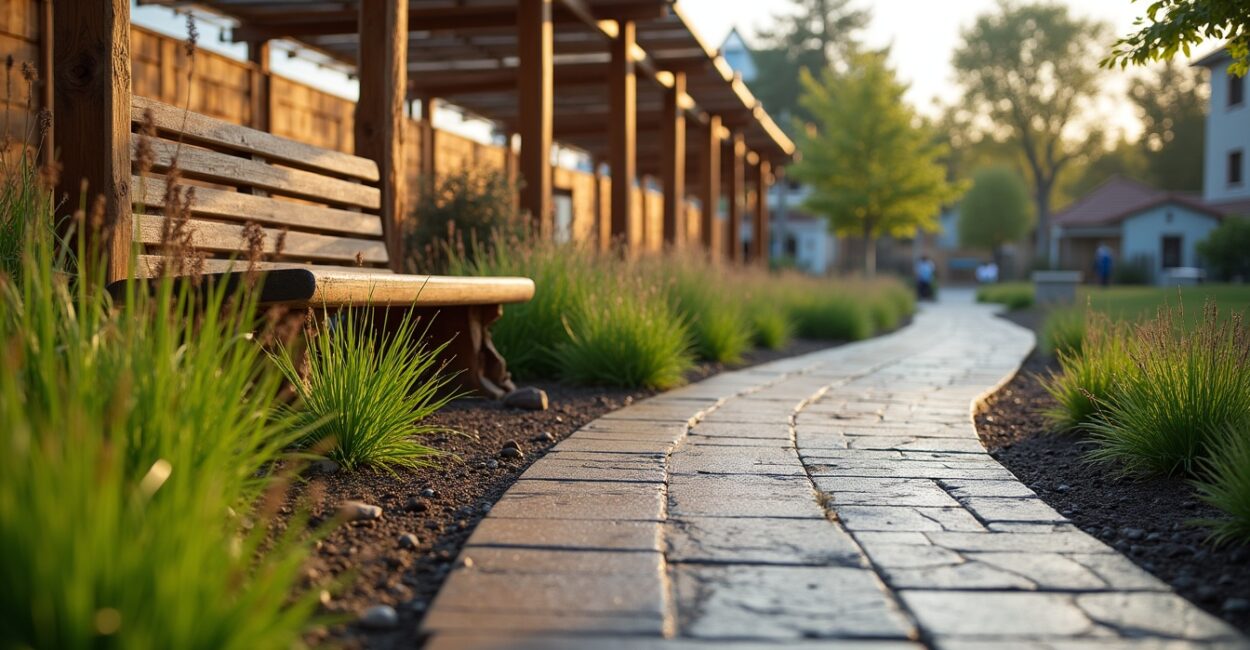
Outdoor sustainability is reshaping our streets and backyards: solar pergolas and rain gardens now cool neighborhoods and cut harmful runoff. This piece explains what that shift means for city life, local water systems, and everyday comfort. You’ll learn practical strategies, evidence, and steps for adoption.
The rise of solar pergolas and rain gardens answers climate stress—reducing heat islands, managing stormwater, and boosting urban biodiversity. We’ll explore technical approaches, policy levers, funding sources, and neighborhood-scale results to help you act and advocate.
Read on to discover clear, mobile-friendly guidance: what these green solutions are, why they work, how to install them, and how they change city living by 2025 and beyond.
Why the 2025 shift matters for outdoor sustainability
Urban heat and stormwater pressures
Cities face rising temperatures, frequent storms, and overwhelmed sewers. Outdoor sustainability addresses heat islands, stormwater management, and neighborhood resilience through design.
Solar pergolas and rain gardens reduce surface temperatures, capture runoff, and increase permeable surfaces, protecting streets and local waterways from pollution.
Human health and community resilience
Cooling public spaces reduces heat-related illness, supports social life, and improves mental well-being through shaded plazas and green corridors.
Integrating green infrastructure enhances air quality, urban biodiversity, and local microclimates while reducing energy demand for cooling buildings.
How solar pergolas deliver shade, power, and resilience
Design and energy benefits
Solar pergolas combine photovoltaic panels with elevated shade structures, capturing sunlight while creating cool, usable outdoor space.
They provide on-site renewable energy for lighting, EV chargers, and local microgrids, reducing grid strain and carbon emissions in neighborhoods.
Materials, siting, and maintenance
Durable frames, tempered panels, and proper drainage prolong lifespan. Positioning considers sun angle, wind, and pedestrian flow for maximum benefit.
Routine inspections, leaf clearing, and seasonal checks ensure long-term performance and safety while protecting underlying landscaping and rain gardens.
Rain gardens: low-tech water management with big impact
Function and ecological benefits
Rain gardens capture roof and pavement runoff, promote infiltration, and filter pollutants through soil, plants, and microbes.
They increase urban biodiversity, recharge groundwater, and reduce combined sewer overflows, supporting healthier streams and neighborhoods.
Plant selection and soil science
Native, deep-rooted plants and engineered soil mixes improve infiltration and pollutant breakdown while thriving in wet–dry cycles.
Designs scale from curb extensions to community parks, integrating with permeable paving, bioswales, and tree pits for broader stormwater control.
Measuring neighborhood cooling and runoff reduction
Evidence and performance metrics
Monitoring surface temperature, soil moisture, and runoff volume shows how solar pergolas and rain gardens lower heat and capture water.
Key indicators include peak temperature reduction, infiltration rates, cubic meters of runoff retained, and pollutant load decreases.
Typical outcomes and local examples
Recent pilots report five-to-ten-degree surface cooling, 30–60% runoff reduction, and increased pedestrian activity near shaded, greened corridors.
Heat-mapping and hydrologic monitoring confirm that coordinated installations multiply benefits across blocks and entire neighborhoods.
| Intervention | Cooling Effect | Runoff Reduction | Co-benefits |
|---|---|---|---|
| Solar pergolas with native understory | 4–8°C surface reduction | 10–20% via shading, paired infiltration | Renewable energy, seating, shade |
| Standard rain garden (residential) | 2–4°C microclimate cooling | 30–60% depending on design | Pollutant filtration, biodiversity |
| Corridor-scale green infrastructure | 5–10°C across streetscape | 40–70% cumulative | Reduced sewer overflow, public space |
How to implement outdoor sustainability at block scale
Community planning and stakeholder buy-in
Start with local needs: heat maps, flood-prone zones, and community priorities guide where to place pergolas and rain gardens.
Engage residents, businesses, and utilities early to align funding, maintenance responsibilities, and permitting requirements.
Step-by-step neighborhood rollout
- Survey sites and map heat and runoff hotspots.
- Design shared solar pergolas with integrated rain capture.
- Secure funding and permits from local authorities.
- Install structures, native plantings, and monitoring systems.
- Train local stewards and schedule maintenance plans.
Use incremental pilots to demonstrate benefits, then scale successful models across blocks with evidence and community champions.
Funding, policy, and incentives for scale
Funding streams and partnerships
Blend municipal grants, utility incentives, green bonds, and philanthropic funding to cover capital costs and initial maintenance.
Public–private partnerships can unlock rooftop rental income for solar arrays while delivering public shade and stormwater relief.
Policy levers and regulatory support
Incentivize permeable surfaces, stormwater credits, and on-site renewable energy through zoning flexibility, tax credits, and expedited permitting.
Set targets for urban cooling and runoff reduction in climate action plans to prioritize investments in outdoor sustainability across agencies.
Community stories and advocacy that change neighborhoods
Neighborhood narratives and visible wins
A single plaza redesigned with solar pergolas and rain gardens becomes a community hub, reducing heat stress and keeping streets dry after storms.
Stories of cooler summer evenings and fewer flooded basements galvanize neighbors and attract local media attention and additional funding.
How to mobilize local action
Host participatory design sessions, demonstration days, and maintenance workshops to build ownership and volunteer capacity.
Leverage data and visuals—before/after heat maps and runoff graphs—to show tangible gains and recruit champions for broader adoption.
Conclusion — The 2025 shift in outdoor sustainability is tangible and actionable: solar pergolas and rain gardens cool streets, capture runoff, and energize communities. From pilot projects to policy change, this strategy makes neighborhoods more livable, resilient, and beautiful. Return to shaded sidewalks and cleaner streams by starting small, measuring impact, and scaling what works.
Frequently Asked Questions
How much cooling can solar pergolas and rain gardens realistically provide in a neighborhood?
Solar pergolas and rain gardens combine shading and evapotranspiration to lower local surface temperatures by several degrees. Pilot studies show 4–10°C surface reductions near shaded structures and green corridors, improving outdoor comfort and reducing building cooling demand across neighborhoods.
Do rain gardens actually reduce sewer overflows and water pollution?
Yes. Properly designed rain gardens retain and infiltrate stormwater, reducing peak runoff volumes and filtering pollutants. They cut pollutant loads entering sewers and streams, easing combined sewer overflow events and improving water quality in urban catchments.
What are typical costs and funding sources for these projects?
Costs vary: small rain gardens are relatively low-cost, while solar pergolas require higher capital. Funding mixes include municipal grants, utility incentives, green bonds, and private partnerships. Demonstration projects attract philanthropic support and local match funding.
How do maintenance responsibilities get handled for shared neighborhood installations?
Maintenance can be shared among municipalities, business improvement districts, and community stewards. Contracts or volunteer programs schedule seasonal care, and maintenance funds are often built into initial budgets to ensure long-term performance and community ownership.
Can these interventions be scaled to dense urban areas with limited space?
Yes. Designers use rooftops, curb extensions, pocket parks, and modular pergolas to fit dense contexts. Combining permeable paving, tree pits, and compact rain gardens adds significant benefit even in constrained urban corridors and alleyways.
Authoritative sources: U.S. Environmental Protection Agency on green infrastructure (EPA: Green Infrastructure) and the International Renewable Energy Agency on distributed solar benefits (IRENA).