

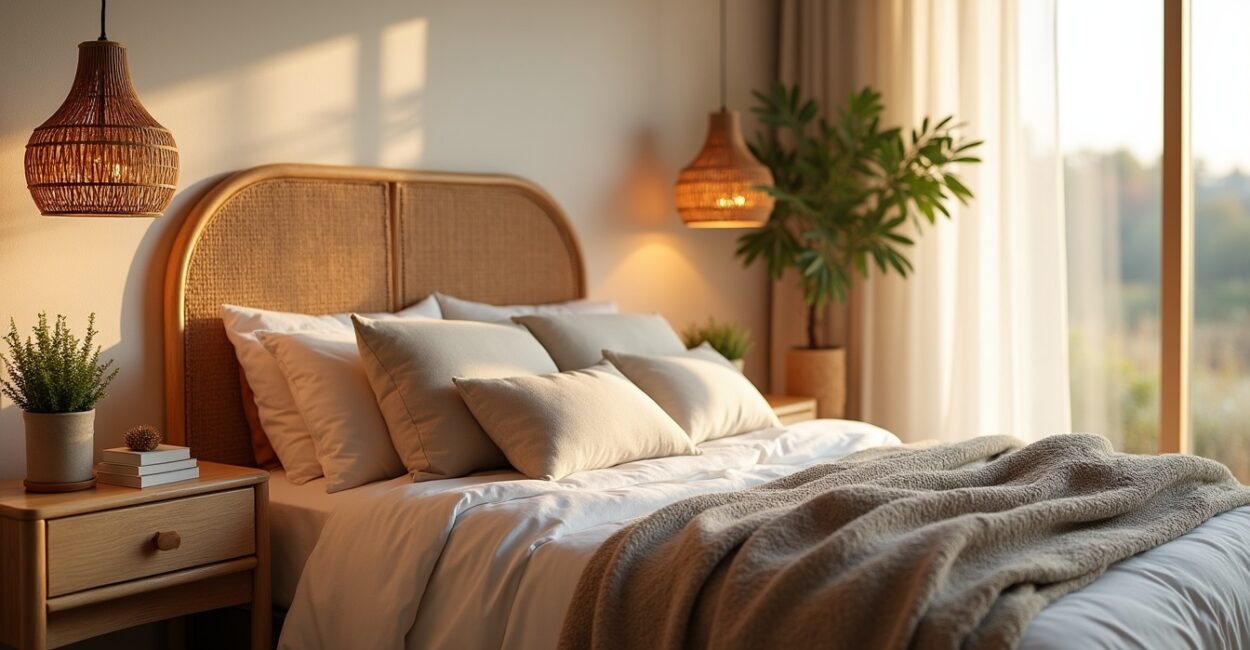
Imagine stepping into a bedroom that feels like a deep, restorative breath—soft textures, warm light, and bedroom decor that whispers calm. This article shows how to make that vision real with tactile materials, layered lighting, and eco-smart choices that elevate comfort and style.
Bedroom decor matters now more than ever: people crave sanctuary spaces where sustainable materials, rattan headboards, organic linens, and soothing palettes restore energy. Below you’ll find modern trends for 2025, practical examples, and mobile-friendly steps to transform any bedroom into a restorative retreat.
Read on to discover actionable ideas, shopping cues, and styling tips that balance comfort, eco-style, and lasting appeal—everything you need to refresh your bedroom decor with confidence.
1. Natural Materials and Textures
Natural fibers, woven headboards, and reclaimed wood create tactile bedroom decor that feels rooted and real. Rattan headboards and organic linens add warmth while supporting sustainable design choices.
Rattan and Woven Accents
Rattan headboards introduce texture and an artisanal touch. Pair with jute rugs and wicker baskets for layered, cozy surfaces that invite touch and calm energy.
These materials age beautifully and suit boho, coastal, and Scandinavian schemes, enhancing the bedroom decor with natural contrasts and subtle patterns.
Layering Fabrics for Comfort
Combine organic linens, cotton blankets, and soft wool throws to make the bed feel irresistibly inviting. Texture mixing boosts tactile comfort and visual depth.
Choose breathable sheets and woven cushions for a healthier sleep environment; these sustainable textiles support wellness-focused bedroom decor.
2. Color Palettes and Mood
Thoughtful colors shape atmosphere: muted greens, warm terracottas, and soft neutrals create calm in bedroom decor. Accent hues influence light and perceived space.
Calming Base Colors
Select earthy neutrals or pale greens as the backdrop to promote relaxation. These tones harmonize with natural materials and improve perceived serenity.
Use paint samples in different light to ensure the bedroom decor reads as warm and restful across day and night.
Accent and Contrast
Add deep navy or terracotta accents to introduce depth without overwhelming. Accent walls, throw pillows, and artwork provide focal points.
Balance contrast with soft lighting and natural textures to retain the restful intent of your bedroom decor and avoid visual clutter.
- Assess room light using samples at morning and evening.
- Pick a calming base shade for walls or bedding.
- Add one or two accent colors for depth and personality.
- Test textiles and accents together before finalizing purchases.
3. Furniture Choices and Layout
Smart layout and multifunctional furniture maximize calm and utility in bedroom decor. Prioritize scale, circulation, and pieces that complement a restful aesthetic.
Bed Placement and Flow
Place the bed to face the room entrance if possible; allow clear paths on both sides. This arrangement fosters balance and better sleep routines.
Think scale: choose nightstands and dressers proportionate to the bed to maintain airy circulation in bedroom decor.
Storage That Disappears
Opt for concealed storage, under-bed drawers, and streamlined wardrobes to reduce visual noise. Minimal clutter enhances the bedroom’s restorative quality.
Built-in or modular pieces help tailor storage to needs while preserving the calm, curated feel central to modern bedroom decor.
4. Sustainable Bedding, Linens, and Nighttime Comfort
Sustainable materials and organic linens are central to eco-style bedroom decor. Organic cotton sheets, linen duvet covers, and natural-fill pillows boost comfort while reducing environmental impact.
Choosing Organic Linens
Look for certified organic textiles with breathable weaves and low chemical use. They feel softer over time and support healthier sleep conditions.
Linen and organic cotton wick moisture and regulate temperature, aligning with comfort-minded bedroom decor focused on wellness.
Pillows, Duvets, and Sleep Quality
Select fills and firmness levels tailored to sleep position. Natural fills like wool or kapok offer temperature regulation and hypoallergenic benefits.
Proper pillow and duvet choices directly impact restfulness and the overall sensory experience of your bedroom decor.
- Choose GOTS or OEKO-TEX certified linens for verified sustainability.
- Wash new bedding in gentle detergent to soften fibers and remove residues.
- Rotate pillows and refresh duvets seasonally for longevity.
| Material | Benefits | Care Tips |
|---|---|---|
| Organic Cotton | Breathable, soft, low chemical use | Machine wash warm, tumble low |
| Linen | Highly breathable, durable, textured look | Wash cold, line dry for best texture |
| Wool Fill | Temperature regulation, natural resilience | Spot clean; professional cleaning recommended |
5. Lighting, Ambiance, and Scent
Layered lighting and subtle scent complete the sensory story of bedroom decor. Combine ambient, task, and accent lights for flexible mood control.
Layered Lighting Strategies
Use dimmable overheads, table lamps, and wall sconces to create zones. Warm bulbs (2700K–3000K) reinforce relaxation and visual comfort.
Position reading lamps and bedside lights for function; use accent uplighting to highlight textures and artwork in bedroom decor.
Scent and Soundscapes
Introduce natural scents—lavender, cedar, or eucalyptus—to cue relaxation. A small diffuser or linen spray subtly enhances the sleep environment.
Soft background sound or a white-noise device supports deep sleep and elevates the sensory comfort of your bedroom decor.
- Install dimmable switches for main lights.
- Place bedside lamps at arm’s reach for convenience.
- Use low-volt accent lights to show texture and depth.
- Choose natural, subtle scents for pre-sleep rituals.
6. Art, Accessories, and Personal Touches
Curated art, curated textiles, and heirloom pieces make bedroom decor personally meaningful. Mix one statement artwork with subtle accessories that tell a story.
Selecting Artwork
Choose pieces that match the room’s mood—abstract washes for calm or botanical prints for freshness. Scale art to wall size for balance.
Frame choices and matting influence formality; opt for softer frames and muted mats to support restful bedroom decor vibes.
Personalized Styling Tips
Limit small knickknacks to keep surfaces serene. Rotate accessories seasonally to refresh the room without major changes.
Incorporate textured cushions, a signature throw, and a plant or two to keep the bedroom decor alive and inviting.
7. Small Budget Upgrades for Big Impact
You don’t need a full remodel to refresh bedroom decor. Strategic swaps—new bedding, a rattan headboard, or better lighting—deliver a high-impact result on a small budget.
High-Impact, Low-Cost Swaps
Swap old pillows and covers for organic linen options to transform feel immediately. Add a woven headboard for texture without structural changes.
Repaint a single accent wall or replace light bulbs with warm, dimmable options to dramatically shift ambiance in bedroom decor.
DIY and Thrifted Finds
Repurpose thrifted frames, refinish a bedside table, or weave a macramé wall hanging. These projects add character and support sustainable bedroom decor choices.
Scout local markets and online vintage shops to find affordable statement pieces that anchor your room’s look and story.
Conclusion
Bedroom decor in 2025 centers on comfort, sustainability, and sensory calm—rattan headboards, organic linens, layered lighting, and thoughtful color choices. These elements create a sanctuary that supports sleep, wellbeing, and personal style.
Return to your initial vision: small, intentional choices can transform the mood and function of your space. Use the ideas above to craft a bedroom that feels like rest, every night.
FAQ
How do I choose the right rattan headboard for my bedroom?
Pick a rattan headboard that matches your bed scale and room size; opt for a lighter weave in small rooms and a bolder pattern in larger spaces. Consider finish and durability—sealed or lacquered rattan resists humidity. Match surrounding textiles like organic linens and throws to maintain cohesive bedroom decor while testing the headboard’s visual weight against your wall color and other furniture pieces.
Are organic linens worth the extra cost for bedroom decor?
Organic linens often cost more but deliver better breathability, fewer chemicals, and longer-term softness, improving sleep quality. Certifications like GOTS or OEKO-TEX verify production standards. Investing in organic linens supports sustainable bedroom decor, reduces irritation for sensitive skin, and typically increases durability, making them a smart choice for long-term comfort and environmental responsibility.
What are the best colors to promote restful sleep in a bedroom?
Soft neutrals, warm beiges, muted greens, and pale blues encourage relaxation and lower physiological arousal. These hues harmonize with natural materials such as linen, wool, and rattan, reinforcing calming bedroom decor. Use color samples in different light to verify tone and consider a single accent shade to add depth without disrupting the room’s overall serenity, ensuring a restful visual environment.
How can I make a small bedroom feel more spacious with decor?
Maximize perceived space with light, neutral palettes, low-profile furniture, and strategic mirrors that reflect light. Keep clutter minimal through hidden storage and vertical shelving. Use scale-appropriate textiles and a slim rattan headboard to add texture without overwhelming. Prioritize circulation and layered lighting to open the room and elevate compact bedroom decor into a breathable sanctuary.
Which certifications should I look for when buying sustainable bedding?
Seek GOTS, OEKO-TEX, and Fair Trade certifications to ensure organic practices, low chemical use, and ethical labor. These labels support reliable sustainable bedroom decor choices and help you avoid greenwashing. Review product details for fiber content and production methods, and choose retailers with transparent sourcing policies to align your bedroom decor with environmental and social values.
Further reading: Explore sourcing tips at Architectural Digest and sustainable textile guidance at GOTS.