

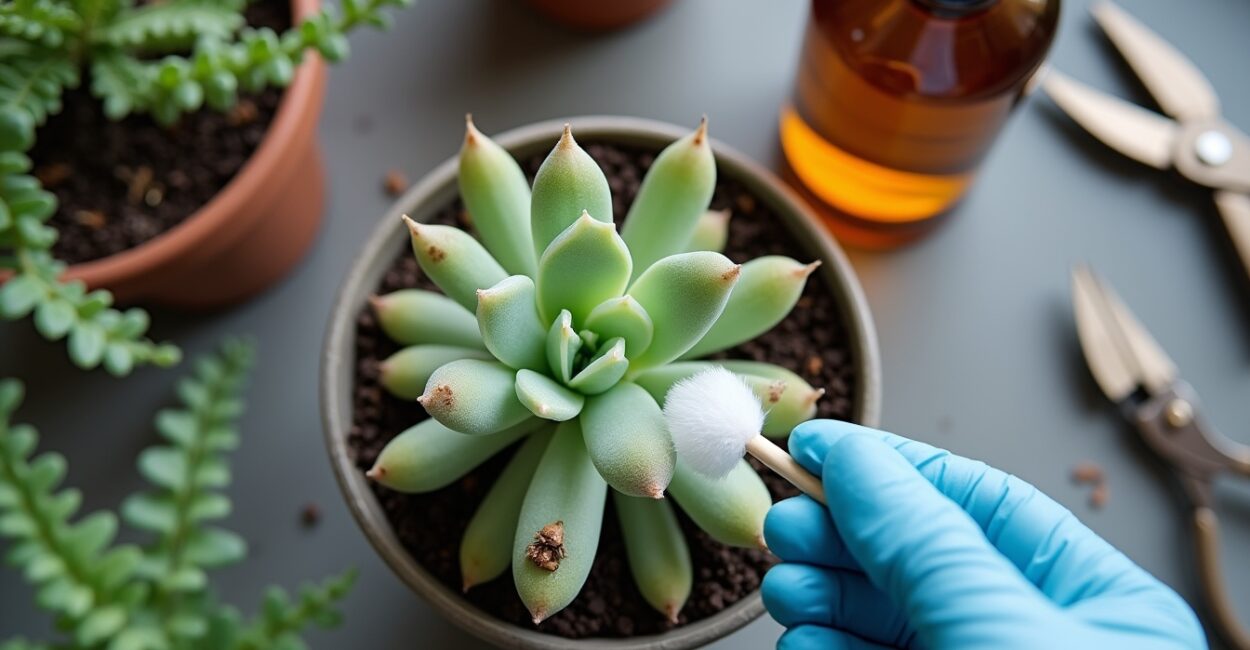
Succulent pests can wreck a collection overnight — and many growers don’t notice mealybugs or scale until their plants droop. This guide explains what succulent pests are, why they devastate succulents like Jade and Aeonium, and how to spot and treat them quickly.
Succulent pests are small insects or mites that feed on fleshy leaves and stems, spreading disease and weakening plants. You’ll learn identification tips, targeted remedies such as neem oil or rubbing alcohol, and prevention strategies to keep your succulents thriving.
Common culprits: mealybugs, scale, aphids and fungus gnats
How to recognize mealybugs
Mealybugs look like tiny cottony tufts on leaves and stem junctions, sucking plant sap and causing yellowing. Check roots and new growth carefully for sticky residue and white masses.
They multiply rapidly in warm, still air and hide in crevices. Early detection prevents severe infestations and protects your Jade and other succulents.
How to spot scale and soft scales
Scale insects appear as small, hard bumps on stems and leaves; they often resemble raised scabs. They cause stunted growth and honeydew that attracts ants.
Soft scale are flatter and ooze sticky honeydew; scale is stubborn and needs persistent removal combined with systemic or topical treatment.
Why succulents attract pests and risk factors
Environmental stress and pest pressure
Overwatering, poor airflow, and low light stress succulents, making them vulnerable to pest attacks. Stressed plants emit signals that attract sap-sucking insects.
Healthy cultural habits reduce pest pressure; improving drainage and light creates a hostile environment for mealybugs and scale.
Propagation and nursery-transferred pests
Newly purchased succulents or cuttings often carry eggs or juvenile pests. Quarantine new plants for several weeks to detect infestations early.
Tools, soil, and shared benches spread pests between plants; sanitize equipment and inspect potting mix to limit transfer.
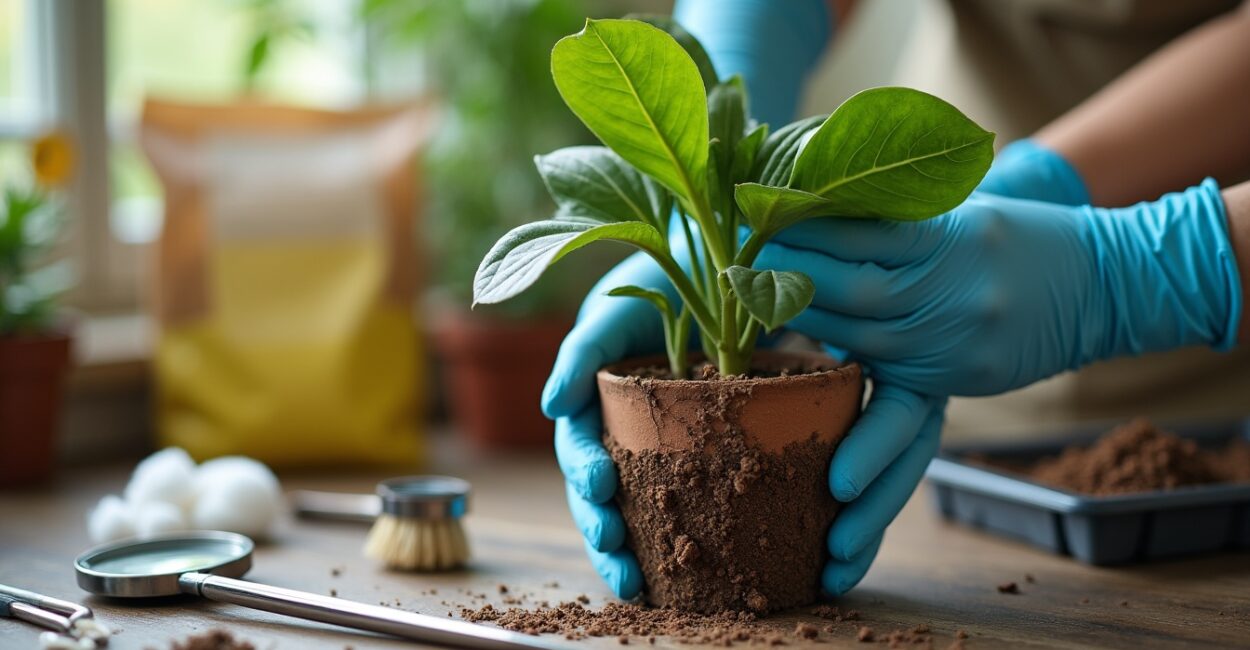
Identification: close-up checks and tools
Inspecting leaves, stems, and roots
Use a magnifier to examine leaf undersides, axils, and root crowns — common hiding spots for mealybugs and scale. Look for sticky honeydew and sooty mold.
Lift plants gently to inspect the root zone; root mealybugs can hide below soil surface and require repotting and treatment.
Tools that make detection easy
A jeweler’s loupe, cotton swabs, and a soft brush speed up inspections. Regularly check during watering and feeding for early warning signs.
Sticky traps help monitor flying pests like fungus gnats. Record infestations to identify patterns and recurrence.
Treatments that work: neem oil, alcohol, soap and systemic options
Topical remedies: isopropyl alcohol and insecticidal soap
For light infestations, dab 70% isopropyl alcohol on mealybugs and scale to dissolve their protective coating and kill them on contact. Repeat every few days.
Insecticidal soaps smother soft-bodied pests; spray thoroughly into crevices. Avoid application in direct midday sun to prevent leaf burn.
Organic sprays and systemic options
Neem oil disrupts insect feeding and reproduction; apply as a foliar spray every 7–14 days. It’s effective for mealybugs, aphids, and some scale stages.
For severe scale, consider a systemic insecticide labeled for ornamentals. Use sparingly and follow label instructions to protect beneficial insects.
Step-by-step eradication for mealybugs and scale
Quick isolation and removal
Immediately isolate infested plants to prevent spread. Remove heavily infested leaves and stem sections with clean tools, discarding them responsibly.
Brush off visible pests with a soft toothbrush, then apply a treatment to remaining insects and eggs to break the life cycle.
Stepwise treatment plan
Follow these steps precisely to remove succulent pests systematically and restore plant health.
- Isolate the plant away from others to stop spread.
- Physically remove pests with cotton swabs dipped in 70% isopropyl alcohol.
- Apply neem oil spray in early morning or evening, covering undersides and crevices.
- Repot if root mealybugs are present, replacing soil and cleaning roots gently.
- Repeat treatments every 7–10 days until no pests reappear.
Prevention and cultural care to keep pests away
Watering, light and airflow routines
Water sparingly and allow soil to dry between waterings; avoid damp conditions that attract fungus gnats. Bright light and good airflow discourage many pests.
Rotate plants and use well-draining mix to minimize stress. Healthy succulents recover faster from minor pest attacks.
Sanitation, quarantine and beneficial allies
Quarantine new plants for two weeks and sanitize pots and tools. Introduce natural enemies like ladybugs for aphids, where appropriate.
Use sterile potting mixes and avoid bringing outdoor soil indoors. Regular inspections and cleanliness cut infestation risk dramatically.
Troubleshooting and when to seek professional help
When DIY fails
If pests persist after repeated treatments, consider consulting a local extension service or nursery specialist. Severe infestations may need targeted systemic treatments.
Document symptoms and treatments tried; this information speeds diagnosis and helps specialists recommend effective options.
Protecting prized or rare succulents
For rare Jade varieties or valuable Aeonium specimens, invest in professional care or greenhouse isolation. Preventative measures avoid costly losses.
Insurance of sorts: maintain backups by propagating healthy cuttings to preserve cultivars in case of catastrophic infestation.
Conclusion
Succulent pests like mealybugs and scale are stressful but beatable with early detection, targeted treatments like neem oil or rubbing alcohol, and smart cultural care. You’ll feel relief and confidence watching your plants recover.
Return to the opening image of rescue: a careful inspect-and-treat routine turns panic into pride, preserving your collection and feeding your love of succulents.
FAQ
How can I tell if my Jade plant has mealybugs or a fungal issue?
Mealybugs appear as white cottony clusters on stems, leaf joints, and roots, often leaving sticky honeydew and sooty mold. Fungal issues usually show as discolored spots, rotting tissue, or powdery coatings. Check closely with a magnifier and probe crevices; mealybugs feel like tiny soft cotton masses while fungal rot is mushy and spreads internally through tissue.
Is neem oil safe for all succulents and how often should I apply it?
Neem oil is generally safe for most succulents when diluted per label and applied in low light. Apply every 7–14 days during active pest pressure, avoiding hot midday sun to prevent leaf burn. Test on one leaf first; if no damage appears after 48 hours, proceed to whole-plant applications and repeat until insects are gone.
Will rubbing alcohol harm my succulents when used to remove pests?
Spot-treating with 70% isopropyl alcohol on visible mealybugs and scale is effective and usually safe when used carefully. Avoid saturating entire leaves repeatedly; dab and remove pests, then rinse if needed. Test a small area first to ensure no sensitivity, especially on thin-leaved succulent species.
How do I handle root mealybugs and when should I repot?
Root mealybugs hide below soil and require repotting if infestation is confirmed. Gently remove soil, rinse roots, and manually remove pests. Repot into fresh sterile mix, treat with an appropriate systemic or soil drench if labeled for ornamentals, and quarantine the plant to prevent reinfestation.
What cultural practices best prevent succulent pests at home?
Preventative care includes using well-draining soil, providing ample light and airflow, and watering only when soil is dry. Quarantine new plants, clean tools, and regularly inspect for early signs. Beneficial insects and sticky traps help monitor flying pests. Consistent care reduces stress and makes succulents less attractive to sap-sucking pests.