Warning: Cannot modify header information - headers already sent in /home/u278635817/domains/myhousegarden.com/public_html/wp-content/plugins/artigosgpt/artigosgpt.php on line 28454
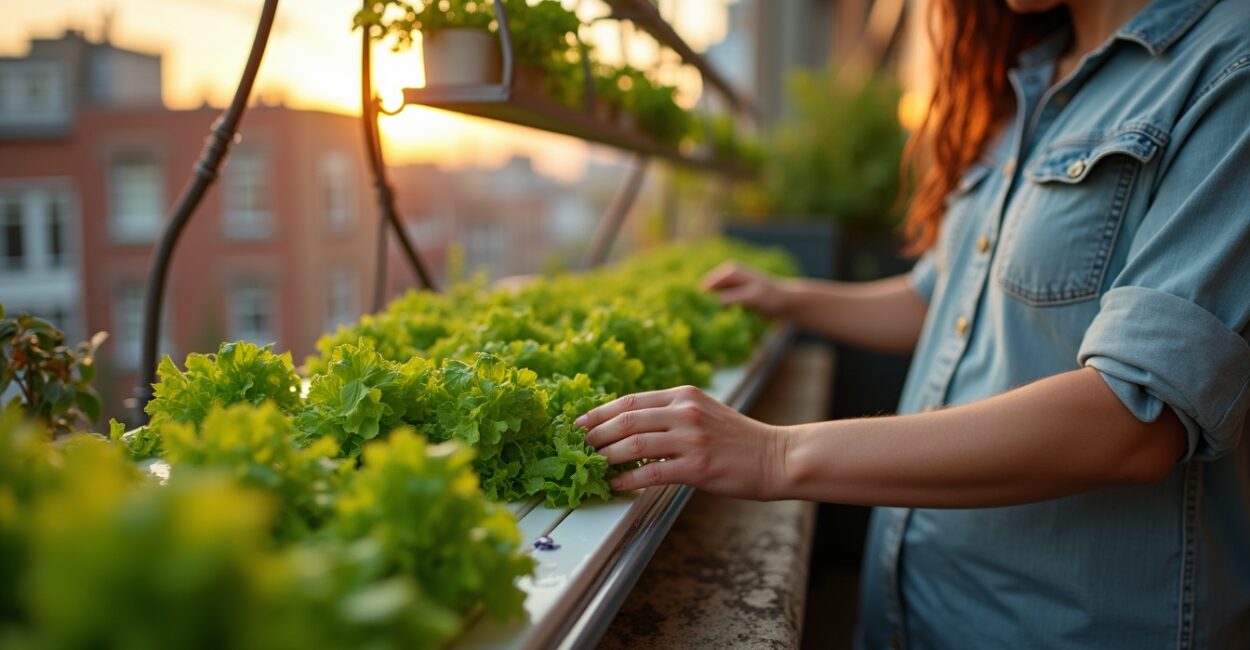
There’s a scene you already know: a narrow balcony, a coffee stain on the ledge and a wilting basil plant that gives up every summer. Now imagine that same balcony dressed in neat rows of lettuce and herbs, growing faster than soil ever could. That’s the appeal of Balcony hydroponics — compact systems that turn dead space into a year-round salad bar. Within days you’ll see growth; within weeks you’ll start saving money and eating better.
Why Balcony Hydroponics is Suddenly Everywhere
Urban growers are flocking to hydroponics because it solves three stubborn problems at once: space, speed and predictability. Plants grown hydroponically can mature up to 50% faster than in soil because nutrients are delivered directly to the roots. For apartment dwellers, that speed translates to constant harvests instead of seasonal hits-and-misses.
- Smaller footprint: vertical racks and rail planters fit railings and walls.
- Lower water use: closed systems often recycle 70–90% of water.
- Cleaner operation: no messy potting soil on the floor or trays.
The Mechanism Nobody Explains Right — How These Systems Actually Make Plants Grow Faster
It’s not magic; it’s control. Hydroponic setups regulate three variables that soil leaves to chance: nutrient concentration, oxygen at the roots, and moisture consistency. When you maintain the right nutrient solution and pH, plants put energy into leaves and fruit, not survival. Small pumps and air stones keep oxygen levels up; timers ensure lights and circulation follow a rhythm plants recognize.
What a Realistic Balcony Setup Costs — And Where You Can Cut Corners
Expectation: thousands for a slick rack with LED lighting. Reality: you can start for under $100 or scale to $600–$1,200 for a near-commercial kit. The biggest costs are structure, lights, and a reliable pump. If you already have a sturdy railing and sunlight, a basic NFT (nutrient film technique) or deep-water culture tub and a small pump are all you need.
- Starter (DIY) — $75–$150: budget pump, PVC channels, basic nutrient solution.
- Mid-range — $300–$600: modular kits, better pumps, timer, basic LEDs.
- Premium — $800+: integrated rack systems, high-efficiency LEDs, reservoirs, smart controllers.
Can Renters Set This Up Without Building Work? Yes—here’s How to Avoid Trouble
Most balcony hydroponics setups don’t need drilling or structural changes. Think modular and reversible: clamp-on planters, railing hooks, freestanding towers. Landlords generally care about stains, leaks, and load-bearing limits, so use trays, secure electrical lines, and keep weight under control. Put a waterproof mat under reservoirs and route cords through a window rather than drilling through walls.
- Use adhesive or clamp hooks rather than screws.
- Keep reservoirs smaller and distribute weight across multiple points.
- Document your setup and offer to remove items and repair when you move out.
Expectation Vs. Reality: The Comparison That Surprises New Growers
Expectation: constant, perfect harvests. Reality: faster growth but new challenges — algae, pH swings, and heat on small balconies. The surprise is how maintenance shifts: you trade weeding for monitoring water chemistry. A quick side-by-side:
| Soil balcony | Hydroponic balcony |
|---|---|
| Irregular yields | Predictable cycles |
| Heavier and messy | Compact and cleaner |
| Less technical | Requires monitoring (pH, EC) |
Common Mistakes (what to Avoid If You Want This to Stick)
People sabotage otherwise good systems with predictable errors. Avoid these five pitfalls:
- Overcrowding seedlings — less light per plant means legginess and disease.
- Neglecting pH — nutrient lockout can happen in days if pH drifts.
- Using garden soil in hydroponic channels — it clogs and breeds pathogens.
- Ignoring local climate — balcony heat build-up can cook roots in summer.
- Skipping a backup pump — a short power outage can wipe a crop in hot weather.
A Quick Success Story and the Surprise Lesson
She moved into a third-floor flat with a tiny balcony and bought a cheap tower kit. Within three weeks her microgreens were thicker than a supermarket pack; within two months she replaced half her grocery herbs. The real lesson: you don’t need perfect gear to succeed—just consistency and curiosity. She learned to check pH every few days, rotate trays for light, and harvest often. That small habit change turned a one-time experiment into a weekly routine that neighbors started noticing.
For deeper technical guidance, check nutrient and safety basics from the United States Department of Agriculture and practical urban gardening research at universities like Penn State Extension. Those resources explain food-safety steps and crop choices for small spaces.
Balcony hydroponics isn’t a fad; it’s a reframing of what “garden” means in the city. If you want consistent greens, lower water use, and a way to reclaim your balcony, this is the moment to try. Just start small, test, and let your harvests do the convincing.
Can I Install a Hydroponic System on a Rented Balcony Without Permission?
Yes—usually you can install a non-permanent hydroponic system without landlord permission, provided you avoid drilling or permanent alterations, manage weight and moisture risks, and comply with safety rules. Use clamp-on supports or freestanding towers, place waterproof trays under reservoirs, and route electrical cords safely to avoid fire hazards. Always document the setup and offer to restore the balcony when you leave to reduce disputes; small, reversible installations are the best option for renters.
How Much Maintenance Does a Balcony Hydroponic System Need?
Maintenance is frequent but straightforward: expect 10–30 minutes every few days for pH and nutrient checks, topping off water, and inspecting pumps and air stones. Weekly tasks include cleaning any algae, checking for root issues, and adjusting nutrient concentration. Seasonal tasks—flushing the system, replacing solution, and inspecting lights—are necessary too. Once you get into a routine, monitoring becomes quick and the system rewards you with steady harvests, not endless chores.
Which Crops Do Best on a Balcony Hydroponics Setup?
Leafy greens and herbs are the easiest wins: lettuce, spinach, arugula, basil, and chard thrive in compact hydroponic systems because they have short cycles and low structural demands. Small fruiting plants like cherry tomatoes or peppers can work if you have strong light and space for trellising, but they need more nutrients and attention. For tight balconies, choose compact cultivars and stagger planting so you harvest one crop while the next matures.
What Are the Real Risks to Watch for with Balcony Hydroponics?
Major risks are manageable: leaks that damage the balcony or neighbors, electrical hazards from outdoor outlets, and crop failure from pH or nutrient errors. Prevent leaks with trays, secure electrical connections and use GFCI outlets, and monitor water chemistry regularly. Biological risks such as pathogens are low with clean systems—avoid garden soil and sanitize tools. Proper setup and simple safety checks largely eliminate the worst outcomes.
Will Balcony Hydroponics Actually Save Money on Groceries?
Short answer: yes, but with caveats. Initial setup costs can be recouped in months to a couple of years depending on how much fresh produce you consume and which crops you grow. Microgreens and herbs deliver quick returns because they mature fast and cost more per ounce in stores. Leafy greens save money over time, especially if you replace store-bought salad greens regularly. Factor in your time, utility costs for lights and pumps, and scale to what you’ll realistically harvest.