

📅 Updated on 06/14/2026
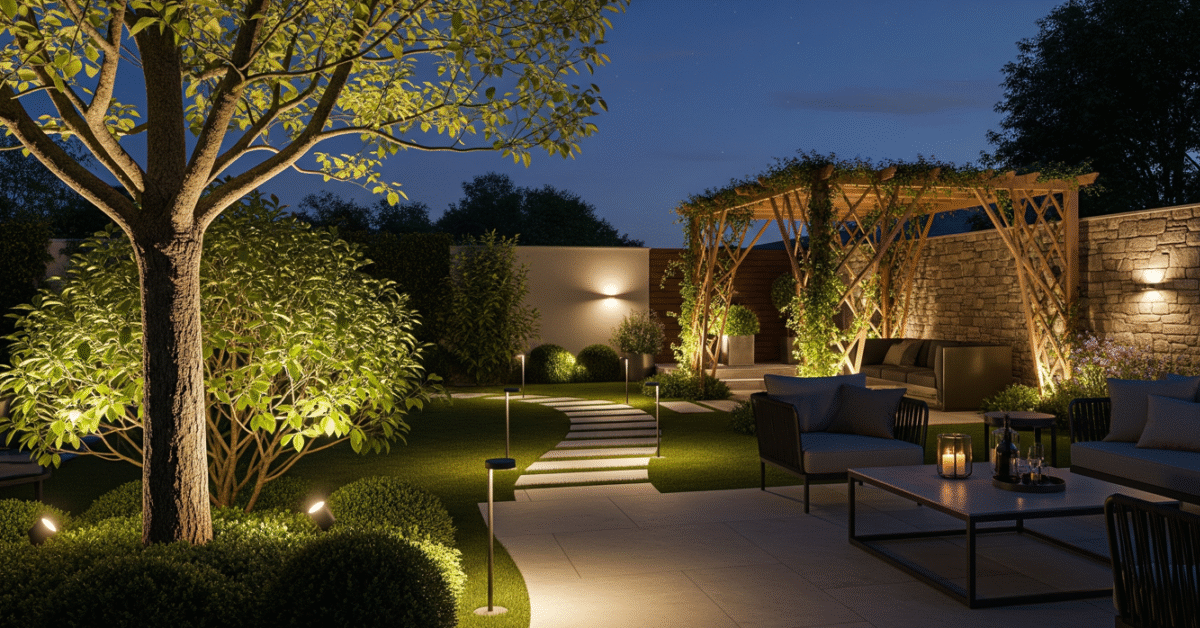
Garden lighting is one of the fastest ways to make an outdoor space feel finished at night, but the best results come from planning, not from buying the prettiest fixtures first. Good lighting makes paths safer, highlights trees and textures, and extends the time you can actually use the yard after sunset.
The trick is balance: enough light to see clearly, but not so much that the garden looks flat or harsh. In practical terms, garden lighting works best when it combines path lights, accent lighting, task lighting, and a little ambient glow in the right places. This guide breaks down how to choose, place, and power it so the result looks intentional.
Key Takeaways
- Effective garden lighting starts with function: safety on paths and steps, then layered light for atmosphere and focal points.
- The difference between a polished yard and a cluttered one is usually placement, beam control, and brightness, not the fixture price.
- LED garden lights and low voltage landscape lighting are the most practical choices for long-term use because they reduce energy use and maintenance.
- Solar garden lights are useful for accenting low-traffic areas, but they are usually not strong enough for dependable everyday path lighting.
- The best design uses fewer fixtures with clearer purpose instead of scattering outdoor garden lights everywhere.
What Garden Lighting Is and Why It Matters for Outdoor Garden Lights
Garden lighting is the planned use of outdoor lighting to improve visibility, safety, and visual appeal in a yard after dark. In practical terms, it means assigning each light a job: guiding movement, defining edges, highlighting plants or structures, or creating a soft background glow. Done well, it makes a garden feel usable rather than merely decorative.
The reason it matters is simple: unlit outdoor spaces get underused. A well-lit path reduces trips, a lit seating area feels inviting, and a subtle wash of light can make planting beds read as intentional design instead of darkness. In many projects, the most noticeable upgrade is not brightness; it is clarity. You can see where to walk, where to gather, and what the garden wants you to notice.
Great garden lighting does not flood the yard with brightness; it gives each area a clear visual purpose.
Landscape lighting also changes how materials look. Stone, wood, metal, water, and foliage respond differently to light, which is why one fixture type rarely solves everything. A narrow beam can catch a tree trunk or sculpture, while a wider spread works better for steps, seating, or a kitchen grill.
For general outdoor standards, the U.S. Department of Energy explains why LED technology is the current baseline for efficient lighting, and the National Park Service has clear guidance on how light affects visibility and night environments. Those principles translate well to residential yards: use the least light necessary, directed where it matters.
Main Types of Garden Lighting: Path, Accent, Task, and Ambient
Most strong garden lighting design comes from four categories. Each one solves a different problem, and mixing them is what makes a yard feel layered instead of flat. If you try to make one fixture type do everything, you usually get glare, dark spots, or a space that looks overworked.
Path Lighting
Path lights mark routes, edges, steps, and transitions. They are not meant to turn a walkway into a runway; they should create enough visibility to move comfortably without bright hotspots. For that reason, low-height fixtures with downward or shielded output usually work best.
Accent Lighting
Accent lighting draws the eye to a feature such as a tree, fountain, wall texture, pergola, or specimen plant. This is where beam angle matters. A narrow beam creates drama, while a wider beam softens the effect and is better for large shrubs or garden walls.
Task Lighting
Task lighting supports activities: grilling, potting, dining, reading, or finding a lock on a gate. It needs to be brighter and more direct than ambient light, but still controlled. Over a seating area, for example, a glare-free pendant or wall fixture is usually more comfortable than a bare bulb.
Ambient Lighting
Ambient light is the soft background layer that keeps the garden from feeling like a series of isolated bright spots. It often comes from wall washers, soft downlights, lantern-style fixtures, or even indirect light bounced off surfaces. This layer matters because it ties the whole design together.
Rule of thumb: path lighting guides movement, task lighting supports actions, accent lighting creates focus, and ambient lighting shapes the mood. If a fixture does not clearly belong to one of those jobs, it probably does not belong in the design.
How to Plan Garden Lighting for Beauty and Safety
The best way to plan garden lighting is to map how the yard is used after dark before choosing any fixtures. Start with the safest routes, then identify the places you want to see, and only after that decide where decorative effects make sense. That order prevents wasted light and keeps the layout coherent.
Start With Movement, Not Decoration
Walk the garden at night and note every spot where someone changes direction, steps up, steps down, or crosses uneven ground. Those are the first lighting priorities. Paths, stairs, edges of patios, and transitions between lawn and beds should be lit before any accent feature gets attention.
Then Add Visual Hierarchy
Once the practical areas are covered, choose one or two focal points. A mature tree, a textured wall, or a water feature can carry a lot of visual weight if lit correctly. Too many focal points create visual noise, so restraint matters here.
Balance Brightness and Contrast
Night design depends on contrast, not brute force. A slightly lit path beside a darker planting bed often looks better than an evenly bright yard. The eye reads shape and depth more easily when light is selective.
For wiring, weather protection, and safe installation around moisture, the U.S. Consumer Product Safety Commission is a useful reference point for outdoor electrical safety basics. That matters because a garden is not a dry indoor room; irrigation, rain, and soil movement all affect how fixtures and cables should be installed.
In outdoor lighting, the biggest planning mistake is lighting every surface equally; the best designs leave some areas darker so the lit zones feel clearer and safer.
Mini example: A small courtyard I worked on had six cheap stakes lining one side of the walkway and nothing near the steps. At night, it looked busy but felt unsafe. We removed four fixtures, moved two to the step landing, and added one soft wall wash on the opposite fence. The space looked calmer and was easier to use immediately.
Best Placement Ideas for Different Garden Zones
Good placement depends on the zone. A front path, a vegetable bed, and a patio all need different light behavior. The same fixture can work in all three, but only if it is aimed and spaced for the actual use of the area.
Paths and Walkways
Place path lights so they illuminate the walking surface and edges without creating glare into the eyes. Spacing depends on fixture output and path width, but many small gardens look best with wider spacing and lower output rather than a crowded line of lights. Curves usually need extra attention at bends.
Steps, Slopes, and Transitions
Steps should be lit at the face or side, not from above in a way that hides the edge. Slopes and level changes need clear definition because they are where people misstep. This is one of the few places where function should dominate style.
Patios, Decks, and Seating Areas
Task lighting works best here, supported by a gentle ambient layer. If you place light sources too high and too exposed, you create glare. If you place them too low, people can’t read faces, food, or surfaces comfortably.
Trees, Shrubs, and Walls
Accent lighting can turn a plain boundary into a feature. Uplighting a tree trunk or grazing a textured wall adds depth, especially in compact gardens where vertical surfaces matter. For dense shrubs, soften the beam; hard shadows can make the planting look messy instead of lush.
Water Features and Planters
Water and reflective surfaces need careful treatment. A small amount of light often goes a long way because reflections amplify the effect. For planters, low-angle light can highlight structure without overpowering the plants themselves.
Choosing the Right Fixtures, Bulbs, and Brightness
The best fixture is the one that matches the job, survives the weather, and is easy to maintain. For most homes, LED garden lights are the safest long-term choice because they use less electricity, run cooler, and last much longer than older lamp types. That combination matters more than brand styling.
| Light Type | Best Use | Strengths | Trade-Offs |
|---|---|---|---|
| LED garden lights | Paths, accents, task areas | Efficient, durable, low maintenance | Quality varies; glare control still matters |
| Solar garden lights | Decorative borders, low-demand accents | No wiring, easy install | Performance drops with shade and winter weather |
| Low voltage landscape lighting | Most residential garden layouts | Safer installation, flexible design | Needs a transformer and proper cable planning |
| Hardwired outdoor lighting | Permanent fixtures, patios, walls | Reliable output, strong control | More installation effort and code considerations |
What to look for in fixtures
- Weather resistance: Choose waterproof outdoor lights or fixtures rated for outdoor use in your climate.
- Beam control: Shrouds, shields, and lenses reduce glare and improve aiming.
- Material quality: Powder-coated aluminum, brass, and stainless components generally hold up better than thin plastics.
- Serviceability: Replaceable bulbs or modular LED components reduce long-term costs.
Brightness and color temperature
Brightness should match the task, not the fixture catalog. For gardens, warmer color temperatures often feel more natural than cool white light because they preserve the look of plants and stone. Very bright, blue-white lighting can flatten textures and make outdoor spaces feel colder.
One important nuance: solar garden lights are good enough for decorative edges and occasional use, but they are not the best answer for steps, security-minded paths, or areas that must stay consistently lit. Shade, short winter days, and dirty panels all reduce performance. For regular use, low voltage landscape lighting is usually the more dependable option.
For weatherproofing and outdoor electrical installation, local codes matter. In the United States, the National Electrical Code is the baseline standard referenced by inspectors and electricians; outdoor circuits and fixtures need to be chosen and installed accordingly. If a fixture or connector seems “close enough,” that is usually where maintenance problems begin.
Energy-Efficient and Low-Maintenance Lighting Options
If you want a system that stays attractive without constant attention, efficiency and maintenance should be part of the design from day one. The goal is not just lower bills; it is fewer burned-out lamps, less rewiring, and fewer fixtures you need to revisit after every season change.
Why LEDs dominate residential landscape lighting
LEDs last longer, consume far less power, and produce less heat than older incandescent or halogen options. That means fewer bulb changes and lower operating cost. For most homeowners, they are the default choice unless there is a very specific design reason to use something else.
When solar makes sense
Solar fixtures make sense where running cable is difficult, where the light need is light-duty, or where you want to test a layout before committing to wiring. They are also useful in remote corners of the yard. The limitation is consistency: they depend on sun exposure and battery health, so output varies.
Low-voltage systems for practical flexibility
Low voltage landscape lighting hits a useful middle ground. It is more flexible than hardwired line voltage setups and more reliable than most solar products. In many gardens, that balance is the sweet spot for both appearance and long-term upkeep.
The U.S. Department of Energy’s LED guidance is worth following when you compare lifespan and efficiency claims. The main lesson is straightforward: the cheapest fixture is not cheap if it fails quickly or consumes more power than necessary.
Common Garden Lighting Mistakes to Avoid
Most bad lighting problems are not caused by bad taste. They come from overlighting, poor aim, or ignoring how the garden is actually used. If you avoid the common errors below, even a modest setup can look polished.
Using too many fixtures
Too many lights create clutter and flatten the garden. A yard with fewer, better-placed fixtures usually feels more expensive than one packed with cheap stakes and spotlights.
Pointing lights directly at eyes
Glare is the fastest way to ruin a good design. Shielded fixtures and careful mounting height matter more than many people expect.
Ignoring maintenance access
If you cannot reach the transformer, clean the lens, or replace a component without digging through mulch, the system will age badly. Good design includes maintenance from the start.
Mixing color temperatures carelessly
Warm and cool light together can make a garden look inconsistent. A little variation is tolerable, but large differences in color temperature usually read as accidental.
Cheap garden lighting fails most often for one of three reasons: poor weather resistance, bad aiming, or too much trust in solar performance.
Simple Garden Light Ideas for Different Budgets
You do not need a large budget to improve a yard after dark. The best garden light ideas usually start with one clear priority: safer circulation, a stronger focal point, or a more usable sitting area. Once that goal is defined, the rest becomes much easier to budget.
Low budget
- Use a few solar garden lights on borders or low-traffic accent areas.
- Add one or two path lights near the most dangerous steps or turns.
- Choose a single focal light for a tree or wall instead of spreading the budget thin.
Mid-range budget
- Install low voltage landscape lighting for the main walkway and patio edge.
- Mix path lights with one or two accent fixtures and a small transformer.
- Use dimmable or shielded LED garden lights to control glare and brightness.
Higher budget
- Layer task, accent, and ambient light across several garden zones.
- Use coordinated outdoor garden lights with better materials and weather ratings.
- Consider hardwired elements for permanent features like retaining walls, pergolas, or outdoor kitchens.
The smartest budget move is usually not buying more fixtures; it is buying better ones in fewer places. That approach creates cleaner sightlines, lower maintenance, and a more professional look. For most homes, one strong path scheme plus one focal accent will outperform a dozen random lights.
Practical Next Steps for a Better Nighttime Garden
Start by walking your garden after dark and identifying the three places where light changes the experience most: movement, gathering, and one visual focal point. Then choose fixtures that match those jobs instead of trying to decorate every corner. That sequence gives you a garden that feels deliberate, safer to use, and easier to maintain.
If you are comparing options, build a simple plan before you buy: mark each zone, choose the light type for that zone, and decide whether solar, low voltage, or hardwired lighting is the right fit. Then verify weather ratings, beam control, and color temperature before installation. That is the difference between outdoor lighting that lasts and lighting that becomes clutter by next season.
FAQ
What is the best type of lighting for a garden?
For most gardens, the best setup combines LED garden lights with low voltage landscape lighting. That pairing gives you reliable path illumination, controlled accent lighting, and lower maintenance than older systems. Solar fixtures are useful, but usually as a supplement rather than the main solution.
How do you plan garden lighting for safety and style?
Plan safety first: paths, steps, gates, slopes, and seating edges. Then add style through accent lighting on trees, walls, or water features. The strongest designs use layered light so the yard feels clear without looking overlit.
Are solar garden lights good enough for regular use?
Usually not for primary lighting. They work well for decorative borders and low-demand areas, but shade, weather, and battery aging reduce consistency. For regular path use or anything safety-related, wired or low-voltage lighting is more dependable.
What is the difference between ambient, task, and accent lighting?
Ambient lighting creates the overall background glow, task lighting supports specific activities, and accent lighting highlights features. If you separate those roles, the garden feels more organized and easier to use. Most problems happen when one fixture is asked to do all three.
How many lights do you need for a small or medium garden?
There is no fixed number, but small gardens often work with 4 to 8 well-placed fixtures, while medium gardens may need 8 to 15 depending on paths, steps, and focal points. The right number depends on how many zones you need to light, not on square footage alone. Fewer lights with clearer purpose usually look better.
What should outdoor garden lights be rated for?
They should be suitable for outdoor use and able to handle rain, moisture, and temperature changes. Look for waterproof outdoor lights or fixtures with a strong weather rating, especially near irrigation or exposed areas. Maintenance and code compliance matter as much as brightness.