
Warning: Cannot modify header information - headers already sent in /home/u278635817/domains/myhousegarden.com/public_html/wp-content/plugins/artigosgpt/artigosgpt.php on line 28454
Imagine stepping into a bright, breezy space where your outdoor laundry feels less chore and more ritual — sunlight, airflow, and a hang of fresh linen. Outdoor laundry transforms mundane washing into a small daily joy.
Outdoor laundry matters now: many homes need space-saving, eco-friendly laundry solutions that resist weather, save energy, and protect appliances. This guide shows waterproofing, appliance choices, and creative semi-outdoor setups you can build.
Read on to discover practical layouts, durable materials, appliance picks, and step-by-step installation tips that make outdoor laundry reliable, attractive, and long-lasting.
Designing functional outdoor laundry spaces
Plan around workflow
Start by mapping wash-to-dry routes: washer, sink, drying area. Positioning reduces steps and speeds tasks while encouraging natural ventilation.
Think about access to water, drainage, and power. A compact layout with clear zones improves ergonomics and everyday usability for family life.
Integrate lighting and ventilation
Include task lighting and passive ventilation like louvres or clerestory windows. Good airflow prevents damp smells and speeds drying naturally.
Skylights or translucent roofing boost daylight, lowering energy use and helping you inspect stains while washing in an outdoor laundry area.
Style that withstands weather
Choose durable finishes—tile, sealed concrete, stainless steel. They resist mold, sun, and humidity, keeping your outdoor laundry looking fresh.
Add plants and weatherproof cabinetry to soften hard surfaces while protecting detergents and textiles from the elements and pests.
Waterproofing and moisture control essentials
Subfloor and wall protection
Apply a continuous waterproof membrane on floor and lower walls. Proper waterproofing prevents structural damage and mold in semi-outdoor laundry rooms.
Seal joints, thresholds, and pipe penetrations. A watertight base layer protects finishes and reduces long-term maintenance in outdoor laundry setups.
Drainage and slope design
Ensure floors slope toward a grated drain or linear channel. Quick, reliable drainage avoids pooling and protects appliances from standing water.
Include a trap with access for cleaning. Good drainage keeps insects and odors away and preserves the integrity of your outdoor laundry floor.
Ventilation and dehumidification
Install extraction fans or passive vents for humid days. Consider a small dehumidifier for enclosed semi-outdoor rooms to control condensation.
Vent a dryer outdoors where possible using insulated ducts. Proper airflow keeps laundry fresh and reduces moisture load on the surrounding structure.
Appliance choices for outdoor laundry
Front-load vs top-load machines
Front-load washers are efficient and compact, ideal for covered outdoor laundry niches. They use less water and spin faster, speeding drying.
Top-load machines can be easier to use but may need extra weather protection. Choose models rated for damp or covered locations and elevated from the floor.
Washer-dryer combos and standalone dryers
Washer-dryer combos save space and are useful in semi-outdoor laundry areas where venting a dryer is difficult. They trade speed for convenience.
Standalone vented or heat-pump dryers perform better for heavy families. If venting outdoors, use smooth rigid ducts and insulated runs to the exterior.
Durability and serviceability
Pick rust-resistant finishes and extended warranties for outdoor laundry appliances. Check service access — front panels and side clearance matter for repairs.
Locate electrical and plumbing shutoffs nearby. Easy service points reduce downtime and make maintaining an outdoor laundry far less stressful.
Materials and finishes that endure
Flooring solutions
Use non-slip porcelain tiles or sealed concrete for durability in outdoor laundry. They tolerate moisture and heavy foot traffic without warping.
Apply anti-slip coatings on steps and thresholds. These finishes keep family members safe and make cleaning quick after muddy chores.
Cabinetry and storage choices
Choose marine-grade plywood or powder-coated aluminum cabinets for longevity. They resist humidity and insect damage better than standard MDF.
Include ventilated shelves and baskets to prevent mildew. Smart storage in your outdoor laundry keeps detergents secure and clothes organized.
Protective roofing and screens
Polycarbonate roofing or metal awnings shield appliances from direct rain while letting in light. Use eaves to direct water away from the laundry footprint.
Screens and sliding panels protect against wind-driven rain and give privacy without blocking airflow — ideal for outdoor laundry ventilation.
Smart plumbing and electrical tips
Safe electrical planning
Install GFCI-protected outlets and weatherproof covers. Keep cords elevated and routed away from drains to reduce shock and water exposure risks.
Hire a licensed electrician for outdoor-rated circuits and switches. Proper wiring ensures appliances run safely in your outdoor laundry environment.
Plumbing durability
Use PEX or copper with insulation for supply lines to resist freezing in cooler climates. Fit easy-access isolation valves for maintenance and winterizing.
Ensure drain pipes slope correctly and include a rodding eye or cleanout. These fixtures reduce clogs and make maintaining an outdoor laundry straightforward.
Eco-friendly hookups
Consider a greywater loop or rainwater supply for pre-wash cycles to reduce freshwater use. Check local codes for greywater reuse in outdoor laundry systems.
Install a cold-water boost or eco-mode washing settings. These choices lower energy consumption and make outdoor laundry greener every month.
Organizing layout and workflow for efficiency
Zones for sorting, washing, and drying
Create dedicated zones: sorting station, sink/wash area, and drying rail. Clear separation speeds tasks and reduces clutter in outdoor laundry spaces.
Use fold-down benches and hanging rails for flexible space. These small touches make a semi-outdoor laundry as functional as an interior room.
Drying solutions
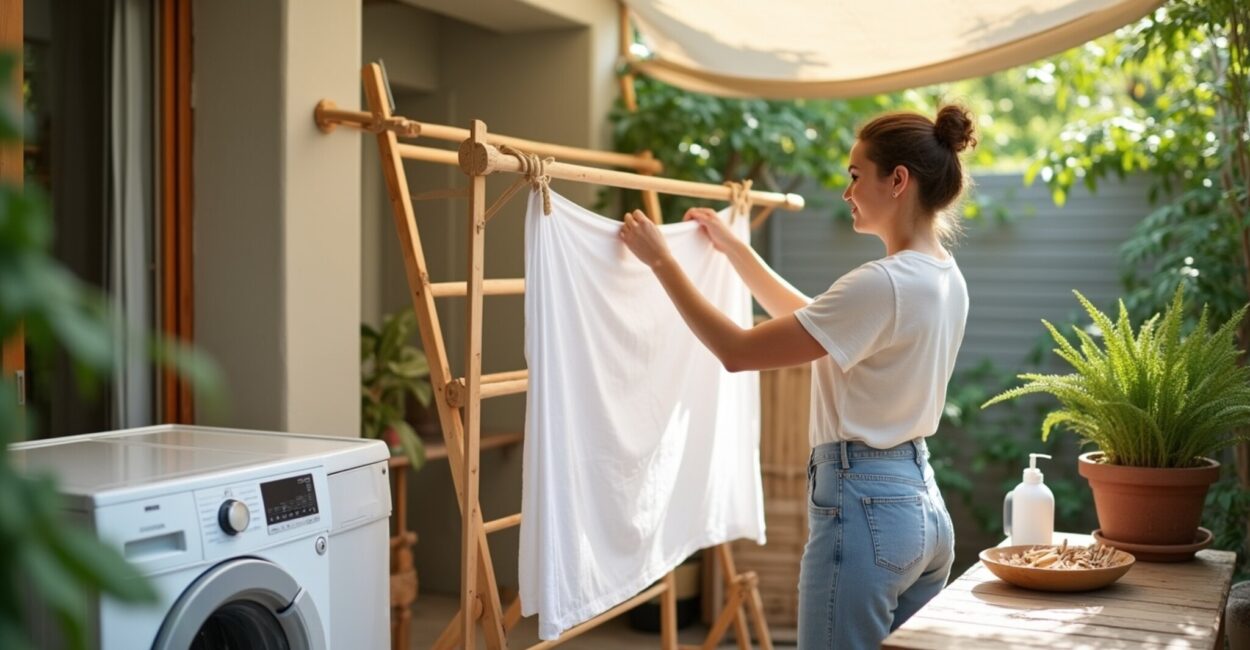
Mix overhead pulley systems, retractable lines, and foldable racks for versatility. Sun and breeze are the cheapest, gentlest driers for many fabrics.
Install a covered drying corridor for rainy seasons. Combining shaded areas and direct sun prevents fabric bleaching while ensuring efficient drying outdoors.
Maintenance routines
Set a monthly checklist: clean filters, inspect seals, check drains. Routine maintenance prolongs appliance life and keeps your outdoor laundry reliable.
Store cleaning agents in sealed bins and wipe surfaces after use. Small habits prevent mildew and keep the outdoor laundry welcoming every day.
Budgeting, permits, and sustainable choices
Cost breakdown and planning
Budget for waterproofing, appliances, installation, and ventilation. Allocate 10–20% contingency for unforeseen site work in outdoor laundry projects.
Compare long-term savings of energy-efficient appliances against upfront costs. Investing in durable materials saves money and headaches later.
Permits and regulations
Check local building codes for outdoor plumbing, greywater, and electrical work. Permits ensure safety and prevent costly retrofits down the line.
Consult a professional for structural changes and roofing attachments. Proper approvals protect your home and maintain resale value of your outdoor laundry area.
Sustainable upgrades
Choose energy-star appliances, water-saving washers, and rainwater capture. These reduce bills and make your outdoor laundry kinder to the planet.
Install solar-heated drying racks or a solar clothes dryer to harness sunlight. Small sustainable upgrades amplify the environmental benefits of outdoor laundry.
| Feature | Why it matters | Recommended |
|---|---|---|
| Waterproof flooring | Prevents damage and mold | Porcelain tile or sealed concrete |
| Appliance finish | Resists rust and corrosion | Stainless steel or powder-coated |
| Drainage | Avoids standing water | Grated linear drain with trap |
- Use weatherproof cabinets to protect supplies.
- Position machines on pedestals to avoid splash damage.
- Install angled eaves to keep rain off entryways.
- Measure and mark the laundry footprint precisely.
- Install waterproof membrane and slope flooring.
- Fit drains and test flow before finishing surfaces.
- Connect water and power with licensed tradespeople.
- Seal penetrations and test appliances under load.
- Choose energy-efficient machines for long-term savings.
- Prioritize ventilation to reduce moisture-related issues.
- Schedule seasonal maintenance to extend appliance life.
Conclusion
Outdoor laundry can be beautiful, efficient, and resilient when planned with waterproofing, smart appliance choices, and airflow in mind. You’ll reclaim space, save energy, and enjoy that simple pleasure of sun-warmed linens.
Begin small—improve drainage, pick the right washer, or add a covered line—and you’ll transform a chore into a calm morning ritual tied back to the opening vision of airy, functional outdoor laundry.
FAQ
Can I place a washing machine completely outdoors?
Placing a washing machine completely outdoors is possible only with full weatherproofing, raised mounting, and outdoor-rated electrical connections. Machines face rain, UV, and temperature swings, so protect controls and seals, use rust-resistant finishes, and provide a covered shelter. Regular maintenance and a licensed electrician for weatherproof circuits are essential. Consider semi-outdoor enclosures or under-eave locations to significantly reduce exposure and prolong appliance life.
What waterproofing steps are essential for an outdoor laundry floor?
Essential waterproofing includes a continuous membrane across the floor and up the lower wall, sealed joints, and correctly sloped drainage toward a protected grate or channel. Use tile adhesives and grout rated for wet areas, plus a protective topcoat if concrete is exposed. Ensure pipes and penetration points have flexible flashing and seals. Proper waterproofing prevents structural damage, mold growth, and costly repairs over time.
How do I vent a dryer in a semi-outdoor laundry area?
Vent a dryer outdoors using smooth, insulated rigid ducting with minimal bends to maintain airflow. Terminate the vent with a weatherproof hood and backdraft flap to keep pests out. If venting isn’t feasible, opt for a heat-pump dryer which recirculates air and needs only drain access. Regularly clean lint traps and ducts to maintain efficiency and reduce fire risk in any outdoor laundry setup.
Which appliances are best for small outdoor laundry spaces?
For compact outdoor laundry, consider a front-load washer and a heat-pump dryer or a washer-dryer combo if space is tight. Front-loaders spin faster, reducing drying time, while heat-pump dryers are energy-efficient and don’t require large external ducts. Choose models with rust-resistant exteriors and elevated pedestals. Ensure proper GFCI outlets and weatherproof covers for safe outdoor operation.
Are greywater systems a good option for outdoor laundry water reuse?
Greywater from outdoor laundry can be reused for irrigation and non-potable flushing when local regulations allow. Proper filtration, diversion, and safe detergents are necessary to prevent soil and plant damage. Installing a dedicated greywater system reduces freshwater consumption and lowers utility bills. Consult local codes and a professional to design compliant systems and avoid contamination risks.
Sources: EPA Green Infrastructure, U.S. Department of Energy, and vendor guidance for outdoor-rated appliances.