Warning: Cannot modify header information - headers already sent in /home/u278635817/domains/myhousegarden.com/public_html/wp-content/plugins/artigosgpt/artigosgpt.php on line 28454
Some apartments feel like caves. A windowsill faces north. The living room gets a pale afternoon glow. Yet you want fresh air, not another expensive purifier. That’s where low light houseplants shine: they quietly clean the air and survive where sun is scarce. Read this if you want compact, tough plants and exact placement tips that actually improve indoor air quality without bright windows.
Why These Tiny Plants Outperform Big, Needy Greens
Low light doesn’t mean low impact. In small rooms, a handful of resilient plants can reduce volatile organic compounds and lift the feel of the space more than one oversized fern that needs daily sun. These compact growers invest energy differently: they tolerate shade and keep stomata active at lower light levels. The result is consistent air exchange and steady respiration. Think of them as slow-acting filters—quiet, steady, and built for corner life where bright light is absent.
The Top 7 Low-light Air-purifying Plants for Apartments
This is the cheat sheet for tiny spaces. Each of these plants tolerates low light, stays compact, and is forgiving of irregular watering:
- Snake Plant (Sansevieria) — nearly indestructible, upright blades.
- ZZ Plant (Zamioculcas zamiifolia) — glossy, drought-tolerant stems.
- Pothos (Epipremnum aureum) — climber or hanging, great for shelves.
- Peace Lily (Spathiphyllum) — blooms in low light, great at VOC removal.
- Cast Iron Plant (Aspidistra elatior) — slow grower, loves shade.
- Philodendron (Heartleaf) — compact and forgiving.
- Spider Plant (Chlorophytum comosum) — small, fast at producing baby plants.
Place two to three small pots in a room under 300 sq ft for a noticeable effect. Rotate pots every few weeks so every side gets some light.

Exact Placement Hacks That Actually Work in Low Light
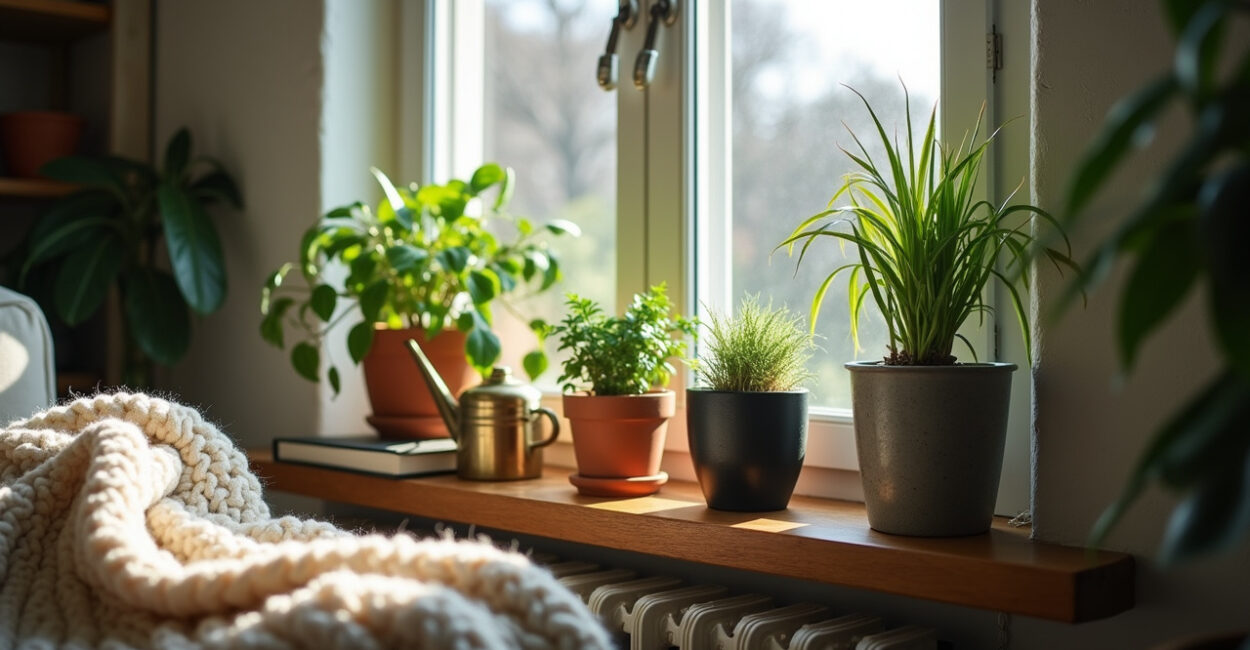
Placement beats pot size. In low light spaces, position matters more than having the trendiest planter. Put shade-tolerant plants near east or north-facing windows, within 3–6 feet of light sources such as a window or a bright doorway. Use shelves where ambient light reaches the second tier. Grouping plants raises humidity locally and improves their filter effect. Avoid stuffing them in a closet—low light isn’t no light. A bright lamp on a timer can mimic the missing sun for 4–6 hours.
Mistakes People Make with Low-light Plants (and How to Avoid Them)
Most failures come from too much love, not too little. Common errors:
- Overwatering because soil stays damp in shade—let top inch dry first.
- Using deep pots that hold water—choose shallow, well-draining pots.
- Putting plants in total darkness—low light ≠ no light.
- Ignoring rotation—plants lean and lose balance without turning.
A useful rule: if leaves yellow and soil is wet, stop watering and up-pot drainage. If leaves pale but soil is dry, try moving the plant closer to light or add a grow lamp for short bursts.

The Surprising Comparison: Low-light Plants Vs. Air Purifiers
Expectation: a plant replaces a purifier. Reality: they complement each other. A small plant won’t pull particulates like a HEPA filter, but it helps reduce VOCs, steady humidity, and improves perceived air quality. Think of plants as the chemical scrubbers and purifiers as the particle removers. In a typical apartment, a mix of both yields better results than either alone. Use plants to improve the living vibe and cut some chemicals; use a purifier for smoke, dust, and allergens.
Mini-story: How One Plant Saved a Studio from Stale Air
The tenant swapped a coffee table for two medium pothos and a snake plant. Within two weeks the room smelled fresher. Neighbors noticed the plant babies and asked for cuttings. The pothos climbed a shelf and the snake plant settled by the couch. Not a miracle, but the air felt lighter and the tenant slept better. That change came from small, steady effects—plant respiration, a touch more humidity, and fewer stale odors from cooking. Low light plants didn’t fix everything, but they changed how the apartment felt.
Where the Research Stands (and Two Trusted Sources)
There’s real science showing plants reduce some indoor pollutants, though results vary by species and room size. For authoritative guidance, check the EPA’s resources on indoor air quality and studies from university labs that examine plant VOC removal. EPA on indoor air and Harvard T.H. Chan School of Public Health offer practical tips and studies that support using plants as one of several smart strategies to improve apartment air.
Want a quick start? Pick two different species—one upright (snake plant) and one trailing (pothos)—place them where they get indirect light, and water sparingly. That small move often changes the whole room.
Can Low-light Plants Actually Improve Air Quality in a Tiny Apartment?
Yes, but with limits. Low-light plants help reduce certain volatile organic compounds (VOCs) and can stabilize humidity, which improves perceived air quality. In a tiny apartment, a handful of resilient plants placed strategically can lower odor and chemical levels over time. However, plants won’t remove fine particles like a HEPA purifier does. Use plants alongside ventilation and targeted filtration for the best results.
How Often Should I Water Low-light Plants to Avoid Root Rot?
Watering depends on pot size, soil and room humidity. In low light, plants use less water, so let the top inch of soil dry before watering again. For many low-light species, that means watering every 10–21 days. Check by sticking a finger into the soil; if it’s cool and damp, wait. Use pots with drainage and avoid saucers that sit in water. When in doubt, err on the side of too dry rather than too wet.
Do I Need a Grow Light If My Apartment is Low Light?
Not always. Many low-light plants tolerate indirect, filtered daylight from north-facing or shaded windows. But if a space receives virtually no natural light—inner rooms or apartments with tiny windows—a small LED grow light on a timer for 4–6 hours daily can keep plants healthy without wasting energy. Choose full-spectrum LEDs and position them 1–2 feet above the foliage for even coverage.
Which Plant is Best If I Travel Often and Forget Watering?
ZZ Plant and Snake Plant are top picks for forgetful owners. Both store water in thick stems or leaves and can survive long dry spells. Pothos is also forgiving but responds better to occasional watering. Use self-watering pots or a layer of perlite in the soil to reduce watering frequency. If you travel regularly, group plants so you can water once and let them share humidity while you’re away.
Can Pets Be Harmed by These Low-light Air-purifying Plants?
Some popular low-light plants, like pothos, philodendron and peace lily, are toxic to cats and dogs if ingested. If you have curious pets, choose pet-safe options such as spider plant or place toxic species out of reach—high shelves, hanging baskets, or behind barriers. Always check specific plant toxicity before bringing a new plant home and consult your vet if ingestion occurs.