Warning: Cannot modify header information - headers already sent in /home/u278635817/domains/myhousegarden.com/public_html/wp-content/plugins/artigosgpt/artigosgpt.php on line 28454
Bees and butterflies skimming a tired lawn is one of those small miracles that stubbornly refuses to cost a fortune. Planting a few smart native plants can flip your yard from a weekly chore into a seasonal stage for pollinators — and save you time and water. Below are seven low-maintenance ornamental natives that actually reward patience. Each profile tells you when they bloom, what soils they tolerate, and exactly where to plant them so your garden becomes tougher and more valuable to wildlife.
1. Purple Coneflower — Long Bloom, Zero Drama
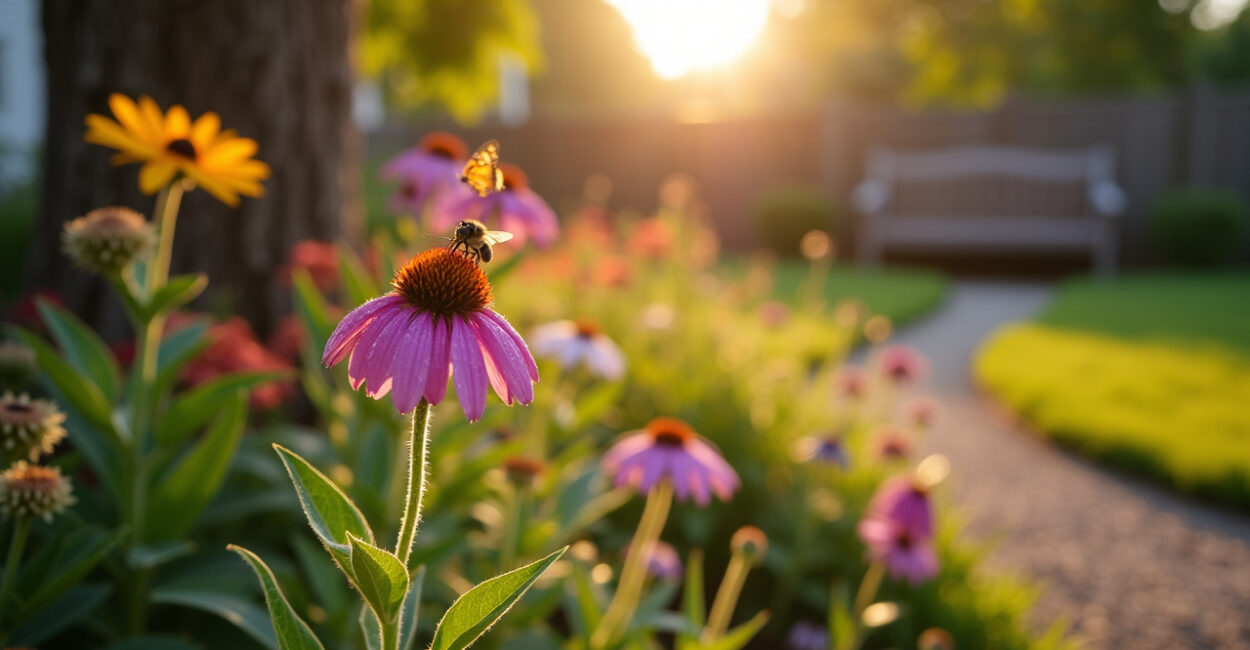
Purple Coneflower (Echinacea) blooms for months and keeps giving. Native Plants like this are reliable: they start in early summer and often push into fall. They tolerate dry soil once established and shrug off clay with a little compost. Plant them in sunny borders or a wildflower patch where bees can land easily. Expect 2–4 feet of architectural blooms that also feed seed-eating birds in winter.
- Bloom season: June–September (often later)
- Soil tolerance: dry to average, tolerates clay
- Placement idea: front-to-mid border; mixed with ornamental grasses
2. Black-eyed Susan — The Pollinator Workhorse
Black-eyed Susan is one of the simplest bets you’ll make with Native Plants. It flowers prolifically and reseeds where it likes the soil. The plant tolerates drought and poor soils, so it frees you from fussing. Put it along pathways or in sunny meadows; its flat flower heads are magnets for bees and small butterflies. If it spreads too much, pull a few seedlings — that’s the only maintenance you’ll need.
- Bloom season: July–October
- Soil tolerance: poor to average; drought tolerant
- Placement idea: mass plantings for color swaths or mixed meadow

3. Milkweed — The Monarch’s Non-negotiable
Milkweed is native, ornamental, and the centerpiece for monarchs. Native Plants like milkweed are soil-forgiving but shine in sunny spots with good drainage. Some species tolerate wetter patches, others want dry soils — pick the right one for your yard. Plant in clumps near nectar sources and you’ll see caterpillars first, then the adults. It’s not messy if you let seedheads wait until winter for maximum wildlife value.
- Bloom season: mid-summer
- Soil tolerance: varies by species; generally average to dry
- Placement idea: edge of vegetable garden, meadow pockets
4. New England Aster — Fall Color That Feeds Late Pollinators
New England Aster extends your garden’s life when other nectar is gone. Native Plants like asters are the last big buffet for migrating butterflies and late-season bees. They prefer sunny spots and tolerate average to moist soils. Plant them at the back of borders or in small groups; their tall, colorful plumes add structure and feed pollinators into October.
- Bloom season: September–October
- Soil tolerance: average to moist
- Placement idea: back-of-border clusters or wet meadow edges

5. Serviceberry — A Multi-season Native That Pays in Fruit and Flowers
Serviceberry is an ornamental shrub that gives flowers, berries, and fall color. As a Native Plants choice, it’s low fuss: tolerant of varied soils and helpful for birds. White spring blossoms draw early pollinators; summer berries feed thrushes and jays. Use it as a small specimen, hedge, or understory tree near patios to watch wildlife without leaving your chair.
- Bloom season: spring flowers; berries in summer
- Soil tolerance: clay to sandy; prefers well-drained spots
- Placement idea: native hedges, small yard focal point
6. Bee Balm — Fragrant, Messy, Wildly Effective
Bee balm is loud, aromatic, and a bee magnet — but it spreads. Many Native Plants are well-behaved; bee balm is not one of them. It tolerates average soils and likes sun to part shade. Plant it in containers or a dedicated patch to contain spread. The payoff: hummingbirds, bees, and butterflies will show up almost immediately. This is a good spot to practice controlled abundance.
- Bloom season: June–August
- Soil tolerance: average; prefers moist, well-drained soil
- Placement idea: containers, pollinator beds, or cut-flower plots
7. Little Bluestem — Grass That Builds Resilience
Little Bluestem is the low-talk, high-impact Native Plants choice for structure. This native grass tolerates drought and poor soils and gives winter seed for birds. It reduces erosion and pairs beautifully with wildflowers like coneflower and asters. Use it in prairie-style plantings, along slopes, or as a backdrop; it needs little care and looks better every year.
- Bloom season: summer flowers; showy fall color
- Soil tolerance: poor to average; drought resistant
- Placement idea: prairie mixes, slopes, or massed borders
Comparison that changes how you garden: A small native mix — coneflower, asters, little bluestem — will need a fraction of the water and half the pruning of a manicured lawn, yet it supports ten times the pollinators. Expect less green uniformity and more vibrant life. That trade-off is worth it.
- Common mistakes to avoid:
- Buying non-native “look-alikes” that offer no pollinator value.
- Over-mulching crowns and causing rot.
- Planting species without checking sun or soil needs.
- Removing all seedheads in fall — you’ll lose food for winter birds.
Mini-story: A neighbor planted three milkweed stems in a patch and expected a quiet season. By August, caterpillars chewed through the leaves and monarchs staged a comical tug-of-war on the blossoms. The yard required no extra water and suddenly hosted a migration stop. That small patch changed how the whole block garden looked at dusk.
Want to read more practical planting guides? The USDA native plant database and many university extension pages are excellent starting points. For regional planting lists, the Lady Bird Johnson Wildflower Center keeps detailed species info and planting tips — both are science-backed sources worth bookmarking.
According to USDA resources, native plants reduce maintenance and support local biodiversity. For local soil and planting calendars, check your state extension service; for example, the Extension Foundation has region-specific guidance.
Plant one or plant a border. Either way, choose better for the bees and your schedule. The smallest patch of well-chosen native plants can shift an entire neighborhood’s wildlife — and your weekends — for the better.
Closing Challenge
Pick one of the seven and plant it this weekend. Let it root. Watch one more species arrive. In five years, your yard will be doing work you didn’t have to do. That’s resilience.
How Soon Will I See Pollinators After Planting Native Species?
Pollinators often arrive within days if your plants bloom quickly, but full community buildup takes time. Expect nectar-seeking bees and butterflies to visit flowering natives the first season, especially summer bloomers like bee balm and coneflower. Specialist visitors and a steady population of pollinators usually appear in the second or third year as plants establish and local insects find the new resource. Regular bloom succession across seasons speeds this up.
Do Native Plants Need Special Soil Amendments?
Most native plants prefer minimal fuss and often do better without heavy amendments. A light layer of compost at planting helps initial establishment, but many natives thrive in poor soils and can be harmed by over-fertilizing. Amend only if drainage is poor or the soil is extremely depleted. Choose species suited to your soil type — for instance, little bluestem tolerates poor, dry soils while asters prefer a bit more moisture.
Can I Mix Natives with Non-native Ornamentals?
Yes — mixing can create continuous bloom and add visual diversity. However, prioritize natives for ecological benefits and avoid aggressive non-natives that outcompete them. Use non-invasive ornamentals to fill gaps or extend bloom times. Place natives in groupings so pollinators can find them easily. Over time, let natives increase their share if you want the highest ecological payoff and the lowest maintenance.
How Should I Manage Seedheads and Fall Cleanup?
Leave most seedheads through winter to feed birds and allow natural reseeding. Cut back only areas that look disorderly or where disease appears. In early spring, before new growth starts, cut dead stems to the ground or to a few inches depending on the plant. This preserves habitat for overwintering insects while keeping the garden tidy. Avoid raking everything away; that removes insects that sustain pollinator populations.
Where Can I Find Region-specific Native Plant Lists?
Use reputable regional resources for tailored lists. State extension services and university programs provide planting calendars and species suited to local soils and climates. The Lady Bird Johnson Wildflower Center and the USDA plant database offer filters by region and habitat. Local native plant societies are also great for sourcing plants and advice. Start with these sources to build a resilient, pollinator-friendly garden that truly fits your area.