

📅 Updated on 06/14/2026
A home can look beautiful and still be hard on a dog’s joints, a cat’s claws, or your daily cleaning routine. A truly pet-friendly space is not about adding a bowl by the door and calling it done; it is a house designed around safety, durability, comfort, and easy maintenance for both animals and people.
In practical terms, that means choosing materials that resist scratches and stains, arranging rooms so pets can move safely, and planning for hair, odors, and accidents before they happen. It also means protecting the design you care about. The best pet-friendly home does not look like a kennel—it looks intentional, calm, and lived in.
Quick Summary
- A pet-friendly home is one where layout, materials, and habits reduce risk for pets without making the space feel improvised.
- The best pet-friendly flooring is durable, low-porosity, and easy to clean; the best finishes are washable and low-VOC.
- Room-by-room planning matters more than one-off accessories, because pets use hallways, entryways, kitchens, and sleeping areas differently.
- Odor control starts with surfaces, ventilation, and cleaning routines, not with scented sprays that only mask the problem.
- The biggest mistakes are choosing delicate materials, ignoring storage for pet items, and failing to design for claw traffic, shedding, and spills.
What Pet-Friendly Home Design Really Means
Pet-friendly home design is the practice of shaping a living space so it stays safe, comfortable, and easy to maintain for pets while still serving human needs. That includes flooring, furniture, finishes, layout, storage, ventilation, and everyday routines. In plain English: the home should work with animal behavior, not against it.
The first thing to understand is that “pet-friendly” is not a style. It is a performance standard. A house can be minimalist, traditional, modern, or eclectic and still be pet-friendly if the surfaces are tough, the paths are clear, and the most common pet problems—scratches, fur, accidents, chewing, and slipping—have been addressed in the design.
That distinction matters because many people focus on accessories before structure. They buy a stylish bed or decorative leash hook, then discover the real issue is a slick floor, a toxic plant, or a sofa fabric that traps hair like Velcro. Good design starts with the parts your pet touches every day.
Pet-friendly design works when the home is built around how animals actually move, rest, shed, scratch, and explore—not when it relies on fragile finishes and hope.
The practical definition
A pet-friendly house is one that reduces preventable friction. The floor should not make a dog slip, the sofa should not punish a cat’s claws, and the entryway should catch dirt before it spreads. The goal is not perfection; it is a home that stays livable on a bad weather day, a muddy walk, or an anxious afternoon.
What it is not
It is not just “pet-themed decor,” and it is not a room full of obvious pet products. A stylish interior can still fail if it uses high-pile rugs in heavy traffic areas or porous stone near feeding stations. Function has to lead design decisions, or the house becomes harder to maintain every month.
Core Principles of a Pet-Friendly Space
The most reliable pet-friendly design follows four principles: safety, durability, cleanability, and comfort. If a choice improves one but destroys another, it is usually the wrong choice for everyday living.
1. Prioritize movement and safety
Pets need predictable paths. Hallways should be clear, staircases should have traction, and furniture should not create sharp blind corners at pet height. Large dogs, senior pets, and animals with limited mobility benefit from non-slip surfaces and low-step transitions between rooms.
2. Choose surfaces that forgive real life
Real life includes muddy paws, spilled water, shedding, and the occasional accident. Low-porosity surfaces, stain-resistant fabrics, and washable finishes make the difference between a five-minute cleanup and a weekend of damage control.
3. Design around behavior, not ideal behavior
Pets do not behave like showroom models. They nap in sunny corners, jump onto counters when they smell food, and claim the one chair you wanted to keep pristine. Good design anticipates those habits with barriers, storage, and layouts that redirect the behavior rather than constantly fighting it.
4. Keep the human side intact
A safe home for pets does not have to look utilitarian. Texture, color, and shape still matter. The trick is to use pet-safe materials and durable finishes in a way that feels cohesive, so the room reads as designed rather than adapted in a hurry.
For guidance on indoor air quality and cleaner material choices, the U.S. Environmental Protection Agency’s Indoor Air Quality resources are a solid starting point. They are especially useful if you are comparing low-VOC finishes, ventilation, and cleaning products.
Best Pet-Friendly Materials, Furniture, and Flooring
The best pet-friendly flooring is durable, water-resistant or water-tolerant, and easy to clean. In most homes, that means luxury vinyl plank, sealed hardwood with the right finish, porcelain tile, or some types of laminate made for heavy traffic. The wrong choice is usually anything that absorbs moisture quickly, stains easily, or becomes slippery when wet.
Flooring that usually performs well
- Luxury vinyl plank (LVP): Comfortable underfoot, water-resistant, and forgiving with claws.
- Porcelain tile: Excellent for spills and odor control, though it can be hard on joints if not softened with rugs or mats.
- Sealed hardwood: Beautiful and workable if the finish is durable and you accept some wear over time.
- Pet-rated laminate: A practical budget option when you want a wood look with easier maintenance than natural wood.
Carpet is not automatically a bad choice, but it is the most maintenance-intensive. Low-pile carpet performs far better than plush carpet, especially in bedrooms or secondary spaces. In high-traffic zones, hard flooring plus washable runners usually makes more sense than wall-to-wall carpet.
Furniture fabrics that earn their place
Pet-friendly furniture should be easy to wipe, less likely to snag, and less likely to hold odor. Leather can work well if you accept patina and occasional marks. Performance fabric, microfiber, and tightly woven textiles are usually safer bets than loose weave linen or delicate velvet in a home with active pets.
If you want to keep pet-friendly decor elegant, look for pieces with removable, washable covers and legs that allow easier vacuum access underneath. That one design decision reduces hair buildup, dust, and the hidden dirt that collects where pets like to curl up.
Pet-safe materials and finishes
Pet-safe materials are not just about avoiding toxicity. They also include finishes that do not off-gas heavily, surfaces that are easy to sanitize, and fabrics that do not trap moisture. For paint, low-VOC or zero-VOC options are often a better fit for a home for pets because they reduce lingering fumes during and after renovation.
| Material | Why It Works | Main Tradeoff |
|---|---|---|
| Luxury vinyl plank | Resists moisture and scratches; simple cleanup | Can dent under very heavy furniture |
| Porcelain tile | Excellent for spills, odor, and wear | Hard surface can feel cold and loud |
| Performance fabric | Handles fur, stains, and routine wiping well | Quality varies widely by manufacturer |
| Sealed hardwood | Stylish and repairable over time | Shows scratches more than vinyl or tile |
For broader indoor material and cleaning considerations, the National Institute of Environmental Health Sciences has useful information on indoor air and chemical exposure. That matters in pet households, because strong cleaners and heavy fragrances can affect both people and animals.
Room-by-Room Pet-Friendly Design Tips
A pet-friendly home works best when each room solves its own problems. The entryway handles dirt, the kitchen controls food access, the living room balances comfort and durability, and the bedroom keeps things calm. One-size-fits-all decisions usually fail.
Entryway and mudroom
This is the first line of defense. Use a wipeable mat outside the door, a washable runner inside, and closed storage for leashes, towels, waste bags, and grooming tools. If you have a dog that comes in muddy or wet, a shallow wash station or a designated towel hook can save your floors.
Living room
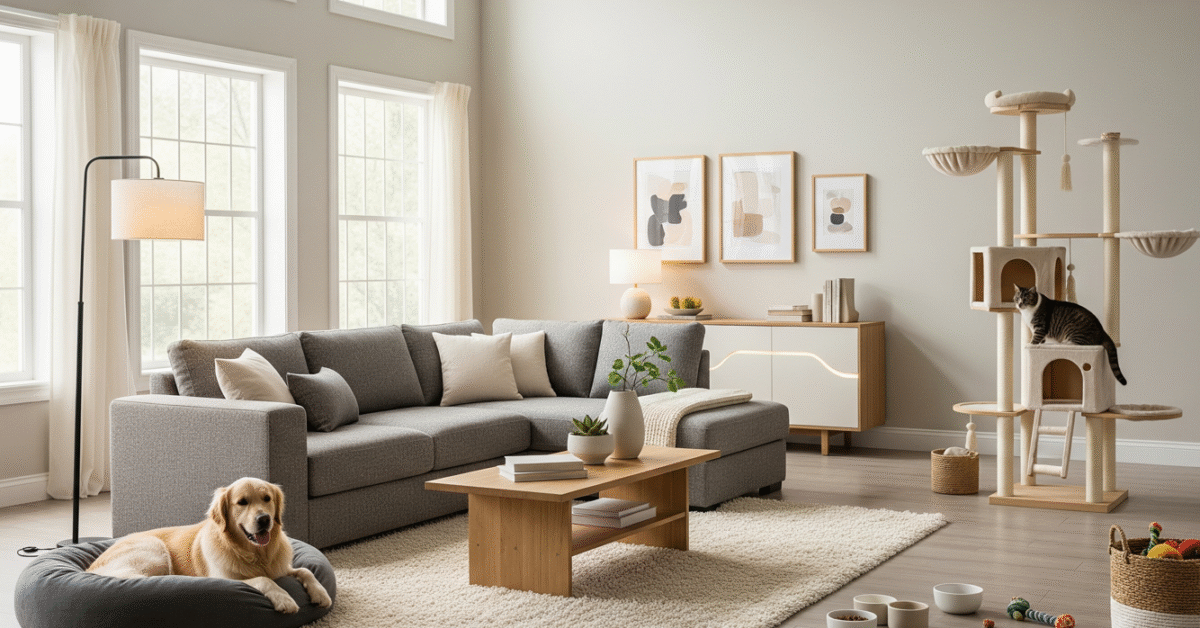
Keep the main circulation path clear and anchor rugs so they do not slide. Choose pet-friendly furniture with easy-clean fabric and avoid placing fragile objects at tail height. If your cat likes the window, create a perch that is more appealing than the curtain rod.
Kitchen and dining area
Food zones should be simple to clean and separated from traffic where possible. Feed bowls on a washable mat are practical, and a lidded container for dry food helps with freshness and pests. If your pet counter-surfs, reduce temptation instead of relying on discipline alone.
Bedroom and quiet zones
Pets often sleep better when they have a predictable spot with a bed that supports their joints and keeps them off cold floors. Senior animals, in particular, benefit from a place that is easy to reach and away from noisy HVAC vents or constant foot traffic.
In a well-designed pet-friendly house, the best rooms are the ones that let the pet settle quickly and let the owner clean even faster.
Mini example: A family with two rescue dogs replaced a slippery hallway runner, moved the feeding station off the kitchen corner, and switched one couch to a washable slipcovered model. The room looked almost identical afterward, but cleanup time dropped sharply and the dogs stopped skidding into the doorway every evening.
Safety and Comfort Essentials for Pets
Safety is where a pet-friendly home earns its name. Style matters, but not at the expense of access, ventilation, or injury prevention. If a feature increases the chance of slipping, choking, poisoning, or overheating, it does not belong in a home for pets.
Non-slip surfaces and stable footing
Hard floors can be a problem for older dogs, large breeds, and animals recovering from injury. Add rugs with grippy backings, stair treads, or runners in zones where pets accelerate or turn sharply. This is one of the simplest upgrades you can make, and one of the most overlooked.
Toxic plants, cords, and chemicals
Houseplants, loose cords, and accessible cleaners are frequent hazards. Keep lilies away from cats, secure electric cables, and store detergents and solvents in closed cabinets. The ASPCA Animal Poison Control Center maintains practical poison guidance and is worth checking before bringing new plants, cleaners, or holiday decorations into the house.
Temperature, light, and resting areas
Pets need places to regulate themselves. Sun patches are fine, but not if they turn into overheating zones. A home should include a cool resting option, fresh water access, and at least one quiet area where an anxious pet can retreat.
One nuance worth admitting: not every “pet-safe” product is ideal for every household. A sealed surface may be safer for cleanup, but a shiny finish can be too slick for an older dog. A highly durable fabric can resist stains, but if it feels rough or hot, some pets avoid it. Good design depends on the animal’s age, size, and habits.
Cleaning, Odor Control, and Maintenance
Most pet odor problems come from delay, not from pets themselves. A clean pet-friendly home uses surfaces that are easy to wipe, a schedule that prevents buildup, and airflow that keeps moisture from lingering. Fragrance alone is not odor control; it is camouflage.
Build a cleaning routine around hotspots
Focus on the places pets actually use: entryways, feeding stations, beds, sofas, and litter zones. Vacuuming two or three times a week is often more effective than one major clean at the end of the week, especially in homes with shedding breeds. If you have a cat, keeping litter boxes far enough from food areas matters more than decorative concealment.
Use washable, removable, and sealed surfaces
Slipcovers, washable throws, removable cushion covers, and sealed flooring shorten cleanup time dramatically. In kitchens and bathrooms, choose materials that tolerate regular disinfecting without breaking down. That approach keeps stains from becoming permanent and reduces the temptation to replace furniture too early.
Ventilation matters more than scent
Open windows when weather allows, run exhaust fans where moisture builds up, and replace HVAC filters on schedule. Air exchange helps with odors, dander, and lingering cleaning fumes. If you rely only on scented sprays, the smell may improve for an hour while the underlying problem stays put.
For ventilation and general indoor air standards, the EPA’s air filter guidance is useful when you are deciding whether a purifier or higher-grade HVAC filter is worth it. In many homes, a better filter plus routine vacuuming does more than a stack of pet-specific gadgets.
Pet-Friendly Design Mistakes to Avoid
The most common mistake is designing for the photo instead of the routine. A room that looks perfect for one afternoon may be miserable after a rainy week, a shedding season, or a puppy phase. The better question is not “Does it look nice?” but “Will this still work after six months of normal use?”
Choosing fragile materials in high-traffic areas
Glossy floors, delicate rugs, and highly textured upholstery create maintenance headaches. They can work in low-traffic spaces, but they are a poor fit where pets eat, run, or sleep every day. Save the fragile finishes for spaces pets rarely enter.
Ignoring storage for pet gear
Leashes, brushes, food bags, toys, and medications need a home of their own. If those items live on counters or in open baskets, the room starts to feel cluttered fast. Closed storage is not just about aesthetics; it is part of pet safety and household order.
Buying for the animal you wish you had
People often choose white upholstery because they promise to stay careful, or a flimsy dog bed because they expect the dog to treat it gently. That optimism usually loses. Plan for the pet’s real size, energy, and age, not the ideal version in your head.
Overusing scent to cover problems
Heavy fragrance can irritate sensitive pets and mask issues that should be cleaned properly. If a room smells off, look for the source: damp fabric, litter tracking, a hidden spill, or a ventilation issue. Treat the cause first.
The biggest pet-friendly design mistake is believing that style and durability compete; in practice, the best homes for pets make both work together.
How to Make a Home Feel Stylish and Pet-Friendly at the Same Time
You do not need to choose between a polished interior and a safe home for pets. The trick is to hide the utility inside the design logic: durable fabric in rich texture, a neutral litter enclosure that blends with cabinetry, or a washable rug that looks tailored instead of obvious. That is pet-friendly decor done well.
Keep the palette simple, repeat durable materials across the house, and let functional pieces look intentional. A woven basket can hold toys, a bench can hide leashes, and a bench cushion can double as a washable pet perch if the fabric choice is right. The room feels calmer when every object has a job.
What to Do Next
If you are updating one room first, start with the entryway or the floor under the highest-traffic pet path. Those changes usually give the fastest return because they reduce mess, improve safety, and make the whole house easier to maintain. After that, move to fabrics and storage.
The smartest next step is to evaluate your home the way your pet uses it: where they run, jump, shed, scratch, rest, and spill water. That lens will tell you more than any trend list. When a room holds up to that test, it is truly pet-friendly.
Frequently Asked Questions
What does pet-friendly mean in home design?
In home design, pet-friendly means a space is planned to be safe, durable, and easy to maintain for animals as well as people. It usually includes non-slip flooring, washable fabrics, secure storage, and layouts that reduce accidents or stress. A stylish room can still be pet-friendly if it handles daily pet behavior well.
What is the best flooring for pet owners?
Luxury vinyl plank, porcelain tile, and sealed hardwood are among the most practical choices. They are easier to clean than carpet and handle moisture better than porous materials. If you use carpet, low-pile options are far more manageable than plush styles.
How can I make my home pet-friendly without ruining the decor?
Choose functional materials that still look refined, such as performance fabric, washable rugs, and neutral finishes. Use closed storage for pet gear so bowls, toys, and leashes do not dominate the room visually. A pet-friendly house looks intentional when utility is built into the design rather than added on top.
What materials are easiest to clean and safest for pets?
Low-porosity surfaces and washable textiles are usually the easiest to maintain. For walls and furniture, low-VOC or zero-VOC finishes and durable fabrics help keep the home safer and less irritating for sensitive pets. The safest option depends on the animal, but surfaces that resist stains, moisture, and heavy wear are the most reliable starting point.
How do I reduce pet hair, stains, and odors at home?
Use flooring and furniture that clean quickly, vacuum regularly, and keep ventilation moving. Washable covers, sealed floors, and a routine focused on high-traffic pet zones make the biggest difference. Odor control works best when you remove moisture and residue early instead of covering smells with fragrance.
Is carpet ever a good idea in a pet-friendly home?
Yes, but it is best used selectively. Low-pile carpet in bedrooms or low-traffic rooms can work if you clean it often and accept more upkeep than with hard flooring. In entryways, feeding areas, and other spill-prone spots, hard surfaces usually perform better.