
Warning: Cannot modify header information - headers already sent in /home/u278635817/domains/myhousegarden.com/public_html/wp-content/plugins/artigosgpt/artigosgpt.php on line 28454
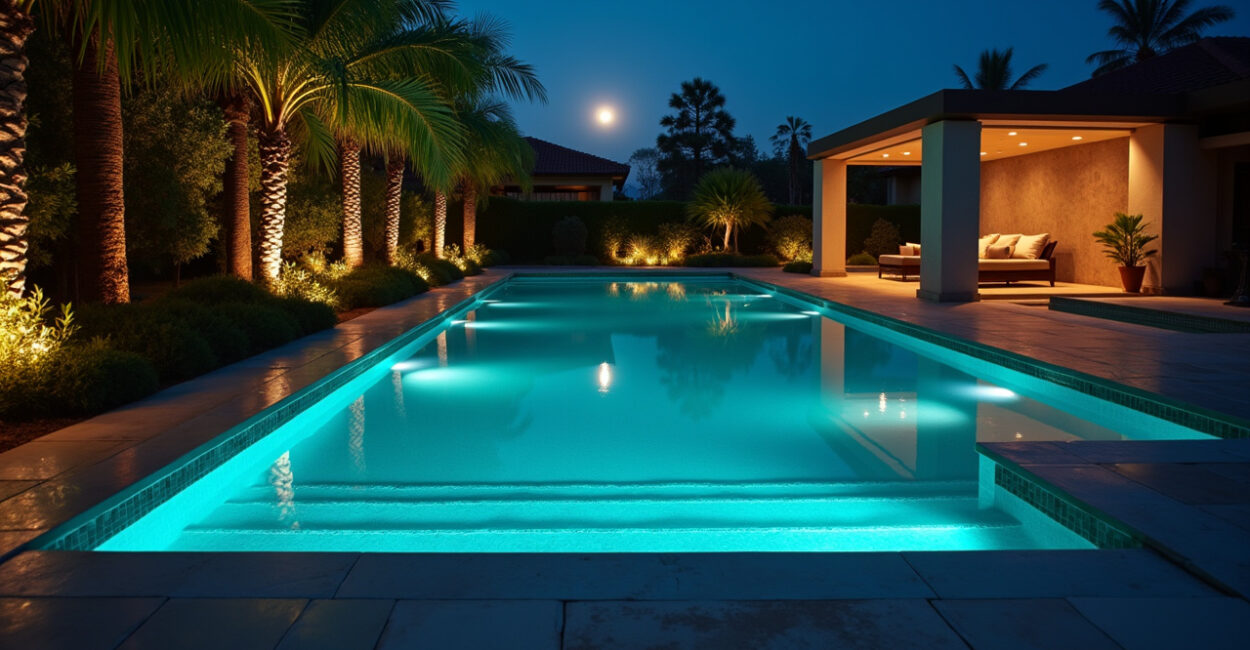
It was midnight and the water looked like oil—flat, black, forgettable. Then someone flipped a switch and the pool turned into a stage: edges traced in soft blue, steps glowing like lanterns, and the garden washed in amber. That’s the power of pool lighting: it doesn’t just illuminate water, it redefines a backyard. If you want luxury that works after dark and saves on your electric bill, read on.
The One Designer Trick That Makes Pools Look Expensive
Layered light sells luxury. Pool lighting isn’t a single bulb; it’s three or four layers working together. Underwater LEDs give color and drama. Cove or wall grazing lights reveal texture. Step lights guide feet safely. And landscape uplights give depth to plants and architecture. When layered, even a modest pool reads like high-end resort lighting.
- Underwater LEDs for color and mood
- Perimeter grazing lights to show finishes
- Accent uplights for palms and statues
Pool lighting placed in layers creates the same richness as multi-zone lighting in a living room—only wetter.
Why LED Beats Fiber-optic for Most Homeowners
LED wins on cost, control, and color. Fiber-optic looks beautiful and is useful where electricity near water is forbidden, but it’s pricier and less flexible. Modern LEDs drop energy use by 80% compared with incandescent and let you shift color and intensity with an app. For most luxury pools, smart LED fixtures offer the best mix of drama and savings.
Expectation vs reality: fiber-optic feels exclusive on paper, but the real-world return on investment usually favors LED once you include bulbs, controllers, and maintenance.
Placement Rules That Change Everything
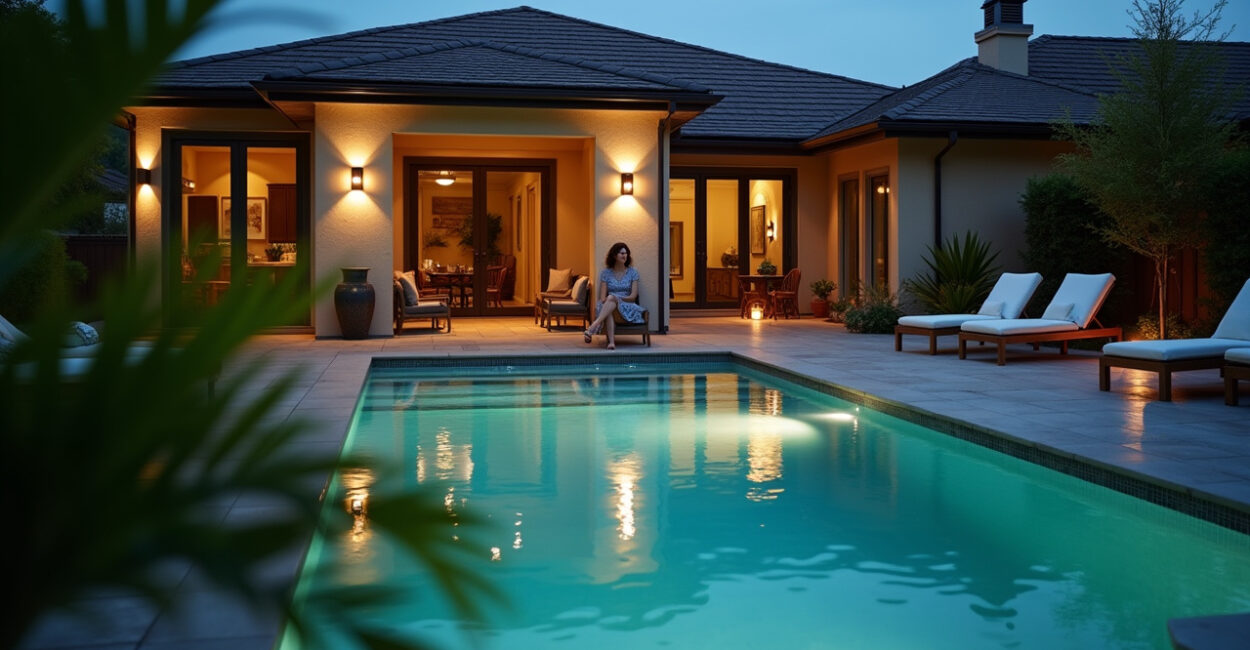
Good placement turns light into story. Put step and bench lights low and diffused so they guide without glare. Mount wall grazing lights high to reveal tiles and coping. Use a single color temperature around the pool—mixing warm and cool creates visual noise. Placement matters more than the most expensive fixture.
- Steps: recessed, low, and shielded
- Perimeter: even spacing, avoid hot spots
- Accents: tight beam for statues, wide wash for walls
Think in sightlines: imagine where guests will sit, swim, and walk, then place lights to flatter those views.
Smart Controls: Ambiance on Demand and Bills That Shrink
Smart pool lighting systems let you run scenes, schedule starts, and sync with music. They cut runtime by using dimming and zone control. A well-programmed controller can halve your energy cost while making the pool feel cinematic. Set a bright cleaning mode for an hour at sunset, then shift to a moody blue for evenings. Integration with home hubs makes it one-button easy.
According to energy studies, switching to LED with smart scheduling is one of the fastest ways to lower operating costs for outdoor living spaces—simple automation gives immediate savings.
Common Mistakes That Kill the Vibe (and How to Avoid Them)
People assume more light equals better. It doesn’t. Here are the top errors and how to fix them:
- Too bright, too many colors: Pick one mood per scene; don’t blast everything white.
- Wrong color temp: Use 2700–3500K for warm luxury; below 2700K looks dingy, above 4000K feels clinical.
- Ignoring maintenance: Dirty lenses cut output—clean quarterly.
- Poor placement: Avoid fixture glare in sightlines; hide sources behind coping or plants.
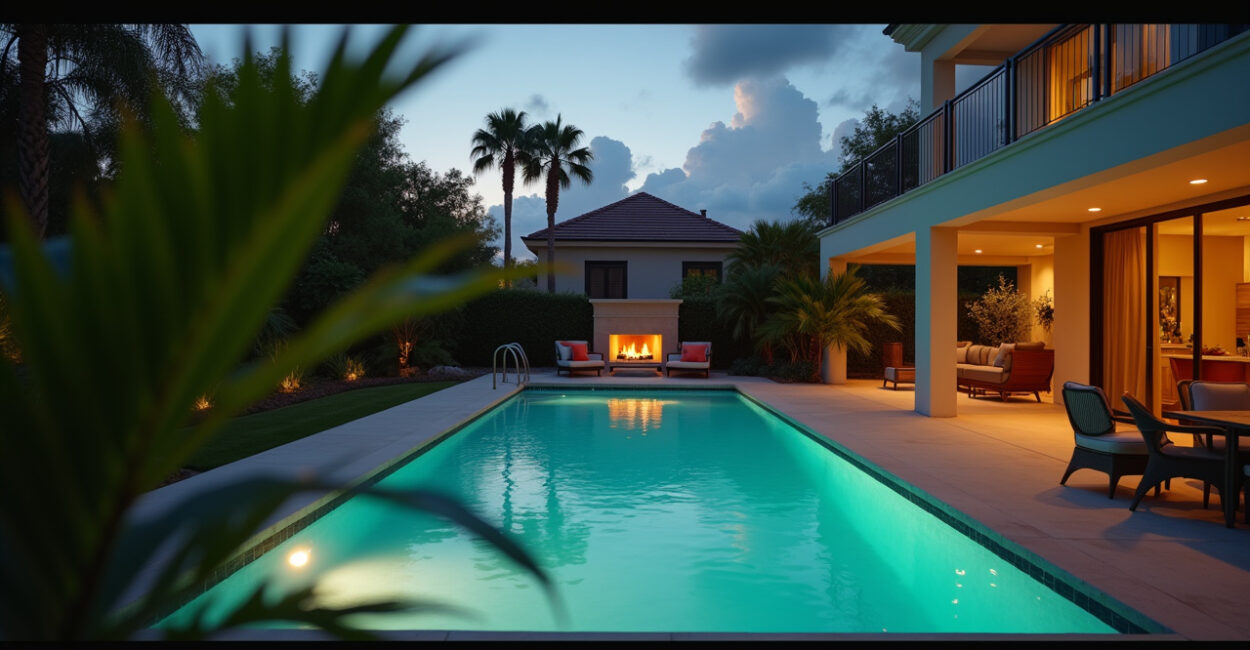
Fix these and your pool goes from lit to luxurious.
The Surprising ROI: Why Lighting is Architecture’s Best Bargain
Lighting often costs a fraction of a redesign but multiplies perceived value. A modest investment in pool lighting improves safety, extends usable hours, and increases property appeal. In many markets, tasteful exterior lighting can influence buyer perception as strongly as a new deck. It’s one of the fastest upgrades to recoup in lifestyle and resale value.
For data-driven readers: energy-efficient LEDs plus a smart schedule typically pay back installation costs within a few years through lower bills and higher use of the space.
A Short Scene That Proves the Point
They hosted a dinner with string lights, then a surprise: the host dimmed the terrace and switched the pool to emerald. Conversation paused. Phones stayed in pockets. Guests swam, came out laughing, then clustered at the edge, staring. That moment—the collective hush—was the ROI. Pool lighting did what a renovation couldn’t: it created a memory.
Want technical specs, code, or a layout review? Start by sketching sightlines and listing where people stand, sit, and swim. The light should flatter those positions, not compete with them.
Sources and further reading: U.S. Department of Energy on LED lighting and a design primer from Harvard Extension insights on outdoor spaces.
How Much Does It Cost to Install Luxury Pool Lighting?
Costs vary widely: small LED retrofits can start under $1,000, while a full designer-installed system with multiple zones, underwater fixtures, and smart controls often ranges from $5,000 to $20,000. Factors include fixture count, whether you need new conduits or low-voltage transformers, and control complexity. Labor and local electrical code requirements also impact price. Get three quotes and ask to see similar installations; results vary more by design than by cost alone.
Can I Add Pool Lighting to an Existing Pool Without Major Construction?
Yes. Many modern underwater LED retrofit fixtures are designed for drop-in without major excavation. Some systems use surface-mounted fixtures or clamp-on lights for temporary looks. If your pool shell allows, you can install niche lights that fit standard wall openings. The catch is electrical access: if wiring or a transformer needs relocating, that adds cost. A professional will assess access, bonding, and code compliance before you buy fixtures.
Is Pool Lighting Safe Around Electricity and Water?
When installed correctly, pool lighting is very safe. Fixtures must be rated for wet locations and bonded per local codes. Low-voltage LED systems reduce risk, and fiber-optic systems eliminate electricity near water entirely. Regular maintenance—checking seals, conduits, and the GFCI—keeps things secure. Always hire a licensed electrician familiar with aquatic installations; improper wiring is the main danger, not the lights themselves.
How Much Energy Do LED Pool Lights Actually Save?
LED pool lights use about 70–90% less energy than traditional incandescent halogen lights. A single LED fixture might draw 10–30 watts versus 300 watts for older halogens. Savings grow with multiple fixtures and when you use dimming and timers. Combined with smart scheduling (run full brightness only when needed), switching to LED often cuts annual lighting energy by several hundred dollars in typical residential pools.
What Color and Intensity Should I Choose for a Luxury Look?
For a timeless, upscale feel, aim for 2700K–3500K with adjustable intensity. Warm whites flatter skin tones and tile finishes. Use color for special scenes—deep blues for calm, teal for tropical, amber for warmth—but avoid saturated hues for constant use. Dimming is crucial: a slightly dimmed warm white reads more luxurious than a bright cold white. Test scenes at night to judge real-world effect before finalizing presets.