Warning: Cannot modify header information - headers already sent in /home/u278635817/domains/myhousegarden.com/public_html/wp-content/plugins/artigosgpt/artigosgpt.php on line 28454
Are any previously used item repurposed to hold soil and plants. They range from wooden pallets turned into troughs to tin cans, plastic bottles, and old drawers. At core, these containers extend the useful life of materials while creating functional growing spaces for edible crops on balconies and small patios.
The rise in urban living, constrained budgets, and interest in local food has pushed gardeners to reuse materials. Properly designed recycled containers cut costs, reduce waste, and often outperform cheap, new plastic pots when attention is paid to drainage, soil depth, and plant pairing. This article gives 11 practical, low-cost project ideas and the technical details to make them safe, productive, and long-lasting.
Pontos-Chave
- Well-prepared recycled containers can grow full-season vegetables if they provide adequate depth, drainage, and non-toxic materials.
- Drainage, liner selection, and soil choice are the factors that most determine yield and container lifespan—not aesthetics.
- Simple safety checks (paint/toxin testing, rust removal) prevent contamination; when in doubt, use a food-safe liner or raised inner pot.
- Combining container type with plant root depth and irrigation method yields the best harvests on balconies with limited weight capacity.
Why Recycled Containers Define Success for Balcony Edible Gardens
Choosing the right container is the single biggest decision for balcony gardens. Recycled containers must meet three practical tests: safe for food, adequate volume for roots, and reliable drainage. Failure in any of these reduces yields, increases pests, or shortens container life. Prioritizing these tests lets gardeners use low-cost materials without compromising food safety or plant performance.
Safety and Contamination Control
Many used items carry residues: lead paint, pesticides, or heavy metals. Test suspect paint with a lead test kit and avoid containers that previously held chemicals. When contamination is possible, line the container with a heavy-duty food-safe plastic liner or use a separated pot-in-pot arrangement. The liner prevents soil contact with suspect surfaces while allowing drainage when paired with a perforated inner pot or landscape fabric.
Volume, Root Depth, and Structure
Match container volume to plant root systems. Leafy greens need 6–8 inches of soil; bush beans require 10–12 inches; tomatoes and peppers need 12–18 inches with 5+ gallons per tomato plant for good yields. Wooden pallets or dresser drawers can be stacked or deepened to reach required depth. Always account for soil settling and compaction when estimating final root space.
Pallet Troughs and Reclaimed Wood Boxes: Building Deep, Breathable Beds
Pallet troughs offer inexpensive, modular planter boxes with good aeration. Properly disassembled and treated, they create beds that drain well and stay cool in summer. Wood breathes, so roots avoid waterlogging when built with gaps and lined correctly.
Construction and Treatment
Select heat-treated (HT) pallets rather than chemically treated ones. HT is stamped on the pallet and indicates no chemical fumigants were used. Disassemble carefully, plane rough edges, and seal nails. Use exterior-grade screws and corner brackets. To extend life, line interiors with rot-resistant wood or a heavy, food-safe liner and provide drainage holes 1–2 inches above the base to prevent soil loss.
Planting Combos and Irrigation
Pallet troughs suit mixed planting: shallow herbs at the edges, deeper roots like baby carrots or beets in the center. Use drip tape or wicking fabric for consistent moisture. For longer crops, rotate or refresh soil annually with compost to avoid nutrient depletion. Mulch with straw or wood chips to slow evaporation and reduce watering frequency.

Tin Cans, Mason Jars, and Small Metal Vessels: Low-cost, Small-space Planters
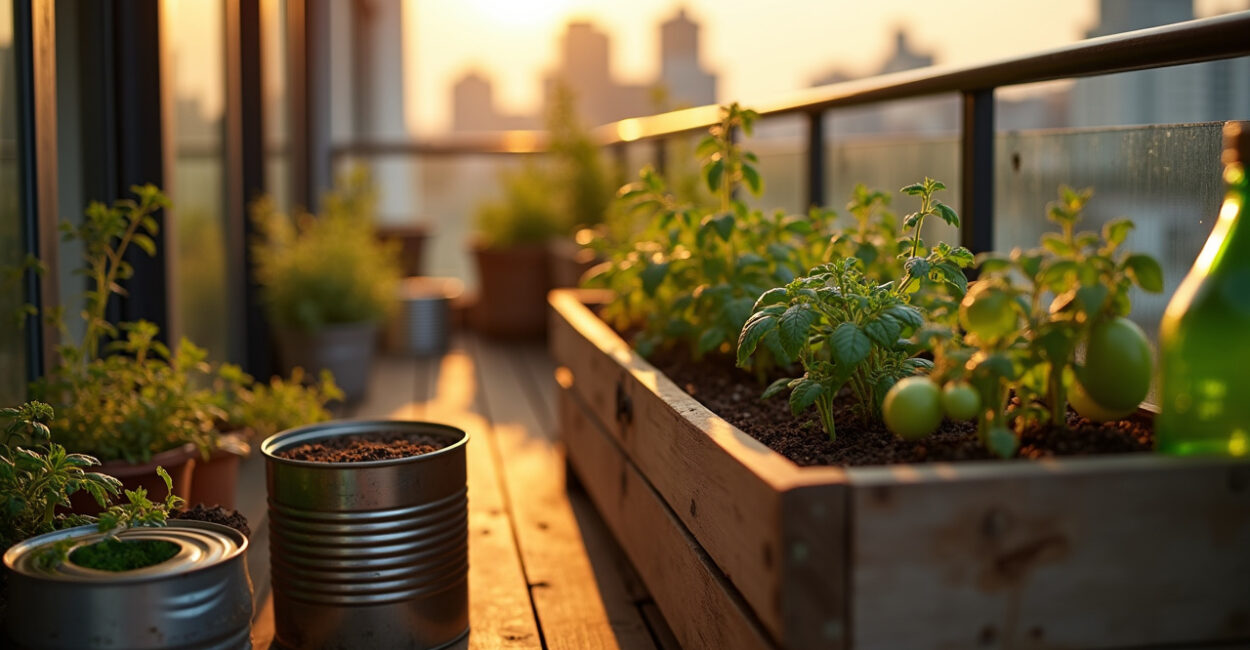
Metal containers are plentiful and ideal for windowsills and railing planters. Their main issues are rapid temperature swings and rust. With proper preparation, metal planters are durable and attractive for herbs and small salad greens.
Preparing Metal for Edible Use
Remove rust with a wire brush, then coat the inside with a food-safe liner or epoxy rated for food contact. Drill drainage holes and raise the can on small feet or gravel to avoid standing water. For hot climates, provide shade or insulating sleeve to reduce root heat stress, which can damage shallow-rooted herbs.
Best Crops for Metal Containers
Short-season herbs (basil, parsley), micro-greens, and lettuce perform well. Avoid long-term root crops in thin metal as they require stable temperatures and more soil. Rotate crops and refresh soil to prevent salt buildup from irrigation and fertilizer.
Plastic Bottles, Buckets, and Tubs: Lightweight, Adaptable Options
Plastic containers are lightweight and diverse in shape, making them common recycled planters. Use higher-density plastics (HDPE #2 or PP #5) when possible; they age better outdoors and are safer for food use. Avoid PVC and unknown plastics that may leach chemicals.
Drainage and Wicking Systems
For bottles, drill multiple holes at the base and consider vertical planting (cut and fill method) for strawberries and shallow herbs. For buckets, create a double-layer: a reservoir at the bottom separated by a mesh platform for wicking systems. This reduces watering frequency and buffers against sudden dry spells on balconies.
Weight, Mounting, and Wind Considerations
Plastic is light, which is an asset for balcony load limits but makes planters prone to tipping in wind. Anchor tubs and hanging bottles with strong brackets and balanced weight distribution. Check balcony load ratings—saturated soil adds significant weight (about 40–60 lb/cubic foot).

Ceramic Pots, Old Sinks, and Nontraditional Ceramics: Durable but Nuanced
Ceramic items and old sinks provide attractive, heavy planters. Their porosity and weight add benefits, but glazed or cracked ceramics may pose contamination risks. Sinks are large and deep, excellent for multi-plant systems if retrofitted for drainage.
Assessing Glazes and Cracks
Historic glazes may contain lead. Test suspect ceramics or avoid direct food use by using a robust liner. Repair hairline cracks with pond sealant designed for potable water. Ensure sinks have at least three drainage holes and add a coarse gravel layer if the basin lacks outlets to prevent standing water.
Designing Multi-crop Sink Gardens
Use partitioning with wood or plastic dividers and dedicated soil blends per crop group. Deep-root crops like bush beans and dwarf tomatoes can coexist with shallower herbs near the rim. Install an overflow outlet to prevent saturation during heavy rain or overwatering.
Raised Inner Pots and Pot-in-pot Systems: Safety and Replaceability
Pot-in-pot systems place a nursery pot inside a decorative or suspect container. This method combines safety (soil contacts only nursery pot) with the aesthetic and structural benefits of recycled outer vessels. It makes swapouts, winter storage, and pest checks easier.
How to Set Up a Pot-in-pot
Select an inner pot with drainage. Add spacer feet so water can exit the outer container. Fill the inner pot with a high-quality container mix to ensure drainage and nutrient retention. If the outer container doesn’t allow drainage, make sure an overflow hole or gutter exists to prevent water buildup.
Maintenance and Overwintering
Pot-in-pot simplifies pest control and reduces soil-borne disease spread by allowing replacement of the inner potting mix annually. In freezing climates, remove the inner pot or insulate around it; trapped water in outer vessels can crack ceramics and stress root systems.
Comparing Recycled Container Types: Performance, Cost, and Lifespan
| Container Type | Best Use | Pros | Cons |
|---|---|---|---|
| Wood pallet trough | Mixed beds, root crops | Inexpensive, breathable, modular | Rot over time, needs HT pallets |
| Tin cans / metal | Herbs, small greens | Durable, compact | Temperature swings, rust |
| Plastic tubs / bottles | Lightweight planters, vertical | Cheap, versatile | UV degradation, unknown plastics |
| Ceramic / sink | Large attractive beds | Heavy, stable | Possible glaze toxins, weight limits |
For regulatory and safety guidance, consult the EPA on lead in paint and consumer products EPA Lead and the USDA resources on container production for small-scale growers USDA. For pallet heat-treatment verification, check the USDA APHIS pallet standards.
Common Mistakes and How to Avoid Them
Errors with recycled containers are predictable and avoidable. The most common are poor drainage, contaminated materials, insufficient soil volume, and overestimating container longevity. Address each with a clear fix: add drainage, use liners, match plant root needs, and treat or replace materials before failure.
Errors in Drainage and Wet Feet
Too often gardeners rely on a single hole or none at all. Use multiple drainage points and elevate the container to allow water escape. For shallow containers, use a mixed media layer (coarse sand or perlite) to improve gravity flow and avoid perched water tables that keep roots wet.
Neglecting Weight and Structure Limits
Saturated soil can exceed balcony load limits. Calculate estimated saturated weight: roughly 40–60 lb per cubic foot. For large tubs, distribute load across the balcony and use lightweight soil mixes with more organic matter and less mineral soil if weight is a concern.
Próximos Passos Para Implementação
Start by auditing available materials and the balcony environment: light levels, wind, and structural limits. Prioritize safety—test or avoid suspect containers. Build one or two prototypes: a pallet trough and a pot-in-pot tin can setup. Track watering, plant health, and pest issues for one season. Adjust soil depth and drainage based on observed root development and yields. Scale what works and replace items that fail safety or performance tests.
Scaling and Continuous Improvement
Document what you plant, when you water, and how much yield you get per container. Over time, you’ll refine soil mixes, irrigation frequency, and crop choices for your microclimate. Recycled containers are iterative; small improvements compound into higher yields and lower costs.
FAQ
Can I Safely Grow Food in Recycled Containers That Once Held Non-food Items?
Yes, but only after assessing contamination risk. Start by identifying what the container held. If it contained chemicals, fuels, or pesticides, avoid direct food use. For unknown histories, use a food-safe liner or a pot-in-pot system where the soil never touches the original surface. Test old paint for lead when present. When in doubt, use a certified nursery pot inside the recycled container and replace the potting mix annually to minimize long-term residue build-up.
How Much Soil Depth Do Common Edible Crops Really Need in Recycled Containers?
Root depth governs container depth: leafy greens and herbs can thrive in 6–8 inches; bush beans and larger herbs need 10–12 inches; peppers and determinate tomatoes need 12–18 inches and roughly 5 gallons per plant for steady yields. Roots compact over time, so add 1–2 inches extra when estimating. For mixed beds, design the deepest crops in the center and shallow ones at the edges to use available vertical space efficiently.
What Drainage Solutions Work Best for Containers Without底holes or with Limited Space?
Create drainage by adding multiple small holes and raising the container on feet or pavers so water exits freely. For containers that can’t be pierced, use a pot-in-pot method with an inner nursery pot that drains. Install a gravel or coarse media layer under the inner pot to aid flow, and include an overflow outlet to avoid saturation. Wicking reservoirs with a separated water zone also reduce the need for direct drainage while controlling moisture.
How Do I Avoid Heavy Metals or Lead from Old Ceramics and Glazed Items?
Test suspect glaze with a consumer lead test kit before using for edibles. If the test is positive or uncertain, use an impermeable, food-grade liner to separate soil from the surface. Sealing interior surfaces with potable-water-rated epoxy can also work, but ensure the sealant is rated for soil contact and UV exposure. If reuse isn’t safe, repurpose such ceramics for ornamentals or nonedible plantings to avoid dietary exposure.
Which Irrigation Strategy Conserves Water but Maintains Yield in Small Recycled Containers?
Drip irrigation with a pressure-compensating emitter or a small wicking system offers the best balance. Drip supplies steady moisture directly to the root zone and reduces surface evaporation. Use soil mixes with higher organic matter to hold water and add mulch to the surface. For very small containers, frequent light watering stresses roots; instead, water deeply but less often, allowing the top inch to dry between irrigations to reduce disease risk while keeping plants productive.