Warning: Cannot modify header information - headers already sent in /home/u278635817/domains/myhousegarden.com/public_html/wp-content/plugins/artigosgpt/artigosgpt.php on line 28454
Brown leaf edges, white crust on the soil, and a plant that refuses to perk up — these are often blamed on pests or light. But more than a few times, the real culprit is overfertilization. If you catch it early, the fix is simple: stop feeding. Read on to spot subtle signs before roots or foliage pay the price.
Why Overfertilization Hides in Plain Sight
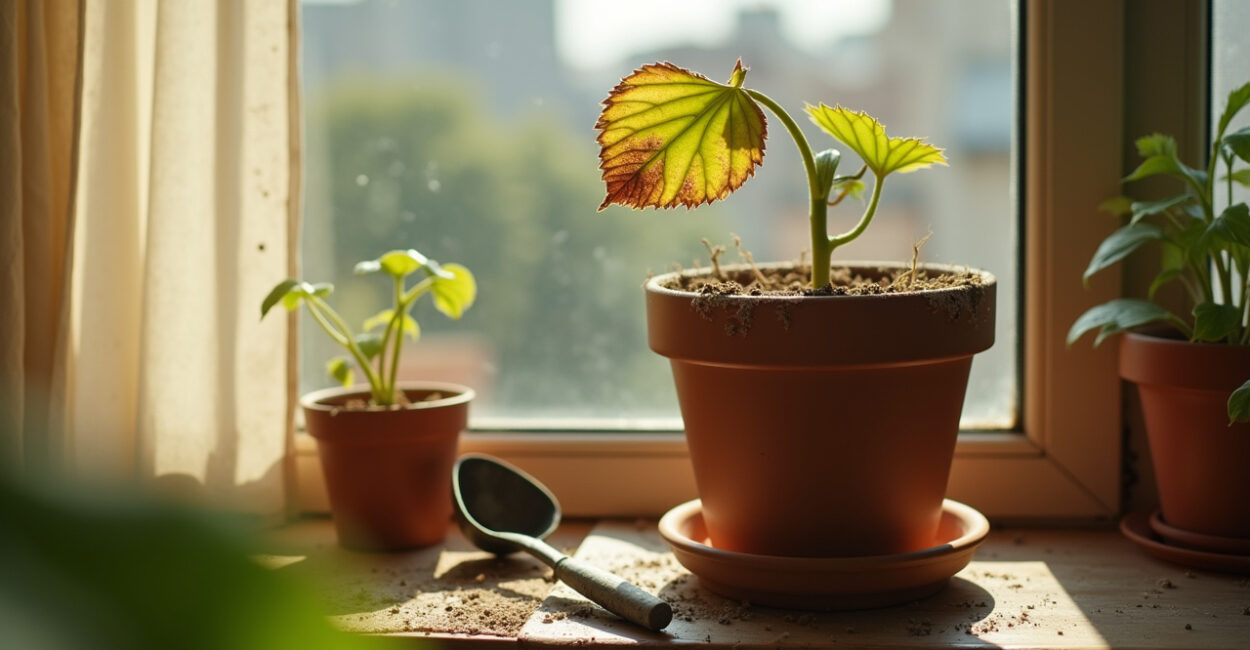
Overfertilization doesn’t always scream. Most houseplants show a slow decline: leaves yellow unevenly, new growth looks distorted, or soil develops a chalky ring. Because these signs overlap with watering problems and pests, people keep adding fertilizer to “help,” which only makes salt buildup worse. Think of it as giving medicine for a problem that needs rest — the intention is right, the action is wrong.
The Early, Tiny Clues That Save Your Plant
Catch overfertilization by watching the small stuff. Look for:
- Fine white crust on the pot rim or soil — salt buildup visible.
- Leaf tips browning while centers stay green — a classic signal.
- Stunted new growth that is oddly thin or curled.
- Water pooling on the surface and draining slowly — roots rejecting soil.
If you notice any one of these, pause feeding immediately. Waiting turns a fixable problem into root loss.

The One Comparison That Makes the Choice Obvious
Expectation: more fertilizer = faster growth. Reality: too much fertilizer = root burn and slow decline. Imagine a marathon runner given energy drinks every mile — performance collapses, not improves. Likewise, plants pushed with constant feeding develop toxic salt levels in the root zone. The before/after is striking: before, shiny new leaves and steady growth; after, curled tips, brown edges, and soil that smells sour.
Quick Recovery Steps That Actually Work
Stop feeding first. Then follow these fast, practical steps:
- Leach the pot: run room-temperature water through the soil until it drains clear (repeat 2–3 times).
- Repot if the soil is heavily crusted or roots are brown and slimy.
- Trim obviously dead foliage to reduce stress on the plant.
- Give the plant bright, indirect light and avoid fertilizing for 4–8 weeks.
In many cases, pausing feeds is the fastest route to recovery — it lets roots reset without more salts being added.

When to Repot, and When to Just Wait
Repotting fixes severe overfertilization but can stress plants. Choose repot when:
- Soil shows dense white crust and won’t absorb water.
- Roots are black, mushy, or smell foul.
- The plant is root-bound and hasn’t responded after leaching.
If symptoms are mild, leaching and patience often work. Repotting is the next step, not the reflex. For guidance on safe potting mixes and root care, see resources from UC Davis Extension and the USDA.
Common Mistakes People Make After Spotting Symptoms
These are the errors to avoid.
- Doubling down with more fertilizer “to help” — this worsens salt buildup.
- Overwatering immediately after fertilizing, which drowns stressed roots.
- Using garden soil or old potting mix that retains salts.
- Ignoring light and humidity needs while blaming nutrients alone.
Avoiding these mistakes speeds recovery far more than any miracle product.
A Short Real-world Moment That Teaches the Rule
She bought a fancy liquid fertilizer and fed her fiddle-leaf fig weekly. Leaves browned at the tips, then a white crust appeared. She topped up the feed, hoping for rescue. The plant slipped further. Finally, she flushed the soil, left the plant alone, and gave it better light. Three months later, new healthy leaves came back. The lesson: rest often outperforms rescue when dealing with overfertilization.
How to Prevent Overfertilization Going Forward
Prevention beats recovery. Start with a slow-release or dilute liquid fertilizer and feed at half the recommended strength for houseplants. Use a well-draining potting mix and flush pots once every few months. Test before you feed: if growth is steady, don’t add more. Keep a calendar to avoid accidental overfeeding. When in doubt, wait — most houseplants tolerate less fertilizer much better than too much.
How Quickly Do Plants Show Damage from Overfertilization?
Damage can show within days to weeks, depending on concentration and plant sensitivity. Fast-draining soil and sensitive species reveal symptoms sooner, while heavy potting mixes can hide buildup until it’s severe. Early signs include tip browning and a white crust; advanced stages bring root browning and overall decline. Acting fast — stopping fertilizer and flushing the soil — often prevents permanent root loss. Monitor plants closely after any fertilization change to catch trouble early.
Can Flushing the Soil Always Save a Plant with Overfertilization?
Flushing helps in most mild to moderate cases because it washes salts away from the root zone. It’s less effective if roots are already badly damaged or if the plant has been overfertilized repeatedly over months. Proper flushing involves watering until excess runs out and repeating over a few sessions. If roots are mushy or black, repotting with fresh mix and careful root trimming may be necessary. Flushing is the right first move—it’s cheap, low-risk, and often enough.
Should I Change My Fertilizer Type After Overfertilization?
Not always. The main change should be concentration and frequency. Switch to a balanced, slow-release product or dilute any liquid fertilizer to half strength. Organic feeds tend to build salts more slowly, but they aren’t immune to overuse. The best step is to feed less often and observe plant response. If you had root damage, allow recovery time before reintroducing nutrients. A slow, cautious approach avoids repeating the mistake.
How Do I Tell Overfertilization from Underwatering or Pests?
Look at the full set of clues: overfertilization often shows white crust on soil, even when water is present, and leaf tips brown uniformly. Underwatering causes dry, crispy leaves and light, pulling soil. Pests leave visible damage or sticky residue. Check the roots: healthy roots are firm and white; fertilized-burned roots are brown and brittle. Testing soil moisture and inspecting undersides of leaves helps confirm the issue before you change care.
Is Pausing Feeds Really Better Than Giving a “weaker” Fertilizer Immediately?
Yes. Pausing feeds gives roots a chance to recover without added salts. Often the fastest improvement comes from stopping fertilizer and improving conditions (light, water, humidity). After a pause of 4–8 weeks, you can reintroduce nutrients slowly and at lower strength. Immediate switching to a weaker fertilizer can still add salts and delay recovery. Let the plant stabilize first, then feed cautiously while monitoring new growth closely.