

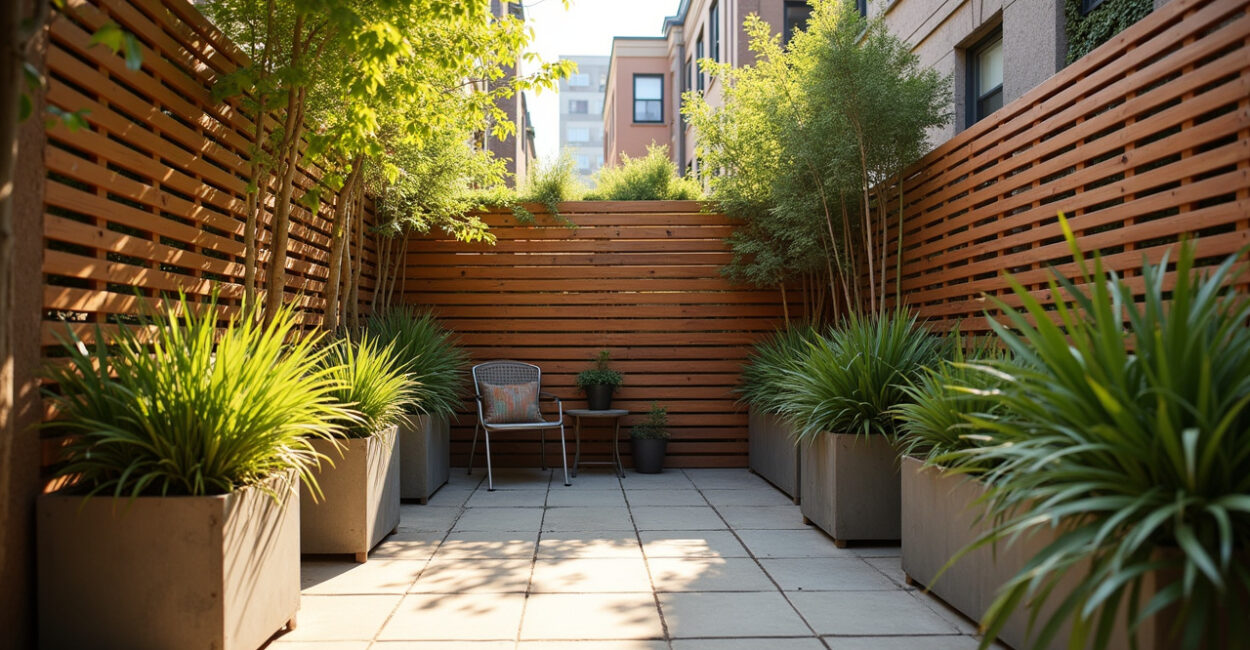
A cramped patio feels even smaller when every neighbor sightline lands directly on your chair. The good news is that small patio privacy screen ideas on a budget do not have to look temporary or cheap; the best ones add privacy, soften harsh views, and still let air and light move through the space.
The trick is choosing barriers that work like a filter, not a wall. In practice, that means mixing partial screening, vertical layers, and movable pieces so the patio stays open and usable. Below, you’ll find the cheapest options that actually hold up, where each one works best, and the mistakes that make budget privacy look messy instead of intentional.
What You Need to Know
- Partial-height screens, lattice, and slatted panels usually feel more spacious than a solid wall on a small patio.
- Planters with tall grasses, bamboo, or shrub-form evergreens create privacy and add softness for less money than custom-built enclosures.
- Outdoor fabric, shade cloth, and tension-mounted curtains are the fastest low-cost fixes when drilling is limited.
- The cheapest screen is not always the best value; wind resistance, sun exposure, and HOA rules matter more than the sticker price.
- Most budget-friendly patios look better when you combine two layers, such as a planter row plus one vertical screen.
Small Patio Privacy Screen Ideas on a Budget: The Best Low-Cost Options That Still Look Polished
From a design standpoint, a privacy screen is any barrier that reduces direct sightlines without fully sealing off the patio. That can be a freestanding panel, a row of plants, a trellis, a curtain, or a hybrid of all four. The cheapest versions work because they interrupt views at eye level, which is where privacy matters most when you are seated.
1) Freestanding Lattice Panels
Lattice is one of the best values because it gives structure without feeling heavy. A basic wood or vinyl lattice panel can be paired with planters, climbing jasmine, or even faux greenery for a cleaner look. If you buy pressure-treated lumber, seal it before outdoor use; untreated wood warps fast in damp or sunny climates. For apartment patios, check whether freestanding panels are allowed before you spend a dollar.
2) Outdoor Curtains on a Tension Rod or Cable
Outdoor curtains are cheap, flexible, and surprisingly effective when the problem is a nearby balcony or window. A weather-resistant polyester curtain can soften the whole patio in one move. They do need occasional washing and, in windy areas, stronger hardware than people expect. This is where cheap can fail: a flimsy rod sags fast. If the patio gets strong gusts, use a cable system or mount the curtains only on a sheltered side.
3) Privacy Screens Made from Cedar Fence Boards
Who works with patios regularly knows this: short vertical boards often look more intentional than a full fence panel when the space is small. Cedar fence pickets are a strong budget option because they already have outdoor durability, and their narrow profile keeps the patio from feeling boxed in. Spacing the boards slightly apart blocks enough view for comfort while allowing airflow.
On a small patio, the best privacy screen is the one that breaks sightlines at seating height without turning the space into a cave.
For building basics and weather exposure guidance, the National Park Service’s wood care resources are a useful reference, even for simple backyard projects. The principle is the same: outdoor wood lasts longer when it is protected from moisture and sun.
Plants That Do More Than Decorate
Plants are the cheapest way to build privacy that feels alive instead of engineered. They also solve a problem hard screens create: visual harshness. A line of containers can hide a corner, block part of a neighbor’s view, and make the patio feel finished at the same time. The catch is patience. Plants are not an instant wall unless you buy larger specimens, and larger specimens cost more up front.
Best Budget Plants for Quick Screening
- Bamboo in containers: Fast coverage, but choose clumping bamboo, not running bamboo, unless you want a maintenance headache.
- Arborvitae: Good for narrow spaces if you need vertical height in planters or along a fence edge.
- Ornamental grasses: Cheaper than shrubs and excellent for light-filtering privacy.
- Star jasmine or clematis: Great for trellises where you want screening plus flowering interest.
- Boxwood or dwarf holly: Slower, but tidy and dependable in formal-looking patios.
For species selection and container care, university extension offices are worth trusting. The Penn State Extension and other land-grant programs regularly publish practical guidance on plant spacing, sun exposure, and root confinement. That matters because a plant that looks cheap on day one can become expensive if it dies in the first season.
Here is the rule I would not bend: if your patio is hot and exposed, do not depend on thirsty plants alone. In full sun, pots dry faster than people expect, and privacy thins out when leaves scorch or drop. Combine plant screens with one hard element, even if it is only a small trellis or a short panel.

DIY Barriers That Cost Less When You Build Them Yourself
DIY works best when you keep the design simple. The moment a project requires specialty tools or perfect joinery, the “budget” part evaporates. The most practical versions are usually modular: one frame, one insert, one finish. That makes them easier to repair, repaint, or move later.
| DIY option | Approximate cost | Best use case | Main drawback |
|---|---|---|---|
| Cedar picket panel | Low to moderate | Small patios needing a clean, custom look | Needs sealing and a stable base |
| Pallet screen | Very low | Casual spaces and renters on a tight budget | Quality varies, and sanding takes time |
| Reed or bamboo roll-up screen | Low | Fast coverage over chain-link or railings | Shorter lifespan in strong weather |
| Trellis with climbing vines | Low to moderate | Soft screening that improves over time | Needs growing season patience |
There is a real tradeoff here. Pallets and reed fencing win on price, but they fail faster in rain, strong UV, or freezing temperatures. Cedar and vinyl cost more at the start, yet they usually make sense if you want fewer replacements. That is why budget planning should include lifespan, not just purchase price.
A Quick Real-world Example
A renter with a 7-by-10-foot patio used two tall planters, a tension-mounted curtain on one side, and a half-height cedar lattice panel behind the chair area. The total cost stayed under what a single custom screen would have cost locally. More importantly, the patio still felt airy because only one side was fully softened. That small shift made the space usable for morning coffee again, which is usually the real goal.
Budget privacy succeeds when you layer two modest fixes instead of forcing one cheap product to do everything.
How to Choose the Right Screen for a Small Patio
Choosing the right setup is less about style and more about the problem you are solving. Are you blocking a direct neighbor view, hiding a storage corner, reducing street exposure, or creating a backdrop for seating? The answer changes everything. A side-facing balcony may need height. A deep patio corner may only need a partial screen plus plants.
Use This Simple Decision Filter
- Start with the sightline. Sit where you normally sit and identify what you actually want hidden.
- Measure wind exposure. Lightweight materials fail in exposed patios unless they are anchored well.
- Check sun direction. South- and west-facing patios may need materials that resist UV damage.
- Match the screen to your lease or HOA rules. Some communities limit height, attachment methods, or permanent structures.
- Choose one focal side first. Fixing the most visible angle often solves 80% of the discomfort.
For homeowners, local building and setback rules can matter even for modest outdoor structures. City codes vary, and some municipalities treat taller freestanding barriers differently from decorative garden elements. If the screen is near a boundary line, it is worth checking local zoning guidance before buying materials. That extra step is dull, but it prevents expensive rework.

Make Budget Screens Look Intentional, Not Temporary
The difference between “cheap” and “smartly affordable” is usually finish quality. When I see a patio that feels pulled together on a small budget, it almost always has three things: repetition, a consistent material palette, and one visual anchor. That can mean repeating the same planter three times, using black hardware throughout, or matching the screen color to the railing.
Small patios also benefit from negative space. If every inch is covered, the area feels cluttered fast. Leave one open edge, one visible planter gap, or one section of low furniture so the eye has a place to rest. That balance is what makes a narrow patio feel edited instead of packed.
One more thing: not every budget screen belongs on every patio. In wet climates, untreated wood and cheap fabric can age badly within a season. In very sunny climates, dark materials can overheat and fade. In those cases, a more durable but slightly pricier option is the better budget choice because it avoids replacement costs.
What Actually Delivers the Most Privacy Per Dollar
If the goal is maximum privacy for minimal money, start with the cheapest solution that addresses the exact sightline, then add a second layer only if needed. That approach usually beats buying one large structure and hoping it solves everything. For many small patios, the best spend is a mix of containers, one vertical panel, and one soft barrier like fabric or vine coverage.
For material durability and outdoor maintenance basics, the U.S. Forest Products Laboratory is a strong reference on wood performance and outdoor exposure, especially if you are choosing between cedar, pine, or treated lumber. If you prefer a broader home-improvement lens, Bob Vila’s outdoor project guides offer practical comparisons that help narrow materials before you spend.
The final test is simple: if you can sit down, look up, and stop feeling exposed, the screen is doing its job. That is the standard that matters, not whether it looks expensive. A good patio privacy fix should feel calm, breathe well, and still leave room to move.
Next step: measure the exact view you want to block, choose one low-cost structural screen, and add one plant layer or fabric layer only where privacy still feels thin. That sequence keeps the patio open while giving you the most impact for the least money.
Frequently Asked Questions
What is the Cheapest Way to Add Privacy to a Small Patio?
The cheapest reliable option is usually a combination of container plants and a lightweight screen such as lattice, reed fencing, or outdoor fabric. A single material rarely solves every angle, so the low-cost win comes from layering two modest fixes. If the patio is renter-friendly, tension rods and freestanding panels keep the setup removable. The key is blocking eye-level sightlines without buying more height than you actually need.
Do Plants Work Better Than Screens for Patio Privacy?
Plants work better when you want privacy that feels soft and natural, but they usually take longer to become effective. Screens win when you need coverage right away or when the patio gets harsh sun and wind. In practice, the best setups pair plants with a hard barrier. That way, the screen handles the immediate privacy problem while the plants fill in texture and reduce the “boxed-in” look.
Can I Use Pallet Wood for a Patio Privacy Screen?
Yes, but only if the pallets are in good condition and you prepare them properly. Sand the surface, check for stamped treatment markings, and seal the wood for outdoor use. Pallet screens are affordable, but they are not the most durable choice if the patio sees heavy rain or direct sun. They work best for short-term projects, casual spaces, or renters who want a temporary fix without spending much.
How Tall Should a Small Patio Privacy Screen Be?
For most seated patios, 4 to 6 feet of coverage is enough to block direct sightlines without overwhelming the space. Taller screens can work, but they make a small patio feel more enclosed and may catch more wind. If you only need privacy while seated, a half-height screen plus plants often performs better than one tall barrier. Measure from the normal sitting position, not from standing height, because that is where privacy actually matters.
What Patio Privacy Option Lasts Longest on a Budget?
Pressure-treated lumber, cedar, and quality vinyl usually last longer than reed, fabric, or reclaimed wood. The longest-lasting budget choice is the one that matches your climate and gets sealed or anchored correctly. In wet or windy areas, spending a little more upfront often saves money later because you avoid replacement. Cheap materials can still work, but their lifespan drops fast when they are exposed to moisture, UV, or repeated movement.