

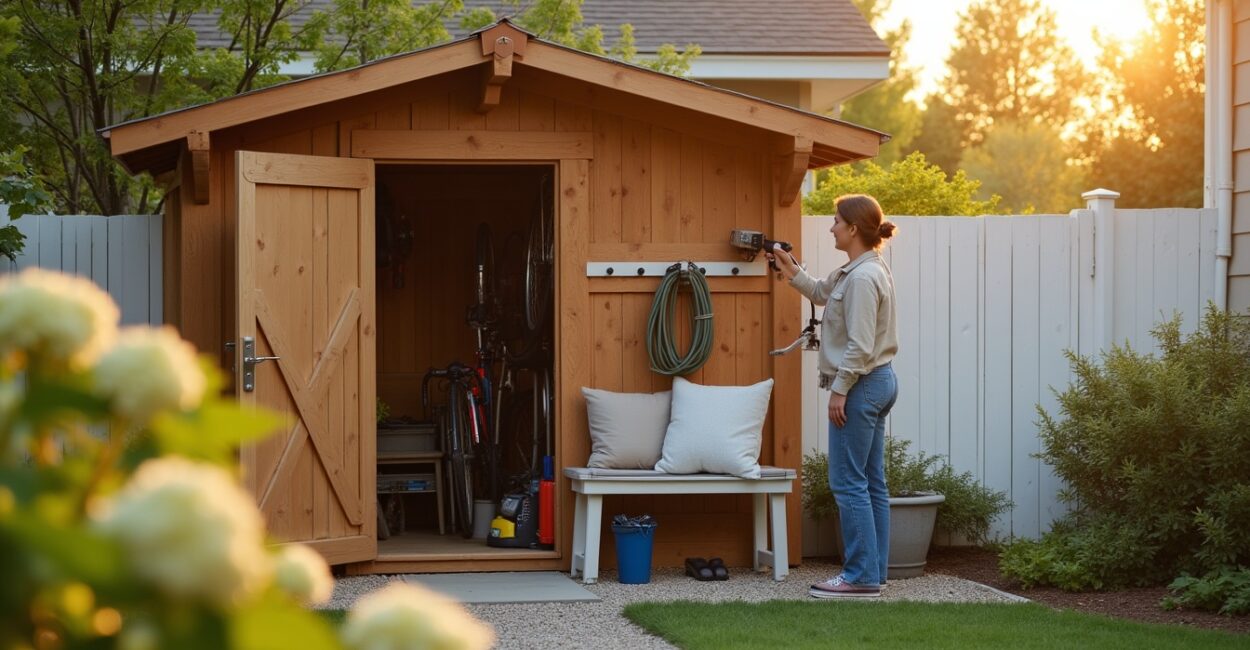
The weekend before an open house, a buyer walked the yard and stopped — not at the front door, but at a tidy little shed tucked behind lattice, where hoses, bikes, and a pressure washer were out of sight. That single, organized corner raised the room-by-room expectation of the whole house. This is the power of outdoor storage: visible order translates to perceived value. Read on — in three days you can make your yard look intentional, larger, and buyer-ready.
The Quick Win That Buyers Notice First
Buyers judge a property in seconds, and a clutter-free yard screams “well maintained.” A compact outdoor storage solution signals care without remodeling. On day one you can remove visible clutter; on day two, install or assemble a small shed or storage bench; by day three, style the space so it reads like extra usable square footage. Small changes shift perception: a tidy yard feels larger, safer, and lower-maintenance.
Compact Sheds That Look Custom but Install in Hours
Not all sheds are eyesores. Modern prefabricated models assemble in a few hours and come in colors and finishes that match vinyl siding or cedar accents. Choose options with flat-pack assembly, metal anchors, and preassembled panels to cut installation time. You can transform an awkward corner into an organized feature in a single afternoon.
- Plastic resin sheds: lightweight, low-maintenance, 2–4 hour assembly
- Metal sheds: durable, fire-resistant, good for tools
- Wood-look composite: higher perceived value, needs finishing touches
Decluttering Tactics That Create Instant Perceived Square Footage
Throwing everything into a pile is not decluttering — it’s hiding. Use these tactics: sort into Keep, Donate, Toss; stage items buyers expect (lawn mower neatly placed in shed); and remove seasonal excess. Decluttering is not just about removal; it’s about signal management. When pathways are clear and sightlines open, yards feel larger and safer — two traits buyers pay for.
- Rent a small dumpster or use curbside donation pickup
- Label boxes for temporary storage during showings
- Store bulky items in a single compact unit, not strewn around
The Installation Shortcuts That Save Time and Money
Skip full foundations and opt for a gravel pad or composite skid system when local codes allow; anchors plus a level pad often suffice for showings and short-term selling needs. Use quick-connect anchors for sheds and pre-cut base kits. Hire a handyman for 3–4 hours rather than a contractor to save cost and time. Practical shortcuts keep the project under three days without looking cheap.
Mistakes That Make Outdoor Storage Backfire (and How to Avoid Them)
People assume any storage is better than none — not true. Common errors ruin perceived value:
- Cheap, faded shed placed front-and-center: draws attention to neglect.
- Piling items inside without organization: suggests hoarding.
- Ignoring local codes: fines or removal orders kill momentum.
Fixes: pick a discreet spot, paint or stain to match the house, use shelving and labeled bins, and check municipal guidelines before buying.
A Surprising Comparison: Before/after That Changes Offers
Expectation: a cluttered backyard equals “needs work.” Reality: add smart outdoor storage and buyers mentally upgrade the whole home. In one local sale, a seller added a 6×6 resin shed, hid tools, and staged a tidy seating corner. The house moved from languishing on-market to receiving offers 7% over asking within a week. The contrast is not just visual — it alters buyer narratives about maintenance and future costs.
Styling and Staging: Make the Storage Feel Like an Asset
Storage should read as intentional design, not an afterthought. Match finishes, add a trellis or climbing plant, and place a bench or small rug nearby to signal a usable nook. Use neutral, coordinated bins and hooks inside the unit so it photographs well. When a storage solution looks like part of the home’s design, buyers mentally add usable square footage.
For data-backed credibility, note that tidy, well-staged homes consistently spend fewer days on market; for home improvement guidance and permit info check local building resources. According to HUD guidance on property standards and market insights from the U.S. Census Bureau, perceived maintenance and curb appeal influence buyer decisions and closing timelines.
Three days, a compact shed, and a ruthless sort—this is a small investment with outsized returns. The yard stops being a liability and starts selling the story buyers want: low upkeep, organized, and move-in ready.
What you do now matters. Pick one corner, pick one storage solution, and treat it like a room reveal — not a cleanup. Buyers will notice the difference before they step through the front door.
How Do I Pick the Right Size Shed?
Choose based on the items you need to store and the space’s visibility. A 6’x6′ or 6’x8′ shed covers common needs—lawn mower, tools, bikes—without overwhelming a small yard. Measure your largest item and allow 18–24 inches clearance for access. Consider door swing direction and proximity to pathways so it reads as part of the yard, not an obstacle. If you’re unsure, mock the footprint with tape or cardboard to test sightlines and flow before purchasing.
Do I Need Permits to Install a Small Outdoor Storage Unit?
Permit requirements vary by municipality and often hinge on size, setback, and permanence. Many places allow small, lightweight sheds under a certain square footage without a permit, but anything with a foundation or utility hookup usually requires approval. Check your city’s building department website or a county permitting portal for specific thresholds. Skipping this step risks fines or removal, which would negate any value you hoped to add before selling.
What’s the Fastest Way to Declutter a Yard Before Showings?
Set a strict 48-hour plan: day one, sort visible items into Keep, Donate, Toss; day two, consolidate Keep items into one storage unit and stage the rest. Rent a small dumpster or schedule charity pickup to remove bulky debris immediately. Use labeled bins for tools and seasonal gear and place them neatly inside the shed or a storage bench. Recruit two helpers for hauling and use a checklist to ensure pathways, sightlines, and focal points are clear for photography and open houses.
Are Storage Benches and Boxes Effective Alternatives to Sheds?
Yes—storage benches and deck boxes are excellent for front- or patio-facing spaces where a full shed would look out of place. They offer immediate curb appeal, quick installation, and dual function as seating. Choose UV-resistant materials and coordinated colors that complement the home. For larger items or long-term storage, however, they’re limited; use them to store cushions, garden tools, or toys, and combine them with vertical shelving inside a shed when needed for a comprehensive solution.
How Should I Budget for a Three-day Transformation?
Expect a modest budget if you focus on essentials: a quality 6’x6′ resin shed ($400–$1,200), gravel pad or skid base ($50–$300), basic shelving and bins ($50–$200), and optional handyman time ($100–$300). Add disposal or donation pickup ($0–$200). You can scale down with a storage bench and aggressive decluttering, or scale up with wood-look composite sheds and landscaping. The goal is visible organization; you don’t need expensive upgrades to shift buyer perception.