

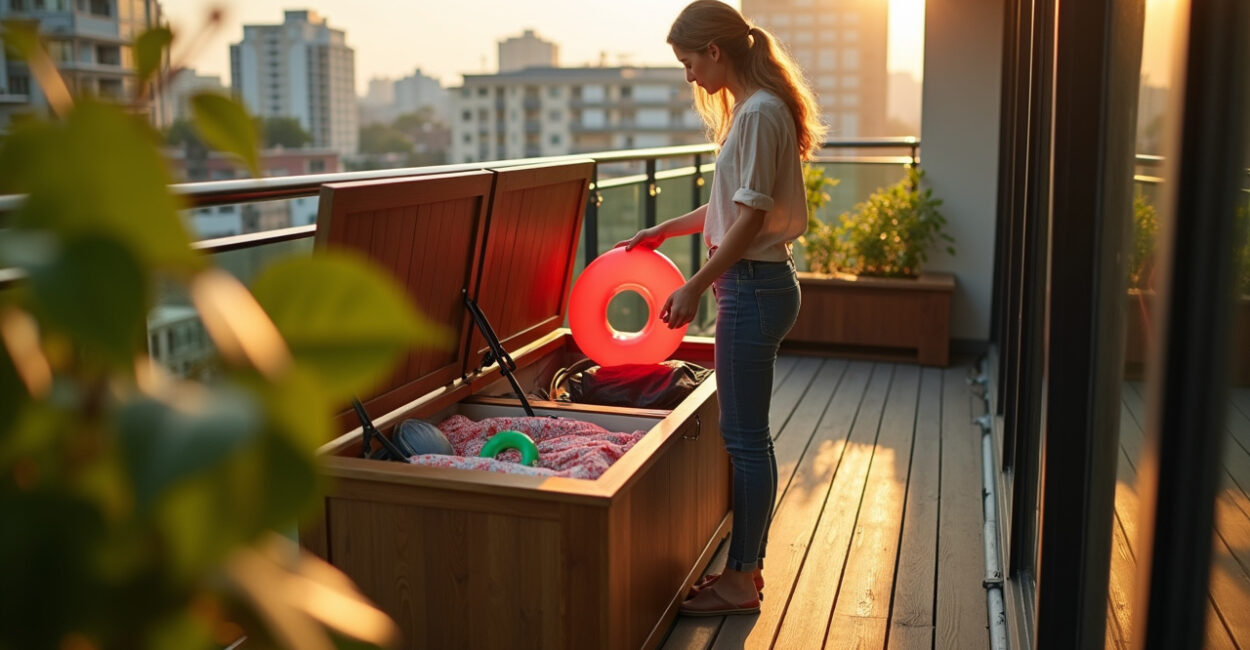
Someone dropped a cooler, two folding chairs and a box of pool toys on your balcony — and still expected you to host. That’s when a multiuse benches solution stops being nice-to-have and becomes survival gear. These benches seat two, hide the clutter and can make a 6-foot balcony feel like a tiny, deliberate living room.
How the Right Size Makes Multiuse Benches Feel Custom, Not Cramped
Size kills awkwardness and doubles seating without crowding the space. A 42–48 inch bench typically seats two comfortably while leaving a 12–18 inch aisle on a narrow balcony. For deeper balconies, a 48–60 inch bench gives a relaxed fit and more storage volume. Measure: bench depth 14–18 inches for sitting, 16–22 inches if you want deeper storage. Visualize one-person-per-2-foot spacing. That simple rule turns guesswork into a bench that looks intentional.
The Surprising Placement Trick Pros Use for Multiuse Benches
Placement beats style 9 times out of 10. Put the bench against a railing or along the longest wall. Anchor one end near the door so cushions and toys are easy to grab on the way out. If your balcony gets direct sun, float the bench under a shade sail or glass awning to protect the lid. This small move keeps the seating area guest-ready and limits daily cleanup.

Weatherproofing That Actually Works for Outdoor Multiuse Benches
Waterproof paint and marine-grade hardware are not optional on exposed balconies. Choose powder-coated steel or teak for frames and composite tops for lids. Line the interior with breathable moisture barriers and add silicone on hinge screws to prevent rust. For cushions, use quick-dry foam and Sunbrella fabrics. Federal and practical sources show how moisture affects outdoor furniture longevity — see EPA guidance on outdoor materials and maintenance tips from USDA resources.
Organization Inside: How to Store Cushions, Tools and Toys Without the Mess
Divide the interior like a tiny closet. Use vertical dividers for cushions, bins for small toys, and a shallow tray for tools and ties. A simple list helps:
- Top shelf: cushions in waterproof sacks
- Middle bins: kids’ toys and pool gear, labeled
- Bottom drawer/tray: gardening tools and zip ties
Labeling saves time. Transparent bins keep visual clutter down and force you to purge seasonally. This keeps your bench guest-ready and reduces the “where did we put that?” scramble.

The One Comparison That Changes What You Buy: Lid Type Showdown
Expectation: a soft, easy lid. Reality: a lid that fails at humidity. Compare three lid types: piano hinge lids (sturdy, heavy), gas-spring lids (soft open, pricey), and removable lids (cheap, flexible). Piano hinges are low-maintenance but can warp wood. Gas springs give a luxury feel and keep kids safe, but seals and springs wear in coastal salt air. Removable lids are simple and cheap but offer less weather protection. Choose based on climate and how often you open the bench.
Common Mistakes People Make with Multiuse Benches (and How to Avoid Them)
Most errors are avoidable with one simple check: think like someone who uses it daily.
- Buying too deep — bench becomes a storage curse, not a seat
- Skipping hinges rated for outdoor use — expect squeaks and rust
- Not planning ventilation — mildew loves sealed boxes
- Using non-stackable bins — wastes vertical space
Avoid these and the bench moves from junk drawer to a curated piece that actually saves time.
A Short Example: How a Tiny Bench Saved a Saturday Night
They expected seven people on a six-foot balcony. I slid a 48-inch multiuse benches against the railing, added two stools and stashed cushions inside. When rain hit, the waterproof lids kept everything dry. Guests sat, drinks stayed upright and the toys stayed out of sight. The bench did two jobs: seat people and hide chaos. That night proved the value of a well-placed, weatherproof bench more than any brochure ever could.
Quick note: if you’re measuring for a condo rule or HOA, check guidelines before anchors or drilling. A little paperwork today saves a headache tomorrow.
Think of a bench as both furniture and a small, outdoor cabinet. Choose size, lid and materials to match your climate and habits, and you’ll have a balcony that’s calm, compact and always ready for guests.
How Big Should a Multiuse Bench Be for a Two-person Balcony?
A 42–48 inch bench is the sweet spot for seating two on most narrow balconies. That size leaves room to walk and still offers decent storage depth. If you want extra storage for bulky cushions or tools, move to 48–60 inches but only if your balcony width allows a 12–18 inch clearance path. Depth of 14–18 inches is fine for seating; choose 16–22 inches if you need deeper storage. Measure door swing and traffic flow before buying to avoid a bench that blocks movement.
What Materials Last Longest for Outdoor Multiuse Benches?
Teak, powder-coated aluminum, and high-quality composite are the top choices. Teak weathers beautifully with minimal maintenance; aluminum resists rust and stays light; composites won’t crack like some plastics. For interiors, use moisture-resistant liners and silicone-treated hardware. Avoid untreated softwoods on exposed balconies unless you plan to refinish regularly. The right material depends on exposure: coastal salt air favors marine-grade metals and composites, while sheltered spaces can handle natural wood with better feelings and scent.
How Do I Keep Cushions Dry Inside a Storage Bench?
Store cushions in breathable, water-resistant sacks and add silica gel packs or moisture absorbers to the bench interior. Create airflow by installing small, screened vents near the top and bottom of the bench; this cuts humidity that causes mildew. If you live in a very wet climate, consider removable storage bins that you can bring indoors or a dehumidifier packet replaced seasonally. Wiping down cushions and airing them before storage reduces trapped moisture and keeps foam from degrading.
Can Multiuse Benches Be Secured to Prevent Theft or Tipping?
Yes. Anchor the bench to a wall or railing with tamper-resistant screws if permitted by your building rules. Choose hidden brackets or a cable lock for theft prevention in public or ground-level settings. For tipping, add weight low in the storage compartment (a sandbag in a sealed bag) or secure L-brackets inside the back. Always follow HOA or landlord rules for modifications, and use corrosion-resistant fasteners outdoors to prevent future failure.
What Small Organization Accessories Work Best Inside a Bench?
Stackable clear bins, labeled fabric baskets, and a shallow removable tray are the top helpers. Use vertical dividers for cushions and strap hooks on the lid for small tools or keys. Magnetic tool strips or a pegboard panel on the inner back wall keep small items visible. Choose modular containers so you can rearrange for seasonality. These simple accessories turn wasted volume into usable space and make the bench feel like a mini-closet instead of a black hole.