

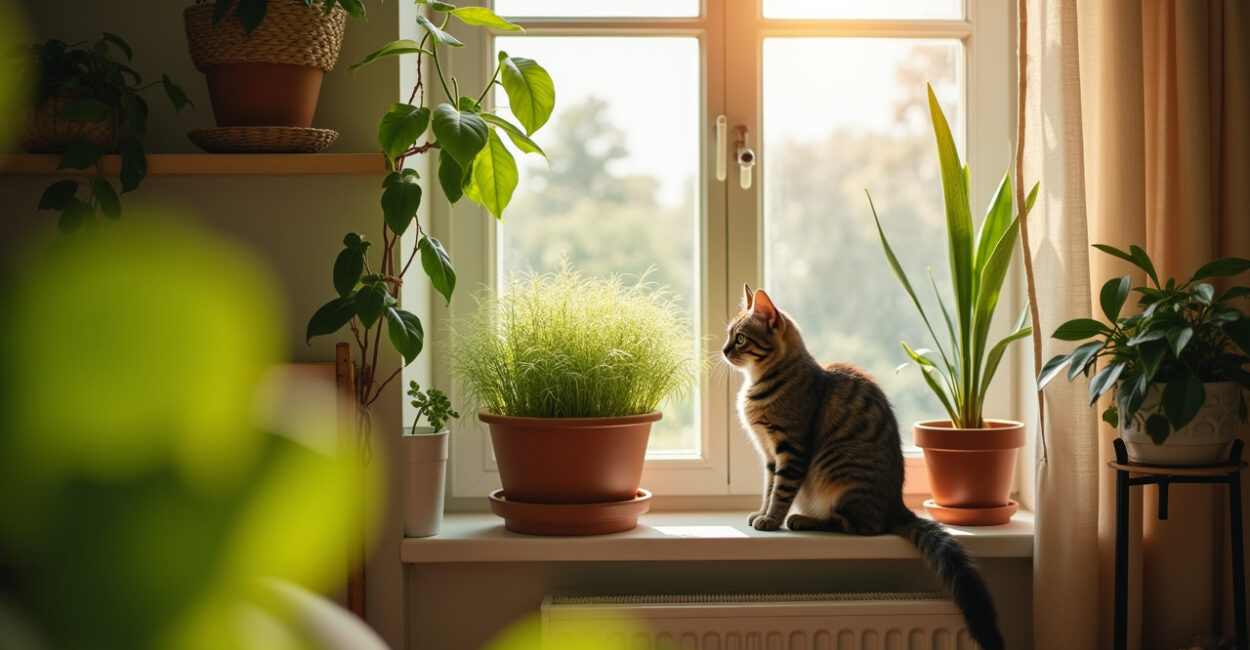
Imagine a sunlit corner full of green that your cat can sniff without turning it into a salad. That’s the promise of cat friendly houseplants — lush, safe, and stylish. In the next scroll you’ll find 12 vetted species, simple placement hacks and quick swaps that protect curious cats without killing your decor vibe.
Why Picking the Right Plants Matters More Than You Think
Toxic plants can cause vet visits, stomach issues, or worse. Yet many common houseplants are risky. Choosing cat friendly houseplants is the difference between a peaceful home and emergency vet bills. Small, cheap mistakes add up fast: a chewed leaf, a vomiting episode, a sleepless night. Protecting pets is both a design and a safety move. You can still have drama, texture and height — just choose smarter.
12 Cat Friendly Houseplants That Actually Stay Alive in Real Homes
Here are 12 plants that passed the “curious-cat test” — attractive, resilient, and non-toxic to cats.
- Spider plant (Chlorophytum comosum) — easy, air-purifying, loves bright indirect light.
- Boston fern (Nephrolepis exaltata) — lush fronds, humidity-friendly.
- Areca palm (Dypsis lutescens) — adds height and soft texture.
- Parlor palm (Chamaedorea elegans) — small, slow, very pet-safe.
- Calathea (various species) — bold leaves, low light winner.
- Ponytail palm (Beaucarnea recurvata) — sculptural, drought-tolerant.
- Haworthia (succulent) — compact, non-toxic, sun-loving.
- Baby rubber plant (Peperomia obtusifolia) — glossy leaves, small habit.
- Moth orchid (Phalaenopsis) — blooms, cat-safe, indoor classic.
- Herbs: Basil, thyme — useful in the kitchen and generally safe in small amounts.
- Sweet basil (Ocimum basilicum) — fragrant and safe; keep pruned.
- Christmas cactus (Schlumbergera) — seasonal color, tolerant of handling.

Placement Hacks: Where to Put Cat Friendly Houseplants So Both Thrive
Light, height and barriers are the three things that decide whether a plant survives and whether your cat leaves it alone. Put plants out of direct paw reach, use vertical shelves, or group them on a high console.
- High shelves with staggered levels create a jungle your cat can’t reach easily.
- Hanging planters keep delicate leaves safe and add movement.
- Heavy ceramic pots resist tipping — essential if you have a rambunctious jumper.
- Use sticky tape or double-sided pads under pot bases as a cat-deterrent (cats dislike the feel).
The Quick-swap Strategy: Replace These Common Toxic Plants Today
Expectation: You love monstera and dieffenbachia. Reality: they’re toxic. Swap them for similar looks that are cat safe.
- Swap Dieffenbachia for Calathea — similar leaf drama, less risk.
- Swap Philodendron for Parlor Palm — similar silhouette in the room, safer for pets.
- Swap ZZ plant for Ponytail Palm or Haworthia if you need low-light, low-care succulents.
These swaps keep your aesthetic but remove the danger. It’s a small change with an outsized safety payoff.

Common Mistakes Owners Make with Cat Friendly Houseplants
People assume “cat safe” means “cat-proof.” It doesn’t. Knowing what not to do prevents most accidents.
- Overestimating a plant’s tolerance to chewing — even safe plants can cause upset stomachs if eaten in quantity.
- Using pesticides or fertilizers that are toxic to pets — always check labels.
- Placing water bowls too close to soil — standing water attracts bugs and encourages digging.
- Assuming succulents are safe — some common succulents are mildly toxic.
A Small Story That Proves Design and Safety Can Co-exist
My friend had a floor-to-ceiling philodendron that made her living room feel like Bali. Her cat chewed a leaf, got sick, and the plant had to go. They replaced it with a grouped parlor palm and spider plant. The room kept its lush look and the cat kept its health. The aesthetic survived — and so did the pet.
Where to Learn More and Science-backed Safety Tips
Not all online lists agree. For reliable, research-based info check pet and extension resources. Trusted sources reduce guesswork when choosing cat friendly houseplants. For toxicity lists and first-aid guidelines, consult the ASPCA and university extensions.
According to the ASPCA’s toxic plant database, many popular species are unsafe. For local plant recommendations and care tips see your state extension office, such as Penn State Extension.
Practical Checklist to Cat-proof Your Plant Collection Today
Here’s a short, actionable checklist. Read it once. Do it tonight.
- Audit: Remove any clearly toxic species (Dieffenbachia, Oleander, Sago palm).
- Swap: Replace toxic focal plants with safe alternatives from the 12 list.
- Fence: Use hanging planters or tall stands for chewers and jumpers.
- Vet: Save your vet’s number and the ASPCA poison helpline in your phone.
One small change — like swapping a philodendron for a parlor palm — can save money, stress, and your cat’s health.
Can My Cat Eat These Plants Safely?
Most plants on the vetted list are non-toxic, but “safe” doesn’t mean edible. Cats may nibble and get mild stomach upset. If your cat eats a lot of plant material or shows drooling, lethargy, or vomiting, call your vet. Keep an eye on quantity eaten and the plant part (leaves, roots, flowers). Safe plants reduce risk but don’t eliminate it. Preventive placement and supervision are still the best protection.
How Do I Introduce New Cat Friendly Houseplants to a Curious Pet?
Introduce plants gradually. Put the new plant on a low table for a day so your cat can sniff from a distance. After that, move it to its intended spot. Use scent deterrents like citrus peels on the pot rim if your cat persists. Reinforce with positive alternatives: a cat grass pot or cat-safe herb box. The goal is to distract, not punish. Consistent redirection works faster than scolding.
Are Any of These Plants Hard to Care For?
The 12 plants were chosen for being both cat-safe and generally low-maintenance. Some, like Boston ferns, like humidity and a bit more attention. Others, like haworthia and ponytail palm, thrive on neglect. Match plant care to your routine. If you travel often, pick drought-tolerant options. If you love humidity, choose ferns and calatheas. Don’t force care routines — pick plants that fit your life, not the other way around.
What Should I Do If My Cat Eats a Toxic Plant?
Act fast. Remove the plant from the cat’s reach and note how much was eaten. Call your vet immediately and have the plant name ready. You can also contact the ASPCA Animal Poison Control Center for guidance. Do not induce vomiting unless instructed. Symptoms vary by plant, so timely professional advice matters. Keep emergency numbers handy and, if possible, a photo of the plant for quick ID.
Can Plants Actually Improve My Cat’s Behavior?
Yes. Introducing safe greenery like cat grass or spider plants can satisfy chewing urges and reduce boredom. Cats enjoy textures and scents; plants can redirect destructive behaviors away from furniture. Pair plants with vertical cat spaces and interactive toys. Behavioral changes take time, but a well-placed safe plant often calms anxious or curious cats. It’s not a cure-all, but it’s a cheap, low-risk addition to a cat-friendly home environment.