

They paved a flat patio, planted a few shrubs, and called it done—until a spring storm erased the edge of their yard overnight. That exact kind of surprise is why creekside outdoor living deserves its own playbook. When water, soil and design meet, small choices either create a peaceful waterside room or a maintenance nightmare.
This piece pulls nine high-impact design moves into one practical guide. Expect erosion-smart patios, native planting schemes, sightline tricks, and low-effort upgrades that deliver big sensory payoffs. Read fast; the best idea should be useful in under an afternoon.
1. Make Your Patio Flood-smart (and Still Feel Luxurious)
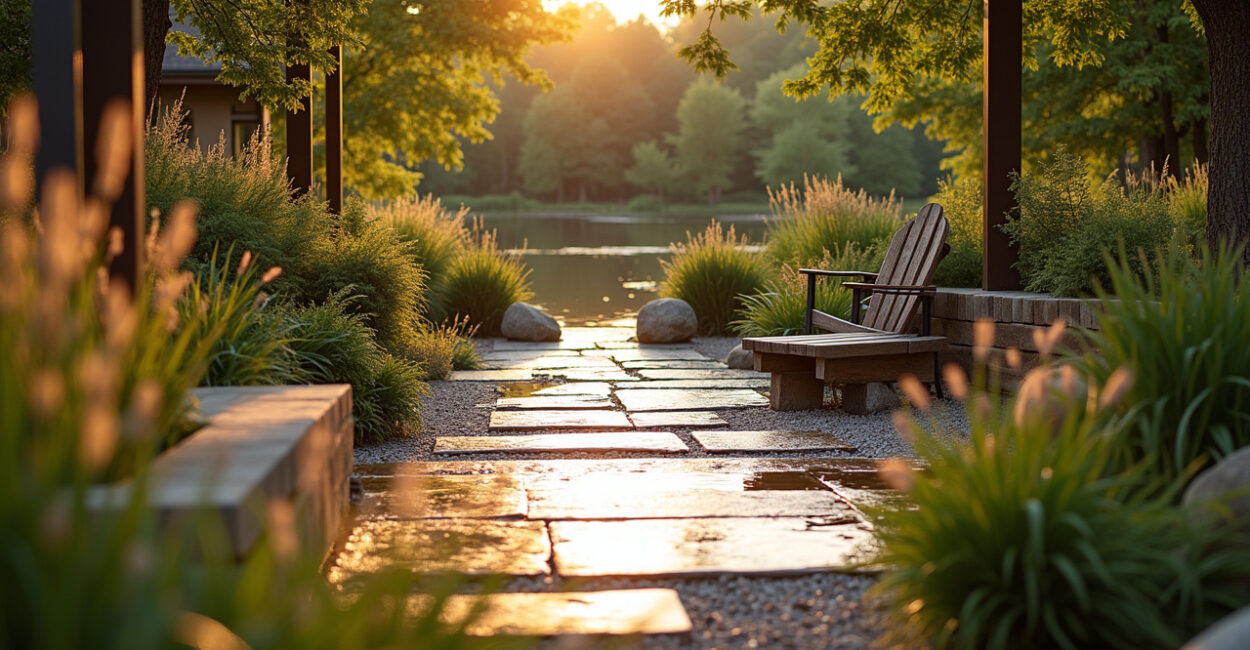
Flood-aware patios keep your furniture dry and your nerves intact. Creekside outdoor living starts with understanding how water moves across your lot. A raised, permeable paver patio or a crushed-granite terrace absorbs runoff and lets floods flow rather than batter your hardscape. Use larger pavers with gaps for gravel or plants to reduce splash and erosion.
- Benefits: less pooling, cooler surface, easier repairs.
- Visual: low, earthy materials that read as an extension of the creek bank.
- Next step: sketch the high-water mark and plan patio 6–12 inches above it.
2. Build with Materials That Forgive Water and Time
Wood that rots and paint that peels are choices you’ll regret beside moving water. Use weather-ready materials: ipe or composite decking, galvanized steel planters, and natural stone. These age gracefully and need far less upkeep than painted lumber. For creekside outdoor living, prioritize texture—rough stone and oil-finished wood feel right next to a creek.
- Expectation vs. reality: painted cedar looks great day one; three seasons later it’s a headache.
- Practical tip: choose materials with 20-year lifespans or easy replaceability.
3. Use Native Planting for Armor and Ambiance
Native plants protect banks, feed wildlife, and look effortless. A riparian palette—willows, sedges, and native grasses—stabilizes soil with deep roots while providing year-round texture. For creekside outdoor living, think in layers: tall buffer plants, mid-layer shrubs, and a living shoreline of grasses. This creates privacy and reduces erosion at the same time.
- Benefits: less watering, fewer pests, more birds.
- Visual: moving grasses and seasonal blooms that feel natural, not staged.
4. Sculpt Sightlines for Calm and Connection
A single framed view of the water turns a yard into a room. Use low plantings and a simple pathway to create a deliberate sightline to the creek. A bench placed where the water reflects the sky invites stillness. In creekside outdoor living, the trick is to reveal the creek like a piece of art—don’t try to show everything at once.
Mini-story: They installed a narrow stepping-stone path and kept the view corridor narrow; now evenings end with two chairs and a book, and the creek feels like a private theater.
5. Design for Sound: Water, Wind, and Privacy
Sound is the hidden sense that makes a creekside space feel alive. Use shrubs, berms, and textured surfaces to shape how you hear the creek. Planting dense evergreen buffers blocks road noise; a cobble strip at the bank can soften water sounds. For creekside outdoor living, deliberate sound design makes the space feel remote—even if it’s in a suburb.
- Quick win: add a row of native evergreens 10–15 feet from the path for sound buffering.
- Don’t forget seating positioned to catch the best acoustic sweet spot.
6. Integrate Low-impact Lighting and Night Safety
Good lighting invites evening use without blasting wildlife with glare. Use warm, low fixtures and shielded path lights to define edges and steps. Solar bollards and motion-friendly LED strips are great for creekside outdoor living because they avoid trenching and reduce wet-area wiring risks. Aim for glow, not glare.
- What to avoid: bright floodlights aimed at the water.
- What to do: add subtle uplighting to specimen trees and step lights on sloped paths.
7. Small Shoreline Fixes That Make a Big Difference
Fixing a 10-foot stretch of bank often protects the whole yard. Instead of bulk retaining walls, use bioengineering: live stakes, coir logs, and rock toes. These solutions absorb energy and give plants time to establish. Creekside outdoor living benefits when the shoreline is part habitat, part garden edge.
- Common errors to avoid:
- Building hard concrete walls that reflect erosion downstream.
- Planting only ornamentals—non-natives often fail on wet banks.
- Ignoring seasonal surge paths when locating furniture.
Comparison (before/after): A straight, mowed bank erodes fast and looks harsh; after adding native buffers and rock toes, the bank traps sediment, feeds pollinators, and looks like it belongs.
Two reliable references that shaped these approaches: research on streambank stabilization from the U.S. Natural Resources Conservation Service and plant recommendations from university extension programs. For design specifics, see USDA NRCS guidance and local extension plant lists like the Penn State Extension.
Before you choose finishes or plants, walk the property at high water. That one visit reveals the honest rules the creek uses. Work with them, and the yard stops fighting the water and starts amplifying the place.
Which idea will you try this weekend? Start with a path or a protective planting and watch the rest fall into place.
How Soon Can I Safely Build Next to a Creek?
Timing depends on slope, soil and local rules. Do not build during high-flow season; aim for late summer or early fall when flows are low and plants will establish roots before winter. Check local permitting—many jurisdictions require setbacks and bank protection permits. A short site assessment by an extension office or a licensed engineer reveals flood lines and erosion risk. For most small projects like a bench or pathway, you can finish in one dry season if you prepare the bank and use native plants for stabilization.
Which Native Plants Stabilize Banks Yet Look Good Year-round?
Look for deep-rooted perennials and shrubs: willow species, native sedges, switchgrass, and dogwood shrubs are reliable. They anchor soil, tolerate floods, and provide seasonal interest—catkins, seed heads, and fall color. Plant in mixed groups, not single rows, so roots interlock and soil is trapped. Combine evergreen buffers for winter structure with flowering perennials for spring and summer color. Your local extension office can give lists tailored to your climate and soil type for best success.
Can I Use Hardscaping Near the Creek Without Causing Harm?
Yes—if you choose permeable, flexible solutions and avoid hard vertical walls that redirect water. Use permeable pavers, gravel terraces, or stepping stones with gaps for planting. Rock toes and boulder clusters at the bank can stabilize without reflecting erosive energy. Avoid concrete bulkheads unless engineered for your specific bank conditions. Prioritize materials that let water pass and plants establish; this reduces downstream impacts and keeps your creekside outdoor living area resilient and ecologically friendly.
What Maintenance Should I Expect for a Creekside Outdoor Living Space?
Maintenance is mostly seasonal: remove debris after storms, check erosion-prone spots, replace failing plants, and clear invasive species. Budget time each spring to inspect bank anchors and pathways. Native plantings typically need little watering once established, but new transplants need care for the first two seasons. Lighting and furniture require less annual work if you choose weatherproof materials. Overall, investing in right plants and materials up front cuts maintenance dramatically compared with traditional lawns and treated wood.
How Do I Balance Wildlife Habitat with Usable Outdoor Space?
Create zoned areas: a wild buffer at the bank and a groomed terrace closer to the house. The buffer uses native plants and leaves leaf litter for insects and birds; the terrace has clear sightlines, seating, and low-maintenance paving. Pathways and small viewing platforms let you enjoy wildlife without trampling habitat. Use soft edges—no impermeable fences—so animals move freely. With thoughtful zoning, creekside outdoor living can be both inviting to people and generous to wildlife.