

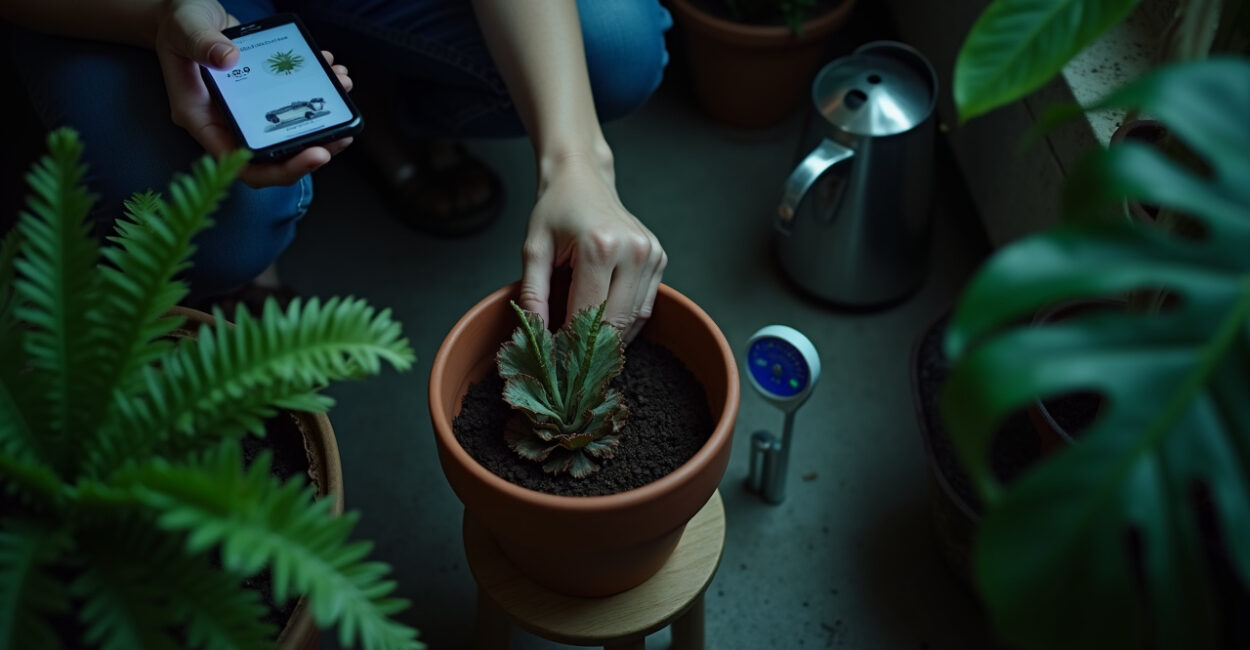
Hands in soil, dead leaves on the pot rim, and a guilty scroll through plant groups at 2 a.m. — sound familiar? Your watering schedule is the single habit that separates stubborn survivors from thriving houseplants. Get this right and plants repay you with growth, blooms, and fewer pests. Get it wrong and you’ll nurse root rot or chronic thirst for months. Below you’ll find clear, species-based schedules, how potting mix and season change the game, and quick tests that tell you exactly when to water.
Why Timing Beats Routine: The Surprising Truth About Watering Schedule
Watering on a fixed day is often the root of plant stress. Many people water every Sunday because it’s tidy. But plants respond to soil moisture, not your calendar. A proper watering schedule looks at species, pot size, and season. Some succulents need a deep drink once a month. A fern may want water every 3–7 days. The point: a smart schedule adapts. Check soil first, then follow a plan. This one shift cuts overwatering and under-watering in half.
The Species Cheat-sheet: Who Drinks When (and How Much)
Different houseplants have dramatically different needs. Here’s a quick guide to typical watering schedule frequency by species. These are starting points; adjust after the soil test below.
- Succulents & cacti: deep soak, then dry for 2–6 weeks
- Pothos, ZZ plant: water every 2–3 weeks, allow top 1–2 inches to dry
- Snake plant: every 3–6 weeks, sparse in winter
- Fiddle leaf fig: once every 7–10 days, keep root ball slightly moist
- Peace lily & ferns: 3–7 days, keep evenly moist but not waterlogged
- Orchids (epiphytic): water every 5–12 days, allow roots to dry between
Use these as a baseline for your watering schedule and always watch leaves and soil for feedback.
How Potting Mix and Pot Type Rewrite Your Watering Schedule
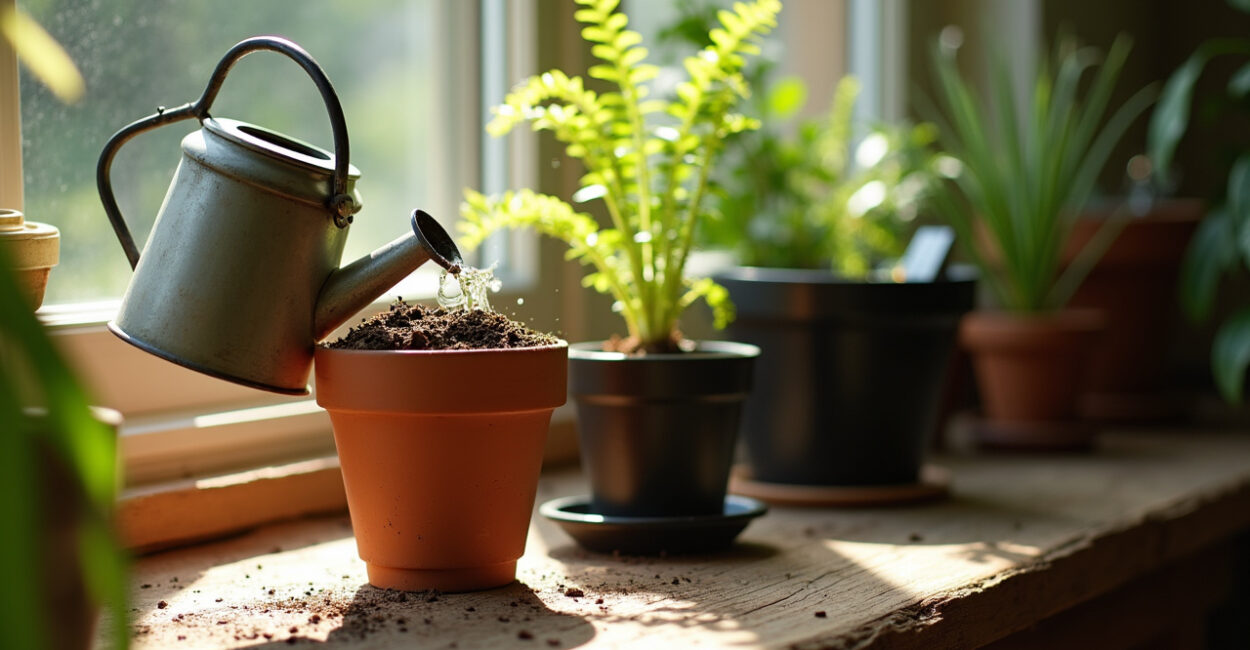
Soil and pot are as important as the plant itself. A chunky, fast-draining mix dries in days. Peat-heavy mixes hold water for weeks. Clay pots wick moisture and dry faster than plastic. If you switch soil or pot, you must rewrite the watering schedule. Consider these quick rules:
- Fast-draining mix + terracotta = water less often, deeper soaks.
- Peat-rich mix + plastic pot = water less deeply but more often.
- Large pot = more buffer; small pot = more frequent checks.
Ignoring pot and mix is the most common mistake people make with their watering schedule.
Seasonal Shifts: When Your Watering Schedule Should Change
Plants don’t keep the same tempo year-round. Growth slows in winter, so water less. In spring and summer, plants grow fast and drink more. A good rule: reduce water by 25–50% in cooler, low-light months. Moveings like dormancy in bulbs or slowed leaf production mean longer gaps. Monitor and tweak. If a warm spell hits in fall, your watering schedule should tighten. Season-aware watering prevents soggy winters and thirsty summers.
Three Quick Tests to Know Exactly When to Water
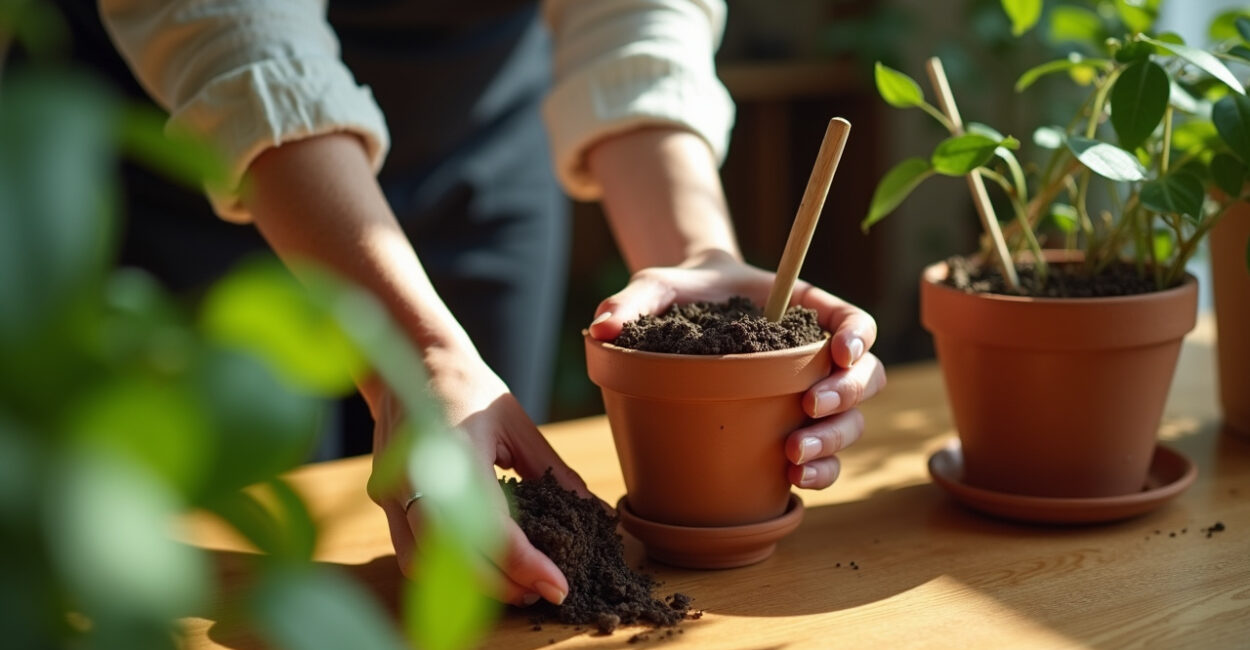
Stop guessing. Test. These three simple checks tell you when your watering schedule needs action.
- Finger test: insert one to two inches. If dry, water (best for most houseplants).
- Weight test: lift the pot — light means thirsty; heavy means moist.
- Skewer or chopstick: insert and pull; damp skewer shows moisture deep down.
Do these before following any watering schedule. They’re faster than waiting for leaves to show stress. Use at least two methods for new plants.
Common Watering Mistakes and How to Fix Them
Most killers are avoidable. Here are the top errors people make with their watering schedule and the fix for each.
- Watering on a fixed day — fix: test soil instead.
- Shallow, frequent waterings for deep-rooted plants — fix: deep soak and let dry.
- Ignoring pot drainage — fix: add holes or use a well-draining mix.
- Overreacting to droop — fix: check soil before flooding with water.
One comparison that shocks new plant owners: watering on schedule vs. testing first. Expectation: predictable care. Reality: testing-first plants recover faster and die less. That’s the payoff for a flexible watering schedule.
A Tiny Story That Changes How You Water
The second winter after I brought home a thirsty fiddle leaf fig, I kept watering every seven days because that’s what I read online. Leaves yellowed. Root tips softened. I switched to testing weight and finger depth. Two weeks later the leaves perked. By spring the fig had new growth and no root rot. That quick pivot from calendar to tests rewrote my entire watering schedule. The lesson: listen to the plant, not the clock.
Two trusted sources back this adaptive approach. University recommendations on houseplant watering show soil moisture is the best indicator of plant health, not fixed intervals. See University of Georgia extension on watering and practical guidance for container soils from Virginia Tech publications.
Ready to change your watering schedule? Start with the finger and weight tests today. One small habit — testing before watering — will save you time, money, and a lot of heartache. Your plants will show up for you.
FAQ
How Often Should I Water My Succulent?
Succulents prefer a “soak and dry” approach: water deeply until excess runs out, then let the soil dry completely before watering again. In summer that often means every 2–4 weeks depending on pot size and mix. In winter, when growth slows, water even less—sometimes only once a month or less. Always check the soil or use the weight test rather than a calendar. Overwatering succulents is by far the most common mistake and cause of rot.
Can I Use a Moisture Meter to Set My Watering Schedule?
Moisture meters can help, but they’re not foolproof. They measure local moisture where the probe sits, which can be misleading in mixed soils or when roots avoid the probe area. Use a moisture meter along with finger and weight tests. Calibrate your expectations: for many houseplants, a reading that shows slightly damp near the root ball is good. Treat the meter as one tool in your watering schedule toolbox, not the only rule.
How Does Winter Change My Watering Schedule?
In winter, most houseplants slow down and need less water because growth and evaporation drop. Reduce watering frequency by roughly 25–50%, and always check soil moisture before you water. Plants in low light dry slower; those near heaters may dry faster. If a plant shows new growth, stick with the regular schedule for active months. Adapting your watering schedule seasonally prevents soggy roots and keeps plants healthier during dormancy.
What Signs Show I’ve Been Overwatering Despite a Regular Watering Schedule?
Early signs include yellowing lower leaves, soft or mushy stems, and soil that stays damp for days. Later, roots may rot and leave a foul smell. If you suspect overwatering, stop watering, improve drainage, and allow the soil to dry. Repotting into fresh, well-draining mix helps in severe cases. The core fix is to switch from calendar-based care to moisture-based watering schedule checks—use the finger and weight tests to avoid repeating the problem.
How Do I Adjust My Watering Schedule for Plants in Hanging Baskets or Small Pots?
Hanging baskets and small pots dry out faster because they have less soil to hold moisture and more surface area exposed to air. Expect to water them more frequently—sometimes every few days in hot months. Use a daily weight lift or finger test to gauge needs. Consider switching to a mix with more water-retaining components if you can’t tend plants often. Grouping pots or adding mulch can also slow drying and stabilize your watering schedule.