

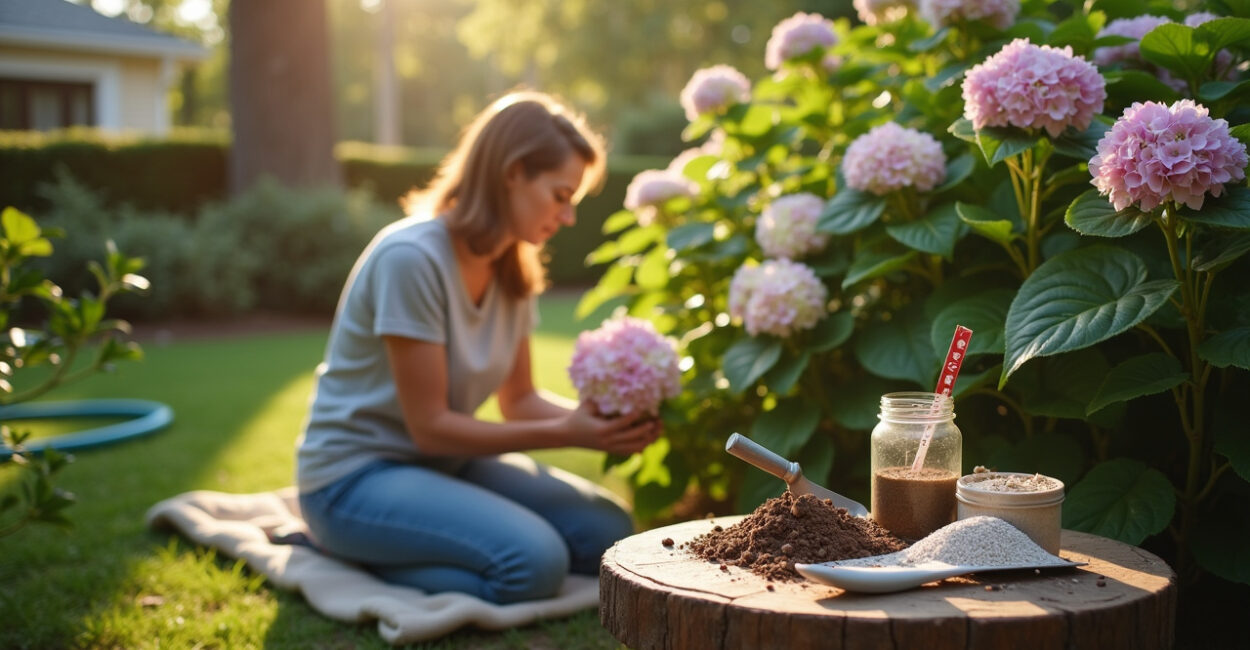
When a single hydrangea produced twice as many heads after one simple change, my neighbor stopped blaming bad luck and started testing her soil. That quick win is what this piece hands you: seven precise soil tweaks—pH shifts, texture fixes, and targeted amendments—that visibly increase bloom size and make flowers last longer. Read the first three and you already have actions to try this week. The rest turn good results into reliable habit.
1. The PH Nudge That Flips Flowers from Sad to Showy
Plants don’t care about labels — they care about chemistry. Soil pH controls nutrient access. Too acidic and phosphorus locks up; too alkaline and iron vanishes. For many ornamentals, a modest shift of 0.5 pH can boost bloom size and color intensity.
- How to test: quick strip kits or a lab test give different depth. Start with a kit for speed, confirm with a lab if results surprise you.
- Quick wins: add elemental sulfur to lower pH; use garden lime to raise it. Small doses over months beat big swings overnight.
Soil does the heavy lifting — treat pH like the thermostat for nutrient delivery, not a guesswork setting.
2. The Texture Tweak That Makes Roots Greedy for Water and Air
Bloom size depends on roots having space and steady moisture. Heavy clay compacts and drowns rootlets. Pure sand drains too fast. The sweet spot is a crumbly loam that holds water but drains excess.
Simple fixes for texture:
- Work in compost to improve aggregation and water-holding.
- For clay, add coarse sand and organic matter; for sandy soils, add compost and well-rotted manure.
Do a jar test: soil in a jar with water will separate into layers and tell you if texture is the problem. Soil that stays cloudy after settling usually needs organic matter.

3. The Amendment That Sparks Bigger Petals—phosphorus, but Smarter
Phosphorus fuels bloom formation, but timing and placement win the day. Tossing powdered bone meal in spring is a tradition, but targeted use at root zone and during bud set gives better results.
- Use a balanced granular fertilizer at planting, then a higher-phosphorus feed when buds form.
- Foliar sprays with soluble phosphorus can give a quick nudge during bloom set, but they’re a supplement, not a replacement for healthy Soil.
Expectation vs. reality: many expect instant giant blooms from one bag of bone meal. Reality: steady phosphorus availability and correct pH produce consistent, larger flowers season after season.
4. Microbial Life: The Unseen Partner of Huge Blooms
Healthy Soil is alive. Microbes unlock nutrients and make roots more efficient. Beneficial fungi and bacteria increase nutrient uptake and can extend bloom life by improving plant resilience.
Introduce them by:
- Adding compost teas or mycorrhizal inoculants at planting.
- Avoiding broad-spectrum fungicides and excessive nitrogen that harm beneficial communities.
Mini-story: A homeowner added mycorrhizae to a tired rose bed. The second season the bushes bloomed later and held flowers longer through a heat wave. The soil biology turned spikes of fertilizer into lasting blooms.

5. Drainage Rescue: The Secret to Flowers That Don’t Rot
Sitting water kills buds faster than pests do. Ornamental beds need predictable drainage. Roots need oxygen as much as moisture. Poor drainage shortens bloom life and invites disease.
- Fixes: raise beds, add coarse grit or gravel under heavy clay, and use wider planting holes with loose soil at the bottom.
- Install a simple French drain or lay a permeable path to move excess water away from beds.
Small comparison: A rose planted in poorly drained Soil produced frequent black spots and few blooms. The same variety in a raised bed doubled its flowering period.
6. Spot Treatments: What to Add and Where for Immediate Results
Targeted edits beat blanket applications. Apply amendments where roots actually grow: band phosphorus at planting, side-dress with compost near the dripline, and mulch thinly to keep collars dry.
- Use slow-release granules for steady feed through the season.
- For container ornamentals, fresh mix with 30–40% compost improves both texture and nutrition quickly.
Errors to avoid:
- Over-fertilizing the crown (burn risk).
- Adding uncomposted manure directly to roots.
- Assuming every plant needs the same amendment.
7. Diagnostics That Save You Hours and Deliver Bloom Gains Fast
Good troubleshooting is cheap and quick. Learn three checks that tell you what the Soil actually needs: a pH test, a jar texture test, and a simple pinch-taste for salt build-up (salty soil smells acrid and tastes bitter on a small scrape).
A quick diagnostic routine:
- pH strip test in 10 minutes.
- Jar test for texture in one day.
- Observation: leaf color, bud set timing, and wilt pattern.
Two authoritative sources to bookmark: USDA Natural Resources Conservation Service for soil basics and amendment guides, and Penn State Extension for diagnostics and crop-specific fertilization recommendations. Use those as your reference when results surprise you.
Do the first three tweaks this week: test pH, add compost to texture-poor beds, and place phosphorus where roots will find it. Those moves usually give visible bloom gains within one season. Soil is not a problem to fix once — it’s a routine to keep. Make it part of your gardening rhythm and the flowers will repay you with size, color, and staying power.
How Soon Will I See Bigger Blooms After Changing Soil PH?
Expect changes in weeks to months, not overnight. Adjusting Soil pH by small increments (about 0.3–0.5 pH) can improve nutrient availability within weeks for fast-growing ornamentals. Perennials and woody shrubs may take a full season to show clear differences in bloom size and longevity because their root systems and internal nutrient storage need time to rebalance. Consistent follow-up—small, repeated amendments and retesting—gets reliable results faster than one large application.
Can Compost Alone Fix Poor Soil Texture and Boost Blooms?
Compost is powerful, but it’s rarely a complete fix alone. Adding compost improves Soil structure, water retention, and microbial life, which supports bigger blooms. For very heavy clay or very sandy soils you’ll often need a mix: compost plus coarse sand or grit for clay, or compost combined with fine organic matter and moisture-retentive amendments for sand. Think of compost as the backbone; texture adjustments are the tools that shape root conditions for bloom success.
Are Mycorrhizae Necessary for Ornamental Flower Improvement?
Mycorrhizal fungi aren’t strictly necessary, but they’re a high-leverage addition. These fungi extend root reach, improving nutrient and water uptake and often increasing bloom size and stress tolerance. For container plants, newly planted perennials, and beds with low organic matter, inoculating with mycorrhizae can produce noticeable gains within a season. They work best when Soil pH and texture are already in a reasonable range—think of them as performance enhancers rather than fixes for broken soil.
How Do I Avoid Burning Plants When Applying Phosphorus or Fertilizer?
Placement and rate matter. Band phosphorus at planting near root zones rather than right at the crown. Use labeled rates and choose slow-release formulations to avoid spikes that harm roots. When side-dressing established plants, apply fertilizer slightly away from the stem and water it in gently. If using liquid feeds, dilute according to instructions—less frequent, proper-strength applications beat frequent overdoses. Regular Soil testing also helps prevent cumulative salt and nutrient buildup that causes burns.
What’s the Simplest Routine for Maintaining Soil Health for Ornamental Beds?
Keep it simple and regular: test pH annually, add 1–2 inches of quality compost once a year, mulch with organic material to conserve moisture and moderate temperature, and use targeted feeds during bud set. Avoid broad-spectrum chemicals that harm beneficial microbes. Observe your plants—leaf color, bud timing, and wilting patterns are early signals. This minimal routine keeps Soil alive and responsive and delivers bigger, longer-lasting blooms without constant tinkering.