

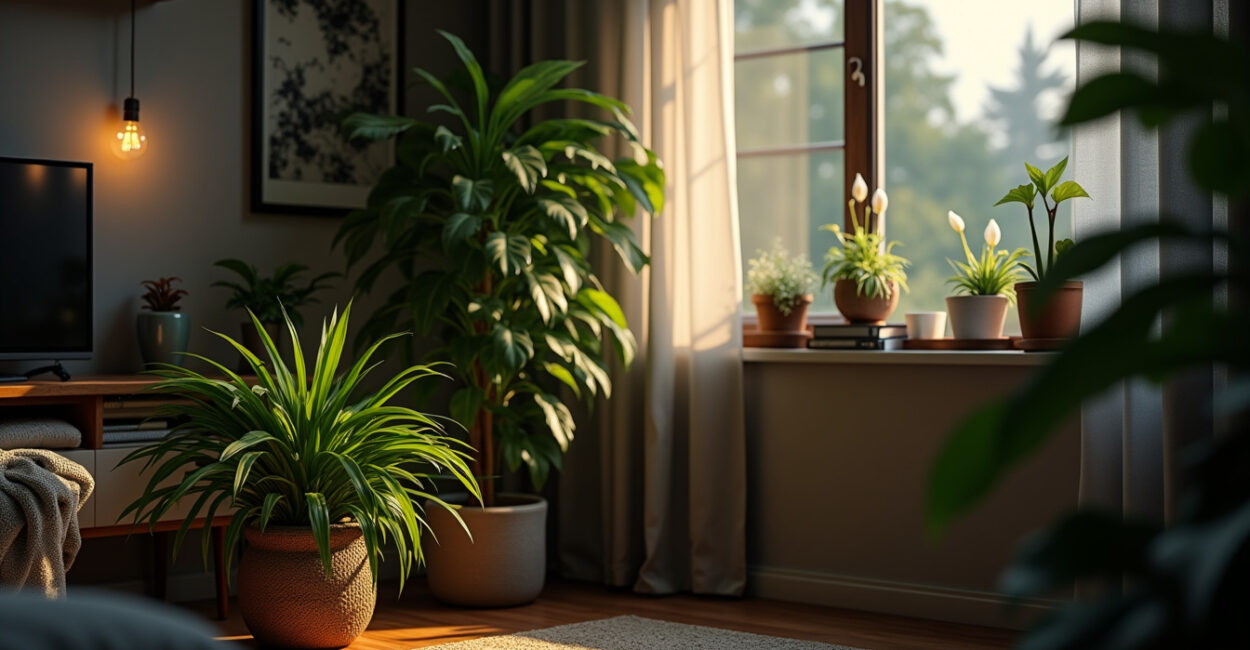
These are the plants that stay full in real dim rooms—not the ones that collapse by week three.
Best Low-Light Houseplants That Still Look Full and Healthy
If you’re looking for low-light houseplants for beginners, the trick is not “which plant is trendy?” It’s “which plant can actually live in that shady corner by the TV, hall, or north-facing window?” Low light usually means bright indirect light is absent for most of the day, not total darkness. That distinction matters.
In practice, the safest picks are the plants that tolerate slower growth, dry spells, and uneven light without getting sparse. That’s where this shortlist wins: fewer failures, fuller leaves, less drama.
Start with Plants That Don’t Panic in Dim Light
The best low-light houseplants for beginners are the ones that forgive neglect and still keep their shape. Snake plant, ZZ plant, pothos, and peace lily all handle lower light better than most starter plants. They don’t “thrive” in gloom, but they hold up.
- Snake plant — upright, architectural, hard to overwater.
- ZZ plant — thick stems store water, so it stays neat longer.
- Pothos — trails well, fills space fast, even in dim rooms.
- Peace lily — softer look, but wants more consistent watering.
One common mistake is choosing a plant for how it looks in a store under bright lights. At home, the same plant stretches, thins out, and starts looking tired. That’s the difference between a pretty purchase and a plant that still looks full six months later.
Match the Plant to the Room, Not the Label
A plant that survives low light near a window may fail in a deep interior corner. That’s why low-light houseplants for beginners should be chosen by room conditions, not by one-word care tags.
| Room condition | Best fit |
|---|---|
| Near a shaded window | Pothos, peace lily |
| Several feet from a window | ZZ plant, snake plant |
| Dry room, forgetful watering | Snake plant, ZZ plant |
| You want a softer, leafy look | Pothos, peace lily |
Here’s the practical test: if you can read comfortably in the spot for a while, some plants can live there. If it feels cave-like, pick the toughest options and expect slower growth. Low light is not a lifestyle; it’s a constraint.
According to the Penn State Extension houseplant guide, matching plant needs to actual indoor light is one of the biggest factors in keeping foliage dense. And the NASA Clean Air Study is often misunderstood: yes, some houseplants are useful, but they are not magic air filters. That’s why the real win is choosing a plant that won’t thin out and disappoint.

The Simple Rule That Keeps Them Full
The fastest way to lose a healthy-looking plant is to overwater it in low light. When growth slows, roots drink less. That means the soil stays wet longer, and root rot shows up before the leaves ever look dramatic.
I’ve seen beginners do everything “right” and still kill a snake plant by loving it too much. The plant looked fine for weeks, then suddenly collapsed. The fix was boring: less water, better drainage, and a brighter spot by one step.
- Use pots with drainage holes.
- Let the top inch or two dry before watering.
- Rotate the pot monthly.
- Wipe dust off leaves so they can use what light they get.
In low light, restraint is care. That’s the rule most beginners learn late, and it changes everything.
How Often Should I Water Low-light Houseplants?
Less often than you think. In darker rooms, soil dries slowly, so check it with your finger instead of following a calendar. For most beginner-friendly options, wait until the top layer is dry before watering again. Overwatering is the most common way to ruin a plant that otherwise would have been fine.
Can These Plants Live with No Natural Light?
No. “Low light” is not the same as “no light.” A room with no window usually needs a grow light if you want the plant to stay full and healthy. Snake plants and ZZ plants tolerate poor light better than most, but they still need some light exposure to avoid thinning out over time.
Which Plant Looks the Fullest for the Least Effort?
Pothos usually gives the fastest visual payoff, while ZZ plant looks the most polished with the least attention. If you want a fuller silhouette in a darker corner, pothos is the easiest choice. If you want something cleaner and more sculptural, ZZ plant tends to hold its shape better.
Why Do Low-light Plants Get Leggy?
They stretch toward the nearest light source. That creates long gaps between leaves and a sparse look. The fix is to move the plant slightly closer to light, rotate it regularly, and avoid choosing species that naturally hate dim rooms.
What’s the One Beginner Mistake to Avoid?
Buying a plant for the store display instead of your room. A plant can look perfect under bright retail lighting and fall apart in a darker home corner. Always match the plant to your actual light level first, then choose the style you like second.
Pick for the room you actually have, not the one in the photo. That’s how a dark corner starts looking intentional instead of sad.