
Drought-Tolerant Front Yard Plants: 9 Picks That Stay Neat
How to design a drought-tolerant front yard by mapping sun exposure first, then choosing plants suited to each zone for less watering and maintenance.
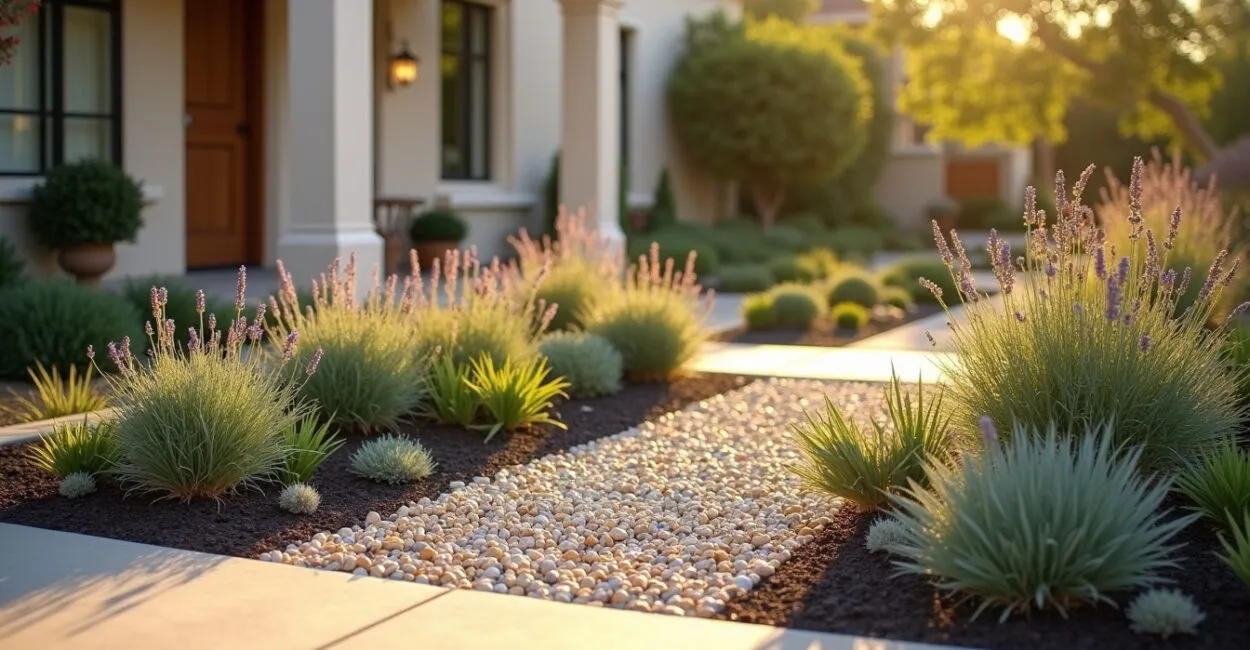 Neat drought-tolerant plants line a front-yard path
These drought tolerant front yard plants do one rare thing: they keep the bed looking finished without turning your weekends into a watering schedule.
The trick is not “plant anything tough.” It’s matching the plant to the right sun and water zone, so you get a neat front yard with less pruning, fewer brown patches, and far less guesswork. Once you group plants by need, the whole bed starts to behave.
Start with the Sun Map, Not the Plant List
In practice, the fastest way to make a front yard look messy is to mix plants that want different conditions. Full-sun drought tolerant front yard plants can stay compact and clean, while shade-tolerant ones often get lankier if they’re baked all day.
That means the “best” plant is the one that fits your exposure first, then your style. For hot, dry sites, think lavender, rosemary, yarrow, salvia, and Russian sage. They handle lean soil and usually keep a sharper shape with less pruning. For part shade or morning sun, try loropetalum, nandina, heuchera, and certain ornamental grasses that don’t flop.
Here’s the quiet win: once the bed matches the light, you water less because the plants are no longer fighting the site. And that is where tidy starts to feel easy.
Read also: Front Yard Edging Ideas That Keep Borders Clean for Months
The 9 Resilient Picks That Stay Neat Longer
These drought tolerant front yard plants are favorites because they hold their form instead of exploding into constant work.
- Lavender — compact, fragrant, and sharp in full sun.
- Rosemary — evergreen structure with almost no fuss.
- Yarrow — airy flowers, but a sturdy base.
- Salvia — repeat blooms and clean lines.
- Russian sage — tough and drought-proof once established.
- Agave — architectural, almost no pruning.
- Aloe — low water, low clutter, strong shape.
- Nandina — useful where you want texture without heavy trimming.
- Blue fescue — small, neat, and excellent at edging.
One small but costly mistake: people buy a plant for its flower and ignore its mature width. Six months later, the “cute” plant is swallowing the walkway. Choose slow, tidy growers when possible. That’s why drought tolerant front yard plants often outperform thirsty showpieces in real life.
Read also: Companion Plants That Repel Aphids: What Works Near Vegetables
A front yard looks expensive when it stays disciplined.
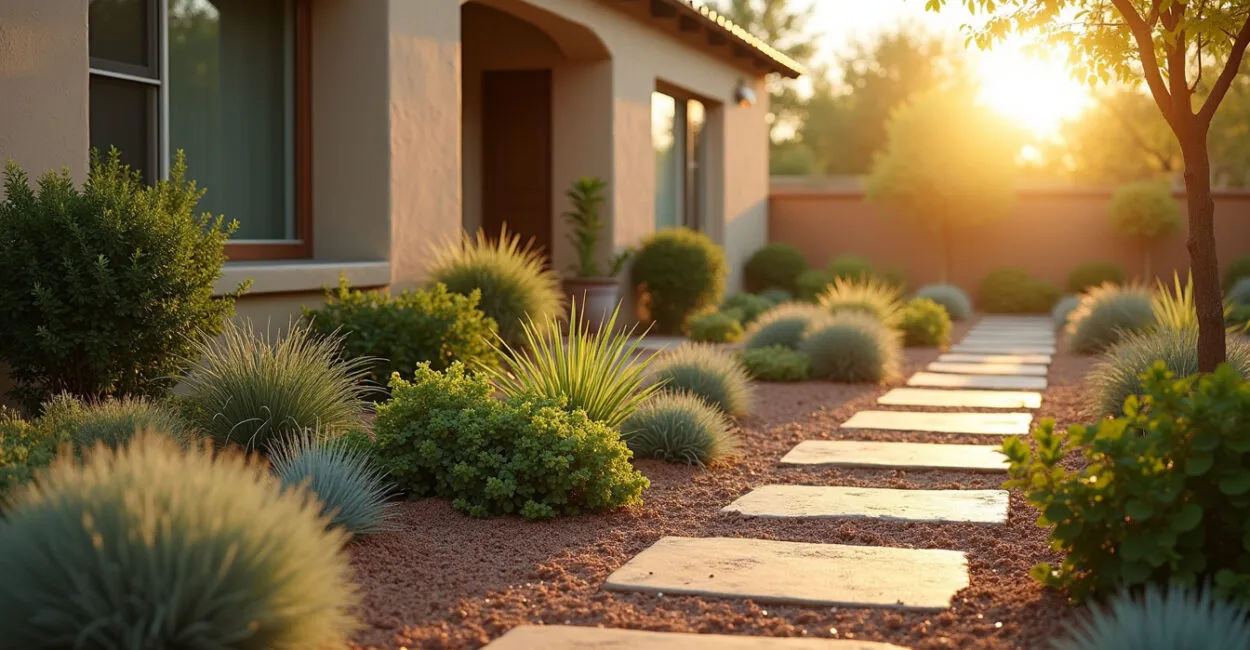
Water Less by Planting in Groups, Not in Guesses
The smartest front yard beds are built in layers: driest plants at the hottest edge, moderate-water plants closer to the house, and anything softer or more delicate where it gets relief. That grouping matters more than most people think.
Here’s the comparison that surprises people: one mixed bed often needs constant spot-watering, while a grouped bed can run on a simple soak-and-wait routine after establishment. The plants stop competing with each other, and your maintenance drops fast.
What to avoid:
- Pairing succulents with thirsty annuals
- Over-fertilizing drought plants so they grow fast and floppy
- Choosing fast growers that need weekly shaping
Vi cases where a homeowner replaced half a lawn with drought tolerant front yard plants, then kept watering them like turf. The plants survived, but they never looked settled. Once the irrigation was cut back and the bed was mulched, the same plants tightened up and looked intentional within a month.
For practical plant and water guidance, see EPA WaterSense landscaping tips and the Penn State Extension guide to landscaping with native plants.
📱 See this content as a Web Story
FAQ
Which Drought Tolerant Front Yard Plants Are the Easiest for Beginners?
Lavender, rosemary, salvia, and blue fescue are some of the easiest because they stay fairly neat and don’t ask for constant watering once established. If you want the lowest-maintenance look, start with a small group of plants that all want the same sun exposure. That alone prevents most of the pruning and watering headaches people run into.
Do Drought Tolerant Front Yard Plants Need No Water at All?
No. “Drought tolerant” means they handle dry periods better than thirsty ornamentals, not that they live on nothing. Most need regular water during the first season so roots can establish. After that, many can shift to deep but infrequent watering, which is the real reason they work so well in a front yard bed.
Can I Mix Succulents with Flowering Plants?
Yes, but only if their water needs are close enough. Succulents hate frequent moisture, while many flowering plants need more consistent watering to stay full. If you mix them carelessly, one side of the bed will always look stressed. Grouping by water need is cleaner and usually makes the whole front yard look more intentional.
How Do I Keep These Plants Looking Tidy?
Pick compact varieties, then avoid overfeeding them. Too much fertilizer often creates soft, sprawling growth that needs more trimming. A thin mulch layer, good spacing, and a once-a-year shape-up are usually enough for many drought tolerant front yard plants. The goal is not perfect control. It’s plants that naturally stay in bounds.
What If My Front Yard Has Both Full Sun and Shade?
Then treat it like two different gardens. Put the sun lovers in the hottest section and use shade-tolerant drought plants where the house, fence, or tree breaks the heat. That is the part people skip. If you match each plant to the microclimate, you get better color, less pruning, and a front yard that looks designed instead of improvised.