

Cheap Front Yard Landscaping with Gravel: Easy Wins
How to plan cheap front yard landscaping with gravel by focusing on drainage, weed control, edging, and mixing materials for a clean, low-maintenance design.
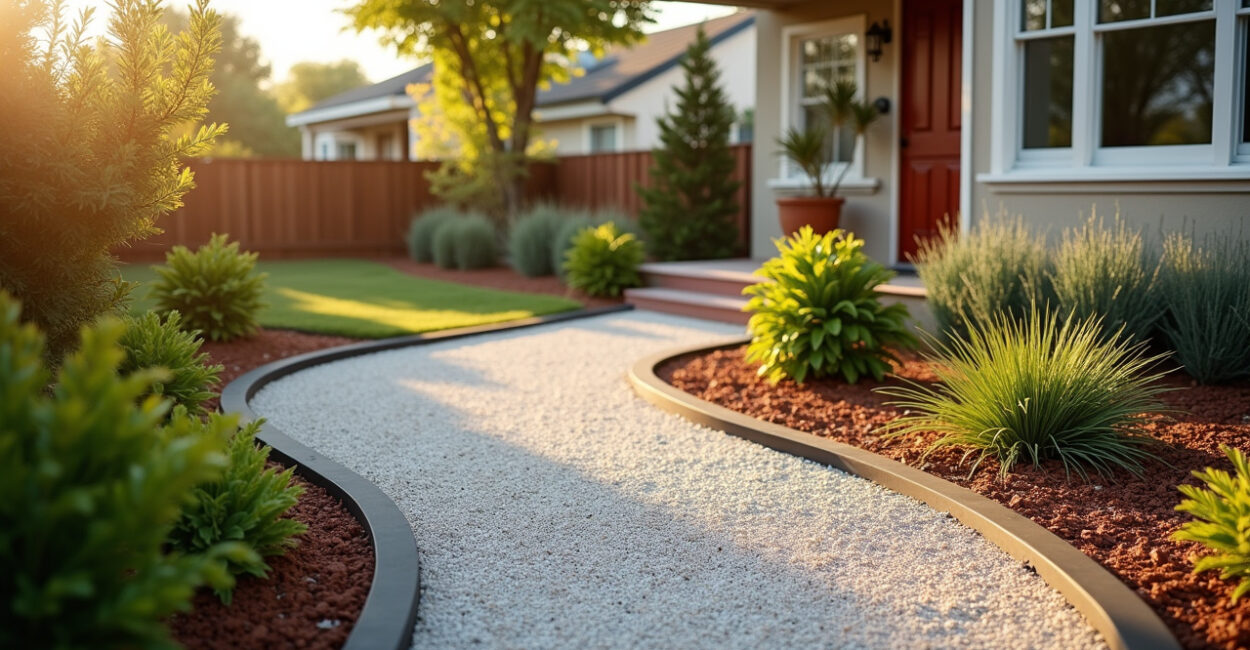
Gravel is one of the few front-yard materials that can cut both labor and cost at the same time. In a well-planned layout, cheap front yard landscaping with gravel replaces thirsty lawn, reduces mowing and edging, and gives the entry a cleaner, more finished look without a full hardscape budget.
The trick is not “throw down rocks and call it done.” Good gravel landscaping depends on drainage, weed control, edging, and scale. Get those four pieces right, and even a modest front yard can look intentional instead of temporary. Get them wrong, and the yard starts to look patchy, dusty, and hard to maintain.
What You Need to Know
- Gravel is cheapest when you use it to replace high-maintenance lawn zones, not when you try to cover every square foot at once.
- A weed barrier helps, but proper base prep and edging matter more for long-term appearance.
- Decomposed granite, pea gravel, and crushed stone solve different problems; the wrong stone can shift, scatter, or track into the house.
- The most polished front yards usually mix gravel with one or two anchor elements, such as steel edging, drought-tolerant plants, or a simple stepping path.
- The cheapest-looking mistake is underbuying material thickness; most gravel areas need a deeper layer than first-time DIYers expect.
Cheap Front Yard Landscaping with Gravel: The Layout That Saves Money
The formal idea behind gravel landscaping is simple: replace living groundcover with a mineral surface that handles foot traffic, runoff, and visual structure with less ongoing care. In plain English, that means fewer weekly chores and fewer expensive landscape fixes later.
Where people save the most is not in the gravel itself, but in reducing the area that needs turf, irrigation, and trimming. A front yard can often be divided into three jobs: one path for movement, one planting zone for interest, and one open gravel field that holds everything together. That pattern works better than trying to make every inch “finished.”
Start with the Yard’s Natural Traffic Pattern
Walk from the driveway, mailbox, sidewalk, and front door. The places your feet already choose are the places that deserve the most durable treatment. If you force a path somewhere inconvenient, people will cut across the gravel, and the yard will wear unevenly.
Keep the Shapes Simple
Curves can look elegant, but they also cost more in edging and labor. Straight lines and broad arcs are cheaper to install, easier to maintain, and usually look more modern in a small front yard. If the budget is tight, restraint is a design tool.
Gravel looks expensive when the layout is disciplined, not when the material is expensive.
For a practical planning reference on drainage and runoff behavior, the U.S. Environmental Protection Agency’s green infrastructure guidance is worth reviewing before you finalize the footprint.
Picking the Right Gravel for the Job
Not all gravel performs the same way. The stone you choose affects comfort, drainage, cleanup, and how often you’ll be sweeping it back into place. That’s why “cheap” should mean cost-effective over time, not just lowest price per ton.
Crushed Stone, Pea Gravel, and Decomposed Granite
- Crushed stone: Angular edges lock together better, so it stays put in paths and open areas.
- Pea gravel: Rounded and decorative, but it shifts more and can roll underfoot.
- Decomposed granite: A compactable option that works well for a smoother, more finished surface.
For front yards, crushed stone usually wins where stability matters. Pea gravel is prettier in dry beds and accent zones, but it can migrate if you use it on slopes or high-traffic routes. Decomposed granite gives a tighter look, though it often needs better edging and moisture control during installation.
The right gravel is the one that matches how the yard is used, not the one that looks best in the bag.
If you want a neutral source on material selection and drainage basics, University of Minnesota Extension’s landscape design resources are useful because they explain how surfaces behave in real yards, not just in showroom photos.

Base Prep and Weed Control That Actually Hold Up
This is where many budget projects fail. People spread gravel over existing soil and expect it to behave like a permanent finish. It doesn’t. A stable base is the difference between a clean front yard and a crushed-stone mess by the second season.
In the field, what happens is predictable: if the subgrade stays soft, the gravel sinks, weeds find gaps, and rain moves fines around. A geotextile fabric can help separate soil from stone, but it is not magic. The base still needs to be graded, compacted, and sloped away from the house.
Use a Base in Layers
- Remove grass, roots, and loose organic matter.
- Grade the soil so water moves away from the foundation.
- Install geotextile fabric where soil contamination is a problem.
- Add a compacted base layer before the decorative gravel.
- Finish with the top layer and check the depth evenly.
One reason the USDA Natural Resources Conservation Service matters here is that drainage and soil structure are not cosmetic issues; they affect erosion, runoff, and long-term yard stability. Gravel can help, but only if the grade supports it.
Border Ideas That Make a Low-Cost Yard Look Finished
Edges are where budget landscaping often either looks polished or looks like a weekend project that never got completed. A simple border gives the gravel a line to stop at, keeps material from wandering, and frames the yard so the house looks more grounded.
Steel edging is my first choice for a modern front yard because it stays thin and visually quiet. Concrete curbing is more durable but costs more. Pavers and salvaged brick can work if you want a softer, more traditional look, though they take longer to set cleanly.
Read also: Drought-Tolerant Front Yard Landscaping: 7 Smart Swaps
Read also: Landscaping Tips: How to Increase Property Value in 3 Days — Step by Step
Read also: Gravel Landscaping for Homes is on the Rise This Season
Best Border Options by Budget
| Border Type | Typical Cost | Best Use | Main Tradeoff |
|---|---|---|---|
| Steel edging | Low to moderate | Modern, clean lines | Requires careful installation |
| Paver border | Moderate | Classic or mixed-style yards | More labor and leveling |
| Concrete curb | Higher | Permanent, durable finish | Less flexible and more expensive |
| Reclaimed brick | Low if sourced locally | Character and texture | Can look uneven if poorly set |
For most homeowners, the smartest move is to spend a little on edging and save on ornamental extras. The border is the part people notice first, especially from the street.
Plants, Pathways, and Accent Pieces That Stretch the Budget
Gravel works best when it supports a small number of strong choices. A front yard full of tiny plants and decorative objects tends to look cluttered. A front yard with one clear path, a few structural plants, and open gravel space looks deliberate.
Think in layers. Low groundcovers soften the edge of stone beds. One or two larger shrubs anchor the view. A short path of stepping stones or concrete pavers breaks up the mineral surface and gives the front yard a point of entry.
Plant Choices That Pair Well with Gravel
- Lavender for a dry, Mediterranean feel.
- Agave or yucca in warmer regions with strong sun.
- Ornamental grasses for movement and texture.
- Compact shrubs such as boxwood or dwarf pittosporum for structure.
Viable plant selection depends on your climate zone, not on the photo you saw online. That’s where a local cooperative extension office is useful; plant choices that thrive in Arizona can fail fast in wetter, colder regions. A good starting point is the Penn State Extension library, which covers planting, mulch alternatives, and yard maintenance by region.
Here’s a small example from a real-world style of project: a narrow suburban front yard with patchy turf, one cracked concrete walk, and too much shade near the porch. The owner removed the center strip of grass, installed steel edging, laid crushed stone in the open bed, and kept just three shrubs near the entry. The yard went from high-maintenance to tidy in one weekend, and the weekly upkeep dropped to a quick rake and occasional weed check.
What Cheap Gravel Projects Get Wrong
The most common mistake is treating gravel like a shortcut instead of a system. A bare layer of stone on top of bad grading only postpones the mess. That approach can work for a month or two, but it often creates more maintenance than the lawn it replaced.
Another common problem is overdoing it with too many materials. If the yard has gravel, pavers, three border types, and a dozen plant species, the result usually feels busy and more expensive than it needs to be. Simpler compositions almost always read as more intentional.
Mistakes Worth Avoiding
- Skipping drainage planning near the foundation.
- Using pea gravel on steep slopes or busy walkways.
- Buying too little gravel and leaving thin, patchy coverage.
- Forgetting to compact the base before spreading the top layer.
- Letting the border sit too low, which allows stone to spill out.
Tradeoff to remember: this method works very well in dry to moderately dry climates and on yards with simple grades, but it becomes harder to manage on steep slopes, clay-heavy soil, or sites that already have drainage problems near the house.
How to Keep the Yard Clean Without Adding Cost
Once the install is done, upkeep should stay light. A gravel front yard is not maintenance-free, but it should be maintenance-smarter. That means occasional raking, pulling weeds before they root deeply, and topping up low spots when the stone shifts.
A Simple Maintenance Routine
- Rake the surface lightly after storms or heavy foot traffic.
- Inspect edges monthly for spillover and settle them back into place.
- Pull weeds early, before roots spread through the base.
- Top off thin areas once the stone level drops.
That rhythm keeps the yard looking fresh without turning it into a second job. If the front yard starts looking dull, the problem is usually not the gravel itself. It is either edge failure, uneven depth, or plants that have outgrown the space.
Practical takeaway: the cheapest front yard is not the one with the least material. It is the one that avoids repeated fixes.
For homeowners thinking about long-term water use and landscape efficiency, California Department of Water Resources guidance offers a helpful perspective on reducing irrigated turf and using water-wise yard design.
What to do next: measure the lawn you can realistically remove, choose one gravel type that matches the traffic pattern, and commit to a clean edge before buying plants. That sequence keeps the project affordable and prevents the “half-finished” look that makes inexpensive landscaping feel cheap. If you want the yard to read as intentional from the street, start with structure first and decoration second.
How Much Gravel Do I Need for a Front Yard?
The amount depends on the area, the intended depth, and the gravel size. A decorative layer often needs around 2 to 3 inches, while a path or high-traffic zone may need more careful base preparation underneath. Measure length times width, convert to square feet, and use the supplier’s coverage chart so you do not underorder.
Does Gravel Prevent Weeds Completely?
No, and that claim is one of the biggest myths in landscape sales. Gravel reduces weed pressure when you combine it with soil removal, geotextile fabric, and proper depth, but wind-blown seeds and roots can still find their way through over time. The better the base prep, the fewer weeds you will fight later.
Is Pea Gravel Good for a Front Yard?
Pea gravel is attractive and comfortable underfoot, but it is not the best choice for every front yard. It shifts more than crushed stone and can scatter onto sidewalks or driveways if borders are weak. It works best in low-traffic decorative beds or relaxed paths, not in steep or heavily used zones.
Can Gravel Replace Grass in a Front Yard?
Yes, especially in areas where turf is expensive to water or hard to maintain. The most successful replacements happen where the yard does not need a soft lawn surface for play or frequent use. Gravel is strongest as a structural groundcover, while plants and paths provide the living and functional parts of the design.
What is the Cheapest Way to Make a Front Yard Look Better Fast?
Remove the most tired patch of grass, define a clean border, and spread one consistent gravel type in the cleared area. Then add one or two drought-tolerant plants near the entry. That combination gives you the biggest visual improvement for the least money because it changes the yard’s shape, not just its surface.