

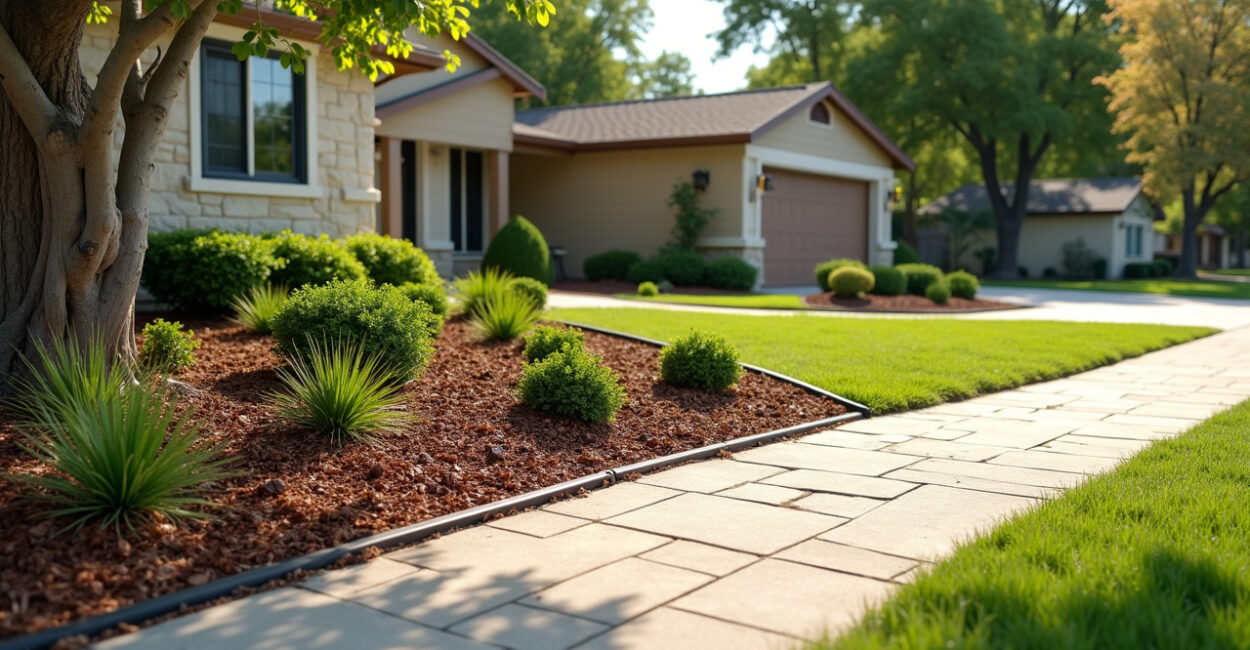
A clean front yard usually looks expensive long before it is expensive. The difference is often mulch: the right depth, the right color, and the right edge detail can make a small landscape read as intentional instead of unfinished. That is why front yard mulch landscaping ideas matter so much when you want curb appeal without turning the yard into a maintenance project.
At its best, mulch does three jobs at once: it suppresses weeds, slows moisture loss, and gives plant beds a finished border. The trick is not “add mulch everywhere.” It is choosing the right mulch type for your climate, plants, and layout, then installing it so it helps instead of creating problems. This article breaks down the practical choices that actually hold up in real front yards.
What You Need to Know
- Mulch looks best when it follows the shape of the bed, not when it is spread in a flat blanket from foundation to sidewalk.
- Most front yard beds perform well with 2 to 3 inches of mulch; deeper than that can trap moisture against stems and trunks.
- Dark mulch creates stronger contrast with light siding and stone, while natural brown mulch usually looks softer and more forgiving.
- Rock mulch can reduce replacement cycles, but it stores heat and is a poor choice for many sun-baked foundation beds.
- The best installation starts with clean bed edges, weed removal, and irrigation awareness—not with the mulch bag itself.
Front Yard Mulch Landscaping Ideas That Improve Curb Appeal Without Raising Maintenance
The technical definition of mulch is any protective layer placed over soil to reduce evaporation, moderate temperature, and limit weed pressure. In plain language, it is a finishing layer that makes a landscape look neat while helping the soil hold moisture longer. That is why well-planned front yard mulch landscaping ideas often do more for appearance and upkeep than adding more plants would.
In the front yard, mulch also acts like a visual frame. It separates turf from beds, ties together shrubs and perennials, and keeps the planting area from looking muddy after rain. The wrong approach, though, can make the house look smaller or the beds look bloated. Width, color, and edge shape all matter as much as the material itself.
Mulch works best in the front yard when it is treated as a design element first and a ground cover second.
Why Mulch Changes the Look So Fast
Fresh mulch instantly creates contrast. That contrast makes plants stand out, hides bare soil, and visually cleans up irregular bed lines. A front entrance with trimmed edges and evenly spread mulch looks maintained even before the shrubs leaf out. That is why mulch is one of the fastest curb-appeal upgrades with a real return on effort.
Where It Helps Most
Mulch delivers the biggest payoff around foundation plantings, mailbox beds, entry paths, and tree rings. These are the areas people notice first and where weeds and splash-back create the most visual noise. It is less useful in narrow strips that dry out too quickly or in spots with poor drainage, where a thicker layer can actually slow drying after storms.
Choosing the Right Mulch Color and Texture for Your House
Color is not a minor choice. It changes the way your siding, roofline, stone, and plants are perceived from the street. Dark brown mulch creates the cleanest contrast in most suburban front yards. Black mulch gives a sharper, more formal look, but it can feel harsh beside warm brick or under intense sun. Pine bark, shredded hardwood, and dyed mulch all behave a little differently in the landscape.
Texture matters too. Fine shredded mulch knits together and stays put better on slopes, while larger bark nuggets resist washout but can look coarse in small beds. In practice, I have seen homeowners pick a color they liked in the bag and later realize it fought the house color. On-site, the test is simple: place the mulch sample beside the siding at midday and again in shade.
| Mulch Type | Best For | Trade-Off |
|---|---|---|
| Shredded hardwood | Sloped beds, general front yards | Can mat down if applied too thick |
| Pine bark | Natural-looking foundation beds | May blow or float in heavy rain |
| Dyed brown mulch | High-contrast curb appeal | Needs refresh sooner as color fades |
| Dyed black mulch | Formal layouts, modern homes | Absorbs more heat in full sun |
| Decorative stone | Low-replacement zones | Stores heat and is hard to change later |
If you want a neutral choice, brown mulch is the safest default. If the home has white trim, gray stone, or modern lines, black can look deliberate instead of heavy. The wrong pick is usually the one that competes with the house rather than supporting it.

The Right Depth, Coverage, and Edge Lines for a Clean Finish
Mulch depth is where many front yards go wrong. The standard range is 2 to 3 inches after settling. Less than that leaves soil exposed and weed-prone; more than that can suffocate roots near the surface, hold too much moisture, and create a layered “volcano” around trunks. Extension guidance from Penn State Extension is consistent on this point: mulch should stay away from direct trunk contact and should not be piled high.
The cleanest front yards also have sharp edges. A bed that ends in a straight or gently curved line looks finished. A bed with ragged borders looks like it was rushed. Many landscapers define the edge before adding the mulch, because once the material is down, it is harder to see where the line should be.
How Much Mulch to Buy
A 2-cubic-foot bag covers about 12 square feet at 2 inches deep. That is a practical number to remember when estimating a front foundation bed. For larger areas, bulk delivery is usually cheaper, but only if you have the space and labor to spread it immediately. Overstocking mulch is one of the fastest ways to waste money on a front yard refresh.
Where Coverage Should Stop
Stop mulch a few inches from house siding, stone veneer seams, and tree trunks. Around perennials, leave the crown exposed so stems are not buried. Around shrubs, keep a small gap at the base. That gap prevents rot, deters voles, and makes inspection easier after heavy rain.
The difference between a polished bed and a sloppy one is usually not the mulch itself — it is the edge line and the depth.
Plant Pairings That Make Mulch Look Intentional
Mulch works best when it supports the planting plan. Dense evergreen shrubs, ornamental grasses, daylilies, hydrangeas, and boxwood all read well against a clean mulch field. The mulch should act like negative space, not a substitute for planting structure. If everything is mulch and very little is planted, the yard can look bare instead of minimal.
Clemson Extension explains that mulch is most effective when matched to soil type, plant needs, and drainage. That matters in front yards because foundation beds often dry differently than side-yard beds. A sunny, east-facing bed may need a mulch that does not bake and crust over, while a shaded north side may need more attention to drainage and fungal pressure.
Best Plant-Mulch Combinations
- Hydrangeas + shredded hardwood: looks full and holds moisture well during summer heat.
- Boxwood + dark brown mulch: creates a crisp, formal edge near walkways and entries.
- Ornamental grasses + bark mulch: adds texture without overwhelming the planting bed.
- Foundation evergreens + black mulch: works on modern homes with strong trim contrast.
Mini-Story from a Real Front Yard Refresh
A homeowner with a narrow ranch front bed had tried white stone and then bare soil. It looked bright for a week, then the weeds took over and the house started to look harsher in summer sun. Switching to dark brown shredded mulch, widening the bed by about 18 inches, and adding three dwarf shrubs changed the whole frontage. The yard did not become “lush,” but it became readable from the street, which is usually the real goal.

Mulch Materials: What Lasts, What Looks Best, and What Fails Fast
There is no universal best mulch. The right material depends on whether you want a softer look, lower replacement frequency, or better stability on slopes. Organic mulches break down and improve soil over time. Inorganic options, like stone, last longer but do not feed the soil and can heat up badly in full sun. That trade-off is real, and it is why experienced installers do not treat rock as a default replacement for wood mulch.
For homeowners who want front yard mulch landscaping ideas that stay attractive without much fuss, shredded bark or hardwood mulch is usually the best balance. It is affordable, easy to top up, and blends into most home styles. Stone can work near modern architecture, but it often fails in beds with thirsty shrubs or strong afternoon exposure. If your front yard gets hot, a reflective gravel bed can make conditions worse for some plants.
When Stone Makes Sense
Stone is worth considering only where replacement access is difficult, the design is very modern, or the bed contains drought-tolerant plants. It is also useful in areas where mulch floats away during repeated runoff. But it is not the easy fix people imagine. Once stone is installed, changing the design later is labor-intensive and costly.
When Organic Mulch is the Better Call
Organic mulch is the better call for most suburban front yards because it supports soil health and is easier to refresh. It also gives the landscape a softer transition into grass and hardscape. The visual result is more forgiving, especially if the bed shape is irregular or the plant palette is still growing in.
Installation Details That Save Money over Time
Most mulch failures are installation failures. The bed may look good on day one and then thin out, wash away, or turn compacted within months. A smart install starts with weed removal, then a light cultivation of the topsoil if it is crusted. Some professionals also use landscape fabric in limited cases, but it is not a cure-all. In many beds, fabric creates more problems later because roots, silt, and weeds accumulate on top of it.
The U.S. Environmental Protection Agency notes that landscape and yard practices affect runoff and water use; their water-saving guidance at WaterSense is a useful reference when planning beds that conserve moisture. For front yards, that means less runoff, fewer bare spots, and better watering efficiency when the mulch layer is maintained correctly. The money saved is not dramatic in one week, but over a season it adds up.
Installation Steps That Matter
- Remove existing weeds and grass at the bed edge.
- Define a clean border with a spade or edging tool.
- Water the soil lightly if it is dusty and hydrophobic.
- Spread mulch evenly to 2 to 3 inches deep.
- Keep mulch away from trunks, stems, and siding.
- Rake lightly so the surface settles into a uniform finish.
Who works with this every season knows that the edge is what survives longest. The middle of the bed can be top-dressed later; the border is what makes the yard look maintained in month six instead of month one.
Seasonal Care, Common Mistakes, and When to Refresh
Mulch is not a one-and-done material. It settles, fades, and decomposes. In many front yards, a light refresh every 12 to 18 months keeps the bed looking clean without overbuilding the layer. The exact timing depends on rainfall, sun exposure, and whether the mulch is organic or inorganic. That is one place where advice has limits: a shady bed in the Southeast behaves very differently from a dry front yard in the Mountain West.
One common mistake is overmulching year after year until the bed rises too high. Another is mulching right up against the house because it looks “finished” in photos. It often looks finished for the wrong reasons. Soil needs air, roots need room, and siding needs a dry buffer. USDA Forest Service guidance is clear that proper mulching protects plants, but excess mulch can cause avoidable stress.
Mulch solves a front-yard problem only when the layer stays thin enough to breathe and thick enough to block light.
Signs It is Time to Refresh
- The soil is visible through most of the bed.
- Weeds are pushing through in multiple spots.
- The top layer has broken into fine dust or gray fibers.
- Rain is washing the mulch into the lawn or walkway.
What to Avoid
Do not bury stems, create mulch mounds around trees, or cover irrigation emitters. Do not use a thick fresh layer to hide poor bed preparation. And do not assume the same mulch color will look identical after sun, rain, and a few weeks of aging. That is one of the reasons some homeowners test a small section first before doing the whole front yard.
What to Do Next Before You Spend a Dollar on Mulch
The best strategy is to walk the front yard like a critic, not a shopper. Look at the bed shape from the street, note where water pools, and decide whether the house needs contrast or softness. If the edges are weak, fix the edges first. If the plants are sparse, add structure before buying a truckload of material. Mulch is a finish, not the whole design.
If you are comparing options, start with a simple three-part test: color against the house, material against the climate, and depth against maintenance. That keeps the project practical. Then buy only enough to complete the beds you can maintain this season. The most effective front yard mulch landscaping ideas are the ones that make the yard look cleaner immediately and still make sense six months later.
Frequently Asked Questions
How Deep Should Mulch Be in a Front Yard Bed?
Most front yard beds look and perform best at 2 to 3 inches deep after settling. Less than 2 inches leaves too much soil exposed, which invites weeds and faster moisture loss. More than 3 inches can trap water, reduce airflow, and smother shallow roots. Keep the mulch pulled back from trunks, crowns, siding, and stem bases so the layer protects the bed without creating rot or pest issues.
What Mulch Color Looks Best with a House?
Dark brown is usually the safest choice because it works with most siding colors, brick tones, and rooflines. Black mulch creates a sharper, more formal look, but it can feel too harsh next to warm materials or in full sun. Red mulch is more design-specific and can overpower smaller front yards. The best test is to place a sample beside the house in daylight and see whether it supports the architecture or competes with it.
Is Organic Mulch Better Than Stone for Front Yards?
For most front yards, yes. Organic mulch is easier to spread, cheaper to refresh, and better for soil health because it breaks down over time. Stone lasts longer, but it stores heat, does not improve soil, and can be hard to change later if the design shifts. Stone only makes sense in certain dry, modern, or high-washout areas where the trade-offs are acceptable.
How Often Should Front Yard Mulch Be Replaced?
That depends on the material and the amount of sun and rain the bed gets. Organic mulch is often refreshed every 12 to 18 months, though some areas need a top-up sooner if the layer thins or fades quickly. Stone does not need replacement as often, but it still needs cleaning, weed control, and occasional repositioning. The key is to refresh only when the bed is losing coverage or visual structure.
Can Mulch Go Right Up to the House Foundation?
No. Mulch should stop short of siding, brick seams, and foundation vents so moisture does not sit against the structure. A narrow gap also helps you inspect for pests, splash-back, and drainage issues. Many landscaping problems start when the mulch is installed too close to the house because it looks tidy at first. A small buffer gives a cleaner, safer result over time.