

Rustic Fire Pit Entertaining Ideas: Which Setup Wins?
How to design a rustic outdoor fire pit space with seating layouts, clear pathways, and durable materials that enhance conversation and comfort for gatherings.
📅 Updated on 10/10/2026
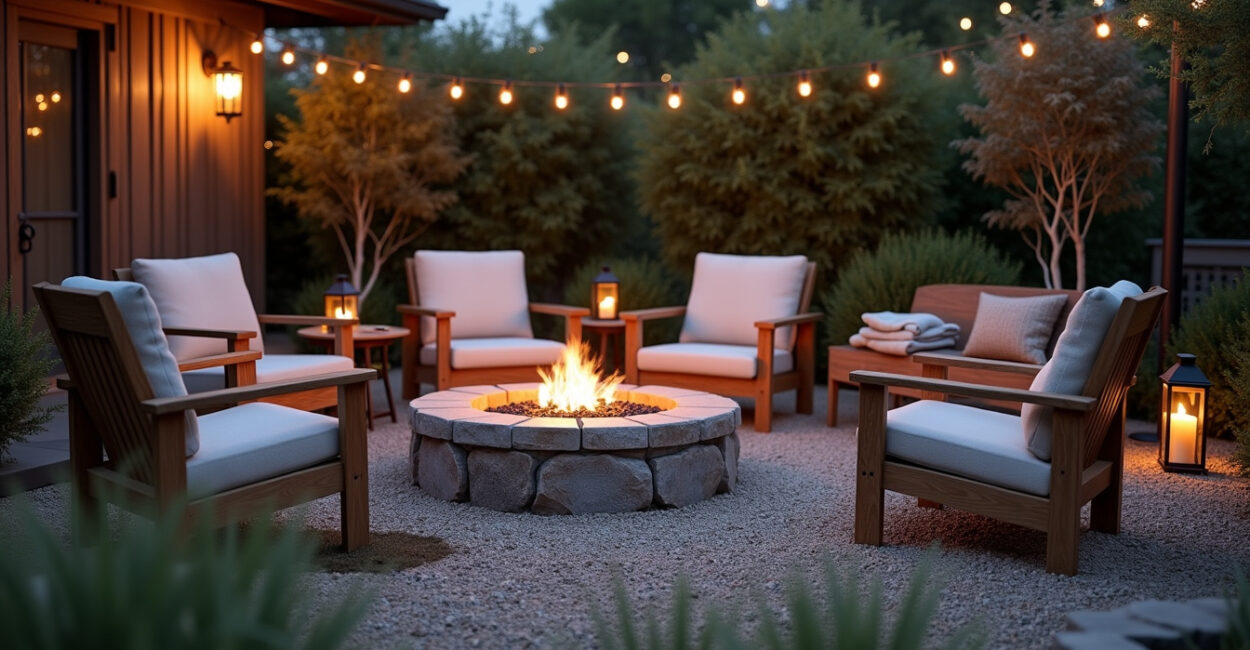
A fire pit can anchor a relaxed outdoor gathering, but a poor layout leaves guests dodging smoke, reaching across flames, or balancing drinks on their knees. Good rustic fire pit entertaining ideas outdoors start with the yard itself: choose a layout that supports conversation, keep a clear path through the space, and use sturdy seating and restrained decor.
A rustic fire pit area is an outdoor gathering space built around a fire feature, with seating, circulation, and materials selected to suit both the setting and the way people will use it. The best arrangement depends on the fire pit’s design, the available ground, local rules, and the number of guests. There is no single safe seating distance for every model.
How to Create a Cohesive Rustic Fire Pit Entertaining Space
The strongest setup pairs a fire pit with a seating plan, a clear route in and out, and a few weather-ready materials that feel at home outdoors. For most backyards, a circle or open horseshoe encourages conversation; a linear arrangement suits a narrow patio or a long, low fire feature. Keep the serving area close enough to use, but outside the main traffic path.
Think of the design as a small outdoor room. The fire pit is the focal point, while the ground surface, seats, lighting, and side tables make the room usable. A cohesive look comes from repeating a few materials, such as stone with dark metal or weathered wood with gravel, rather than adding rustic objects at every turn.
Choose a Fire Pit Layout for Conversation and Yard Flow
A circular arrangement brings guests into one shared conversation, though it needs enough room to move between chairs. A horseshoe keeps one side open for entry, a view, or access to a serving zone. A linear layout works along a wall or narrow yard, but guests at the far ends may feel less connected.
| Layout | Works well when | Watch for |
|---|---|---|
| Circle | The yard has room for seating on all sides. | Chairs can block the route through the space. |
| Horseshoe | You want a clear entrance or an open view. | The open end can make conversation feel less balanced. |
| Linear | The space is narrow or the fire feature is elongated. | People at the ends may sit outside the main conversation. |
Before moving heavy furniture, mark the planned chair positions with outdoor-safe objects or temporary markers. Walk the route guests will take from the house to the seating area, and check that someone carrying a tray can pass without squeezing between a chair and the fire pit. That small test often reveals the real problem: a layout can look spacious from the patio door and feel cramped once chairs are occupied.
Plan Seating Distance and Guest Comfort
There is no universal seating distance from a fire pit: follow the clearances in the fire pit’s manual, the furniture maker’s instructions, and applicable local fire-safety requirements. The right placement also depends on the unit’s fuel, flame design, wind exposure, and heat output. If the manual is missing or the model is unclear, check with the manufacturer before arranging seats for a gathering.
Leave enough room for chairs to shift without scraping into the fire feature, and keep a clear path around the seating group. Mixed seating can make a rustic outdoor fire pit area feel collected rather than showroom-like, but stability matters more than variety. Use level chairs with sound legs; avoid placing lightweight stools where a guest might lean back or stand up into the fire zone.
Smoke direction changes with wind and nearby walls or trees, so a fixed chair position may not suit every evening. Before guests arrive, sit in the likely seats and check where smoke drifts. If it keeps crossing the conversation area, reposition chairs or choose another time and location rather than asking guests to tolerate it.
Add Rustic Decor Without Creating Clutter
Rustic fire pit decor works best when it comes from durable materials and useful objects. Stone, gravel, brick, weathered wood, and powder-coated metal can provide texture without requiring a collection of ornaments. Choose a limited palette and repeat it in one or two places, such as matching chair frames and lantern finishes.
Read also: Rustic Backyard String Lights for Parties: Best Setup
Read also: Rustic Backyard Decor Ideas for Entertaining Guests
Read also: Rustic Backyard Table Decor for Dinner Parties: Do It Right
Keep loose decor away from the flame and from paths where people carry food or drinks. A basket for blankets can be useful if it sits beyond the fire zone and stays dry; a stack of spare logs belongs only where the fire pit’s instructions allow it. Skip fragile signs, low decorations that disappear underfoot, and anything guests must step over.
Use Lighting, Textiles, and Tables to Make the Space Inviting
Layer light so guests can see faces and walk safely without turning the fire pit area into a brightly lit patio. Shielded path lights or low-voltage fixtures can mark the route from the house, while lanterns placed well away from the fire add a softer glow. Keep cords out of circulation routes and follow the lighting manufacturer’s outdoor-use instructions.
Choose outdoor-rated textiles that can be stored or brought inside when weather changes. A few seat cushions and one accessible blanket basket usually serve guests better than dressing every chair with fabric. Add small side tables within reach of the seats; a stable surface for a mug prevents people from setting drinks on the ground beside chair legs.
Host Easy Gatherings Around a Backyard Fire Pit
Set up food and drinks at a separate serving point, such as a patio table or kitchen pass-through. Guests can help themselves without crowding the fire, and the host can tend the gathering without carrying dishes through a ring of chairs. Keep the menu easy to eat outdoors, with napkins and a waste container close to the serving zone.
A fire pit can be the setting for conversation without becoming the whole program. Offer a low-effort activity, such as roasting food where the equipment and fire-pit instructions permit it, or let the group settle into conversation with a warm drink. Plan for guests who do not want to sit close to the heat by providing another seat nearby, outside the main fire area.
For example, a narrow backyard with a door opening onto a small patio may suit a horseshoe arrangement better than a full circle. The open end can face the house, leaving a direct route for carrying drinks outside. A side table on the patio keeps serving traffic away from the chairs, while the fire remains the visual center of the gathering.
Fire Pit Setup Checklist: Safety, Ground Surface, and Common Mistakes
Check the fire pit’s installation and operating instructions before choosing its permanent position. Local rules may restrict fuel type, placement, or use during certain conditions, and those requirements take precedence over a general design suggestion. The National Fire Protection Association offers fire-safety information; use it alongside the specific manual and local fire department guidance.
The U.S. Consumer Product Safety Commission provides consumer safety guidance, while the U.S. Forest Service shares information on outdoor fire safety. Their guidance does not replace product-specific instructions or local restrictions, which can vary by fire feature, property, and conditions.
- Confirm the pit is approved for its intended location and fuel, and follow its clearance requirements.
- Use a stable, suitable ground surface; do not assume a deck, lawn, or loose gravel is safe for every model.
- Keep chairs, paths, and serving surfaces arranged so guests can move without stepping over objects.
- Remove loose textiles and decorative items from the fire area, and keep children and pets under active supervision.
- Check local restrictions and weather conditions before lighting the fire; have the required extinguishing supplies available.
Overcrowding is a common setup mistake. Too many chairs reduce the space people need to enter, stand, or leave, while extra lighting and decor can make paths harder to read. If the available area cannot meet the manufacturer’s clearances and still allow safe movement, use fewer seats or relocate the gathering rather than compressing the layout.
Set Up the Space Before Guests Arrive
A comfortable fire pit gathering depends on a few choices made in the right order: verify the pit’s requirements, mark the circulation route, position stable seating, then add only the tables, lighting, and textiles guests will use. The limit is specific to each setup; wind, surface, fuel, and local rules can change what works.
A good fire pit layout gives every guest a comfortable seat and a clear way to move through the space.
Before the next gathering, test the arrangement with the fire pit off: sit in each chair, carry a tray along the route, and check sightlines to the serving area. Adjust what feels crowded, then confirm the final placement against the manufacturer’s manual and local fire-safety guidance.
📱 See this content as a Web Story
Frequently Asked Questions
Can a fire pit seating area work in a small yard?
Yes, if the pit’s required clearances and a safe route can fit without squeezing guests against fences, walls, or furniture. A compact horseshoe or linear layout may use space better than a full circle.
What should I do if smoke keeps blowing toward the seats?
Check wind direction and nearby obstructions, then adjust the seating or move the gathering to a more suitable spot. Smoke patterns vary, so a layout that works on a calm evening may not work in changing wind.
Are wood chairs suitable near a fire pit?
They may be suitable when the fire pit and chair manufacturers’ instructions permit the placement and required clearances are maintained. Wood type and finish alone do not determine whether a chair is safe at a particular distance.
How can guests stay comfortable after the fire goes out?
Provide a nearby indoor or sheltered option, and keep weather-appropriate blankets available away from the fire area. A gathering space should remain usable when guests move away from the heat.