

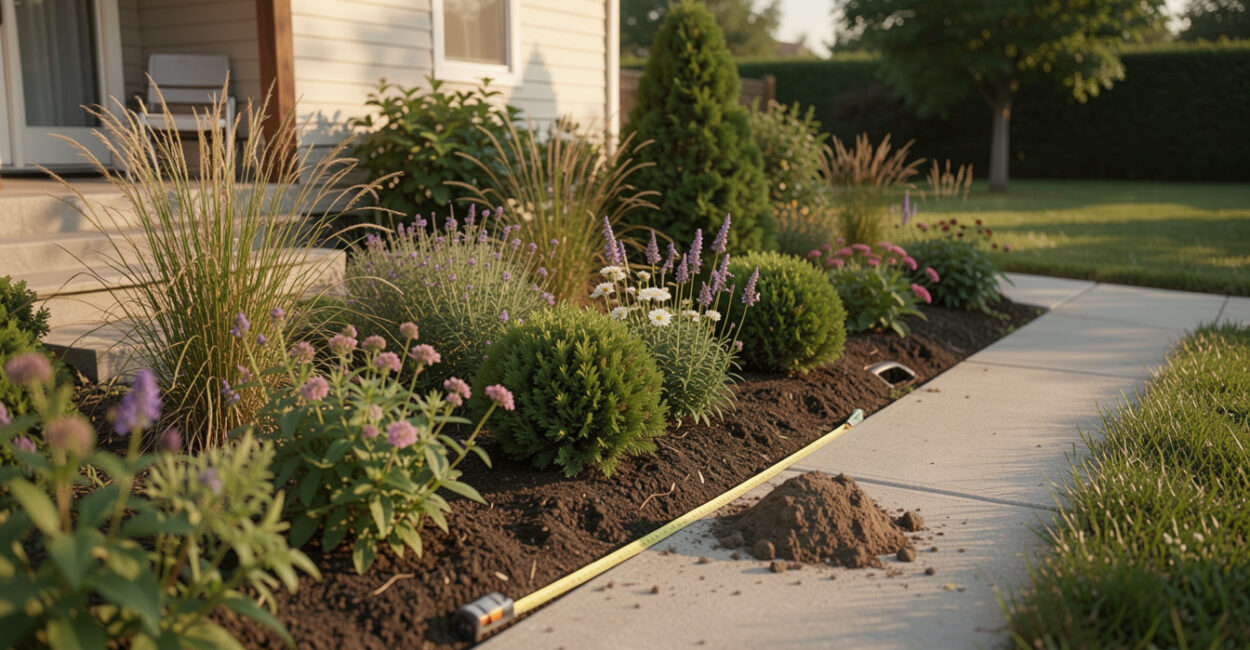
A narrow front bed can look crowded by midsummer if every plant is chosen from its nursery pot size. Native plants for small yards work best when you plan around mature width, sunlight, soil, and drainage before buying anything. The result can be a polished planting with year-round structure and less routine work, provided the species suit your region.
Here, “native” means a plant that occurs naturally in a defined region, rather than one that merely grows well there. Because native ranges vary across the United States, use local references to check a plant’s status before treating any list as a recommendation for your yard.
Before You Start
- Note the bed’s approximate length and depth, including space near the walkway and foundation.
- Track direct sun at the site through a typical day; nearby trees and buildings can change exposure by season.
- Check whether the soil stays wet, drains quickly, or falls somewhere between.
- Decide what the planting should do: soften the foundation, frame an entry, provide a clear path, or add seasonal color.
1. Plan a Small Front Yard with Native Plants
Choose native plants for a small front yard by matching locally appropriate species to the site’s light, soil moisture, drainage, and available space at maturity. Then limit the palette to a few plants with distinct roles, such as a compact shrub for structure, repeated flowering perennials, and a low ground layer. This approach helps the bed look intentional without demanding constant pruning or replacement.
Start with the view from the street and from the front door. Mark windows, steps, utility access, sightlines, and the path people actually use. A planting that looks attractive from the curb can still be frustrating if it narrows the walk or hides the house number.
Set a simple visual goal before shopping. For example, a small bed might use one evergreen or woody anchor, two flowering species repeated in groups, and a low edging plant. Repetition gives a compact garden a composed look; a different species in every few inches tends to read as a collection.
2. Check Sun, Soil, Drainage, and Moisture
Observe the site before selecting plants. Full sun, part shade, and shade labels are useful starting points, but actual conditions can shift with tree cover, reflected heat from paving, and seasonal leaf growth. Record where direct sun falls and whether the ground dries quickly after rain.
Soil texture and drainage matter as much as light. A simple infiltration check can reveal a problem: after rain or watering, notice whether water disappears promptly or lingers in a low spot. For a more dependable assessment, use a local extension service or a soil test; soil pH and texture can affect which species establish well.
The U.S. Environmental Protection Agency’s rain garden guidance explains how drainage and water movement shape planting choices. A plant suited to a dry slope may struggle in a compacted, persistently damp bed, even if both locations receive the same amount of sun.
Also check practical constraints. Eaves can leave soil unusually dry, while downspouts concentrate water. In a narrow bed beside a driveway, reflected heat and road salt may rule out plants that would thrive elsewhere on the same property.

3. Choose Native Plants That Fit at Maturity
Use the plant’s mature height and width, not its sale-pot dimensions, to estimate fit. A tag may give a range because growth changes with climate, soil, and moisture. Allow room for the broad end of that range where crowding would block a path or press foliage against a wall.
Check botanical names and regional status with a state native plant society, a university extension service, or a regional plant database. The USDA PLANTS Database is a useful starting point for distribution information, but a species listed for a state is not automatically native to every county or appropriate for every garden condition.
For compact native plants, compare mature spread, growth habit, and maintenance needs alongside bloom color. A clumping perennial is often easier to contain than a runner, while a shrub can provide winter structure if its mature width fits the bed. Cultivars may differ from straight species in size or other traits, so check the label and verify local guidance when ecological value is a priority.
Native plants for front yards are not automatically low-maintenance in every setting. A species adapted to a nearby woodland may still fail in a hot, exposed foundation bed. Regional guidance helps narrow the choices, but microclimates and cultivar differences mean there is no universal plant list.
Read also: Native Plant Spacing: A Simple Front Yard Layout Guide
4. Combine Plants for a Cohesive, Polished Design
Give each plant a clear role: taller structure toward the house, medium-height flowering plants in the middle, and low groundcovers or edging plants near the front. Adjust the pattern for windows and paths, and keep plants low near driveways or corners where visibility matters.
Repeat a small number of species in groups rather than scattering single plants throughout the bed. Repetition makes the design easier to read and simplifies care because plants with similar water and light needs can share an area. Leave enough room for mature growth; the bed may look open at first, but filling every gap immediately often leads to dividing or removing plants later.
Plan for a succession of interest rather than expecting constant bloom. Foliage, seed heads, and evergreen structure can carry a planting between flowering periods. For a seasonal layout, this guide to designing native plant borders for blooms throughout the season offers ideas you can scale down for a compact bed.
A small native garden feels finished when repeated plants, clear edges, and mature-size spacing work together.
5. Match Plant Choices to Sun, Shade, Dryness, or Dampness
Use site conditions to make a shortlist, then confirm that each candidate is native to your area. The examples below are broad regional starting points, not universal recommendations.
| Site condition | Possible regional examples | What to verify |
|---|---|---|
| Sunny, well-drained bed | Some regional coneflowers, blazing stars, or compact native grasses | Local native range, mature spread, and tolerance for summer dryness |
| Part shade or shade | Some regional sedges, woodland asters, or native ferns | Whether the site is dry shade or consistently moist shade |
| Dry, exposed spot | Some regional prairie or rocky-site species | Heat, wind, soil drainage, and the plant’s establishment-water needs |
| Damp or periodically wet area | Some regional rushes, sedges, or moisture-loving perennials | Whether the soil is seasonally wet or stays saturated |
Plant names can be misleading across regions: a species common in one state may be nonnative or poorly suited just a few hundred miles away. The National Park Service’s native plant resources explain why local plant communities matter. For more design ideas, compare your plan with approaches to native landscaping for pollinators, while keeping the scale and conditions of your own yard in view.
6. Plant and Care for the First Year and Beyond
Planting season depends on your region, soil, and species. Follow local nursery or extension advice, and water each plant thoroughly after installation so the root zone settles around the roots. During the first growing season, check soil moisture regularly and water when the root zone begins to dry; rainfall alone may not reach newly planted roots, particularly beneath eaves.
Apply a modest layer of mulch to reduce weeds and help even out soil moisture, keeping it away from stems and shrub trunks. Avoid piling mulch against the foundation or burying crowns. Once plants are established, many need less supplemental water, but drought, unusual heat, and shallow soil can still require attention.
For example, a sunny strip beside a porch may receive little rain under the roof overhang. A perennial can wilt there even after a nearby lawn looks damp. Direct a hose to the root zone during establishment and check moisture beneath the mulch instead of watering by appearance alone.
Prune shrubs to remove dead or damaged growth and preserve the intended shape, rather than shearing every plant on a fixed schedule. Leave some perennial stems through winter if they provide structure or suit local wildlife practices, then cut them back at the time recommended for the species and region. For a broader look at planting choices around paths, see these native plants for sunny beds.
7. Avoid Common Mistakes and Keep the Plan Manageable
The most common design problem is buying plants before measuring the space. Overcrowding can reduce airflow, hide low plants, and force repeated pruning. A second common mistake is treating “native” as a guarantee of success: a locally native plant still needs the right light, moisture, and soil conditions.
Keep the first planting modest. Choose a small palette that suits the site, repeat species for visual unity, and leave room for mature growth. If a plant repeatedly struggles, check drainage and exposure before replacing it; the trouble may come from a mismatch between the plant and the spot, not from poor care.
Native landscaping for small yards works best when the design is easy to read and the plants are suited to their exact locations. Sketch the bed, write down mature dimensions, and verify each species with a local native plant resource before making a purchase.
📱 See this content as a Web Story
Keep reading in this series
Frequently Asked Questions
How Many Species Should I Use in a Small Front Bed?
Start with a limited palette of roughly three to five species, then repeat them in groups. The right number depends on bed size and plant spread; a narrow strip usually benefits from fewer, repeated choices.
Can I Mix Plants That Prefer Different Soil Moisture Levels?
Yes, if you place them in separate microzones. Keep dry-site plants on the higher, faster-draining part of the bed and moisture-loving plants where water naturally collects, rather than trying to manage the whole area at one moisture level.
Should Native Plants Touch the House Foundation?
Leave enough clearance for airflow, inspection, and maintenance, and keep soil and mulch below siding or other vulnerable materials. Follow local building guidance for the foundation and drainage conditions.
When Should I Replace a Plant That is Struggling?
First check whether it receives the expected sun and whether the soil stays too wet or dries too fast. If those conditions do not match the plant’s needs, move it or choose a locally appropriate species for that spot.
Do Native Plants Need Fertilizer?
Not as a rule. Test the soil or follow local extension advice before adding fertilizer, since excess nutrients can encourage weak growth or favor weeds over the plants you selected.