

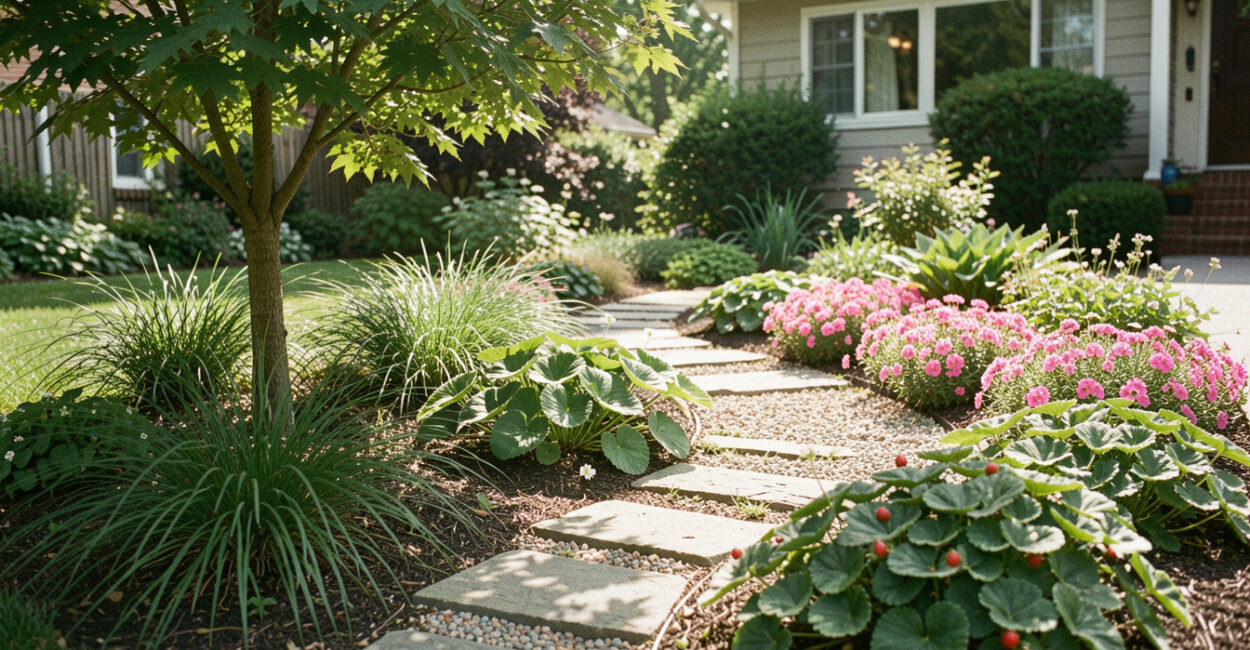
Which Native Groundcovers Suit Small Yards?
Native groundcovers are low-growing perennial plants that spread across soil, often by rhizomes, runners, or creeping stems. For a small front yard, six options worth comparing are Pennsylvania sedge, wild ginger, woodland strawberry, creeping phlox, bearberry, and Allegheny spurge. Their best uses depend on your region, available space, sunlight, drainage, and how much moisture the soil holds.
Choose by matching the plant to the spot rather than picking the fastest spreader. A groundcover can shade bare soil and reduce the room weeds have to establish, but new plantings still need watering, weeding, and time to knit together.
Which Native Groundcovers Match Your Site?
For small yards, the strongest choices are Pennsylvania sedge and Allegheny spurge for shade, wild ginger for moist shade, woodland strawberry for adaptable sun or part shade, creeping phlox for sunny edges, and bearberry for dry, acidic ground. Mature spread varies by site and cultivar, so use these ranges as planning estimates, not guarantees.
| Plant | Typical spread | Light | Moisture | Best placement |
|---|---|---|---|---|
| Pennsylvania sedge (Carex pensylvanica) | About 8–12 inches per clump; slowly forms colonies | Part to full shade | Dry to average | Under trees, dry-shade borders |
| Wild ginger (Asarum canadense) | About 12–18 inches per plant; spreads by rhizomes | Part to full shade | Moist, well-drained | Shaded woodland edges |
| Woodland strawberry (Fragaria virginiana) | Runners may travel several feet | Sun to part shade | Average; tolerates some dryness once established | Informal edges with room to wander |
| Creeping phlox (Phlox subulata) | About 12–24 inches | Full sun | Dry to average; well-drained | Sunny banks, path edges |
| Bearberry (Arctostaphylos uva-ursi) | Often 3–6 feet over time | Full sun to light shade | Dry; acidic, well-drained soil | Sunny slopes and sandy sites |
| Allegheny spurge (Pachysandra procumbens) | About 12–18 inches; slowly expands by rhizomes | Part to full shade | Average to moist; well-drained | Shaded beds and protected foundations |
These measurements describe mature plants under suitable conditions. Spacing plants at their expected mature width helps estimate coverage, but a tighter layout costs more and can increase competition while roots establish. For regional context, the Lady Bird Johnson Wildflower Center’s native plant database lets gardeners search species by state and growing conditions.

How Do You Choose a Groundcover for Your Site?
Start with regional nativeness, then assess light, soil drainage, moisture, and the space available at maturity. A plant native somewhere in North America may still be out of place in your local ecosystem; confirm its range for your state or ecoregion before buying.
Watch the site through the day. The area beneath a mature tree may look bright in spring, then become dense shade after the canopy fills in. Soil can also vary sharply across a few feet: a roof overhang creates a dry strip, while a downspout keeps the adjacent bed damp.
- Check the soil: Observe whether water drains quickly or lingers after rain. Bearberry needs acidic, well-drained soil; wild ginger prefers more consistent moisture.
- Measure the boundary: Runners from woodland strawberry and broad colonies of bearberry may cross a path or reach neighboring plants. Plan an edge you can maintain.
- Verify the species: Consult your state’s native plant society, a university extension service, or a regional flora. Ask the nursery for the species name, not just a “native” label.
The National Park Service’s explanation of native plants provides useful background, but local range information is still needed for a planting decision. “Native” describes a plant’s relationship to a place, not a universal stamp that applies across the country.
Which Plant Works Best in Dry Shade Beneath Trees?
Pennsylvania sedge is a reliable choice for dry shade and tree-root competition, especially where a short, fine-textured planting suits the scale of the yard. It forms low clumps and gradually spreads into a loose colony; it generally stays more restrained than plants that send long runners.
Use it beneath deciduous trees or along a shaded path, where its soft foliage can cover soil without creating a tall visual edge. Tree roots make digging difficult, so plant small plugs in gaps between major roots rather than cutting large trenches. Water during the first growing season, particularly during dry spells.
Under a tree, a groundcover succeeds when its roots can settle between existing roots without requiring the soil to be repeatedly disturbed.
For planting around established trees, avoid piling soil over the root flare or burying surface roots. Pennsylvania sedge can tolerate dry conditions once established, but newly planted plugs still need moisture while their roots spread.
Is Wild Ginger a Good Choice for Moist, Shady Beds?
Wild ginger fits moist, shaded beds where you want a broad-leaved groundcover that expands at a moderate pace. Its rhizomes form colonies, usually filling a border gradually rather than covering a large bare area in one season.
Read also: 12 Best Groundcover Plants for Slopes to Control Erosion
Complete guide: Native Plants for Small Yards: A Low-Maintenance Guide to Front Yard Plants
Plant it along a woodland-style border or beside a north-facing foundation if the soil stays evenly moist and drains well. Persistent sogginess can cause trouble, while dry, exposed sites tend to stress the foliage. Give it room to broaden, and avoid placing it where a narrow path must remain completely clear.
Keep in mind that regional ranges matter. The species is native to parts of eastern North America, not every state or habitat; check a local source before treating it as an appropriate native planting.
Where Can Woodland Strawberry and Creeping Phlox Spread?
Woodland strawberry suits sunny to partly shaded areas where runners can fill gaps; creeping phlox is better for sunny, well-drained edges where a low mat can spill slightly over a border. Both can cover exposed soil, but their growth habits and site preferences differ.
Woodland strawberry sends runners that root where they touch the ground. Its small fruit is edible, though the plants may wander into adjacent beds, so use it where occasional trimming is acceptable. It can work well near a loose front-yard border, but it is a poor fit beside delicate plants that cannot compete with runners.
Creeping phlox stays close to the ground and produces a spring flush of flowers. It prefers sun and drainage; heavy, wet soil can weaken the planting. Give it space to spread over a sunny slope or along a path edge, and avoid treating its flowering season as year-round color.
A typical small-yard choice: a tree casts afternoon shade over a dry bed, while the front walk receives full sun. Pennsylvania sedge can cover the tree-root area; creeping phlox can soften the sunny walk edge. The two plants solve different site problems without asking one species to tolerate conditions it dislikes.
For other planting goals around paths, compare these native pollinator garden planning notes. Groundcover choice can complement a broader planting, but bloom timing and pollinator value depend on the species and the surrounding plants.
When Should You Choose Bearberry or Allegheny Spurge?
Choose bearberry for sunny, dry, acidic sites, and Allegheny spurge for shaded beds with average to moist, well-drained soil. They solve nearly opposite site problems, so choosing between them comes down to conditions rather than appearance alone.
Bearberry is a woody, evergreen groundcover that can spread several feet and work well on sunny slopes, sandy ground, or other acidic sites. It dislikes poorly drained soil and may struggle in hot, humid conditions outside its preferred setting. Its mature width makes it a poor choice for a tiny strip without room to expand.
Allegheny spurge, also called Allegheny pachysandra, is a slow-spreading woodland plant for shade. It can fill a protected bed over time, but it will not quickly conceal a large bare area. Do not assume it behaves like the commonly sold Asian pachysandra; confirm the botanical name on the plant label.
The North Carolina State Extension Plant Toolbox offers detailed profiles for many garden species. Descriptions from a university database are useful for comparing conditions, but local distribution and performance can still differ by climate and soil.
How Do You Establish a Planting with Fewer Weeds?
Prepare the bed before planting, then keep weeds from seeding while the groundcovers close their gaps. Dense cover can reduce open soil available to weeds, but it cannot prevent every weed, especially perennial weeds already established beneath the planting.
- Remove perennial weeds and their roots before planting; pulling only the top growth can leave plants such as bindweed ready to return.
- Set plants according to mature spread and your budget. Closer spacing fills faster, while wider spacing leaves more room for weeds during establishment.
- Water new plants as needed through their first growing season, adjusting for rainfall and soil drainage. A light layer of leaf mulch can limit exposed soil without burying crowns.
- Inspect the bed regularly and remove young weeds before they set seed. Trim runners or spreading margins when they approach paths or neighboring plants.
There is no dependable calendar for establishment: growth varies with plant size, weather, soil, and competition. Even a well-matched planting may take more than one growing season to form a continuous cover. For ideas on combining species in a border, see these native plant border design principles, then adapt spacing to the mature dimensions on the plant label.
What Should You Check Before Planting?
| Question | Short answer |
|---|---|
| Dry shade? | Try Pennsylvania sedge beneath trees. |
| Moist shade? | Use wild ginger or Allegheny spurge where soil drains well. |
| Sunny edge? | Choose creeping phlox for drainage or woodland strawberry where runners can roam. |
| Dry, acidic sun? | Consider bearberry if there is room for its broad spread. |
| How to reduce weeds? | Prepare the bed, space for coverage, and remove weeds during establishment. |
| How to confirm local nativeness? | Check a state or regional native-plant source and verify the botanical name. |
Before buying, measure the planting area and note its light and moisture after rain and during a dry spell. Then compare those conditions with a locally verified species profile, and choose a plant whose mature spread fits the space you are willing to maintain.
Can I Plant Different Groundcovers Next to Each Other?
Yes, if their light and moisture needs overlap and their growth rates are compatible. Leave a clear boundary between aggressive runners and slower clump-formers so one does not crowd out the other.
Will Native Groundcovers Eliminate Weeds?
No. Once established, a dense planting can make it harder for some weeds to take hold, but it will not stop every weed or remove established perennial roots. Expect regular checks, especially during the first seasons.
Should I Fertilize Groundcovers When Planting?
Usually not unless a soil test or reliable local guidance points to a deficiency. Excess fertilizer can encourage leafy growth that does not suit the site and may favor weeds.
Are All Six Plants Safe for Pets?
Do not assume that native status means a plant is safe to eat. Check species-specific toxicity information from a veterinary or poison-control source before planting where pets may chew leaves or berries.
📱 See this content as a Web Story