

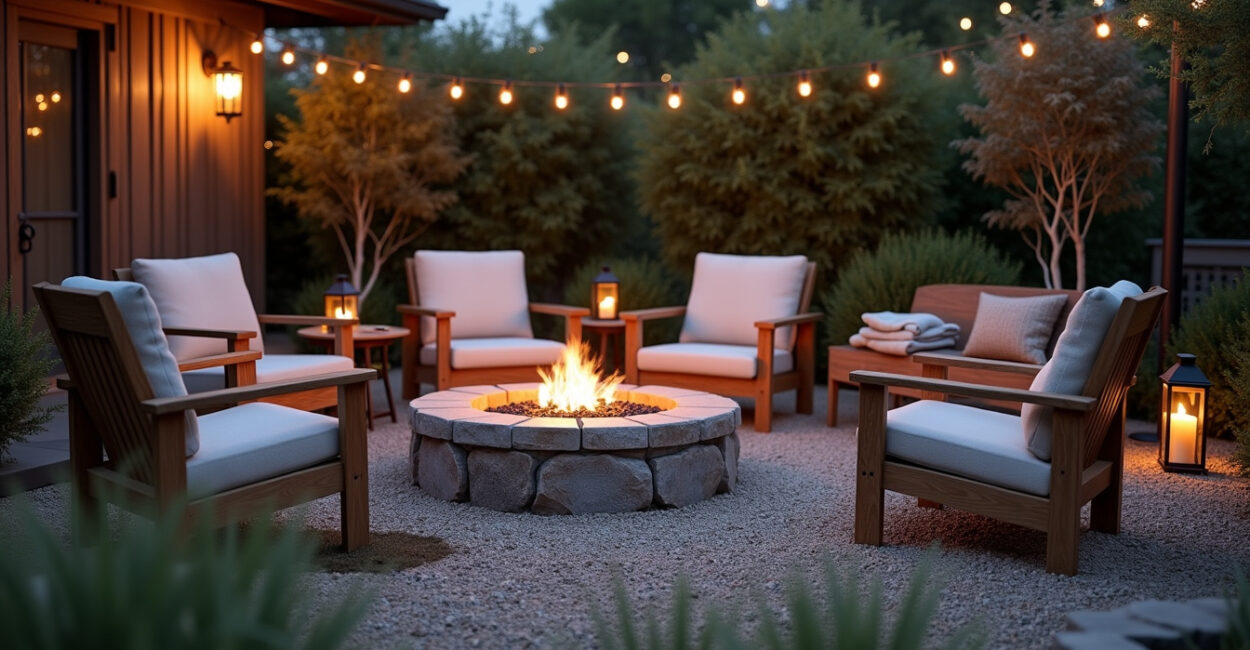
A rustic fire pit area works best when it feels easy to sit in, easy to talk in, and safe enough that nobody is constantly shifting chairs or dodging smoke. The strongest rustic fire pit entertaining ideas outdoors balance layout, seating distance, and a few grounded materials—wood, stone, metal, linen, and warm light—so the space feels welcoming instead of staged.
This guide compares the setups that actually work for conversation, comfort, and visual cohesion, so you can build a backyard gathering space that guests want to stay in. I’ll also show where rustic outdoor decor helps, where it starts to look cluttered, and which hosting choices make a fire pit hangout feel relaxed from the first drink to the last ember.
Key Takeaways
- A rustic fire pit area succeeds when the fire, seating, and side surfaces form one conversation zone, not three separate mini-scenes.
- The most reliable fire pit layout is a loose circle or horseshoe, because it keeps sightlines open and prevents guests from feeling “stuck” in fixed positions.
- Fire pit seating distance usually works best at about 3 to 5 feet from the rim for warmth and comfort, with more space needed for large flames or windy yards.
- Rustic decor should lean on texture and age, not volume; a few weathered materials create more warmth than a crowded collection of signs, lanterns, and props.
- The difference between a pretty fire pit and a great entertaining space is function: lighting, circulation, and places to set drinks matter more than matching everything perfectly.
What Makes a Rustic Fire Pit Entertaining Space Outdoors Feel Cohesive?
The best rustic fire pit entertaining ideas outdoors start with a clear definition: a rustic fire pit area is an outdoor lounge area built around natural materials, tactile finishes, and a low-pressure social layout. In plain terms, it should feel relaxed, grounded, and useful before it feels decorative.
That means the space needs three things working together. First, the fire pit itself should fit the scale of the yard. Second, the outdoor fire pit seating should support conversation without forcing people to shout. Third, the accessories should reinforce the mood instead of competing with it.
In practice, the spaces that feel most inviting use fewer materials, but they use them better. Think stone or concrete around the fire, wood or black metal in the seating, and a restrained palette that picks up the colors already in the yard. If you want the look to feel intentionally rustic, add texture through woven baskets, raw-edge wood, or aged planters rather than themed decor.
For a broader styling layer, the same logic that works in a seating area also works with nearby zones. A well-placed outdoor rug can define the edge of the lounge without making it look overdesigned; see weatherproof rug styling tips for patios for a useful way to anchor the whole scene.
What separates a rustic fire pit from a cluttered one is not how many pieces you add—it is whether every object has a job, a scale, and a place in the conversation zone.
Best Fire Pit Layouts for Conversation, Flow, and Comfort
The strongest fire pit layout for entertaining is usually a loose circle or a shallow horseshoe. Both create face-to-face conversation, keep the fire visually central, and leave enough open space for people to step in and out without interrupting the group.
Loose Circle: Best for Small to Medium Gatherings
A loose circle works when the goal is easy conversation and equal access to the fire. It keeps everyone in the same social field, which matters more than perfect symmetry. If your yard is compact, this is the safest choice because it avoids dead corners and makes the area feel larger than it is.
Horseshoe: Best for Comfort and Traffic Flow
A horseshoe layout is ideal when you want one side open for circulation, a serving path, or a view toward the house. It works well for backyard fire pit ideas that involve food, drinks, and guests moving between zones. This is also the better option when you expect mixed group sizes, because people can slide in without rearranging the whole setup.
Linear Layout: Best When the Yard is Narrow
A linear arrangement can work, but only when the fire pit sits slightly off the main traffic line. It is better for narrow patios or long side yards than for open entertaining areas. The drawback is simple: people tend to face forward instead of toward each other, so conversation can feel segmented unless you break the line with angled chairs.
One practical comparison: if the yard feels intimate, choose the circle. If you host often and need movement, choose the horseshoe. If the site is awkwardly narrow, use a linear setup only after testing the chair spacing with tape or a hose before you commit to furniture placement.
| Layout | Best For | Main Tradeoff |
|---|---|---|
| Loose Circle | Conversation-friendly seating and balanced views | Needs enough width to avoid crowding |
| Horseshoe | Entertaining with food, drinks, and traffic flow | Less symmetrical, so styling must stay restrained |
| Linear | Narrow yards or side patios | Can reduce face-to-face conversation |

Ideal Seating Distances and Arrangements Around a Fire Pit
For most backyard gathering spaces, seating works best about 3 to 5 feet from the edge of the fire pit. That range gives guests warmth without forcing them too close to heat, sparks, or smoke. If the fire pit is large, very hot, or exposed to wind, increase the gap.
Distance is only half the story. Seat height, chair angle, and whether people can easily set down a drink matter just as much. A deep lounge chair may feel luxurious, but if it sits too far back or too low, guests end up leaning forward the whole evening.
How to Place Chairs for Real Conversation
Angle chairs slightly inward instead of lining them up in a rigid ring. That small shift makes the group feel connected and reduces the feeling that everyone is staring at the fire like an audience. If you use benches, break them with side tables or stools so the seating does not become visually flat.
When to Use Mixed Seating
Mixed seating works well when the group is unpredictable. Combine a pair of deep chairs, a bench, and one or two movable stools to make the fire pit seating flexible. That way, some guests can lean back and others can rotate in and out without dismantling the whole arrangement.
A Simple Spacing Rule That Prevents Regret
Leave enough room behind each chair for someone to pass without bumping knees, and avoid placing every seat at the same exact distance. Slight variation feels natural and helps the fire pit seating distance support the real flow of people, not just the visual layout. If the space is tiny, choose fewer chairs with better spacing instead of forcing in extra seats.
For patios that also need a durable base underfoot, the floor matters more than many people expect. A stable surface reduces wobble and makes chairs easier to move, which is why durable backyard patio flooring options can change how the entire seating zone functions.
Three to five feet is the useful comfort zone for most fire pit seating, but the right distance still depends on flame size, wind exposure, and how low the chairs sit.
Rustic Decor Accents That Add Warmth Without Clutter
Rustic decor should add weight, texture, and age—not noise. The most effective pieces are the ones that make the space feel collected over time: weathered wood, matte black metal, woven baskets, stone trays, and neutral pottery. If every object tries to be a statement, the room loses the easy, lived-in feel that rustic design depends on.
Use Texture Before Ornament
Texture does more work than themed decor. A rough-sawn stool, a reclaimed wood table, or a galvanized metal bucket can bring in the rustic feel without making the space look like a prop set. That matters because guests notice comfort first and styling second.
Limit the Palette
Stick to earth tones, charcoal, warm beige, muted green, and one accent material. The more colors you add, the harder it becomes to keep the fire pit area visually calm. Rustic design works because it feels rooted, not busy.
Add Functional Pieces That Earn Their Place
Side tables, log holders, and a covered storage bench count as decor when they are chosen with care. They help the gathering space look finished while doing real work. If you need nearby planting to soften the edges, the same scale rules used in choosing pots for compact patios apply here too: keep containers substantial enough to matter, but not so large that they block flow.
One small but telling detail: a single aged lantern near the seating can create more atmosphere than five random accents placed at different heights. I have seen backyards where the decor looked expensive but felt cold because every surface was overfilled. Once the owner removed half the pieces, the space finally started to breathe.
Lighting, Textiles, and Table Styling for a Cozy Outdoor Mood
Lighting and textiles are what turn a fire pit from “usable” into “people want to linger here.” The fire gives you movement and warmth, but it does not light faces evenly or make the seating feel soft. That job belongs to layered lighting, weather-tolerant fabrics, and a table setup that keeps drinks and snacks within reach.
Layer the Light, Don’t Flood the Yard
Use a mix of low path lights, string lights, or lanterns so the fire pit remains the focal point. Too much overhead brightness kills the mood and makes the fire feel like an afterthought. A warmer, lower light level is usually better for conversation and is easier on the eyes after sunset.
If you are mapping the whole yard, a separate lighting pass helps a lot. The layout ideas in solar path lights for backyard ambiance and safety are useful because they guide people without overpowering the fire area.
Choose Textiles That Look Soft but Work Hard
Outdoor cushions, throws, and pillows should hold up to dew, dust, and the occasional spill. The goal is not plushness for its own sake; it is comfort that lasts through a whole evening. Weatherproof fabric in linen-like neutrals tends to fit rustic settings better than glossy patterns or bright synthetics.
Style the Table Like It Will Actually Be Used
Keep the table simple: coasters, a candle or two, napkins, and one serving piece. A crowded centerpiece gets in the way fast when people are balancing plates and mugs. For a cohesive finish, borrow ideas from budget-friendly backyard patio lighting ideas and use the same restrained approach at table level.
Hosting Ideas for Easy Backyard Gatherings Around the Fire
The best way to host around a backyard fire pit is to remove friction before guests notice it. That means chairs already arranged, blankets folded within reach, a drink station set up away from the heat, and fuel or firewood staged in advance. The gathering feels easy when the host is not constantly moving pieces around.
Give People a Reason to Stay
Offer one simple food setup and one simple activity, not a full production. Roasted marshmallows, skewers, warm cider, or a self-serve snack board are enough. Fire pit nights become memorable when the pace stays relaxed and nobody has to guess what comes next.
Keep the Serving Zone Separate
Drinks, napkins, and food should sit outside the main seating circle so the conversation zone stays open. A separate side table or console reduces traffic around the fire and prevents guests from standing in the best seats just to reach a plate. This small separation makes the whole night feel smoother.
Use the Fire as the Anchor, Not the Only Attraction
Guests do not need nonstop entertainment. A good rustic outdoor entertaining space lets people drift, talk, eat, and sit quietly without awkward gaps. The fire is the anchor; the seating, lighting, and flow do the rest.
Tip: Keep a wind check in mind before you invite people to gather. A setup that feels perfect on a calm evening can become smoky or uneven if the yard channels air toward the pit. That is one area where every rule has an exception.
The most successful fire pit nights are planned like a dinner party and felt like a campfire: structured enough to run smoothly, loose enough to feel unforced.
Common Mistakes to Avoid When Designing a Fire Pit Hangout
The most common mistake is treating the fire pit like a decoration instead of the center of a functioning social space. Once that happens, seating gets awkward, traffic gets messy, and the area looks better in photos than it works in real life. A rustic style cannot fix a bad layout.
Putting Seats Too Close or Too Far
Too close, and people get hot, smoky, or tense. Too far, and the fire stops feeling like the shared center of the gathering. If you are unsure, start with chairs farther back and move them in after testing the flame pattern and the wind.
Overdecorating the Perimeter
Too many lanterns, signs, planters, and accent pieces make the area feel crowded. Rustic design depends on negative space as much as it depends on material texture. Leave room for the eye to rest.
Ignoring the Ground Surface
Uneven pavers, muddy grass, or loose gravel can make even good furniture feel unstable. The base should support foot traffic and chair legs without constant adjustment. If the surface is weak, the whole setup feels temporary no matter how nice the decor is.
For safety and placement standards, it is worth checking official guidance from the U.S. Fire Administration and local fire codes before you settle on a permanent setup. The National Fire Protection Association also publishes outdoor fire and patio safety guidance at NFPA, which is useful when you are choosing fuel type, clearances, and ember control. For yard-scale comfort and outdoor livability ideas, extension resources from universities such as University of Illinois Extension are often more practical than generic inspiration boards.
One limit worth admitting: a rustic fire pit setup that works beautifully in a sheltered backyard may fail in a windy, exposed lot, especially if the seating is low or the pit is oversized. Climate, lot shape, and local fire restrictions matter. That is why the best design is the one that fits the site, not the one that looks best in a catalog.
Próximos Passos for a Better Fire Pit Setup
If you want the space to work on the first try, sketch the layout at full scale with chairs, tables, and the fire pit marked out before you buy anything permanent. That single step usually reveals whether the room needs a tighter circle, a wider horseshoe, or less furniture altogether. The smartest move is to design for how guests actually gather, not how the area looks from the back door.
Start with one layout, one seating style, and one lighting plan. Then test the setup on an evening when you can sit in it for an hour, not five minutes. That is the fastest way to turn rustic fire pit entertaining ideas outdoors into a real backyard gathering space instead of a project that only works on paper.
Frequently Asked Questions
What is the Best Layout for a Rustic Fire Pit Entertaining Area?
The best layout is usually a loose circle or a shallow horseshoe because both support conversation and easy movement. A circle feels more intimate, while a horseshoe handles traffic, serving, and mixed seating better. If your yard is narrow, a linear layout can work, but it usually needs angled chairs and careful spacing to keep people engaged with one another.
How Far Should Seating Be from a Fire Pit?
For most setups, seating should sit about 3 to 5 feet from the fire pit rim. That distance gives guests warmth without crowding the heat zone, and it leaves room for chairs, legs, and occasional movement. Large flames, windy conditions, or low lounge chairs may require a wider gap. Always test the feel of the arrangement before you finalize the layout.
What Decor Makes a Fire Pit Area Feel Rustic Without Looking Cluttered?
Choose texture over volume. Weathered wood, matte metal, stone, woven baskets, and neutral fabrics do more for a rustic outdoor decor scheme than a pile of themed accessories. Keep the palette restrained and use only pieces that serve a clear purpose, such as seating, storage, lighting, or serving. If every item competes for attention, the space loses its calm, grounded feel.
How Do You Make an Outdoor Fire Pit Space More Comfortable for Guests?
Comfort comes from good spacing, soft seating, layered lighting, and a place to set drinks down. Add weather-resistant cushions or throws, keep the serving area separate from the main seating zone, and make sure no chair sits awkwardly close to the heat. Guests stay longer when they do not have to manage smoke, glare, or unstable furniture while talking.
What Are the Best Ways to Host Guests Around a Backyard Fire Pit?
The easiest approach is to pre-set the seating, stage firewood or fuel, and keep food and drinks within reach but outside the main circle. Offer one simple snack or dessert and let the fire set the pace. The most successful backyard fire pit ideas are not busy; they are organized enough that the host can stay present instead of constantly fixing the setup.