
Hidden Kitchen Storage for Tiny Apartments: 7 Spots Most People Miss
How to use overlooked kitchen zones like above cabinets, under sinks, and toe-kicks for hidden storage that keeps small apartments organized without clutter.
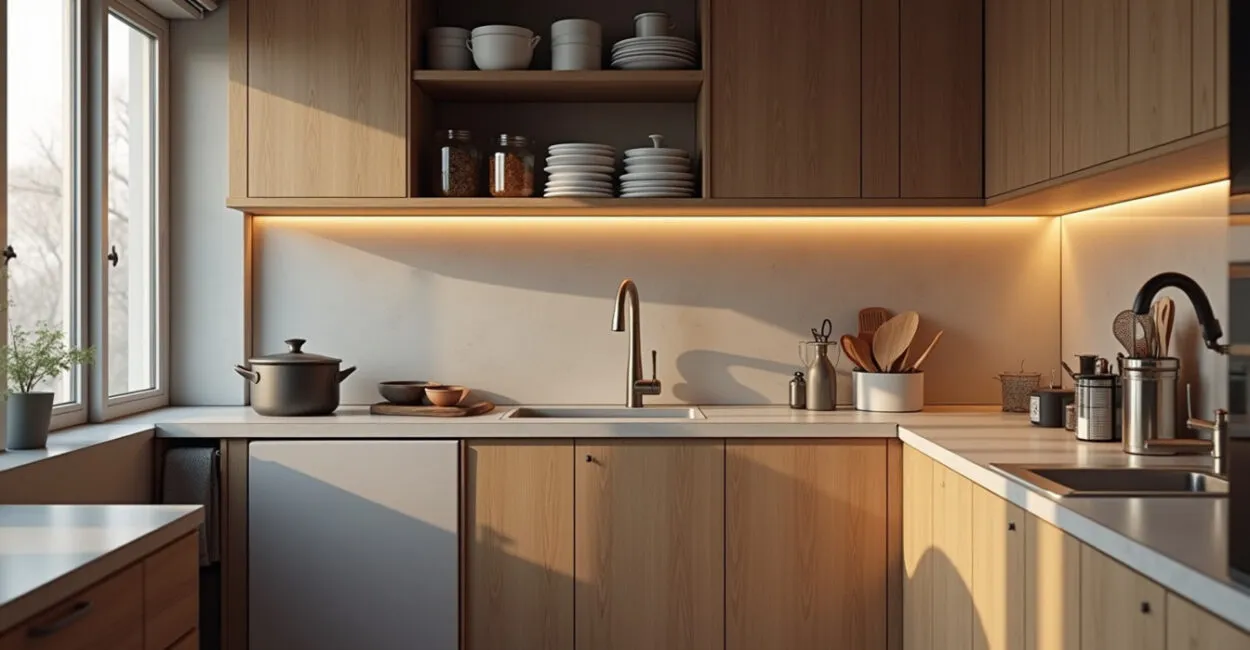 Clever hidden storage maximizes a compact kitchen
These overlooked kitchen zones can hold cookware, pantry items, and cleaning supplies without making a tiny apartment feel crowded.
In a small apartment, the real storage problem usually isn’t space. It’s wasted space: the gap under a shelf, the side of a cabinet, the back of a door. Hidden kitchen storage for tiny apartments works because it turns awkward dead zones into useful inches.
The trick is not cramming more stuff in. It’s placing the right items where they disappear until you need them. That’s what keeps a compact kitchen calm instead of cluttered.
Read also: Wall-Mounted Storage Vs. Freestanding Shelves: Which Saves More Space?
1. The Spots That Hide More Than You Think
Start with the zones most people ignore: above cabinets, under sinks, inside toe-kicks, and the sides of tall cabinets. In practice, these are the easiest wins for hidden kitchen storage for tiny apartments because they don’t steal visual space.
- Above cabinets: use lidded bins for rarely used cookware.
- Under the sink: add a pull-out caddy for cleaners.
- Cabinet sides: mount narrow racks for spices or foil.
- Toe-kick drawers: stash trays, flat pans, or backups.
The comparison is stark: visible shelves make a small kitchen feel busier, while hidden zones make the same kitchen feel lighter. That’s why the best storage upgrades are often the ones you barely notice. And one spot in particular usually does more work than people expect.
Read also: Under-Bed Storage Ideas for Tiny Bedrooms That Free Space
2. The Cabinet Door is Your Quiet MVP
The inside of cabinet doors is one of the most underrated parts of hidden kitchen storage for tiny apartments. It can hold measuring spoons, cutting boards, wraps, or even a slim cleaning spray, as long as the door still closes cleanly.
That tiny strip of space can replace an entire cluttered drawer. I’ve seen cramped kitchens look cleaner after one door rack went up, because the countertop finally stopped acting like overflow storage.
What to avoid: heavy items, deep organizers that block shelves, and anything that bangs when the door shuts. This method works well for light, flat objects, but it fails fast if you overfill it. The smartest setups are boring in the best way—they vanish until needed. And that matters even more when you’re trying to store food and cleaning supplies without crowding the room.
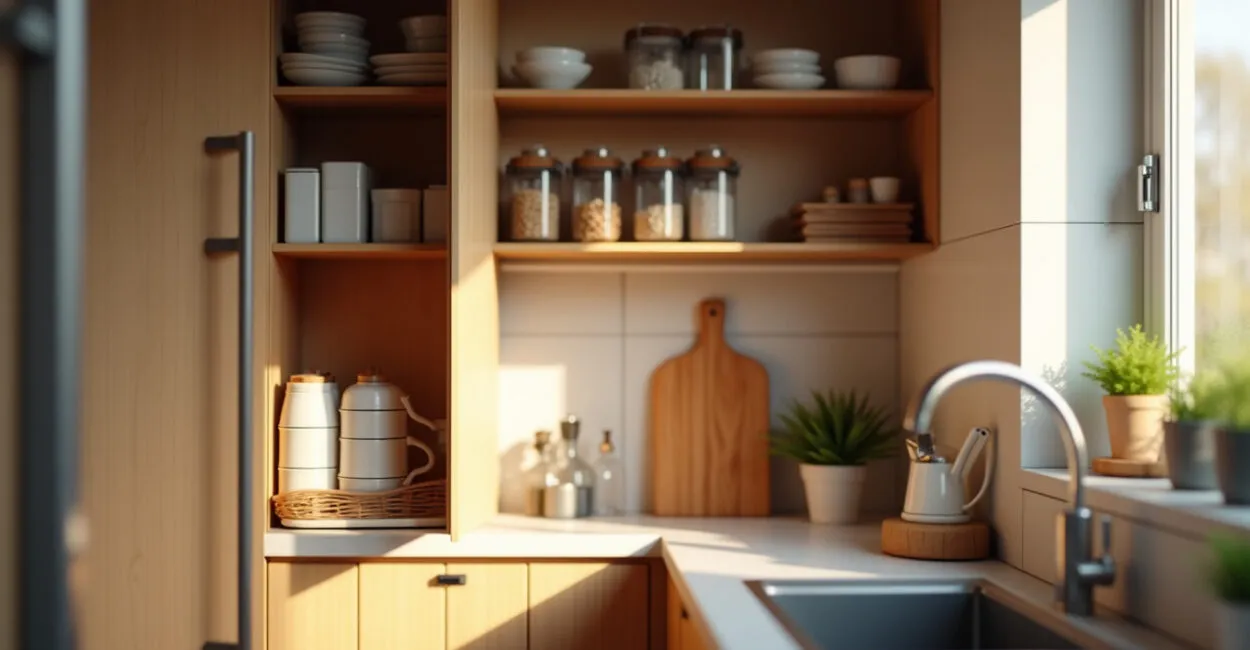
3. Use Vertical, Not Bigger, to Make Room
If your apartment kitchen feels full, don’t look for a bigger bin. Look up. Vertical storage changes the equation because it stacks function without spreading across the counter. That’s the real logic behind hidden kitchen storage for tiny apartments.
Try a riser inside a cabinet for mugs, stackable bins for pantry items, and a tension rod under the sink for spray bottles. Small moves, big difference.
In a tiny kitchen, the best storage is the kind that disappears when the door closes.
For a practical benchmark, see the storage guidance from the NHS on food storage and the USDA on leftovers and food safety. Those rules matter because hidden storage only helps if your pantry and cleaning items stay organized, dry, and safe.
The real win is psychological: once the hidden zones do their job, your counters stop carrying the weight of the whole apartment.
Can Hidden Storage Make a Tiny Kitchen Feel Smaller If Done Wrong?
Yes. If you use bulky organizers, opaque bins everywhere, or too many “clever” gadgets, the kitchen can feel boxed in fast. The goal is to hide clutter, not create more layers of clutter. Keep the system shallow, light, and easy to reach so the space still breathes.
What Should I Store in Hidden Kitchen Zones?
Put the less-used items there: extra cookware, baking sheets, pantry backups, wraps, foil, cleaning supplies, and seasonal tools. Daily essentials belong in the easiest spots. Hidden storage works best when it supports your routine instead of fighting it.
Is Under-sink Storage Safe for Food Items?
Usually, no. The under-sink area is better for cleaning products, sponges, gloves, and trash bags. If you store anything edible nearby, separate it fully and keep it in sealed containers. Moisture and leaks make this a risky zone for food unless the cabinet is well protected.
What’s the Cheapest Upgrade with the Biggest Payoff?
Door-mounted racks and simple stackable bins usually give the fastest improvement for the least money. They use space you already have and don’t require renovation. For renters, that’s ideal: high impact, low commitment, and easy to remove when you move.
How Do I Know If My Hidden Storage Setup is Too Crowded?
If you can’t grab an item in one motion, it’s too crowded. If opening one zone makes another zone harder to use, it’s too crowded. Good hidden storage feels almost invisible in daily life. You should notice the calm, not the system.
Small kitchens don’t need more square footage as much as they need better hiding places. Once you stop treating every wall and counter like prime real estate, the room gets easier to live in.
The best tiny kitchen is not the one with the most storage—it’s the one where storage quietly disappears.
📱 See this content as a Web Story