
Vertical Storage Solutions for Narrow Closets That Add Real Capacity
How vertical storage solutions transform narrow closets by using wall height to separate items, keep daily essentials handy, and store seasonal goods up high.
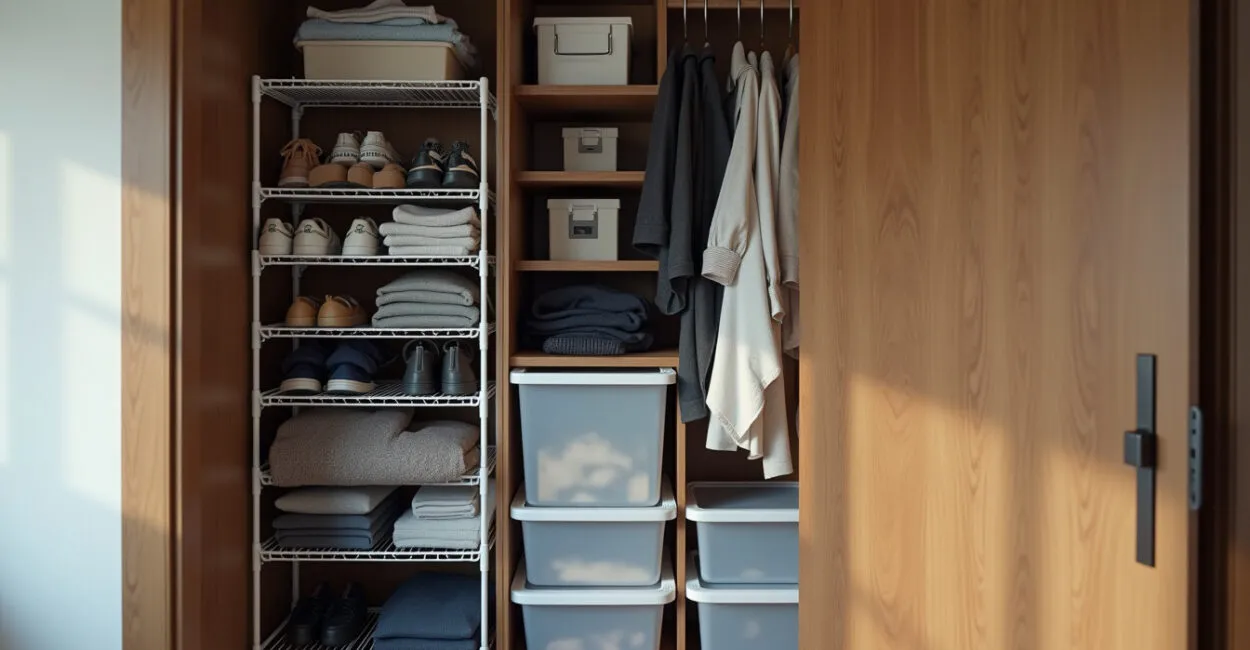
 Tall shelving transforms a narrow entry closet
A narrow closet can hold far more than it looks like it should—if you stop thinking in shelves and start thinking in height.
In a lot of homes, the fastest win comes from vertical storage solutions for narrow closets, hallways, and those awkward corners nobody plans for. The trick is not adding bulk. It’s stacking function upward, so the same footprint suddenly handles shoes, bags, linens, and cleaning supplies without feeling stuffed.
That’s why room-by-room vertical storage works so well: you use the dead air near the ceiling, the back of doors, and the sliver of wall space beside trim that usually gets ignored.
Why Going Vertical Changes a Narrow Closet Fast
Vertical storage is the use of wall height, not floor width, to increase usable capacity. In plain English: you stop wasting the upper half of the closet. That matters most in narrow spaces, where every inch of floor is already spoken for.
Read also: Entryway Organization Ideas for Narrow Hallways and Clutter
The best vertical storage solutions for narrow closets usually do three things at once: they separate categories, keep daily items within reach, and push seasonal or rarely used items higher up. A double-hang rod, stacked bins, slim shelf dividers, and a top cubby can double practical storage without making the closet feel tighter.
In small spaces, height is often cheaper than square footage. That’s why this approach shows up in hallway closets, mudrooms, and entry nooks before it ever feels “organized” in the traditional sense.The Room-by-Room Moves That Actually Work
Start with the room, not the product. In bedrooms, vertical storage solutions for narrow closets work best with short hanging zones below and open shelving above for folded clothes. In hallways, the win is usually narrow floor-to-ceiling shelving for paper goods, bags, or seasonal gear. In awkward corners, a slim tower or modular stack can turn a dead angle into real capacity.
Read also: Wall-Mounted Storage Vs. Freestanding Shelves: Which Saves More Space?
Here’s the simple rule: match the storage to the item’s height and frequency of use.
- Bedroom closet: double rods, shelf risers, and top bins for off-season items.
- Hallway closet: tall shelves for linens, labeled baskets, and a hook strip for grab-and-go items.
- Corner niche: narrow tower shelving or a vertical peg system for bags, hats, and accessories.
I’ve seen a closet go from “always jammed” to calm in one afternoon just by moving winter coats up, adding one second rod, and using matching bins on the top shelf. No renovation. No drama. Just better use of vertical space.
For design guidance and safety around wall-mounted systems, general storage and safety recommendations and NIOSH guidance on safe storage and lifting are worth a look. The details matter more than people think, especially when shelves reach higher and loads get heavier.
The Mistakes That Shrink Capacity Instead of Expanding It
The biggest mistake is buying a tall organizer and filling every shelf with mixed items. That looks organized for a day, then turns into vertical clutter. Another common miss is using bins that are too deep for narrow closets; they swallow space and make rear items disappear.
Avoid these errors:
- Using one shelf height for everything.
- Putting daily items too high to reach easily.
- Ignoring door storage in tight closets.
- Overloading lightweight shelves with heavy bins.
That last one is where trust disappears fast. If a system wobbles, people stop using it. And once a narrow closet stops being easy, it stops being useful.
The smarter play is to keep the top for light overflow, the middle for daily reach, and the lower zone for heavier or bulkier items. That pattern works in almost any room—but not every closet needs the same mix, and that’s the part most advice skips.
How Do I Know If a Narrow Closet Needs Vertical Storage?
If the floor is full but the top half is empty, you’re already behind. Narrow closets usually fail because they spread storage sideways instead of using height. If you have stacked piles, cramped hangers, or items spilling into the room, vertical storage solutions for narrow closets will give you a faster fix than replacing the entire system. The ceiling space is usually the easiest capacity you’re not using.
What Should Go on the Highest Shelves?
Put light, low-frequency items up top: seasonal decor, spare linens, guest bedding, or archived paperwork. Avoid daily essentials there unless you’re okay using a step stool. In a narrow closet, the highest shelf is best treated like overflow storage, not prime real estate. That keeps the lower zones open for things you touch every week instead of every season.
Are Door Organizers Worth It in Small Closets?
Usually, yes—if the door still closes cleanly and the organizer doesn’t block hinges or handles. Door storage works best for flat, light, and frequently used items like belts, cleaning spray, scarves, or shoes. It’s one of the easiest vertical storage solutions for narrow closets because it uses space you already own. The catch: don’t overload it, or the door becomes annoying fast.
Do I Need Custom Shelving for Awkward Corners?
No. Custom helps, but it isn’t required. A slim freestanding tower, adjustable shelves, or modular bins often solve the problem well enough. The real goal is to fit the corner’s shape without wasting the vertical line above it. If the corner is irregular, use stackable pieces instead of one rigid unit. That flexibility is what makes the layout usable long term.
What’s the Fastest Upgrade with the Biggest Payoff?
For most narrow closets, a second hanging rod and top-shelf bins deliver the biggest immediate gain. That combination creates two storage layers where there was one, and it clears the floor without a major remodel. If you want the closet to feel bigger by tonight, start there. It’s the quickest proof that vertical storage solutions for narrow closets can add real capacity without adding visual chaos.
Most narrow closets don’t need more space. They need a better map.
Once you start storing upward with intention, the room stops fighting you—and the extra capacity feels like it was hiding there the whole time.
📱 See this content as a Web Story