

📅 Updated on 06/13/2026
Seasonal home decorating works best when you treat it like a small editing exercise, not a full makeover. The goal is to change the mood of a room with a few high-impact swaps—textiles, lighting, greenery, and tabletop accents—while keeping the same furniture, layout, and color anchors in place.
That approach keeps spending low and prevents the cluttered look that happens when every shelf gets “themed.” In practice, the homes that feel polished through spring, summer, fall, and winter usually rotate only a handful of visible pieces. This article shows how to do that well, what to buy first, what to reuse, and where seasonal decorating tends to go wrong.
Quick Summary
- The cheapest way to refresh a room is to change texture and color at eye level, not to replace large furniture or wall art.
- A reusable base of neutral pillows, throws, trays, baskets, and glass vases can carry every season with small updates.
- One or two “hero” items per room create more impact than a box of random seasonal décor.
- Natural elements, candlelight, and simple color shifts do more work than obvious theme pieces.
- Storage and timing matter: if seasonal items are hard to access, you will skip the swap and keep buying duplicates.
How to Decorate Your Home Seasonally Without Rebuying the Whole Room
Seasonal decorating is the practice of adjusting a room’s color, texture, scent, and accent objects to match the time of year while keeping the underlying furniture and layout intact. The practical version is simple: build one stable base, then rotate 10–20% of what people actually see. That keeps the room fresh without turning your home into a storage problem.
The first rule is to work from a room’s visual anchors: sofa, bed, dining table, console, mantel, and shelving. Those are the pieces that define the room, so changing them is expensive and rarely necessary. Instead, adjust the layers around them—pillow covers, throws, branches, candles, bowls, lampshades, and art leaning on shelves.
What separates stylish seasonal decorating from clutter is not how many objects you add, but how deliberately you edit what stays visible.
This is where many people overspend. They buy a fresh set of “spring” or “holiday” décor every year and forget the reusable pieces already sitting in a closet. A better system is to collect a small set of neutral foundations and let the season show up through color and material.
The Best Budget Pieces to Reuse All Year
Reusable décor saves money because it shifts the cost from constant buying to a one-time foundation. If an item works in three or four seasons, it belongs in your core kit. That core kit should be boring in the best way possible: adaptable, durable, and easy to store.
Build a Core Kit First
- Neutral throw pillows with removable covers.
- A few solid throws in cotton, linen, or knit textures.
- Clear glass vases and simple ceramic vessels.
- Woven baskets for blankets, pinecones, books, or faux stems.
- Trays for coffee tables, entry consoles, and dining tables.
- Unscented or lightly scented candles in plain holders.
Choose Materials That Change with the Season
Natural materials do the heavy lifting. Linen and cotton read as airy in spring and summer. Chunky knit, boucle, and wood feel warmer in fall and winter. Glass works year-round because it disappears visually and lets the contents do the seasonal work.
If you buy only one category of seasonal décor, buy covers rather than filled pillows. Covers store flat, cost less, and let you change the room without accumulating bulky duplicates. The same logic applies to table runners, napkins, and mini garlands.
Color Swaps That Change the Mood Fast
Color affects seasonal style faster than almost anything else. You do not need a full palette overhaul. A room can feel like spring, summer, fall, or winter after one careful shift in accent color, especially if the base is neutral.
Think in layers: one base color, one accent color, and one material accent. For example, ivory plus sage plus rattan reads light and fresh; charcoal plus rust plus walnut reads warmer and more grounded. The key is restraint. When everything changes, nothing feels intentional.
| Season | Simple Color Direction | Best Supporting Materials |
|---|---|---|
| Spring | Sage, blush, pale blue, butter yellow | Glass, linen, ceramic, fresh greenery |
| Summer | White, sand, ocean blue, green | Cotton, jute, rattan, light wood |
| Fall | Rust, ochre, deep green, brown | Wool, wood, stoneware, amber glass |
| Winter | Ivory, evergreen, navy, silver | Velvet, metallic accents, evergreen branches |
Keep the palette narrow. Two accent colors are enough for most rooms. More than that, and the room starts to feel like a craft project rather than a space with a clear point of view.
The fastest seasonal transformation usually comes from changing one visible color family and one tactile material, not from filling the room with themed objects.
Season-by-Season Swaps That Actually Work
Each season calls for a different kind of atmosphere, but the swap list stays short. You want the room to feel in sync with the weather and light outside without becoming literal. A few specific changes are enough.
Spring and Summer
Spring and summer should feel lighter, cleaner, and less layered. Use brighter textiles, more open surfaces, and living greenery. Fresh flowers are great, but branches, herbs, and cut stems from the market often last longer and cost less.
- Replace dark throws with lightweight cotton or linen.
- Use clear vases and simple bowls.
- Bring in greenery, tulips, peonies, hydrangeas, or eucalyptus.
- Swap heavy candles for lighter scents or unscented options.
Fall and Winter
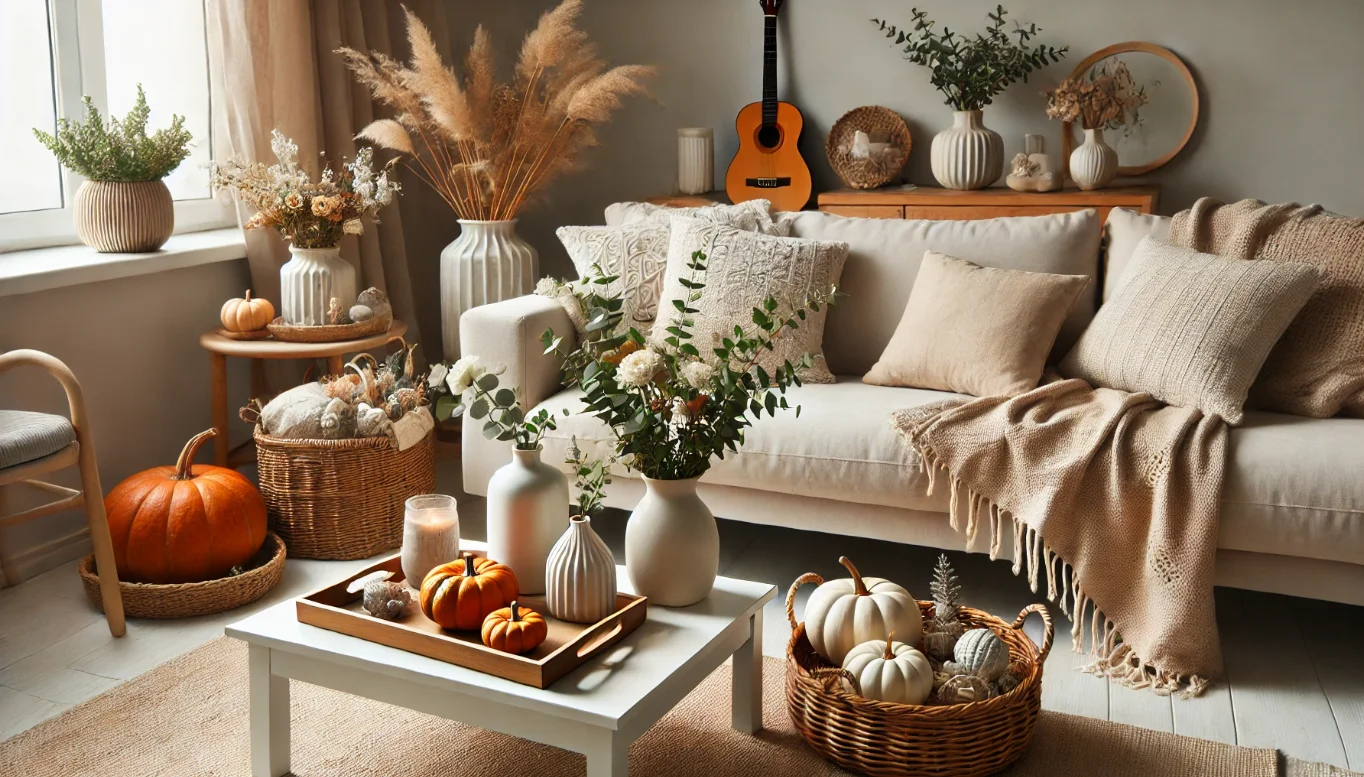
Fall and winter work best when the room feels layered and grounded. Add texture before adding color. A room with a wool throw, a knit pillow cover, and a wood tray already feels more seasonal before any pumpkins, ornaments, or holiday décor appear.
- Use deeper tones like rust, olive, plum, navy, or evergreen.
- Bring in thicker fabrics, matte ceramics, and amber glass.
- Style branches, pinecones, dried florals, or evergreen clippings.
- Use candlelight to soften the room as daylight drops.
Na prática, what works in a sunny apartment can fail in a darker house. Rooms with little natural light need lighter winter accents than people expect, or the space turns heavy fast. That is one reason a seasonal style that looks beautiful on social media may feel wrong in a real home.
How to Style One Room for the Season Without Overcrowding It
Start with one focal surface and stop there. A coffee table, mantel, dining table, entry console, or bookshelf is enough to signal the season if you style it well. The room does not need five separate “moments.” It needs one clear one.
A simple styling formula works across nearly every room: anchor, height, texture, and one organic element. The anchor might be a tray or bowl. Height can come from a lamp, vase, or stacked books. Texture comes from fabric or woven material. The organic element is a stem, branch, fruit, pinecone, shell, or plant.
A Realistic Example
A small living room I styled for a family in late September had one issue: too many tiny fall pieces. The space looked busy instead of cozy. We removed seven small décor objects, kept one wood tray, added a wool throw, swapped in rust pillow covers, and placed a vase of dried branches on the console. The room felt finished in twenty minutes.
That kind of edit matters because surface clutter competes with the architecture of the room. A single well-styled area signals intention; scattered décor signals indecision. If you want the room to feel calmer, subtract first.
Where Seasonal Decorating Saves Money and Where It Does Not
Seasonal decorating saves money when it changes the feel of the room without changing the room’s structure. It does not save money if every season becomes a shopping event. The real budget win comes from buying fewer, better reusable pieces and using them more creatively.
Some categories are worth investing in. Pillow inserts, neutral drapery, quality trays, and good storage bins last for years. Ultra-specific décor, on the other hand, usually has a short lifespan. The trick is to avoid buying anything that can only do one holiday or one season.
For broader home design guidance, the U.S. Environmental Protection Agency’s materials on reuse and waste reduction are a useful reminder that buying less and reusing more is not just practical—it also keeps disposable décor out of the trash. For organizing the storage side of the equation, the Penn State Extension has solid home-management resources that support better household systems. And for color and light trends in residential interiors, the Architectural Digest coverage is useful for seeing how designers apply these ideas in real spaces.
The budget mistake is not spending too little on décor; it is buying pieces with no reuse value.
Storage, Rotation, and the System That Keeps You Consistent
Seasonal décor only works if it is easy to rotate. If your items are buried in three boxes, the system fails before it starts. The best setup is a single labeled bin for each season or a smaller set of bins organized by category: pillows, tabletop, greenery, and holiday-specific items.
A Practical Rotation System
- Keep one core bin of reusable items.
- Label seasonal bins by month or season.
- Store fragile items in clear containers so you can see them quickly.
- Take a quick photo of each seasonal setup before packing it away.
Those photos matter more than people think. They give you a reference for what worked last time, so you do not start from zero every year. That small habit saves both time and money because it prevents repeat purchases.
There is one limit worth acknowledging: this method works best in homes with some storage space and a fairly stable layout. If you live in a very small apartment, rotation still works, but it has to be tighter. In that case, focus on reversible pieces like covers, trays, and one seasonal centerpiece rather than full-room swaps.
What to Buy First If You’re Starting from Scratch
If you are building a seasonal decorating setup from zero, begin with items that can serve at least three seasons. Do not start with holiday-specific décor. That is the fastest way to create a collection that looks cheap and gets used once a year.
The smartest first purchases are neutral pillow covers, a throw blanket, a tray, a vase, a basket, and one good candle holder. With those six items, you can create a spring table, a summer shelf, a fall console, and a winter mantel without changing the whole room.
That is the real logic behind seasonal home decorating on a budget: fewer purchases, better reuse, and more thoughtful edits. If a piece cannot move across seasons, it has to earn its place. Start with the reusable base, choose one room to refresh first, and build from there only when the previous season actually worked.
Frequently Asked Questions
How Many Seasonal Décor Pieces Do I Actually Need?
Most rooms only need three to seven visible changes to feel seasonal. That can be as simple as two pillow covers, one throw, a vase, and a styled tray. If you need more than that to notice a shift, the base room may be too busy.
What is the Cheapest Way to Make a Room Feel Seasonal?
Change textiles and one natural element first. Pillow covers, throws, and branches or greenery usually cost less than decorative objects with a short lifespan. Lighting also matters, so candles or softer bulbs can change the mood without much spending.
Should Every Room in the House Match the Same Season?
No. A better approach is to let one or two rooms carry the season more strongly and keep the rest subtle. That prevents visual overload and makes the home feel more cohesive.
How Do I Keep Seasonal Décor from Looking Cluttered?
Use fewer pieces with stronger visual impact. Stick to one color family, one focal surface, and one texture shift per room. If every surface has a separate theme, the room will feel crowded even if each item is inexpensive.
Is It Better to Buy Décor on Sale After the Season Ends?
Yes, if the item is reusable and fits your storage space. Off-season sales are the best time to buy neutral throws, trays, candles, and covers. Just avoid impulse buys that only make sense for one holiday.
What Should I Store Separately for Each Season?
Holiday-specific décor, themed signs, and specialty colors that do not work year-round should be stored separately. Reusable basics like baskets, vases, and neutral textiles can stay in your core collection. That split keeps rotation fast and storage manageable.