

Hidden Storage Solutions for Small Houses: Easy DIY Wins
Hidden storage solutions that transform unused spaces like under stairs and platform beds into clutter-free, easy-to-reach storage without adding bulk or vis…
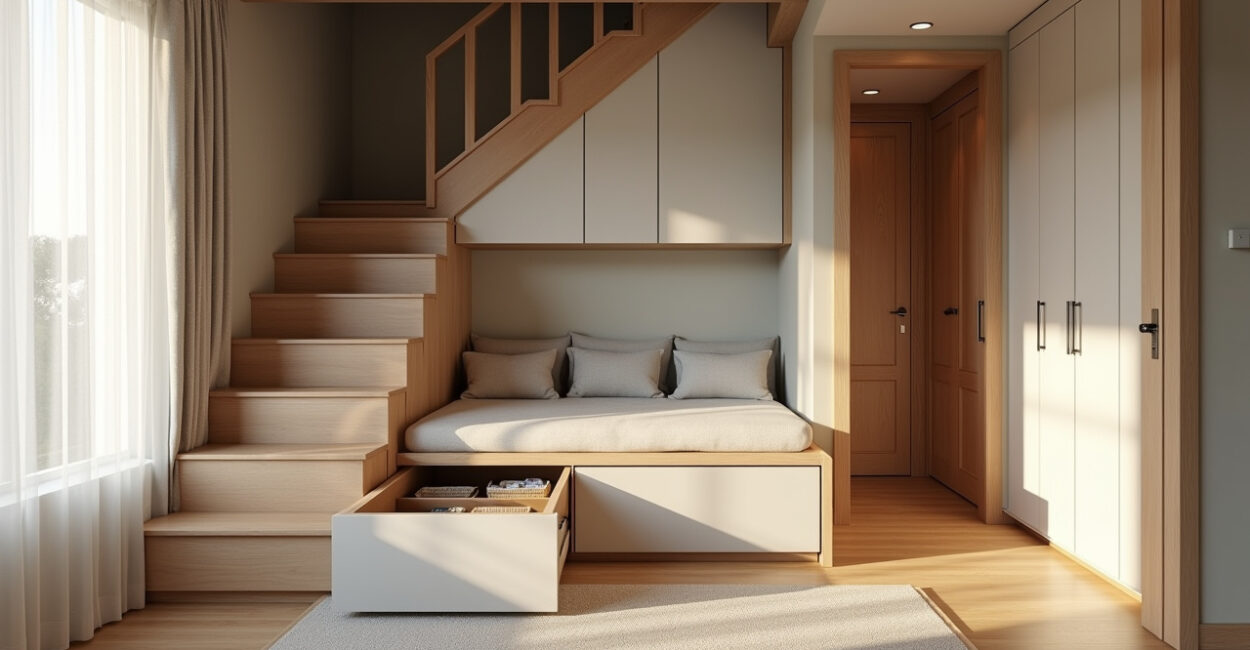
Square footage is expensive, and clutter gets expensive faster. The smartest hidden storage solutions for small houses do not add more furniture; they turn dead space into storage that disappears when you are done using it.
That is the real trick: storage should support the room, not visually fight it. In practice, the best solutions use cavities, vertical gaps, and built-ins to store more without making a home feel packed. Below, you will find practical ideas that work in everyday houses, not just perfectly staged photos.
O Que Você Precisa Saber
- Hidden storage works best when it uses spaces you already own: under stairs, inside benches, behind doors, and inside platform beds.
- The strongest designs hide visual clutter first, then organize the contents with bins, dividers, and labeled compartments.
- In small homes, the goal is not maximum storage volume; it is storage that is easy to reach and easy to keep tidy.
- Built-ins and custom joinery usually outperform loose furniture because they eliminate wasted clearance around the edges.
- Some “secret” storage ideas fail when they block airflow, trap dust, or become too inconvenient to use daily.
Hidden Storage Solutions for Small Houses That Use Every Inch Without Visual Clutter
From a design standpoint, hidden storage means any storage system integrated into the architecture or furniture so it reads as part of the room rather than a separate object. In plain English, it is storage that disappears into stairs, seating, wall cavities, toe kicks, or furniture bases.
The best systems usually solve two problems at once. They create a place to put things, and they reduce the number of visible items competing for attention. That matters because visual clutter makes even a clean room feel smaller than it is.
Hidden storage works best when it is easy to access in under ten seconds; otherwise, the space becomes a hiding place, not a storage solution.
Why Disappearing Storage Feels Bigger Than Open Shelving
Open shelving can be attractive, but it only works when the contents are curated. In a small home, that is a high-maintenance rule. Hidden storage reduces the number of objects the eye has to process, which makes rooms feel calmer and more spacious. It also lowers the “reset cost” after a busy day, because you can close a drawer, bench lid, or cabinet door and restore order instantly.
Where This Strategy Fits Best
This approach is strongest in entryways, hallways, bedrooms, and living rooms where stray items pile up fast. It is less useful for items that need constant visibility, such as frequently used cooking tools or work supplies. That is the first rule I apply: if you reach for it several times a day, hide it only if access stays effortless.
Under-Stair Cavities, Toe-Kicks, and Other Neglected Gaps
One of the most overlooked storage zones in a small house is the space nobody designed for on purpose. Under stairs, beneath cabinets, and along low wall areas, you often find deep pockets that can hold far more than they seem.
Under-Stair Drawers That Actually Get Used
Under-stair storage is most effective when each compartment matches the item you plan to store. Long drawers work for shoes, sports gear, wrapping paper, or extra linens. Small pull-outs are better for tools and seasonal accessories. A single giant cavity sounds efficient, but it often becomes a junk zone because the back half disappears.
Toe-Kick Storage Beneath Cabinets
Toe-kick drawers turn the dead space below kitchen or bathroom cabinets into shallow storage for baking sheets, placemats, pet bowls, or flat items. This is one of those ideas that looks minor on paper and feels surprisingly useful in daily life. It will not replace a pantry, though. It is a supplement, not a miracle.
Small homes do not need more square footage as much as they need better geometry: shallow, vertical, and divided storage beats one oversized cavity almost every time.

Built-In Furniture That Hides Storage in Plain Sight
Built-in furniture solves a common problem in compact homes: loose pieces waste space around them. A bench with lift-up seating, a window seat with drawers, or a sofa table with concealed shelves can store a meaningful amount while still looking intentional.
Who works with compact interiors knows this well: the moment you stop treating furniture as standalone objects, the room opens up. Built-ins align with walls, corners, and niches, which means you reclaim the inches that regular furniture leaves behind.
Bench Seats, Window Seats, and Ottoman Storage
A bench with storage inside is one of the most practical options for mudrooms and entryways. Window seats work well for blankets, board games, or off-season items. Storage ottomans are the least permanent option here, but they are useful when you want flexibility and cannot commit to carpentry.
When Built-Ins Are Worth the Effort
Built-ins make sense when a room has a fixed function and a fixed layout, such as a bedroom, hallway, or breakfast nook. They are less smart in spaces that may need to change often. That is one limit people ignore: if the room will evolve soon, a custom build can lock you into a layout you later regret.
For planning and space efficiency ideas, the U.S. Department of Energy’s home design guidance is a solid reference point for thinking about layout, function, and efficient use of space.
Read also: Hidden Kitchen Storage for Tiny Apartments: 7 Spots Most People Miss
Read also: Built-In Storage Vs. Freestanding Furniture for Small Homes
Read also: Vertical Storage Solutions for Narrow Closets That Add Real Capacity
Vertical Storage Behind Doors and Inside Walls
Vertical space is where many small houses underperform. People often think in terms of floor area, but the real opportunity is usually above shoulder height and behind swing paths. Door backs, shallow wall cavities, and tall narrow niches can all carry storage without consuming visible room.
Over-Door and Behind-Door Systems
Over-door racks and behind-door organizers work best for lightweight items: cleaning tools, accessories, pantry goods, toiletries, and hobby supplies. If the door slams or the hardware sticks out too far, though, the system becomes annoying fast. That is why thinner profiles usually win over bulkier units in small houses.
Recessed Shelves and Wall Niches
Recessed shelving is ideal where wall thickness allows it, such as between studs in certain non-load-bearing walls. Bathroom medicine cabinets are the classic example, but the same idea can be extended to hallways, kitchens, and entry areas. The catch is that not every wall can be opened safely, so this is where a careful assessment matters before cutting anything.
- Use shallow recesses for toiletries, keys, and daily carry items.
- Use behind-door organizers for items you access often but do not want on display.
- Use tall, narrow vertical storage for cleaning tools, umbrellas, and pet supplies.
Lift-Up Floors, Bed Bases, and Other Furniture with Secret Compartments
Bedrooms usually waste the most hidden volume because the bed frame consumes a huge footprint. Platform beds with drawers, hydraulic lift beds, and under-bed boxes reclaim that footprint without adding more visual weight to the room.
We saw this play out in a one-bedroom rental where the owner had six different plastic bins under a standard bed. They were hard to slide, collected dust, and made vacuuming miserable. Replacing that setup with a lift-up base turned the same area into one large, reachable compartment. The room felt cleaner the same day.
Platform Beds Vs. Standard Frames
Platform beds are better when you want integrated storage and a cleaner look. Standard frames are easier to move and usually cheaper, but they leave a lot of unused air beneath the mattress. If you need long-term storage for bedding, off-season clothing, or bulky extras, the platform design usually wins.
What to Store Under a Bed
Use under-bed storage for items that are stable, sealed, and not needed every day. Think extra pillows, winter blankets, luggage, or archived papers in protective boxes. Avoid storing anything that needs airflow, regular access, or climate protection, because that space can trap dust and moisture more easily than people expect.
Kitchen and Bathroom Tricks That Hide Clutter Fast
Kitchens and bathrooms create the fastest clutter because the items are small, repetitive, and always in use. The best hidden solutions here are the ones that convert awkward millimeters into useful compartments: pull-out spice racks, cabinet door organizers, false drawer fronts, and mirrored medicine cabinets.
Pull-Out Pantries and Narrow Cabinet Inserts
A pull-out pantry is one of the most efficient upgrades in a slim kitchen. It uses depth without sacrificing visibility, so bottles, cans, and dry goods do not vanish behind each other. Narrow inserts beside appliances also work well for baking trays, cutting boards, and cleaning products.
Bathroom Storage Behind Mirrors
Mirrored cabinets give you two functions in the footprint of one. They hide toiletries, medications, and grooming tools while keeping the bathroom bright. According to the CDC’s medication safety guidance, medicines should be stored carefully and kept away from children and moisture-prone areas, which makes enclosed bathroom storage useful only when the cabinet stays dry and secure.
In kitchens and bathrooms, hidden storage fails when convenience drops below habit; if a drawer takes too many steps, the clutter returns to the counter.
Planning the Right Hidden Storage Mix for Your House
There is no universal best setup. The right mix depends on how your household behaves, how often you move things, and how permanent you want the solution to be. A family with kids needs fast-access bins and durable latches. A single occupant may prefer sleeker, more concealed systems with less hardware.
For longer-term planning, Architectural Digest’s small-space design coverage and Houzz’s project galleries are useful for comparing what actually gets built in real homes, not just conceptual drawings.
| Storage Type | Best For | Main Trade-Off |
|---|---|---|
| Under-stair drawers | Shoes, seasonal gear, linens | Needs custom fit |
| Bench storage | Entry clutter, blankets, toys | Limited depth |
| Bed-base storage | Bedding, luggage, off-season clothes | Heavier to move |
| Behind-door organizers | Light daily-use items | Can interfere with door swing |
The most reliable method is to start with the items that create the most visual mess and store them closest to where they are used. That sounds simple, but it is where many projects fail: people build storage in the wrong room, then wonder why it never gets adopted.
What to Do Next Before You Buy or Build Anything
Start by walking through your home with a measuring tape and a short list: things you use daily, weekly, and seasonally. Mark the spaces that are underused, then decide which of those spaces can handle a drawer, a recess, a lift-up base, or a simple organizer. The point is not to hide everything. The point is to hide the right things in the right places.
If you want the strongest result, choose one high-friction area first, measure it carefully, and build for habits instead of aesthetics alone. That is the difference between a clever storage idea and a system that actually survives real life.
Frequently Asked Questions
What Hidden Storage Solution Gives the Biggest Payoff in a Small House?
Built-in storage usually gives the biggest payoff because it removes wasted space around furniture and walls. In many homes, under-stair drawers and storage beds are close behind because they reclaim large volumes that would otherwise sit empty. The best choice depends on where clutter accumulates most often. If you are starting from scratch, pick the space that currently causes the most daily frustration.
Are Hidden Storage Solutions Expensive to Install?
They can be either cheap or costly, depending on how permanent they are. Simple upgrades like behind-door organizers, under-bed boxes, and bench baskets are inexpensive and renter-friendly. Custom carpentry, recessed shelving, and hydraulic lift beds cost more because they require materials, labor, and often precise fitting. The budget usually rises when the solution must blend seamlessly into the room.
Which Hidden Storage Ideas Are Best for Renters?
Renters usually do best with removable systems such as over-door racks, rolling bins, storage ottomans, and modular under-bed containers. These options improve organization without altering walls or built-ins. Adhesive hooks and tension rods can also help, as long as they do not damage surfaces. For renters, the smartest rule is to choose solutions you can pack up and take with you.
How Do I Keep Hidden Storage from Becoming a Junk Drawer?
Use categories and limits. Each compartment should have one job, and the size should match that job so extra items do not migrate in over time. Clear bins, labels, and regular resets help, but the real fix is designing storage for the items you actually own. When a hidden space is too large or too vague, clutter fills it fast.
What Should I Avoid Storing in Hidden Compartments?
Avoid anything that needs airflow, temperature stability, or immediate visibility, unless the compartment is designed for that purpose. That includes sensitive papers, some electronics, damp textiles, and anything that could attract pests if forgotten. Bathrooms and under-stair areas can also trap moisture or dust, so those spaces need careful selection. Hidden storage should make items safer, not harder to monitor.