

Storage Ideas for Small Homes: 25 Smart Space-Saving Ideas
How to optimize storage in small houses by using vertical space, multifunctional furniture, and grouping items efficiently to reduce clutter and maximize eve…
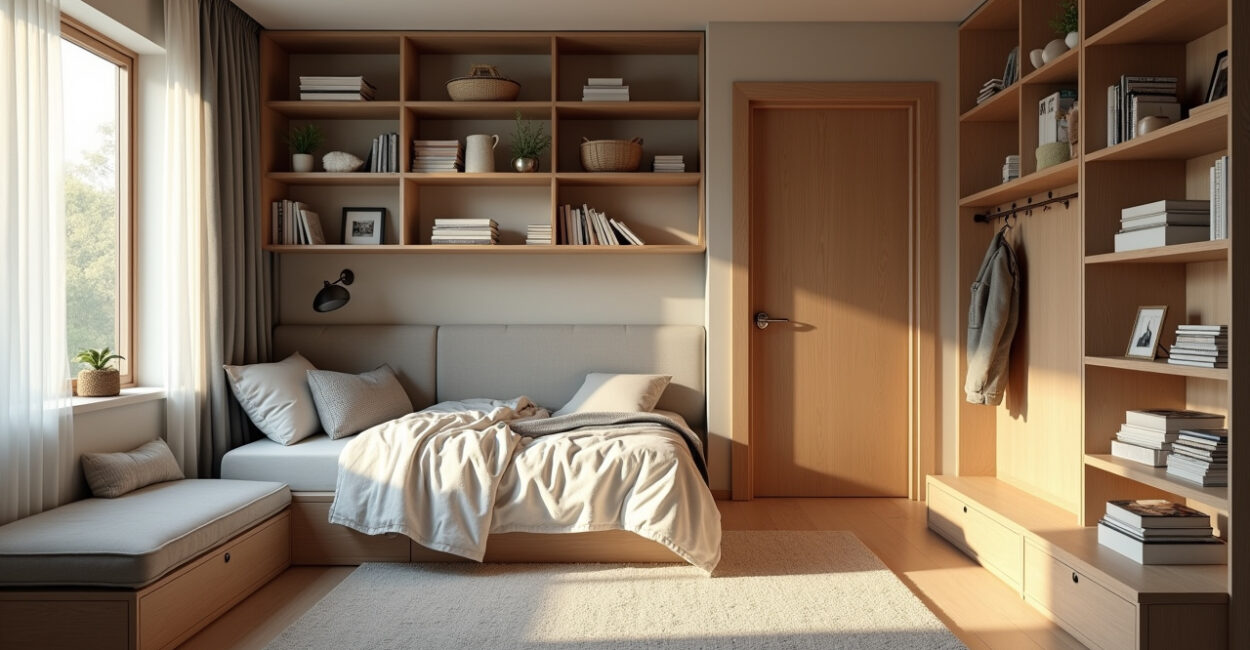
Small homes feel cramped for one main reason: storage usually gets added after the fact, not designed into the space. The best storage ideas for small houses are not about stuffing more bins into corners; they are about reducing dead space, choosing furniture that earns its footprint, and making everyday items easier to put away. Done well, storage makes a home feel larger without changing the square footage.
This article breaks down practical, real-world storage moves that work in studios, tiny houses, cottages, older bungalows, and compact family homes. You will see what to prioritize first, which ideas deliver the biggest payoff, and where a clever trick can backfire. I am focusing on solutions that improve daily life, not storage theater.
The Essential
- In small homes, vertical space usually delivers the fastest storage gain because floor area is the scarcest resource.
- Built-ins, under-bed drawers, and furniture with hidden compartments work best when they replace a piece you already need.
- Open shelving helps only when the household can keep it visually disciplined; otherwise, it makes rooms feel busier.
- The most effective storage plans start by grouping items by use frequency, not by room.
- Small-space storage fails when it creates more steps to access common items than the original clutter did.
Storage Ideas for Small Houses That Use Every Inch Without Adding Clutter
Technically, storage optimization is the disciplined allocation of volume, access, and visibility inside a constrained floor plan. In plain English: every item needs a place that fits how often you use it and how quickly you need to reach it. That is why good storage in a small home is less about capacity and more about placement.
The first rule is to treat walls, corners, and gaps as usable real estate. A narrow wall niche can hold a broom cabinet. The dead zone above a doorway can support shallow shelving. Even the space under a staircase can become a pantry, shoe zone, or utility closet. If you are comparing approaches, the National Institute on Aging’s home safety guidance is a useful reminder that compact storage also has to stay accessible and safe, not just dense.
Start with the Zones You Use Daily
Items used every day should live at eye level or below waist height. Less-used items can move higher, lower, or farther away. That simple rule reduces the “open three doors before breakfast” problem that makes small homes feel exhausting.
Use the Voids, Not Just the Rooms
Most small homes have awkward voids: the gap above cabinets, the side of a refrigerator, the inside of a bench, the underside of a bed. Those spaces are often ignored because they look too small on their own. Put together, they add up fast.
In a small house, the best storage is the storage you stop noticing because it lives where the room already had wasted space.
Built-In Solutions That Make Small Rooms Feel Intentional
Built-ins are not a luxury in compact homes; they are often the most space-efficient way to solve recurring clutter. A custom bench with drawers in an entryway, a window seat with lift-up storage, or floor-to-ceiling cabinetry can outperform freestanding furniture because it uses irregular space more precisely. That precision matters when every inch counts.
Who works in small-home renovation knows this: built-ins only pay off when they are sized around actual objects, not wishful thinking. Measure the laundry baskets, vacuum, seasonal bedding, and kitchen appliances first. Then design around them.
Window Seats and Banquettes
These work well in dining nooks and living rooms because they add hidden storage without breaking circulation paths. They are especially useful for blankets, board games, and off-season decor.
Toe-kick Drawers and Shallow Cabinets
Toe-kick storage, the low space beneath base cabinets, is ideal for trays, flat tools, or pet supplies. Shallow cabinets are underrated because they keep items visible instead of stacking them into oblivion.
One older bungalow I saw had a hallway no wider than a suitcase. The owner converted one side into 10-inch-deep cabinets with push latches. It did not sound dramatic on paper. In practice, it eliminated the hallway clutter pile that had been swallowing shoes, mail, and charging cables for years.

Multi-Use Furniture That Pulls Double Duty Every Day
Multi-use furniture works because it solves two problems with one footprint. A storage ottoman can hide throws and also serve as seating. A bed with drawers can replace an entire dresser. A drop-leaf table can open for dinner and shrink back for circulation. The trick is to choose pieces that match real habits, not showroom fantasies.
Furniture that promises too many functions often disappoints. If a piece is hard to lift, awkward to clean, or too heavy to move, people stop using the storage portion. That is where many small-house setups fail: the container is clever, but the routine is not.
| Furniture type | Best use | Main drawback |
|---|---|---|
| Storage ottoman | Throws, games, remotes | Limited internal depth |
| Platform bed with drawers | Clothes, bedding, shoes | Requires clear access room |
| Nesting tables | Flexible surfaces for guests | Can become visual clutter if overused |
| Bench with lift-up lid | Entryway or dining storage | Needs a simple organization system inside |
Choose Pieces That Replace Something, Not Add Something
If a new item only creates more furniture, it does not solve the problem. The strongest multi-use pieces are substitutes: the bed replaces a dresser, the bench replaces loose shoe piles, the coffee table replaces a basket stack.
The difference between smart and awkward multi-use furniture is whether it reduces the number of objects in the room, not whether it has hidden storage.
Vertical Storage, Wall Systems, and the Ceiling Line
Vertical storage is the fastest way to expand capacity without expanding footprint. Wall-mounted pegboards, tall bookcases, rail systems, and stacked cabinets pull storage upward and free the floor for movement. In small homes, floor space is not just precious; it determines how calm the room feels when you walk into it.
Apartment Therapy’s small-space coverage consistently shows the same pattern: the best compact interiors leave more negative space at eye level and near the floor. That is not an aesthetic accident. It is a visibility strategy.
Read also: Space-Saving Storage Ideas for Small Homes That Clear Away Daily Clutter
Read also: Under-Stair Storage Ideas for Small Houses That Work
Read also: Small House Closet Storage Ideas: Maximize Every Inch
Use Vertical Zoning
Think in bands. Lower space for daily access, middle space for medium-frequency items, upper space for seasonal or rarely used items. This prevents the common mistake of stacking everything high, which forces a step stool into every task.
Mount What Does Not Need to Move
Wall-mounted hooks, magnetic strips, spice rails, and fold-down desks are effective because they remove items from surfaces. This is especially useful in kitchens, laundry rooms, and small entryways where horizontal surfaces attract clutter instantly.
Keep the Top Shelves Honest
Top shelves are best for holiday items, archival boxes, or backup supplies. If you place everyday items up there, the storage system starts fighting the household instead of helping it.
Kitchen and Bathroom Storage That Actually Reduces Friction
Kitchens and bathrooms become messy faster than other rooms because they hold high-turnover items. In these spaces, storage should cut down motion. If you must cross the room to find a towel, a sponge, or a cutting board, the room is underperforming. Compact storage here should prioritize proximity and visibility.
Pull-out pantry shelves, drawer dividers, under-sink risers, and door-mounted organizers are high-value upgrades because they transform awkward cavities into useful zones. The U.S. Department of Energy also notes that efficient home design depends on making systems and layouts work together; that principle applies to storage too. In small homes, the room layout and the storage layout cannot be separated.
Kitchen Wins That Pay Off Fast
- Use drawer inserts for utensils and prep tools.
- Install pull-out trays in lower cabinets so items do not disappear into the back.
- Store lids vertically instead of stacked.
- Keep a slim rolling cart for overflow pantry goods or appliances used weekly.
Bathroom Wins That Prevent Daily Pileups
Over-the-toilet shelving, medicine cabinet organizers, and sink-cabinet risers are practical because they use spaces that are otherwise wasted. The goal is to keep toiletries visible enough to use, but contained enough to avoid counter sprawl.
Decluttering Rules That Make Storage Work Instead of Fill Up Again
Storage is only half the system. The other half is deciding what deserves space in the first place. If a small house keeps accepting new containers without reducing inventory, the home slowly turns into a warehouse of half-used things. That is not a storage problem anymore; it is an accumulation problem.
This is where a strict filter helps: keep what you use, love, or need for a known purpose in the next 12 months. Everything else should be sold, donated, stored off-site, or discarded. There is no elegant workaround for excess volume.
Use a One-in, One-out Rule for Categories That Grow Fast
Clothing, shoes, kids’ toys, mugs, reusable bottles, and hobby supplies tend to expand quietly. A simple replacement rule keeps categories from ballooning after one shopping trip or a holiday season.
Audit Seasonal Storage Twice a Year
Winter gear, decor, camping items, and holiday storage can swell beyond reason. Twice-yearly checks are enough for most households to catch duplicates and broken items before they take over valuable space.
Storage systems fail fastest when they are asked to preserve items the household no longer actively uses.
Small-House Storage Mistakes That Waste Space Fast
Some storage choices look efficient but create hidden costs. Deep shelves without dividers become black holes. Clear bins stacked too high become unstable towers. Open baskets feel tidy until they are overloaded and impossible to sort through. The problem is not the idea itself; it is the mismatch between the container and the behavior it requires.
Another common mistake is using too many different storage types in one room. When every shelf, basket, and bin works differently, people stop maintaining the system because it demands too many decisions. Simplicity is not just aesthetic. It lowers friction.
- Do not buy storage before sorting the items.
- Do not hide objects so deeply that people stop putting them away.
- Do not use decorative bins to mask a volume problem.
- Do not reserve prime space for rarely used things.
Where the Rule of Thumb Fails
Open shelving can be excellent in a minimalist household, but it fails in a busy family kitchen if nobody has time to keep it visually tidy. Likewise, a highly modular system may be perfect for a renter, but too flimsy for a long-term homeowner who wants custom storage. The right answer depends on habits, not trends.
How to Build a Storage Plan That Fits Your Home
The best small-house storage plan starts with a simple map: daily items, weekly items, seasonal items, and backup items. Put the first category in the easiest places, the second in medium-access zones, and the rest higher, lower, or farther away. That order keeps the house functional even when life gets busy.
Before buying new organizers, test the flow for one week. Move the things you use most often into the places you naturally reach for them. Then notice what still creates friction. The right system becomes obvious faster when you watch behavior instead of guessing at it.
Start with One Room, Not the Whole House
The entryway, kitchen, or bedroom usually gives the fastest return. Once one room works, you can repeat the same logic elsewhere without rebuilding the entire house at once.
Measure Before You Buy
Most storage failures begin with a tape measure problem. Measure the interior depth, door swing, and clearance, especially around closets, under sinks, and stair voids. A system that fits on paper but blocks the room is not a solution.
Practical next step: choose one problem zone in your home, remove everything from it, and rebuild the storage around how often each item is used. Buy nothing until the space works in its simplest form. That one reset usually reveals which additions are worth keeping and which ones would only create more clutter.
Frequently Asked Questions
What Storage Solution Gives the Biggest Payoff in a Small House?
Vertical storage usually gives the biggest payoff because it increases capacity without shrinking walkways. Tall cabinets, wall-mounted shelves, and hooks free the floor while keeping the room usable. That said, the biggest win is often a combination of vertical storage and decluttering, because extra capacity means little if the house is still holding too much. In most homes, the best first move is to use the walls before adding more furniture.
Are Open Shelves a Good Idea for Small Homes?
Open shelves can work well if the household keeps a consistent visual order. They are useful for dishes, books, baskets, or everyday items that look neat in groups. The downside is that they expose everything, so they can make a small room feel busier if the contents are mismatched or overfilled. Use them where access matters more than concealment, and avoid them if the room already feels visually crowded.
How Do I Store Seasonal Items Without Taking over the House?
Seasonal items should live in the highest, lowest, or least convenient storage zones because they are not needed every day. Labeled bins, vacuum bags, and clear category separation help prevent overlap with current-use items. The best setup is one that limits seasonal storage to a defined area, such as a top closet shelf, under-bed drawers, or a garage cabinet. If seasonal items spread into living space, the system needs tighter boundaries.
What Should I Buy First If I Am Trying to Organize a Small House?
Buy after sorting, not before. Start with a measuring tape, a few matching bins or drawer dividers, and one storage piece that solves a specific bottleneck, such as a bench, shelf, or rolling cart. Avoid filling the house with organizers before you know what the real problem is. The most useful purchase is usually the one that replaces a clutter hotspot instead of adding another container to maintain.
Do Custom Built-ins Always Make Sense in a Small House?
Not always. Custom built-ins are worth it when you own the home, plan to stay for years, and have awkward spaces that standard furniture cannot use well. They are less attractive for renters or for rooms that may change function later. Built-ins also need accurate planning, because a design that looks efficient can still fail if it blocks flow or makes everyday access annoying. The value depends on permanence, budget, and flexibility.