

Under-Stair Storage Ideas for Small Houses That Work
How to optimize under stair storage in small houses: matching daily-use items to accessible designs, using custom drawers, and ensuring ventilation and light…
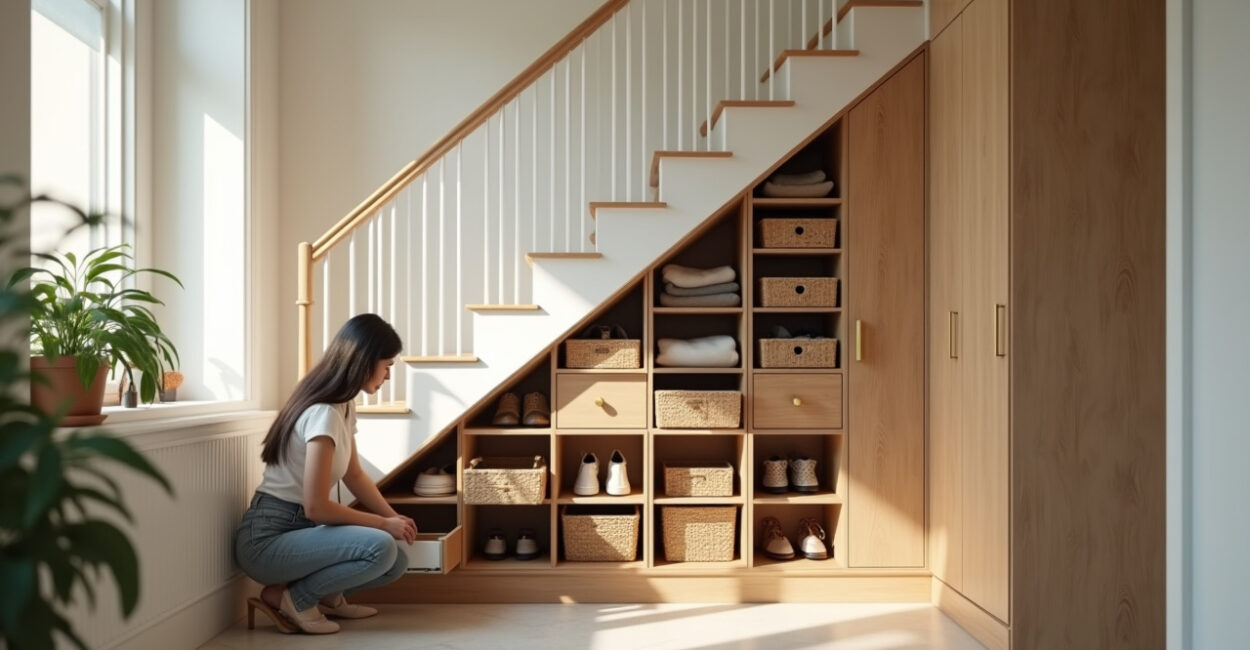
Stair voids are wasted square footage until they aren’t. In a small home, the space under the stairs can hold more than a few random bins; with the right layout, it becomes a high-value storage zone for shoes, cleaning tools, books, pet supplies, and the things that usually clutter a hallway.
The best under stair storage ideas for small houses solve a simple problem: they turn an awkward triangle into storage that is easy to reach, easy to clean, and visually calm. The trick is not stuffing the area full. It is matching the storage type to what you actually use every day, how deep the space is, and whether you need doors, drawers, or open shelves.
What You Need to Know
- Under-stair storage works best when the items stored match the access pattern: daily-use items need open or quick-access zones, while seasonal items can go deeper behind doors.
- The most efficient builds follow the stair slope, because custom-fit drawers, cabinets, and pull-outs waste less volume than one large boxy closet.
- Good storage under stairs is not only about capacity; ventilation, lighting, and trim details determine whether it feels integrated or makes the room look cramped.
- In small houses, the smartest solutions usually combine two functions, such as a coat closet plus shoe storage, or bookshelves plus a hidden utility cabinet.
- Open shelving is cheaper and faster to build, but closed fronts are better when the area is visible from the living room or entryway.
Under Stair Storage Ideas for Small Houses That Fit Real Daily Use
The formal definition is simple: under-stair storage is a custom or semi-custom built-in that uses the triangular or stepped void beneath a staircase to store household items. In plain English, it is a way to make dead space earn its keep. In small houses, that matters because every square foot has to do at least two jobs.
What works best depends on the location of the stairs. A staircase near the entry benefits from shoe storage and coats. A stair run near the kitchen can hold pantry overflow, small appliances, or cleaning supplies. A staircase in a living area often works best as bookshelves or concealed cabinets so the room still feels open.
Under-stair storage works when the layout follows the stair geometry instead of fighting it; the more the build respects the slope, the more usable space you gain without making the home feel cramped.
Start with the Item Mix, Not the Cabinet Style
Before choosing drawers or doors, list the actual things you want to store. Shoes, backpacks, vacuums, board games, and folding laundry all have different depth needs. A space that holds tall items at the front may still be useless if the back section is too low to reach. That is why good planning beats decorative carpentry every time.
I have seen small homes lose a lot of function because the owner asked for “more storage” without naming the category. The result was a beautiful built-in that held almost nothing practical. When the use case is clear, the design gets sharper fast.
Built-In Drawers for Shoes, Bags, and Everyday Clutter
Drawers are one of the most efficient answers for a stair base near an entry or mudroom. They let you separate shoes by season, keep dog leashes in one place, and hide the visual mess that open baskets often create. For small homes, that visual calm matters as much as the capacity.
Why Drawers Beat Deep Cabinets for Small Items
Deep cabinets look spacious, but small things disappear in the back and get forgotten. Drawers pull the contents to you, which makes them better for socks, gloves, chargers, pet gear, and other pieces that tend to migrate. Full-extension slides are worth the upgrade because they let you use the whole depth of the drawer instead of the front half.
- Use shallow drawers for shoes and accessories.
- Use medium-depth drawers for bags, hats, and sports gear.
- Reserve one deeper drawer for bulkier items like reusable shopping bags or cleaning cloths.
For homes with high foot traffic, a bench above the drawers can make the setup even more useful. That turns one tight corner into a true landing zone instead of a pile-up point.

Closed Cabinets for Cleaning Tools and Household Supplies
Vacuum cleaners, mops, broom handles, and spray bottles are hard to store neatly because they are tall, odd-shaped, and annoying to access. A stair cabinet with vertical compartments solves that better than open shelving. It also keeps dust and cleaning chemical bottles out of sight, which is a plus in homes where the stair area is open to the living room.
The Right Interior Layout for Utility Storage
Design the cabinet around the tool, not the other way around. A broom needs height. A vacuum often needs an outlet nearby. Microfiber cloths and refills need shallow shelves or bins. If you skip this step, you end up with a cabinet that looks organized but forces you to stack things in a way that falls apart after a week.
The CDC’s guidance on cleanliness and hygiene is a useful reminder that cleaning tools should be kept accessible enough to encourage regular use, not buried in a hard-to-reach spot. In practice, the easiest cleaning storage is the storage you can open in one motion.
Read also: Small House Closet Storage Ideas: Maximize Every Inch
Read also: Hidden Storage Solutions for Small Houses: Easy DIY Wins
Read also: Built-In Storage Vs. Freestanding Furniture for Small Homes
A small utility cabinet under the stairs fails when it becomes a catch-all; it succeeds when every shelf, hook, and partition is assigned to one type of item.
Open Shelving and Display Storage for Books and Decor
If the stair zone sits in a living room, hallway, or den, open shelving can be the best-looking choice. Bookshelves under stairs make the area feel intentional, and they are especially useful when the house is too small for a separate library wall. They also keep the space lighter than full-height doors would.
Still, open shelving only works if you are willing to keep it edited. A shelf packed with mismatched objects creates the same visual noise as clutter on the floor. Use a simple system: books together, a few framed photos, one or two larger objects, and empty space left on purpose.
When Open Shelves Make Sense
- The stair area is visible from the main living space.
- You want storage that doubles as decor.
- The items are stable, dry, and not used as often as daily essentials.
Library ladders and deep decorative niches can work in larger homes, but for small houses they are usually overkill. Shallow shelves with strong trim often look better and cost less.
Pull-Out Pantry and Kitchen Overflow Storage
When stairs sit near the kitchen, the under-stair zone can become a surprisingly effective pantry extension. This is one of the strongest under stair storage ideas for small houses because food storage is one of the first places a compact home starts to feel cramped. Extra pasta, small appliances, canned goods, and paper products all need somewhere predictable to live.
The best pantry-style builds use pull-out trays or narrow shelving instead of one deep compartment. You want visibility. If you cannot see the back corner, you will buy duplicates. That is waste, not storage.
| Storage Type | Best For | Weak Point |
|---|---|---|
| Pull-out trays | Cans, jars, snacks, small appliances | Requires hardware and careful measurement |
| Adjustable shelves | Bulk pantry items and backup supplies | Can become cluttered without labels |
| Wire baskets | Potatoes, onions, linens, packaged goods | Less polished visually in exposed areas |
If humidity is a concern, especially near kitchens or exterior walls, use finishes and hardware that stand up to moisture. Homeowners often think the cabinet is the whole project, but the hinges, runners, and ventilation gaps decide whether it stays useful after the first year.
Hidden Storage Behind Flush Doors for a Cleaner Look
Flush-panel doors are the most forgiving solution when the stair zone is visible and the house already feels busy. They let the storage disappear into the wall plane, which helps a small room feel less fragmented. This is the option I would choose when the staircase sits in an open-plan living area and I want the storage to do its job quietly.
Where Hidden Storage Pays Off Most
Hidden storage is strongest when the items inside are useful but not visually attractive: chargers, pet supplies, spare linens, board games, first-aid kits, and seasonal items. The downside is simple. If the door layout is poorly planned, you lose easy access and the cabinet becomes a dead zone again. That is the tradeoff, and it is worth acknowledging.
There is also a design limit here: hidden storage works well in modern or transitional homes, but it can look out of place if the rest of the interior is very rustic or highly detailed. In those cases, visible shelving or divided cabinetry may fit the room better.
For design standards and space-saving thinking, the HUD User research on housing efficiency is a useful reference point for how compact homes gain value through smarter use of fixed space.
Lighting, Ventilation, and Hardware That Make It Work
The build is not finished when the doors go on. Under-stair storage needs light, airflow, and hardware that can handle awkward angles. Without those details, even a well-designed unit becomes annoying to use. This is where many projects fail in real life.
Three Details That Save the Project
- Lighting: Add LED strips, puck lights, or a motion sensor so you can see the back corners immediately.
- Ventilation: Leave small gaps or use ventilated panels for shoes, cleaning supplies, and anything that may trap odor or moisture.
- Hardware: Choose hinges, runners, and pulls rated for repeated use, not decorative pieces that bind after a few months.
The National Association of Home Builders notes that functional storage and practical home design remain major priorities in compact living spaces; that tracks with what builders and remodelers see on the ground. A storage system that is hard to open or dim inside usually gets ignored.
Good under-stair storage is not measured by how full it looks after installation; it is measured by how often people actually reach for it six months later.
How to Choose the Right Under-Stair Solution for Your House
Choosing the right layout comes down to three questions: what goes inside, how often you need it, and who will use it. A family with kids needs fast access and durable finishes. A couple in a small townhouse may care more about clean lines and hidden compartments. A solo homeowner may prefer flexible shelving over fixed drawers.
A Simple Decision Framework
- Use daily: Open access, drawers, or shallow pull-outs.
- Use weekly: Cabinets, baskets, and labeled shelves.
- Use seasonally: Deep storage, hidden compartments, or upper sections.
One practical way to test the layout is to mock it up with painter’s tape and cardboard before building. Mark the stair angle, measure the tallest item you want to store, and check whether the door swing interferes with the hallway. That small test can prevent an expensive mistake. I have seen homeowners skip it and end up with a cabinet that opens into a light switch or blocks the baseboard trim.
Próximos Passos
The smartest move is to treat under-stair space like a work zone, not a leftover corner. Measure the items first, then choose the access style that matches real behavior. If the goal is function in a small house, the winning design is the one that stays easy to use after the novelty wears off.
Before building, sketch the stair profile, list the storage categories, and compare open, closed, and pull-out options against your daily routine. Then choose the simplest design that still solves the clutter problem. That is how small homes gain usable square footage without adding visual noise.
How Deep Should Under-stair Storage Be?
Depth depends on what you plan to store, but shallow access zones often work better than one deep cavity. Shoes, books, and cleaning tools all benefit from different depths, so a segmented layout usually beats a single oversized compartment. If the back of the space is hard to reach, it will not stay useful for long. In compact homes, reachability matters as much as total volume.
Is Under-stair Storage Worth It in a Very Small House?
Yes, if the stairs sit in a location where the storage can replace another piece of furniture or a separate closet. In very small houses, the value comes from consolidation: one built-in can absorb clutter that would otherwise spread across the entry, hallway, or living room. It is less useful if the stairs are too narrow, too shallow, or blocked by structure that makes access awkward.
What Should Not Be Stored Under Stairs?
Avoid items that need strong airflow, frequent heavy lifting, or strict climate control unless the cabinet is designed for them. That includes some electronics, sensitive paper records, and anything that can mold if ventilation is poor. If the area has plumbing, moisture risk rises and storage should be planned accordingly. The safest rule is to keep the space dry, accessible, and low-risk.
Which is Better: Open Shelves or Closed Cabinets?
Closed cabinets are better for visual clutter, while open shelves are better for quick access and display. In a small house, the right answer depends on how visible the stair zone is from the main room. If the storage is on show, closed fronts usually look cleaner. If it sits in a utility-like nook, open shelving can be easier and cheaper.
Can Under-stair Storage Be Added to an Existing Home?
Yes, and many of the best projects are retrofits rather than full remodels. The main constraints are the stair structure, electrical lines, wall framing, and whether you can create safe access without weakening the area. A retrofit can be as simple as custom shelves and doors, or as involved as drawers and lighting. The older the house, the more important it is to verify structure before cutting into the space.