

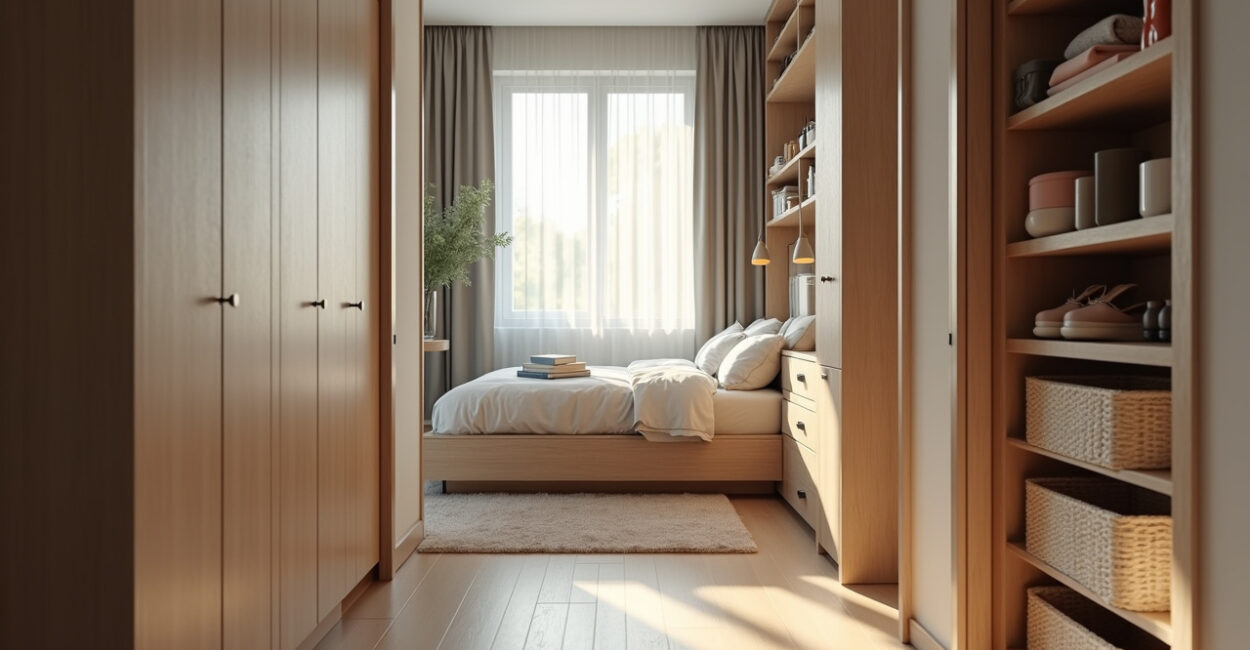
Square footage is not the real problem; wasted square footage is. The best house organization ideas for small spaces focus on turning dead zones—under beds, above cabinets, inside doors, and along narrow walls—into usable storage without making a room feel crowded.
When a small home works well, it is usually because every item has a clear “home,” traffic paths stay open, and storage matches the shape of the room instead of fighting it. This guide covers practical layouts, hidden storage, room-by-room fixes, and quick changes you can use right away to make tight spaces feel calmer and larger.
What You Need to Know
- Small-space organization works best when storage is vertical, shallow, and assigned by category rather than by room alone.
- Closed storage reduces visual clutter faster than open shelving, but a few open zones help daily-use items stay accessible.
- The most effective hidden storage lives in overlooked places: under furniture, behind doors, inside drawer organizers, and above eye level.
- One well-chosen layout change can do more than a full decluttering spree if it clears a walkway or removes “furniture friction.”
- Organization systems fail when they require too many steps; the best setup is the one you can maintain on a busy Tuesday night.
House Organization Ideas for Small Spaces That Start with the Layout
Before buying bins or labels, look at the room’s geometry. In small homes, layout is the first organizing tool because it controls movement, access, and the feeling of openness. If a sofa blocks a cabinet door or a dining chair scrapes a hallway, the room feels smaller than it is.
Think in Zones, Not Rooms
Break the home into activity zones: sleep, work, prep, eat, clean, and store. A studio apartment, for example, can handle all six zones if the furniture edges are deliberate and the storage supports each zone’s daily use. That is why a narrow console table by the entry can outperform a bulky hall tree.
Keep the Center Clear
The center of a small room should usually do the least work. Push storage to the perimeter, use wall-mounted pieces when possible, and choose furniture with visible legs so the floor reads as one continuous surface. That visual continuity matters more than people expect; it makes a tight room feel less boxed in.
In small spaces, the layout is often more important than the storage product itself; if the path is blocked, even the best organizer becomes clutter.
Use Vertical Space Without Making the Room Feel Heavy
Vertical storage is one of the most reliable ways to recover capacity in a small home, but it has a limit: if everything climbs upward, the room starts to feel top-heavy. The trick is to stack storage where the eye does not need to rest, then keep the lower half of the room visually lighter.
Go Higher on the Walls
Install floating shelves, wall rails, and mounted hooks for items that are used often but do not need to live on the floor. Kitchen tools, bags, hats, and cleaning supplies are all good candidates. A fall-proof home layout from the National Institute on Aging also underscores a useful rule here: wall storage should never force you to climb, stretch, or reach awkwardly every day.
Use the Full Height of Closets
Most closets waste the upper third. Add an extra shelf, stack clear bins, and store seasonal items up high. If the closet has only one rod, consider a double-hang system for shirts and pants; that one change often doubles usable hanging space. For renters, tension rods and removable shelf inserts create the same effect without permanent changes.
Keep Visual Weight Low
Use lighter finishes on upper shelves and darker, sturdier pieces below. Open shelving can work, but only if you edit it hard. Too many open items create visual noise, and in a small room, visual noise reads as clutter even when the items are technically organized.

Hidden Storage That Actually Pulls Its Weight
Hidden storage works because it preserves clean sightlines. The room looks calmer, and you still have a place for the things that do not belong in plain view. That said, hidden storage fails when it is too hidden. If you need a five-step ritual to reach toothpaste or charging cables, the system will collapse in a week.
Best Places to Hide Capacity
- Under-bed drawers or low rolling bins for linens, off-season clothing, and backup supplies.
- Storage ottomans for blankets, toys, or media accessories.
- Behind-door organizers for pantry items, wraps, cleaning tools, or bathroom extras.
- Bench seating with lift-up lids near entryways or dining areas.
- Drawer dividers that stop small items from spreading into “junk drawer” territory.
A practical example: one family I saw had a tiny apartment kitchen with almost no cabinet space. Instead of buying more shelf baskets, they converted the space under a window bench into pantry overflow and moved breakfast items into a shallow tray in the upper cabinet. The room did not get bigger, but the bottleneck disappeared.
Use Containers with a Purpose
Containers should match the job. Clear bins are best for inventory you need to see, opaque bins are better for visual calm, and shallow trays are ideal for items that migrate—keys, mail, earbuds, and remotes. If a container forces you to stack items too high, it is the wrong container.
Room-by-Room Systems That Stop Clutter Before It Spreads
Small-space organization is easier when each room has a strict role. The living room should not absorb paperwork, the bedroom should not become storage overflow, and the kitchen should not become a drop zone for every object that lacks a home.
Entryway
Use one hook per person, one tray for keys, and one closed shoe solution if you can fit it. The entry is the first place clutter multiplies because it receives everything before it gets sorted. A slim cabinet, a wall shelf, and a catchall tray are often enough.
Kitchen
Group items by task: prep, cook, serve, clean. Store frequently used tools between waist and shoulder height, and move duplicate gadgets out unless they earn their space. The U.S. Department of Energy’s guidance on efficient storage use reinforces a practical point: accessible storage works better than overpacked storage because it reduces friction and waste.
Bedroom
Keep clothing categories stable. Shirts, pants, sleepwear, socks, and seasonal pieces each need a fixed place. If the bedroom also doubles as an office, hide work tools in a lidded bin or a single drawer so your sleep zone does not inherit the entire workday.
Bathroom
Bathrooms benefit from vertical dividers, medicine-cabinet limits, and under-sink trays that prevent bottles from tipping over. Separate daily-use items from backups. The smallest bathrooms get easier to maintain when each shelf has only one category.
The difference between a tidy small home and a cluttered one is rarely storage volume; it is whether every item has a short, repeatable path back to its place.

Tools and Products That Are Worth Buying
Not every organizer is worth the money. The best products solve a real bottleneck: wasted vertical space, narrow gaps, awkward drawers, or items with no natural home. If a product only makes your shelves prettier, it may not solve the underlying problem.
| Tool | Best For | Why It Helps |
|---|---|---|
| Drawer dividers | Kitchen, office, bedroom | Prevents small items from drifting and mixing |
| Over-the-door racks | Bathrooms, pantries, closets | Uses space that usually goes unused |
| Stackable clear bins | Pantry, closets, utility zones | Makes inventory visible while saving shelf depth |
| Wall hooks and rails | Entryways, kitchens, laundry areas | Lifts daily items off surfaces and floors |
In small homes, shallow products usually outperform deep ones. Deep bins become parking lots for forgotten items. Shallow trays and slim boxes encourage rotation, which is exactly what you want when space is limited.
Decluttering Rules That Prevent Re-Cluttering
Decluttering is not just about removing excess. It is about matching the amount of stuff to the amount of storage you actually have. A small home stays organized when incoming items are controlled and categories remain capped.
Use the One-in, One-out Rule Where It Matters
Clothing, shoes, mugs, water bottles, and kids’ toys are good candidates. The rule is not perfect, and it fails for consumables, but it works well for objects with persistent volume. The point is not austerity; it is keeping collection growth under control.
Set Category Limits
Choose a realistic cap for items that tend to multiply. Ten coffee mugs may fit in the cabinet, but if four are used regularly, the rest are just taking up the oxygen your shelves need. Category limits are especially effective in small apartments because they force the hard question: do I actually use this, or do I just own it?
Schedule Short Resets
Five-minute resets beat marathon cleanups. Put away laundry, clear the entry tray, reset the kitchen counter, and return stray items to their zones. That rhythm matters more than one perfect organizing weekend, because daily drift is what breaks the system.
How to Make a Small Home Feel Bigger After It is Organized
Once the clutter is under control, the next goal is optical space. A room can stay the same size and still feel larger because the eye has fewer obstacles to process. That is where color, light, and furniture choice matter.
Choose Lighter Visual Breaks
Use mirrors where they reflect natural light, keep window treatments simple, and avoid too many contrasting finishes in one view. Matching storage pieces creates visual order even if the room is modest. This is one place where restraint pays off.
Prefer Fewer, Better Pieces
A narrow bookshelf with closed lower storage often works better than two cheap units that crowd the wall. A small home usually benefits from fewer furniture types, not more. The more functions a single piece can handle without looking bulky, the better.
The smartest house organization ideas for small spaces are not about squeezing more things into a room. They are about removing friction so the room supports daily life instead of competing with it. Test one zone first, then expand the system only after it proves itself in real use.
Practical Next Steps
Start with the room that creates the most daily frustration, not the one that looks easiest in a photo. Clear one surface, reclaim one vertical zone, and move one category of items into a defined home. Then live with the change for a week before buying anything else.
If you want results that last, prioritize layout, category limits, and hidden storage before decorative bins. That sequence prevents the common mistake of organizing the symptoms while leaving the structure untouched. Choose one small area today, and build from there.
Frequently Asked Questions
What is the Best First Step for Organizing a Small House?
The best first step is to remove items that do not belong in the room and define one clear purpose for the space. Small homes get overwhelmed when every room becomes a storage spillover zone. Start with a single category, like mail, shoes, or kitchen tools, and give it one fixed home. That creates immediate relief and makes the next step easier to see.
How Do I Organize a Small Space Without Buying a Lot of Containers?
Use the storage you already have before you buy anything. Rearrange shelves, add hooks, group like items together, and remove duplicates. Many people buy bins too early, then discover the real problem was a bad layout, not a lack of containers. A few good dividers and one or two slim bins often outperform a whole cart of organizers.
What Storage Solutions Work Best in a Studio Apartment?
Studio apartments usually benefit from multifunctional furniture, vertical storage, and closed containers that reduce visual clutter. A bed with drawers, a wall-mounted desk, or a storage ottoman can serve two roles without taking extra floor space. The key is to separate zones as much as possible so sleeping, working, and relaxing do not blend into one messy area.
Should I Use Open Shelves or Closed Cabinets in a Small Home?
Closed cabinets are better for hiding visual clutter, while open shelves work well for a few attractive or frequently used items. In most small spaces, a mix is the best choice. Too much open shelving makes a room feel busy, but a few open zones keep the space from feeling sealed off. Use open shelves sparingly and keep them edited.
How Do I Keep a Small Home Organized Long Term?
Long-term organization depends on maintenance, not perfection. Build simple habits: return items to the same spot, clear one surface daily, and limit how many things enter the home. Systems fail when they are too complicated to maintain during a busy week. If the setup takes more than a few seconds to use, simplify it until it fits your actual routine.