

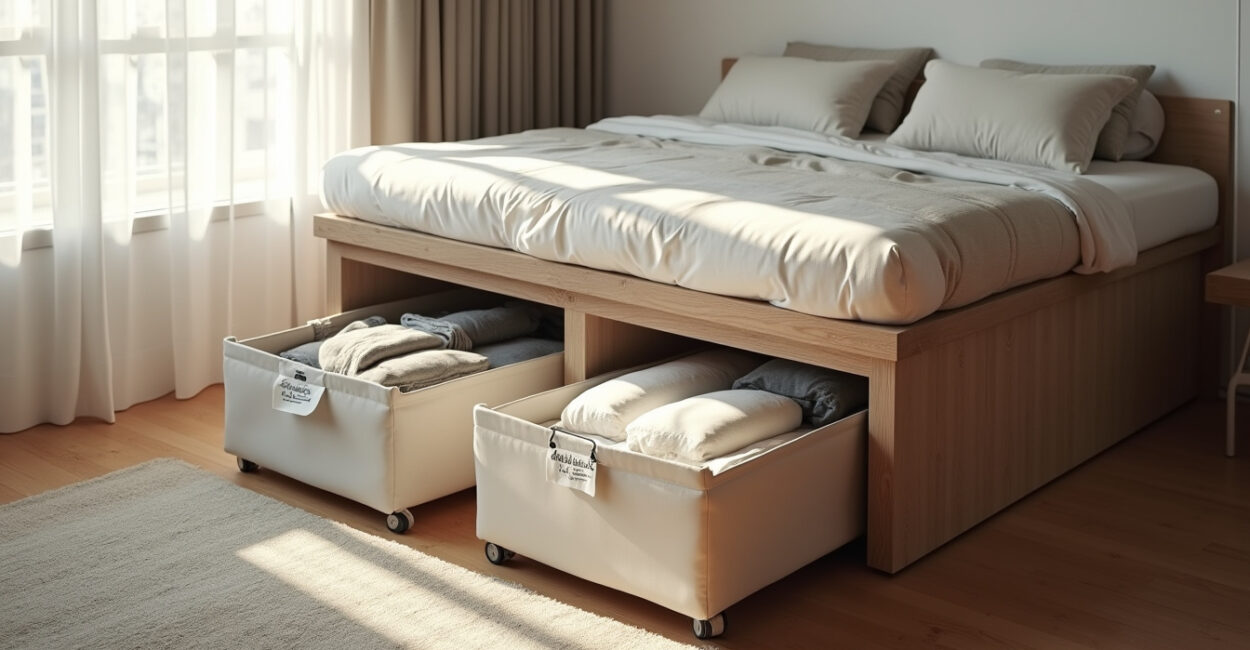
The smartest under-bed storage ideas for studio apartments are the ones you can reach fast, not the ones that hide everything and make life annoying.
In a studio, that space under your bed is prime real estate. The trick is choosing a setup that stores more and keeps daily items sorted, visible, and easy to pull out without turning your room into a scavenger hunt.
Bins Beat Boxes When You Need Speed
When people think of under-bed storage ideas for studio apartments, they usually picture plastic bins. That’s not wrong. It’s just incomplete. Bins win when you want cheap, flexible, and easy-to-label storage.
The best version is low-profile bins with lids, divided by category: off-season clothes, extra bedding, tech cables, backup toiletries. If you use soft-sided cubes, pick ones with a firm base so they don’t collapse into a dusty mess. This is where the “easy to reach and sort” part matters more than raw capacity.
- Clear bins help you find things fast.
- Opaque bins hide visual clutter better.
- Rolling bins work well if your bed frame has enough clearance.
One mistake I see all the time: people cram random items into one giant container. It looks efficient for a week. Then you stop using it. That’s why the best under-bed storage ideas for studio apartments behave like drawers, not junk caves.
Lift-Up Frames Store More, but Only If You Sort First
If you want maximum space, lift-up frames are the heavy hitter. They turn the whole bed into storage, which is great in a studio where every inch counts. But here’s the catch: they store more than bins and often less conveniently.
Lift-up frames are best for things you do not need every day—seasonal clothes, spare blankets, luggage, gift wrap, backup household items. In practice, what happens is you use them like a basement in bed form. That’s powerful, but only if you group items into smaller organizers inside the frame. Otherwise, the space becomes a flat, hard-to-navigate pile.
Big storage is useless if it turns into one more place where things disappear.
For studio living, that means giving lift-up frames a job. Let them hold the bulky stuff. Let bins handle the grab-and-go items. If you want a quick rule, use bins for access, lift-up frames for volume.

The Setup That Actually Works in a Studio
The best answer is usually a hybrid. Use under-bed storage ideas for studio apartments in two layers: a few labeled bins for daily rotation, plus a lift-up or drawer-style base for the bulky overflow. That gives you reach without wasting depth.
Here’s the simplest decision test:
- If you need it weekly, use a bin.
- If you need it monthly, hide it in a lift-up frame.
- If it’s not worth labeling, you probably should not store it there.
Mini-story: a friend in a 420-square-foot studio kept winter clothes in a giant bin under the bed. Every time the weather changed, she had to empty half of it just to find one sweater. She switched to two clear bins and one lift-up compartment for bulky coats. Same space. Half the frustration.
That tradeoff is the whole game. Better organization beats raw storage every time, and the people who live with this setup long-term know that clutter control matters as much as capacity. For broader decluttering habits, the National Institute on Aging’s advice on keeping living spaces clear is a useful reminder that accessible floors matter, too. The same logic applies in tiny apartments.
Are Clear Bins Better Than Opaque Ones?
Clear bins are faster when you need to spot something quickly, especially for seasonal clothes or accessories. Opaque bins look cleaner and reduce visual clutter, which matters in a studio. If you tend to forget what you stored, clear usually wins. If your room feels busy already, opaque may be the calmer choice. The right answer depends on whether you value speed or a cleaner visual line under the bed.
Do Lift-up Beds Make Sense in Very Small Studios?
Yes, if you store bulky items and do not need them often. Lift-up beds are strong when floor space is tight and closet space is weak. They are less ideal if you want frequent access, because opening the frame takes more effort than sliding out a bin. In small studios, they work best as backup storage, not your everyday drawer system.
What Should Never Go Under the Bed?
Anything that needs airflow, stays fragile, or attracts moisture is a bad fit. Paper files, delicate fabrics without protection, and items that can warp in humidity should live elsewhere if possible. Also avoid loose clutter with no category. It turns storage into a hiding place. Under-bed space works best when every item has a clear reason for being there.
How Do I Keep Under-bed Storage from Getting Dusty?
Use containers with lids, seal soft items in bags, and clean under the bed on a schedule instead of “when you remember.” A low dust cover or bed skirt can help, but airflow still matters. In a studio, dust builds fast because everything is closer together. If you can slide the container out with one hand, you’re much more likely to keep the space clean.
What’s the Best First Upgrade If I’m on a Budget?
Start with two matching bins and labels before buying a new bed frame. That gives you instant structure without a big expense. Once you know what you actually store under there, you can decide whether a lift-up frame is worth it. Most people buy too much capacity too early. A smarter first move is sorting, not spending.
In a studio, storage should disappear without becoming invisible. The best setup is the one that lets you find your winter sweater before you lose patience.