

7 Clever Storage Ideas for Small Spaces: Maximize Your Home’s Potential
Strategies for small space storage that prioritize circulation and daily use, focusing on vertical, hidden, and multipurpose solutions to reduce clutter effe…
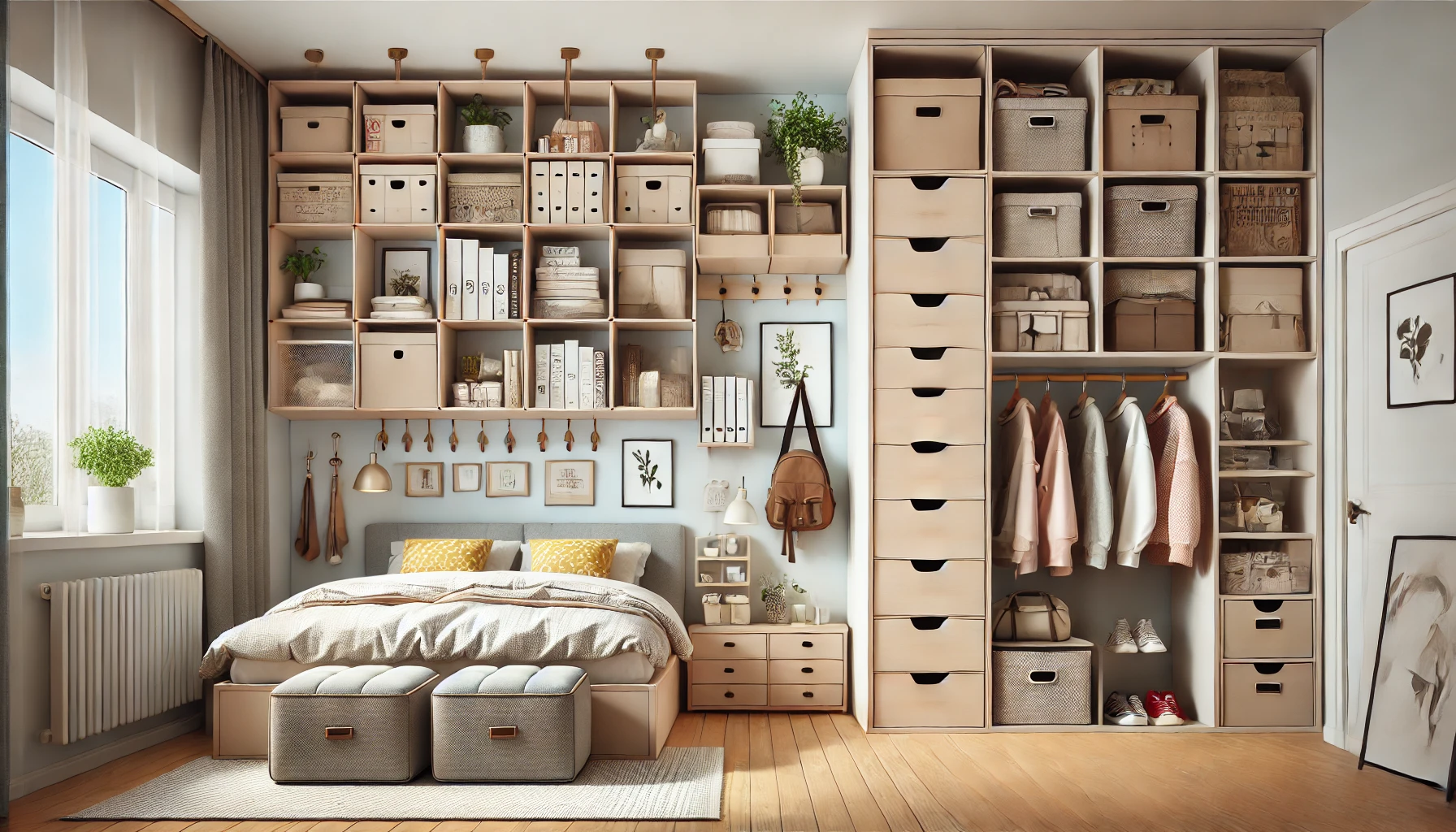 Compact apartment hallway with clever hidden storage solutions
📅 Updated on 06/13/2026
Cramped rooms are rarely a storage problem first. They are usually a layout problem: too much floor furniture, too little vertical planning, and too many “temporary” surfaces that never clear off. In small spaces, the best storage is the kind that supports movement instead of competing with it.
That’s why the smartest solutions are not about buying more bins. They are about using walls, corners, closet interiors, and furniture with hidden capacity in a way that matches real habits. The ideas below focus on what actually holds up in daily life, not just what looks neat in a styled photo.
What You Need to Know
- Good storage in compact rooms starts with circulation: if a shelf, cabinet, or basket blocks movement, it is making the room worse, not better.
- Vertical storage, under-bed space, and inside-the-door zones often deliver more usable capacity than another freestanding dresser.
- Closed storage usually reduces visual clutter faster than open shelving in rooms that already feel full.
- Multi-purpose furniture only works if the storage is easy enough to use on a busy day, not just in theory.
- The cleanest system is the one that assigns every item a home and leaves no category relying on “temporary” piles.
7 Clever Storage Ideas for Small Spaces That Make Every Inch Work Harder
Space efficiency is the practice of increasing usable storage without enlarging the room’s footprint. In plain English, it means using height, depth, and overlooked gaps so the room functions better than its square footage suggests. The goal is not to hide everything; it is to make the room easier to live in.
In compact interiors, storage succeeds when it follows the room’s movement pattern, not when it forces people to work around it.
1. Go Vertical Before You Add Another Floor Piece
Vertical storage is the first move that deserves attention in a tight room. Walls usually contain more unused capacity than closets, and they do it without taking away walking space. That makes them the most reliable place to start when a room feels crowded.
Use Height with Purpose
Tall shelving, wall-mounted hooks, pegboards, and floating ledges each solve a different problem. A wall rack near the entry can catch bags and coats. A narrow bookcase can store pantry overflow or office supplies. High shelves are best for seasonal items, backup toiletries, and anything you do not need to reach every day.
Avoid the “one More Low Cabinet” Trap
People often add a short cabinet because it feels safer and less visually demanding. The problem is that low furniture consumes floor area while leaving the upper wall zone empty. In a room with limited depth, that trade usually works against you.
For layout guidance, the HUD User research library is useful because it ties housing usability to circulation, not just appearance. That distinction matters in compact homes, where a solution can be technically “storage” and still be a bad design choice.
2. Choose Furniture That Stores More Than It Shows
Multi-purpose furniture is worth the investment only when the hidden storage is truly practical. A platform bed with drawers, a storage ottoman, or a bench with lift-up seating can replace separate pieces and free up square footage. That works best in rooms where every object needs to justify its footprint.
Look for Daily-access Storage, Not Novelty Features
A coffee table with a lift top is useful if the mechanism is smooth and the interior is easy to reach. A sofa with hidden bins is useful if you can open them without moving half the room. If access is awkward, the storage will quietly stop getting used.
Best Candidates for Dual-purpose Pieces
- Entry benches with shoe storage
- Beds with drawers or lift bases
- Nesting tables that spread out only when needed
- Ottomans that hold blankets, cables, or toys
The difference between smart furniture and clutter in disguise is how easily you can use it on an ordinary Tuesday.
Who works with compact interiors knows this pattern well: elegant storage fails when it adds a second task to a daily routine. If opening it feels like a project, it will not stay part of the system.
3. Turn Closets and Cabinets Into Zoned Storage
Most closets waste more space than they save because they are treated like one large empty box. The better approach is zoning. That means assigning each section a job: hanging, folding, bins, cleaning supplies, or seasonal overflow.
Divide by Function, Not by Category Alone
A closet can hold shirts, but it can also hold baskets for accessories, shelf dividers for linens, and a slim organizer for small tools. Cabinet interiors work the same way. Stackable organizers, pull-out trays, and shelf risers convert dead air into usable layers.
Use the Back of the Door
Inside-door storage is one of the most underrated moves in compact homes. Over-the-door racks, shallow pockets, and mounted hooks can hold wrapping supplies, hair tools, pantry packets, or cleaning products. The trick is to keep these items light enough that the door still closes cleanly.
For evidence-based housing guidance, the U.S. Department of Energy regularly emphasizes efficient home use and thoughtful organization as part of broader livability and performance. Storage is not just about neatness; it influences how smoothly the home operates every day.
4. Claim Dead Space Under Beds, Stairs, and Corners
Dead space is not actually dead. It is simply space that has not been matched with the right storage format. The area under a bed, the triangle under stairs, and awkward room corners can all become high-value storage if the container shape fits the gap.
Match the Container to the Shape
Shallow rolling bins work under low beds. Tall narrow shelving works in corners. Custom-cut shelves or fitted cabinets work under stairs. Standard boxes often fail here because they leave wasted air around them, which defeats the purpose.
Know When Custom is Worth It
Custom storage makes sense when the gap is permanent and the item you need to store is consistent. It is less useful when your needs change often. For renters or frequent movers, modular pieces usually win because they can adapt to the next room.
A small apartment I visited had one under-bed drawer filled with winter bedding and another with office paper, chargers, and backup electronics. The owner did not add more furniture. They simply used the bed frame as a storage zone, which freed the closet for clothes and made the room feel calmer the second you walked in.
5. Use Closed Storage to Calm Visual Noise
Open shelving is appealing, but it is rarely the best default in rooms that already feel crowded. Closed storage hides visual fragments, which matters because the eye reads exposed objects as density. In compact interiors, that density can make a room feel smaller than it is.
When Open Shelving Helps
Open shelves work well when the items are uniform, attractive, and limited in number. Cookbooks, a few dishes, or a curated set of baskets can look intentional. But mixed objects, loose cords, and everyday clutter usually create a messy edge faster than people expect.
When Doors and Drawers Win
Cabinets, drawers, and lidded bins are better for tools, paper goods, chargers, personal care items, and anything visually noisy. That does not mean everything should be hidden. It means the visible zones should be chosen carefully, not left to chance.
There is some divergence among designers here. Minimalists often prefer more open display, while practical organizers usually favor concealed storage in highly active rooms. Both can work, but the room’s behavior should decide. If the space is busy from morning to night, closed storage is the safer choice.
6. Build Micro-Zones for Daily Routines
Storage works better when it reflects how people actually move through a home. Micro-zones are small, task-based areas: a coffee station, a landing strip near the door, a bathroom drawer for morning essentials, or a charging shelf by the couch. These reduce the scatter that happens when one item is used in three different places.
Think in Routines, Not Rooms
A basket near the sofa for remotes, chargers, and a notebook matters more than a large decorative bin in another part of the room. A tray near the entry can hold keys and sunglasses. A labeled drawer in the kitchen can keep meal-prep tools together. The function is simple: shorter search time, less duplication, fewer piles.
Use Small Containers to Prevent Category Drift
When one container gets too large, categories start blending. The notebook becomes mixed with receipts, the charger bin becomes a cable graveyard, and the system breaks. Smaller containers force cleaner habits because they make overfilling obvious.
That is why organizing advice from Penn State Extension often emphasizes maintaining systems that fit actual behavior. A storage plan only stays useful when it matches the way people already live, not the way they wish they lived.
7. Make a Storage System Easy Enough to Maintain
The best storage strategy is not the prettiest one. It is the one that survives laundry day, grocery day, school-day chaos, and late-night cleanup. If a system takes too many steps, it will slowly collapse into surfaces and corners.
Follow the One-touch Rule Where You Can
Items that come in every day should have a place that takes one motion to reach. Bags near the door, towels near the bathroom sink, and charging gear near where devices are used all reduce friction. Every extra step is a chance for clutter to reappear.
Audit Storage by Behavior, Not by Perfection
- If a basket always overflows, it is too small for the category.
- If a drawer stays empty, it is probably in the wrong place.
- If you keep opening a cabinet with frustration, the layout is fighting you.
That is the part many people miss: storage is a living system, not a one-time project. In small spaces, maintenance matters more than cleverness. A simpler setup that gets used beats an ambitious system that only works on day one.
What to Do Next
Start with the room that creates the most friction, not the one that looks easiest on paper. Measure the dead zones, notice what gets left out, and choose one vertical, one hidden, and one routine-based fix. That sequence usually produces more impact than buying several matching containers at once.
If you want the fastest payoff, test one change for seven days before adding another. A storage system proves itself through use, not through appearance. The goal is a room that moves better, clears faster, and makes everyday tasks feel lighter.
Frequently Asked Questions
What Type of Storage Works Best in Very Small Rooms?
Vertical storage usually gives the best return because it frees floor space while increasing capacity. Wall-mounted hooks, tall shelving, and door organizers are often more effective than short, wide furniture. Closed storage also helps if the room already feels visually busy.
Is Open Shelving a Bad Idea in Compact Spaces?
Not always. Open shelving works when the items are limited, uniform, and visually calm. It becomes a problem when mixed objects, cords, and everyday clutter start to dominate the shelf.
How Do I Keep Storage from Making a Room Feel Crowded?
Keep walkways clear and avoid adding pieces that block door swings or natural movement. Choose furniture that stores items without increasing visual weight too much. In many rooms, fewer pieces with better internal organization work better than many small add-ons.
What Should I Store Under the Bed?
Under-bed space is best for seasonal bedding, off-season clothes, luggage, or items you do not need daily. Use bins or drawers that slide easily and fit the bed height. Avoid packing it with random loose items, because that creates a hard-to-manage storage zone.
When is Custom Storage Worth the Cost?
Custom storage makes sense when the gap is permanent and the item category is stable, such as under-stair cabinetry or a fitted closet system. It is less useful if you move often or expect your needs to change soon. Modular storage is more flexible in those cases.
How Often Should I Reassess My Storage Setup?
A quick review every few months is usually enough. If a drawer, shelf, or bin starts overflowing, the system needs adjustment. Storage works best when it changes with your habits instead of staying fixed after the initial setup.