

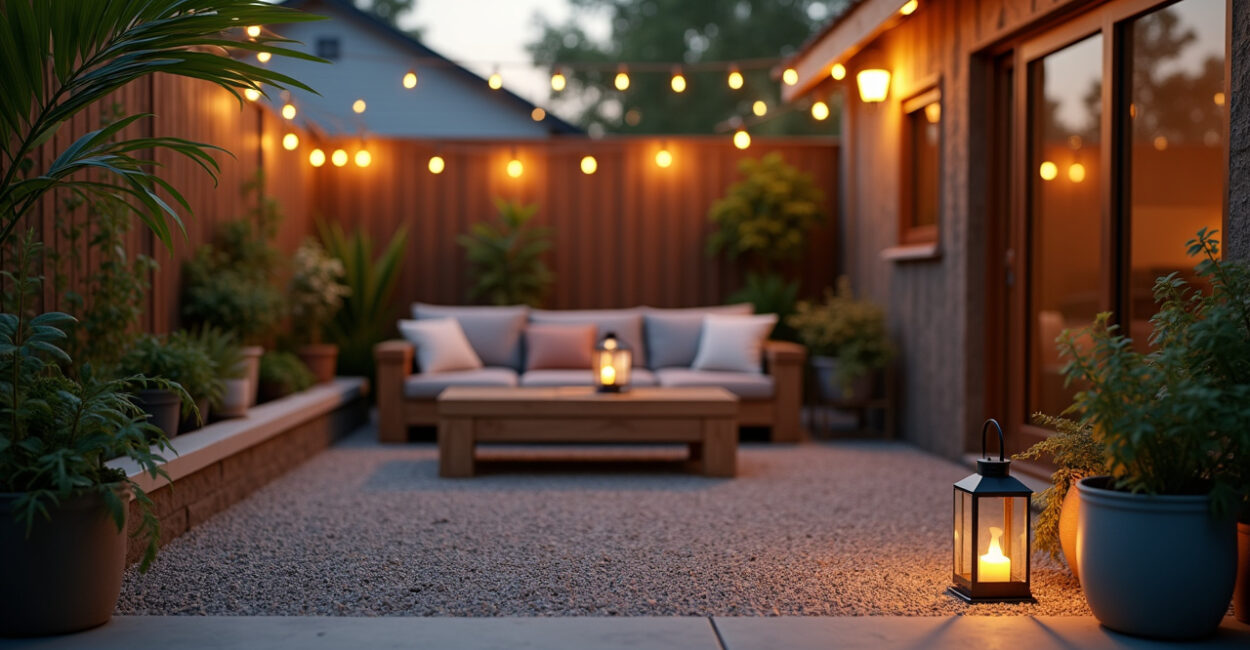
The cheapest way to make a patio feel finished is not a new sofa or a bigger table. It is light. With the right budget backyard patio lighting ideas, a small outdoor space can shift from “dark corner” to a place you actually want to sit in after sunset.
Good patio lighting does three jobs at once: it adds ambiance, it improves visibility, and it helps define the space without expensive hardscaping. The trick is choosing fixtures that look intentional, survive weather, and keep electricity costs low. Below, I’ll break down the options that deliver the most impact for the least money, plus where they work, where they fail, and how to avoid the usual mistakes.
O Que Você Precisa Saber
- String lights usually give the biggest visual upgrade per dollar because they spread light across the entire patio instead of lighting only one point.
- Solar path lights work best where they get direct sun for most of the day; in shade, their runtime drops fast and the “budget” choice can become disappointing.
- LED bulbs save money twice: they use less power and last far longer than incandescent bulbs, which reduces replacement costs.
- Layering light matters more than buying one expensive fixture; a mix of overhead, accent, and task lighting feels richer than a single bright source.
- Outdoor-rated products and weatherproof cords are not optional details; they are the difference between a smart purchase and a short-lived one.
Budget Backyard Patio Lighting Ideas That Make a Small Space Feel Intentional
The technical term for this is layered outdoor lighting: a lighting plan that combines ambient light, task light, and accent light so the space feels usable and visually balanced. In plain English, that means you should not rely on one bulb in the middle of the patio and call it done. A better setup uses several low-cost sources that work together.
When people say a patio “looks expensive at night,” what they usually mean is that the light is spread evenly, the shadows are soft, and the brightest points are placed on purpose. That effect is achievable on a small budget if you stop thinking in terms of one fixture and start thinking in zones.
What separates cheap-looking outdoor lighting from polished patio lighting is not the price tag — it is whether the light has a clear job.
Start with One Goal Per Zone
If your patio has a dining area, a seating area, and a walkway, each one needs a different kind of light. Task lighting belongs over the table, ambient lighting belongs around the perimeter, and path lighting belongs where people actually walk. The patio feels more finished when each zone is given a purpose instead of being flooded with the same brightness.
Use LEDs for the Best Cost-to-Performance Ratio
LEDs are the safest bet for budget-conscious outdoor lighting because they use far less electricity than incandescent bulbs and last much longer. The U.S. Department of Energy explains that LEDs can cut lighting energy use substantially compared with older bulb types; that matters outdoors, where lights are often left on for hours. You can read the technical overview on the U.S. Department of Energy’s LED lighting page.
String Lights: The Highest Impact for the Lowest Spend
String lights are still the best first buy for most patios because they solve a design problem and a practical one at the same time. They create an overhead canopy effect, which makes a small space feel more enclosed and welcoming. They also hide visual clutter better than many other cheap options.
In practice, what happens is that one strand is rarely enough. A single line can look sparse, especially if the patio is larger than a few chairs and a side table. Two or three runs, spaced well and mounted at different heights, usually look more deliberate than one long drooping line.
Choose the Right Bulb Style
- G40 globe bulbs give a warm, café-style look and spread light broadly.
- Mini fairy lights feel softer and more decorative, but they usually contribute less usable light.
- LED Edison-style bulbs work well when you want a vintage feel without the heat and energy waste of old filament bulbs.
Mount Them So They Look Planned, Not Temporary
Use existing posts, fence lines, pergola beams, or simple tension wire before you start adding new hardware. A clean attachment line matters more than people think. When lights sag too low, they feel improvised; when they’re level and anchored, the whole patio reads as intentional. For safety and outdoor product standards, the Consumer Reports outdoor lighting guidance is a useful reference point for what to look for in durable fixtures.

Solar Lamps and Path Lights for Zero-Electricity Accent Lighting
Solar lighting is the easiest way to add accent light without hiring an electrician or running extension cords across the yard. It is also the option most likely to disappoint if you place it in the wrong spot. These fixtures depend on direct sun, so their real-world performance is tied to your yard’s exposure more than the product listing suggests.
That is the catch: solar path lights are cheap to buy, but not all of them are cheap to own. If they only glow for two hours because the panel sat in partial shade all day, the low upfront cost stops mattering.
Where Solar Works Best
- Open borders of the patio with full sun exposure
- Walkways that need gentle guidance rather than strong illumination
- Garden edges where the goal is atmosphere, not visibility for cooking or reading
Where Solar Usually Fails
Dense tree cover, north-facing walls, and covered patios often starve solar fixtures of enough light to charge properly. In those conditions, low-voltage wired lighting or rechargeable battery lamps usually perform better. This is one of those cases where the cheaper option is not the smarter option.
Solar lights are budget-friendly only when the panel can charge well; shade turns a low-cost fixture into a low-output fixture.
DIY Fixtures That Look Custom Without a Custom Budget
DIY lighting is where a lot of patio projects either get clever or get messy. The good versions use simple materials, outdoor-safe parts, and a clean mounting method. The bad versions look like craft supplies survived a storm.
Who works with this kind of thing knows the rule: if the fixture will be exposed to rain, humidity, or heat, start with outdoor-rated electrical components. Decorative containers are fine; exposed wiring is not. For electrical safety, the National Fire Protection Association’s lighting safety guidance is worth checking before you wire or repurpose anything.
Low-Cost DIY Ideas That Actually Hold Up
- Mason jar lanterns with battery candles for tabletops
- Solar lanterns hung from shepherd hooks or fence brackets
- Repurposed metal planters as shade covers for low-voltage bulbs
- Painted terracotta pot covers for hiding string-light battery packs
Keep the Build Simple
The more joints, cuts, and exposed connections a DIY project has, the more likely it is to fail outdoors. I’ve seen plenty of projects look great on day one and then wobble, rust, or leak by the second rain. Simpler builds last longer, and on a budget, longevity is part of the design.
Choosing Colors, Bulbs, and Brightness Without Overbuying
The fastest way to make a patio feel harsh is to buy lights that are too white or too bright for the space. Warm white, usually in the 2700K to 3000K range, tends to feel more natural outdoors because it echoes the glow of evening light. Cooler temperatures can work for a work zone, but they often feel clinical on a patio.
Brightness matters too. More lumens are not automatically better. If you want a lounge-like setting, too much output flattens shadows and makes the area feel less inviting. If you need to cook, grill, or read, you need brighter task lighting in just that zone instead of lighting everything equally.
| Lighting Type | Best Use | Budget Strength | Main Limitation |
|---|---|---|---|
| String lights | Ambient glow | High visual impact per dollar | Limited task lighting |
| Solar path lights | Walkways and borders | No operating cost | Needs strong sunlight |
| Battery lanterns | Tables and seating nooks | Portable and flexible | Requires recharging or battery swaps |
| Low-voltage LEDs | Reliable task and accent light | Efficient long-term value | Higher upfront setup |
Placement Tricks That Stretch a Small Lighting Budget
Placement often matters more than the fixture itself. A cheap light in the right place can look better than a premium light in the wrong one. The goal is to create a sense of depth: light the edges, soften the middle, and keep the brightest source slightly away from where people sit.
A useful rule is to place light at three heights. Low lights define the boundary, mid-height lights draw the eye, and overhead lights create the room-like feeling. That structure makes a patio feel designed instead of improvised.
The Three-Height Method
- Low: Solar stakes, path lights, or lanterns near the floor.
- Mid: Wall sconces, hanging lanterns, or lights attached to railings.
- High: String lights, pergola strands, or canopy lights overhead.
A Small Story That Shows the Difference
A homeowner with a narrow concrete patio once spent almost nothing on lights: one set of string lights, four solar stakes, and two battery lanterns. The first setup had the string lights only across the back fence, which made the seating area feel unfinished. After moving the lanterns to the table and adding the stakes along the outer edge, the space suddenly felt larger. Nothing expensive changed; the placement did.
What to Buy First If You Want the Biggest Upgrade
If the budget is tight, do not try to buy everything at once. Start with the fixture that solves the biggest visual problem. For most patios, that is overhead ambiance, which makes string lights the first smart purchase. If the patio already has decent overhead light, then the next best move is usually low-level path or border lighting.
The order below is the one I’d use on a real project with limited money. It prioritizes impact, flexibility, and low regret. That matters because the wrong first purchase usually leads to more spending later.
- First: Outdoor-rated string lights with warm LED bulbs
- Second: Solar path lights if the area gets direct sun
- Third: Battery lanterns or rechargeable table lights for seating zones
- Fourth: Low-voltage task lighting only where you need visibility for cooking or cleanup
The smartest patio lighting purchase is the one that improves the whole space, not just one corner of it.
How to Keep Outdoor Lighting Cheap over Time
The upfront price is only half the story. Replacement bulbs, weather damage, battery waste, and inefficient fixtures all add to the real cost. That is why durability belongs in a budget conversation. A slightly better-made LED string set can outlast three bargain sets, which makes it the cheaper choice over two or three seasons.
There is also a maintenance angle. Check cords after storms, keep solar panels clean, and store rechargeable lanterns during long freezes if the manufacturer recommends it. Those habits sound small, but they extend the life of budget lighting enough to matter.
For readers who want a broader outdoor-safety baseline, the U.S. Consumer Product Safety Commission’s electrical safety guidance is a strong reference for avoiding preventable hazards around cords, plugs, and outdoor use.
Practical Next Steps
The best approach is to light the patio in layers, not all at once. Pick one overhead source, one low-level accent source, and one portable option for tables or corners. That gives you enough flexibility to test what actually improves the space before you spend more.
If you want the fastest payoff, start with warm LED string lights and add solar or battery accents only where the sun and layout support them. That sequence keeps the patio comfortable, keeps costs under control, and avoids the common trap of buying bright fixtures that still feel wrong.
Frequently Asked Questions
What is the Cheapest Way to Light a Backyard Patio?
The cheapest effective setup is usually one strand of outdoor-rated LED string lights plus a few solar or battery accent lights. String lights create the biggest visual change for the lowest cost because they cover a large area and define the space. If you already have a fence, pergola, or posts, you can avoid extra mounting hardware and keep the total spend low. The key is to use warm light and place it deliberately.
Are Solar Patio Lights Worth It?
Solar patio lights are worth it when the area gets several hours of direct sun and the goal is accent lighting rather than strong task lighting. They are a poor fit for shaded patios, covered porches, or spaces under heavy tree canopy. In those conditions, the battery usually charges poorly and the light output drops too fast to feel useful. For sunny borders and walkways, though, they can be a very practical budget choice.
What Color Temperature Looks Best Outdoors?
Warm white, typically around 2700K to 3000K, usually looks best on patios because it feels softer and more natural at night. Cooler light can make outdoor furniture and plants look flat or stark, especially in small spaces. If you need brighter visibility for grilling or cleanup, keep that cooler, brighter light limited to the task area. For lounging and entertaining, warm light almost always wins.
Do LED String Lights Save Money over Time?
Yes. LED string lights use less electricity and last far longer than incandescent versions, which lowers both utility costs and replacement frequency. They also run cooler, which is useful in outdoor settings where lights may stay on for hours. The upfront price can be slightly higher, but the long-term cost usually favors LED by a wide margin. That makes them the most practical first buy for most patios.
How Many Lights Does a Small Patio Actually Need?
Most small patios need fewer lights than people expect. One overhead source for ambiance, one or two accent points, and a task light if you eat or cook there is usually enough. Too many fixtures can flatten the space and make it feel overlit rather than cozy. The right number depends on patio size, surrounding darkness, and how much of the area you want to use after sunset.