
Pest-Repelling Plant Combinations for Patios: Layouts That Keep Pests Away
How plant barriers combine foliage, scent, and site placement to modestly repel patio pests by disrupting movement and creating less inviting spaces.
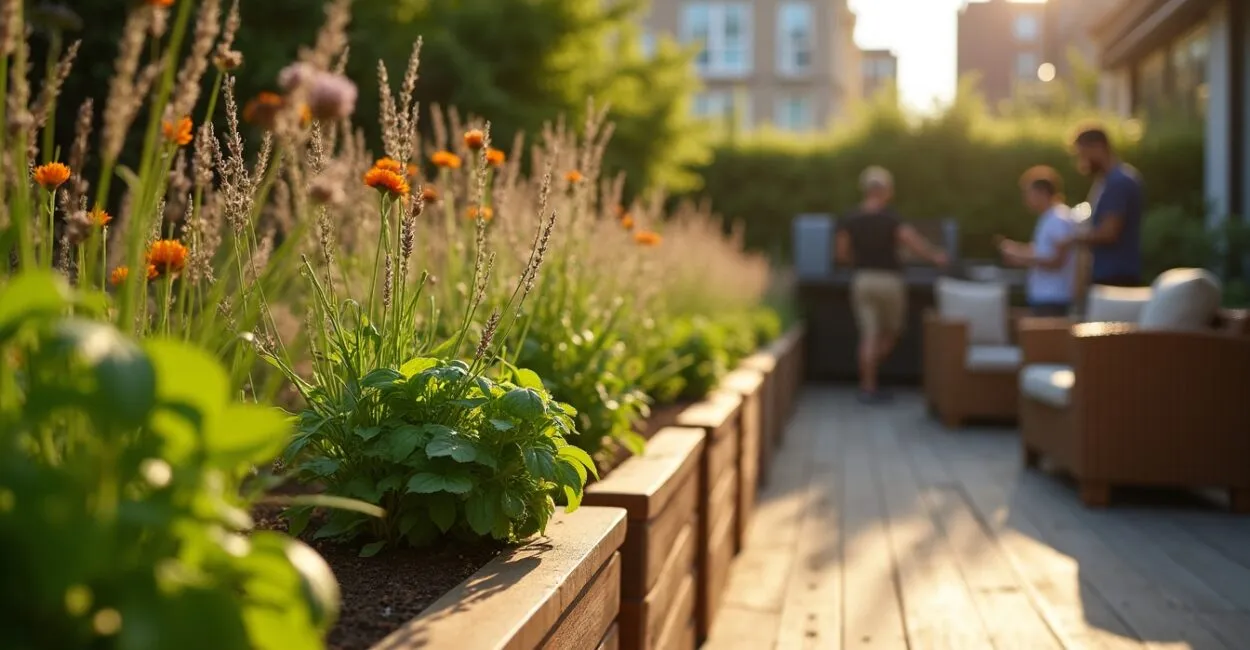 Herbs line a welcoming urban patio seating area
📅 Updated on 10/10/2026
A planter of fragrant herbs beside a patio chair can look like a mosquito shield, but the scent alone won’t keep biting insects away. For patio pest control, repelling plants work best as part of a living barrier: a well-placed mix of suitable plants that may discourage some pests while improving the space.
The useful choices depend on the pest, the patio’s sun and wind, and whether you can grow plants in the ground or only in containers. Plantings can support other control measures, but they do not reliably create a pest-free zone or replace proven repellents.
How Plant Barriers Help With Repelling Patio Pests
A living barrier is a deliberate arrangement of plants intended to interrupt pest movement or make an area less inviting through foliage, scent, or habitat. For patio use, combine plants suited to the site and place them where they can influence the space, while treating their effect as a modest part of pest management rather than a dependable shield.
Some aromatic plants release volatile compounds, but a potted plant does not necessarily release enough scent to repel insects at a distance. Foliage can also form a physical obstacle, though it will not stop flying insects from crossing an open patio. Results vary with plant health, weather, pest behavior, and the way the space is used.
Start with the source of the problem. Mosquitoes need standing water to reproduce, so empty saucers and other water-holding containers; dense, damp foliage can also provide resting places. The CDC’s mosquito prevention guidance emphasizes reducing breeding sites and using proven protection where needed.
Choose Plants for Sun, Shade, and Patio Conditions
Match plants to the conditions they will actually get. Rosemary, lavender, and basil generally need ample sun and well-drained soil. Mint tolerates more shade, but spreads aggressively, so keep it in its own pot. In hot climates, containers dry faster than garden beds; check the soil rather than relying on a fixed watering schedule.
Wind affects scent and comfort, while reflected heat from paving or walls can stress plants that would thrive in an open bed. Before buying, note how many hours of direct sun the planting spot receives and whether containers have drainage holes. A stressed or sparse plant contributes little to a barrier and may become another maintenance problem.
For a shaded patio, prioritize foliage that suits low light instead of forcing sun-loving herbs into poor conditions. Choose plants for their growing needs first, then treat any pest-repelling effect as a potential bonus. The University of Minnesota Extension’s overview of mosquito-repellent plants also cautions against assuming that simply growing these plants provides dependable mosquito control.
Read also: Style Potted Plants for Patios: 9 Easy Design Ideas
Plan a Linear, Staggered, or Layered Layout
Choose a layout based on the patio’s shape, not on a promise of complete coverage. Space containers according to the mature width of each plant and leave room to water, prune, and move them. Crowding pots tightly may look like a solid barrier at first, but it limits airflow and makes routine care harder.
- Linear: Arrange a row along the patio edge facing a garden bed or walkway. This is simple to maintain, but leaves gaps at the ends and does little to block pests approaching from other directions.
- Staggered: Set containers in two offset rows along the edge. The overlapping foliage creates a fuller visual boundary without packing plants into one continuous hedge.
- Layered: Place taller containers at the back, medium plants in the middle, and low-growing herbs near the front. This suits a corner or broad patio border, provided the taller plants do not shade out those behind them.
For any arrangement, preserve a clear path and keep plants out of the chair’s immediate footprint. A barrier should be easy to live with: if reaching the seating area means brushing through foliage or stepping around pots, the layout is unlikely to last.
Read also: Arrange Potted Plants on a Patio: Height and Balance
Pair Plants With the Pests You Want to Manage
No plant pairing reliably repels every patio pest. These combinations are sensible starting points, not tested guarantees:
| Patio concern | Plant combination | Practical note |
|---|---|---|
| Mosquitoes | Lavender and rosemary in a sunny, well-drained spot | Enjoy their fragrance, but remove standing water and use an EPA-registered repellent when protection is needed. |
| Aphids on nearby plants | Basil or other suitable herbs near flowering alyssum | Alyssum can attract beneficial insects; it attracts helpful visitors rather than directly repelling aphids. |
| General patio border | Rosemary with compact, site-appropriate flowering plants | Choose flowers that suit local conditions and bring in pollinators or other beneficial insects. |
Mint is often suggested for pest control, but its vigorous growth can crowd neighboring plants. Contain it separately and avoid treating its presence as protection from mosquitoes. For plants that attract beneficial insects, the Penn State Extension guidance on flowering plants and beneficial insects offers a useful distinction: some plants support natural enemies of garden pests rather than acting as repellents themselves.
Avoid Placement and Planting Mistakes
The most common mistake is putting fragrant plants where they look attractive but where their scent or foliage has little chance of affecting the problem area. Another is assuming a dense row must work better. Overcrowded containers can hold moisture, restrict airflow, and make it harder to spot pests or remove debris.
Keep these checks in mind as the planting establishes:
- Confirm the plant’s light and drainage needs before choosing its position.
- Leave space for mature growth instead of arranging pots by their size on purchase day.
- Empty saucers and remove other standing water that can support mosquito breeding.
- Inspect leaves and stems for pests; a stressed plant may need care, not more companion plants.
- Use a proven personal repellent when exposure calls for one.
What a 10-Foot Plant Barrier Can and Cannot Do
Imagine a row of containers along one 10-foot edge of a patio. It may define the seating area, add foliage, and make that approach less open to crawling insects. It cannot be assumed to repel mosquitoes across the whole patio, block insects arriving from above, or control pests breeding elsewhere on the property.
The outcome depends on the plants’ size and condition, wind, the pest species, and nearby habitat. A row that looks continuous may still have gaps between pots; flying insects can pass over it. Treat the example as a layout, not a measured estimate of pest reduction.
Maintain the Barrier and Get Realistic Results
Check containers regularly for dry soil, blocked drainage, and standing water in saucers. Prune herbs to keep them healthy and within bounds, and remove dead leaves that collect around pots. Reassess the layout as plants grow: a container that once sat in full sun may become shaded by a larger neighbor.
For a container-only patio, use several movable pots rather than trying to build an unbroken wall. Group plants by their light and water needs, keep mint contained, and position the most useful foliage near the patio boundary without crowding seats or walkways. When biting insects remain a concern, pair the planting with source reduction and a repellent labeled for the intended use.
Which plants are most effective together for repelling mosquitoes?
There is no plant pairing that reliably protects a patio from mosquitoes. Lavender and rosemary can make a pleasant sunny planting, but removing standing water and using an appropriate repellent are more dependable ways to reduce exposure.
How close should repellent plants be to a seating area?
Place them near the patio edge or seating zone where they are easy to care for, while leaving enough room to sit and move comfortably. No established distance guarantees protection, because plant scent and pest activity vary with wind, weather, and the site.
Can plant combinations replace chemical repellents entirely?
No. Plants do not provide the reliable, labeled protection offered by registered repellents. Use an EPA-registered product according to its label when personal protection is needed.
Can beneficial insects and pest-repelling plants share a patio?
Yes. Flowering plants can attract pollinators and beneficial insects, while herbs may be grown nearby for fragrance or culinary use. Beneficial insects help support garden ecosystems, but their presence does not guarantee control of patio pests.
How do I adapt the layout for a patio with containers only?
Use pots in a single row, staggered groups, or layers in a corner, depending on available space. Choose container size and drainage to suit each plant, and keep saucers free of standing water.
Test one small arrangement before filling the patio with pots. Track where pests appear, adjust placement and care, and keep source reduction or proven repellents in the plan when the plants alone do not provide enough protection.