
How to Safely Flush a Water Heater and Reduce Sediment
A flush water heater procedure may clear loose tank sediment, but noise alone is not proof it will help. Learn which models it applies to and when to stop.
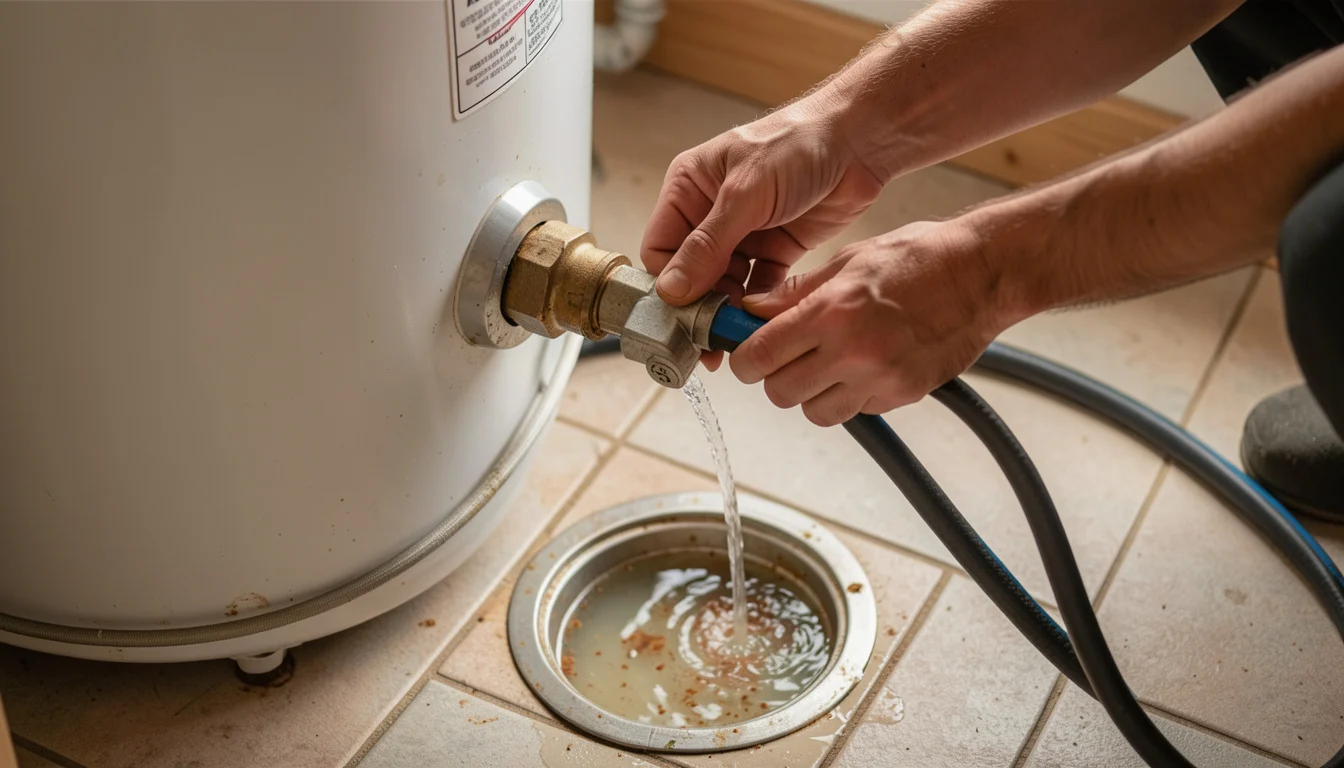 Sediment draining safely from a tank heater
A water heater that rumbles during a shower may have sediment collecting at the bottom of its tank, but noise alone does not prove that flushing will solve the problem. A flush water heater procedure drains water from a storage tank to carry out loose sediment. Whether to do it depends on the heater’s condition, the manufacturer’s instructions, and whether you can drain it safely.
This process is for tank-style heaters. Tankless models have different maintenance needs, often involving descaling rather than draining a storage tank.
If you’re unsure which type you have, check the model label and manual before touching a valve.
What Flushing a Water Heater Does—and Which Models It Applies To
Flushing a tank water heater means draining water through its drain valve to remove loose sediment from the storage tank. For a tank-style heater, it may help when sediment has settled at the bottom, but it cannot repair a leak, reverse corrosion, or restore a failed component.
Follow the model’s manual: mineral content, heater design, and maintenance instructions all affect whether and how to flush.
Do not apply tank-draining instructions to a tankless unit. Tankless maintenance may involve a separate descaling procedure, and the manufacturer’s process and equipment requirements can differ. The U.S. Department of Energy’s water-heating guidance provides background on water-heater types and operation; your heater’s own manual should guide maintenance steps.
A flush can carry out loose sediment, but it cannot diagnose or repair a failing water heater.
Decide Whether a Flush is Appropriate
Rumbling or popping can be a clue that sediment is present, but a sound does not identify its cause. Discolored water, weak hot-water output, or unusual operation can also come from other problems.
Use symptoms to decide whether to investigate, not as a diagnosis.
Observation What It Might Indicate What to Do Rumbling or popping Sediment may be affecting heat transfer, though other causes are possible. Check the manual and heater condition before considering a flush. Discolored water Corrosion, plumbing issues, or sediment may be involved. Arrange diagnosis if discoloration persists or affects hot water only. Reduced hot-water performance Sediment or a heating, control, or plumbing fault may be responsible. Do not assume flushing will restore output; seek diagnosis if the issue continues. Leak or badly corroded parts A damaged connection, tank, or valve may be unsafe to operate. Do not drain the heater yourself; contact a qualified plumber. Blocked drain valve Sediment may obstruct the valve, or the valve may be faulty. Do not force or dismantle it; stop and call a professional.
A useful decision rule: if the tank and valve look sound, the valve is accessible, and the manual permits draining, a careful DIY flush may be reasonable. If there is a leak, heavy corrosion, a stuck valve, or uncertainty about the heater type, leave it to a qualified professional. If you suspect a household supply issue, first identify the right shutoff using this guide to finding and shutting off your home’s main water valve.
Prepare Safely Before Draining
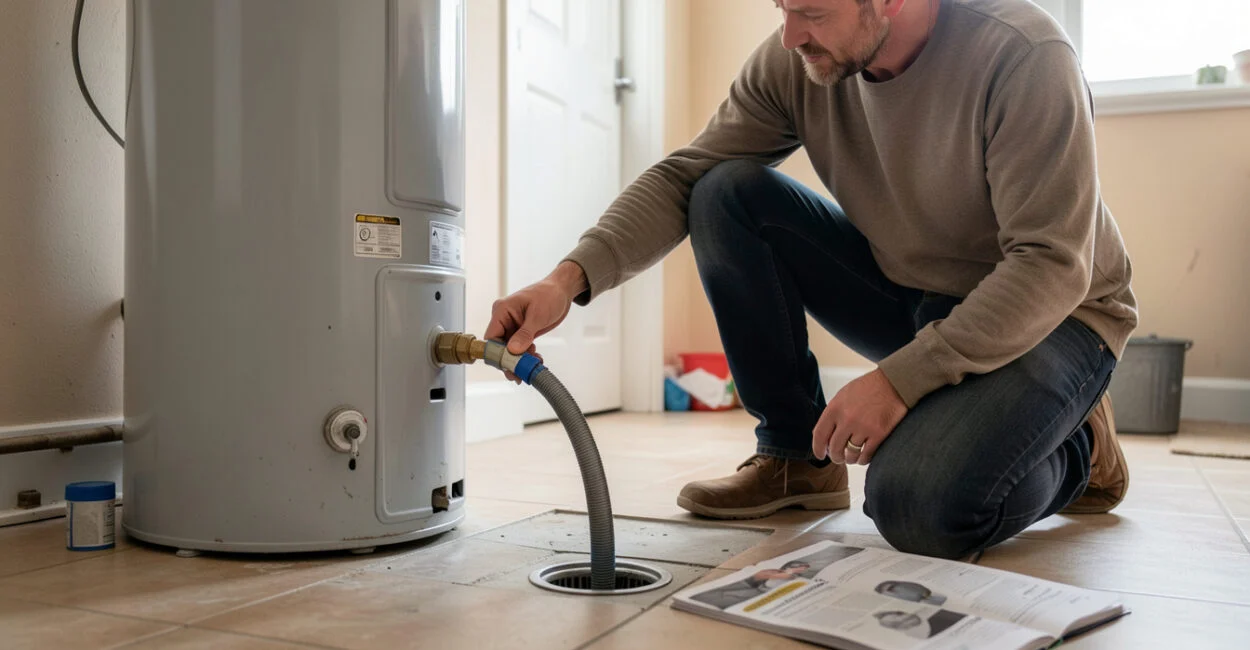
Tank water and the water leaving the hose can be hot enough to scald. Route the discharge to a drain or other location that can safely handle hot water, and keep children and pets away. Use a hose rated for hot water, secure it to the drain valve, and make sure it cannot slip or spray across a walkway.
- Manual available and heater model identified
- Tank-style heater confirmed
- Heat source shut down as the manual directs
- Hot-water-rated hose secured and routed safely
- Discharge area cleared and able to handle hot water
- People and pets kept clear of scald risk
Gas and electric heaters have different shutdown and restart requirements. Follow the model’s instructions rather than relying on a generic sequence. For gas equipment, do not improvise around the controls; the U.S. Consumer Product Safety Commission’s carbon monoxide safety guidance also underscores the need to treat fuel-burning appliances with care.
How to Flush a Tank Water Heater
To flush a water heater, shut down its heat source as directed, close the cold-water inlet, attach a hot-water-rated hose, and drain through the valve to a safe discharge point. The manual controls the exact order and valve handling. Opening a hot-water faucet may admit air and help water drain, but follow the manufacturer’s instructions if they differ.
- Shut down the heat source. Use the manual’s procedure for your gas or electric model before draining.
- Close the cold-water inlet. Identify the correct valve from the manual; do not guess if the piping is unclear.
- Attach and route the hose. Secure it to the drain valve and position the outlet where hot discharge is safe.
- Open the drain valve carefully. If the manual allows, open a hot-water faucet to admit air while the tank drains.
- Watch the discharge. Sediment may appear, but water may not run clear and a flush may not remove all deposits.
A common mistake is forcing a drain valve when water stops flowing. Sediment can clog the opening, but force or disassembly can cause a leak or release hot water. Stop if the flow stops or the valve appears blocked, and call a professional rather than working on a hot or pressurized tank.
When a drain valve will not flow, stopping is safer than trying to clear it under pressure.
Refill and Restart Without Damaging the Heater
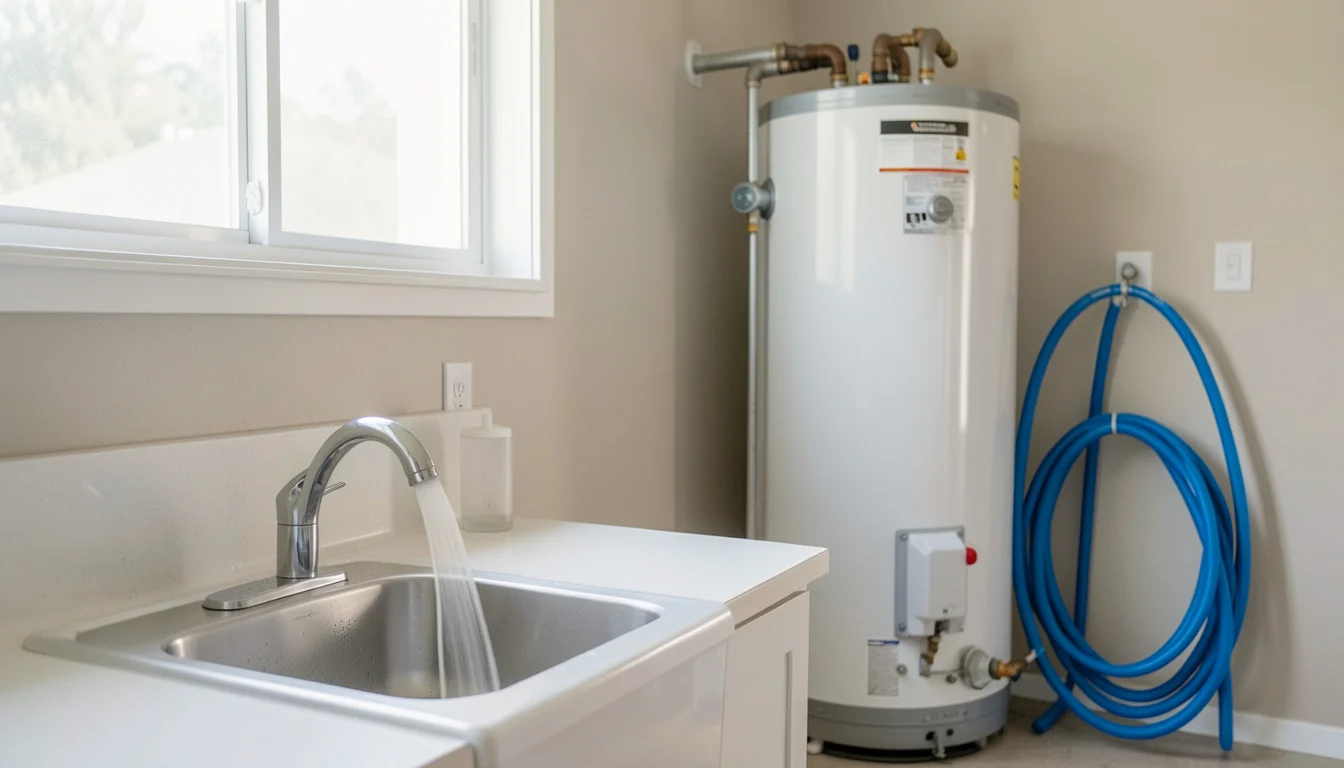
Close the drain valve and remove the hose only when the manual’s directions allow. Restore the cold-water supply as instructed. Open a hot-water faucet and wait for a steady stream without sputtering; that helps confirm the tank has filled and air has cleared from the line.
Never energize an electric tank while it is empty. An exposed heating element can be damaged if powered before the tank fills. Gas models also require the manufacturer’s specific pilot-lighting or restart procedure; do not improvise with gas controls.
- Drain valve closed
- Hose removed safely
- Cold-water supply restored as directed
- Hot faucet runs in a steady stream
- Tank confirmed full before heat is restored
- Heat restored only according to the manual
If a faucet still sputters after the tank refills, or the heater behaves unusually after restart, leave the heat off if the manual directs and get qualified help. A change in shower flow may also come from the fixture itself; this guide to replacing a showerhead can help distinguish a fixture concern from a heater issue.
Maintenance, Service, and When to Call a Plumber
Follow the maintenance schedule in the heater’s manual; there is no flushing interval that fits every model and household. Routine draining differs from repair. Persistent noise, poor heating, leaks, a stuck valve, or recurring sediment symptoms call for diagnosis rather than repeated flushing.
- DIY may fit: routine maintenance on a sound tank with a working, accessible valve and clear manufacturer instructions.
- Professional help is safer: when the heater type or procedure is unclear, parts are corroded, a valve is stuck, or symptoms continue after maintenance.
When comparing a “flush water heater service” or searching for “water heater repair near me,” ask what the visit includes and whether diagnosis, parts, or repairs cost extra. “Flush water heater cost” varies by location, heater type, access, and service scope, so request a local itemized quote rather than relying on a universal price. A water heater flush kit, flush tool, or turbo tank cleaner may be available, but none is required for every model or suitable for every situation.
Before booking, describe the symptoms and ask whether the provider will inspect the valve and check for faults, rather than promising that a flush will fix the problem. If the issue is a blocked drain or leak, routine maintenance alone may not be the right service.
Frequently Asked Questions
Should You Flush Your Water Heater?
It may be appropriate for some tank heaters, but the manual, the heater’s condition, and safe access determine whether to proceed. It is not a universal requirement, and tankless models need different maintenance.
How Much Do Plumbers Charge to Flush a Water Heater?
There is no reliable universal price. Request a local, itemized quote and confirm whether it covers inspection, draining, diagnosis, or any additional work.
How Long Does It Take to Flush a 40-Gallon Water Heater?
There is no fixed duration. Draining and flushing time depends on water flow, sediment, valve condition, and the steps needed to refill and restart safely.
How Do I Drain Sediment from My Water Heater Tank?
Follow the model’s manual: shut down the heat source as directed, close the cold-water inlet, attach a hot-water-rated hose, and drain to a safe location. Refill the tank fully before restoring heat. If the drain stops or the valve seems blocked, do not force it.
Can Flushing Fix Discolored Hot Water?
Sometimes sediment contributes, but discoloration can also point to corrosion or a plumbing issue. If it persists, arrange an inspection instead of assuming a flush will solve it.
Should I Buy a Water Heater Flush Kit?
Only consider one if the manufacturer’s instructions allow it and it matches your heater’s fittings and procedure. A kit or turbo tank cleaner is optional; it does not make a damaged or blocked valve safe to operate.