
How to Choose an Energy-Efficient Water Heater for Your Home
Comparison of heat pump, electric, gas, and tankless water heaters based on efficiency, installation needs, fuel costs, and household hot water demand to gui…
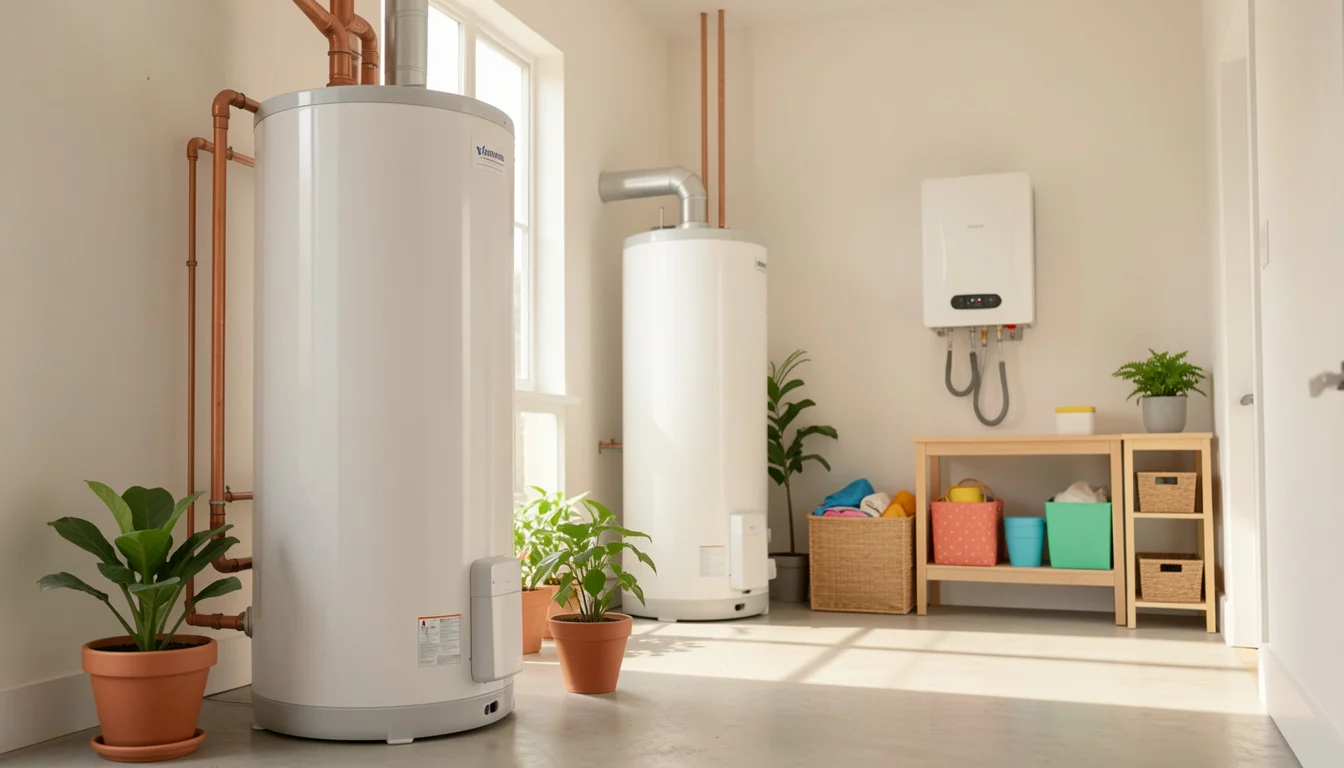 Comparing efficient water heater options
Choosing an energy-efficient water heater means balancing energy use with fuel prices, household hot-water demand, installation limits, and the cost of the equipment. Heat pump, conventional electric, gas, and tankless models perform differently; the right choice depends on what your home can support and how you use hot water.
Heat Pump Vs. Electric, Gas, or Tankless: Which Should You Choose?
Choose a heat pump water heater if your home has suitable space and you want to reduce electricity use; choose a conventional electric or gas tank when lower upfront cost or existing connections matter more. A tankless model can suit households that need continuous hot water and can support its fuel and installation requirements. Compare total costs, not the efficiency label alone.
How Water Heater Types Compare
A uniform measure such as the Uniform Energy Factor (UEF) estimates how efficiently a water heater converts energy into hot water under standardized test conditions. A higher UEF indicates greater tested efficiency, but it does not predict your exact bill: local energy prices, household usage, climate, and installation all matter. Compare models of the same fuel type and similar capacity using the label and manufacturer specifications.
Heat Pump: Uses Less Electricity in Suitable Spaces
A hybrid electric water heater moves heat from surrounding air into the tank instead of generating all the heat with electric resistance. That can make it much more efficient than a conventional electric tank, but it needs adequate air volume and a location that can tolerate cooler air and operating noise.
Conventional Electric: Simple Installation Where Wiring is Ready
A standard electric tank heats water with resistance elements. It can be practical where gas is unavailable, though it typically uses more electricity than a heat pump model serving the same demand.
Gas Tank: Uses Gas, with Efficiency Varying by Model
A high-efficiency gas water heater may use less fuel than a standard gas model, but compare its UEF, venting needs, and local gas rates. Combustion equipment also requires safe venting and proper installation.
Tankless: Heats Water on Demand, with Site Limits
Tankless units avoid storing a full tank of hot water, but their efficiency and real-world convenience depend on sizing, incoming water temperature, and the ability to meet simultaneous demand. Gas models may require larger gas lines or new venting; electric models can require substantial electrical capacity.
Criterion Heat pump Conventional electric Gas tank Tankless Energy use ✓ Often lowest electricity use Usually higher electricity use Uses gas; varies by model Can reduce standby losses Upfront cost Often higher Often lower where wiring exists Depends on model and venting Can rise with site upgrades Space needs Needs air volume and clearance Tank footprint Tank and venting clearance Compact unit; access for service Hot-water capacity Tank size and recovery rate matter Tank size and recovery rate matter Tank size and recovery rate matter Flow rate limits simultaneous use Best fit Suitable space and electricity rates Existing electric setup, tighter budget Existing gas service and venting Demand pattern and infrastructure fit Installation complexity Condensate, airflow, and clearance Often simpler if connections match Combustion venting required May need fuel or electrical upgrades
The U.S. Department of Energy’s water-heating guidance explains system types and efficiency considerations. ENERGY STAR’s residential water heater information can help identify qualifying models; certification is a useful filter, not a guarantee of the lowest bill for every home.
Match the Water Heater to Your Home and Household
The most energy-efficient type is usually a heat pump water heater when the installation space, climate, and household use suit it. It extracts heat from surrounding air, so its performance can fall in a cold or confined location. The rule has limits: a high local electricity rate, poor placement, or inadequate capacity can change the value of that choice.
Which Water Heater Uses the Least Electricity?
A heat pump water heater generally uses the least electricity among the common electric options because it transfers heat rather than relying only on resistance heating. A gas unit may use less household electricity, but it consumes gas; compare total energy costs across fuels rather than treating electricity use as the whole bill.
Read also: How to Choose Sustainable Cleaning Products for Your Home
Is a 40- Or 50-Gallon Water Heater More Efficient?
Neither size is automatically more efficient: a 40-gallon model may have lower standby losses, while an undersized unit can run short of hot water or recover more often. Choose capacity based on peak demand, first-hour rating, and the manufacturer’s sizing guidance, then compare UEF within that size range.
Fuel availability and installation details can rule out an option before its efficiency rating matters. Before replacing a unit, check the existing electrical circuit, gas line, vent, drain for condensate, clearances, and route for removing the old tank. A common installation mistake is assuming a heat pump model will fit wherever the old electric tank stood; tight closets may lack the required air volume or service clearance.
Read also: How to Choose Lower-Impact Materials for Home Renovations
For household energy changes beyond water heating, these energy-saving home habits can complement an equipment upgrade.
Estimate Purchase, Installation, and Operating Costs
Compare the full installed price plus expected energy costs over the unit’s service life. Ask for a quote that separates equipment, labor, permits, venting or electrical upgrades, condensate drainage, and removal. Operating cost depends on local utility rates and how much hot water the household uses, so national averages may not fit your home.
Hypothetical example: If one option costs $1,000 more to install and saves $200 per year in energy, its simple payback is $1,000 ÷ $200, or five years. This omits financing, maintenance, changing utility rates, and differences in equipment life, so it is a starting comparison, not a savings promise.
For a fair estimate, use the same household hot-water demand and current local rates for every option. Ask contractors to state their assumptions; a quote that leaves out required venting or panel work can make a seemingly cheaper model look better than it is.
Compare Features, Warranties, and Brands
Compare Bradford White water heater models with other manufacturers by matching fuel, capacity, UEF, first-hour rating or flow rate, dimensions, warranty terms, and service access. Bradford White is a brand to evaluate, not a shortcut to a universal recommendation. Confirm the exact model’s specifications and warranty in the manufacturer’s documentation, and check whether installation must meet particular conditions.
Warranty length alone does not establish reliability or total value. Read what the warranty covers, whether labor is included, and what maintenance or installation conditions apply. Searches for “water heater brands to avoid” often produce unsupported rankings; judge the specific model, local service availability, and written warranty instead.
Check Rebates, Tax Credits, and Current Eligibility
For a water heater placed in service in 2026, do not assume the federal Energy Efficient Home Improvement Credit is available. Under current federal tax guidance, the credit does not apply to qualifying property placed in service after December 31, 2025. Check the IRS Energy Efficient Home Improvement Credit guidance for current rules and any updates before relying on a tax benefit.
State programs, utility rebates, and other local incentives may have separate eligibility rules, funding limits, approved-product lists, and application deadlines. Verify those details with the program administrator before purchase; some programs require preapproval or installation by a participating contractor. The ENERGY STAR product listing can help identify eligible models, but it does not confirm that a particular rebate is still funded.
Use This Checklist Before You Buy
- Confirm which fuels and electrical capacity your home can support.
- Record household peak hot-water demand and compare tank capacity, first-hour rating, or tankless flow rate.
- Check the model’s UEF alongside local fuel prices and expected usage.
- Verify space, airflow, venting, drainage, clearances, and service access.
- Get an itemized installation quote, including any required upgrades.
- Read the exact model’s warranty and confirm local repair support.
- Check current federal, state, and utility incentives before signing a purchase order.
📱 See this content as a Web Story
Frequently Asked Questions
Are Heat Pump Water Heaters Noisy?
They make fan and compressor sounds, so placement matters. Check the manufacturer’s sound information and avoid putting the unit beside a bedroom or another noise-sensitive space when possible.
Can a Heat Pump Water Heater Work in a Cold Climate?
It can, but the room temperature and model specifications affect performance. Review the operating-temperature range and ask an installer how the unit will perform in the planned location during colder months.
Does an ENERGY STAR Label Guarantee the Lowest Operating Cost?
No. It identifies products that meet efficiency criteria, but your bill also depends on utility rates, installation, settings, and hot-water use.
Before committing, confirm current tax rules with the IRS and local incentive details with your state energy office or utility.